
Reviewed · WAFFLE & FRIES TOURS
Frietmuseum Entrance Ticket
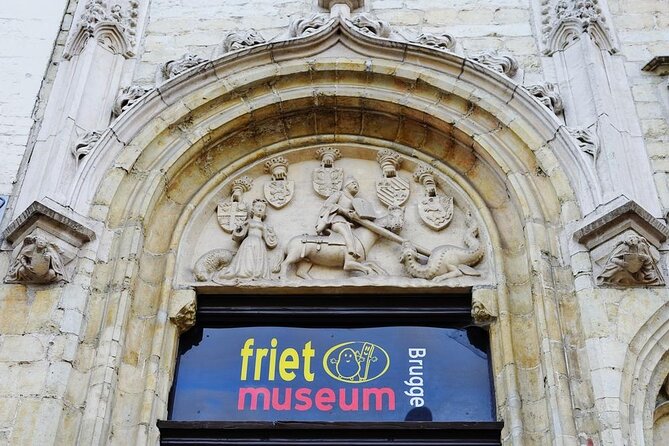
Belgium’s famous fries get an entire museum in Bruges, and the story begins far from Europe. Inside the historic Saaihalle, you’ll trace the potato from Peru to the Belgian frites tradition, then head downstairs to the medieval cellars for fries you can buy on site.
I like the clear three-part layout: potato history on the ground floor, the story of fries upstairs, and the tasting stop below. I also like that the museum sits in one of Bruges’ prettiest old buildings, making this an easy addition to a day of canals, churches, and chocolate.
The main drawback is that this is a self-guided, text-heavy museum, not a hands-on food tour. Some displays are aimed at children, and the fries are not included in the $14.44 admission price.
Key points to know before you go
- Potato story first: The ground floor explains the crop’s origins in Peru more than 10,000 years ago.
- Fries come later: The first floor follows the arrival and development of fries in Belgium.
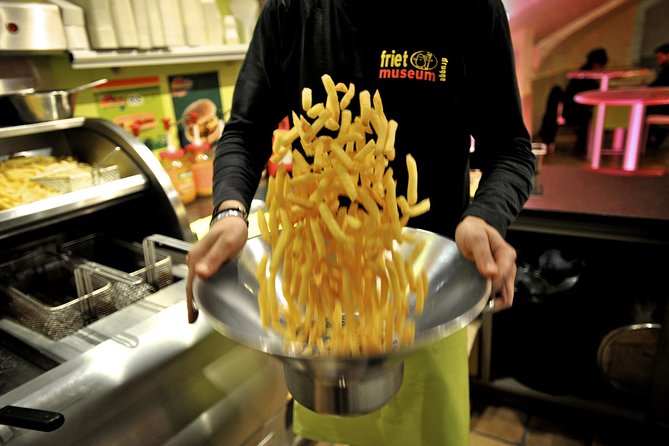
- Tasting costs extra: You can buy fries in the basement, but food and drinks are not included.
- Allow 40 minutes to an hour: Add time if you plan to read the many panels or stop for food.
- English audio guides are included: The experience is self-guided rather than led by a named guide.
- Historic setting: The museum occupies the Saaihalle, with medieval cellars below street level.
A potato museum in Bruges? It makes more sense than you think
The Frietmuseum works because Belgian fries are more than a quick snack. They are part of the country’s everyday food culture, and the museum gives you the background before you order a portion.
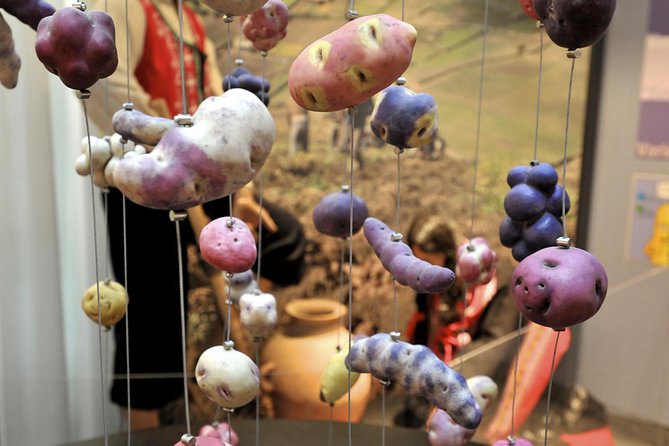
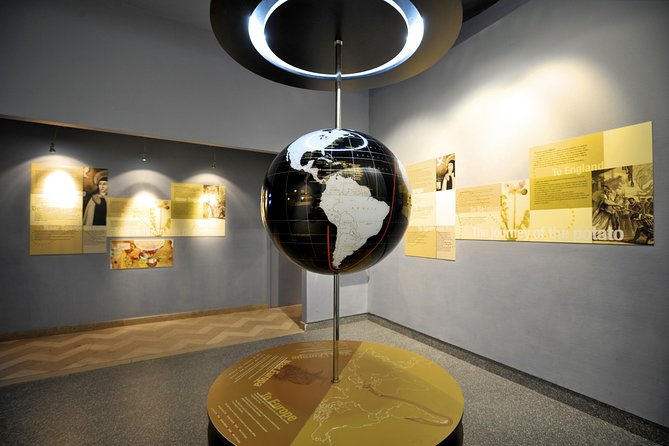
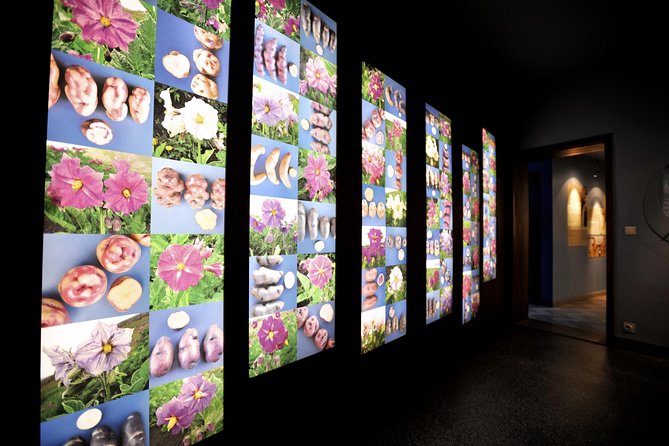
You begin with the potato itself. The ground floor covers the crop’s origins in Peru more than 10,000 years ago, then explains how this useful food made its way toward Europe. If you have only thought of potatoes as the raw material for fries, this section gives you a wider view.
That opening also prevents the visit from feeling like a single joke stretched across three floors. The subject may sound narrow, but the potato connects farming, trade, food habits, and national identity.
The museum was created by Cédric and Eddy Van Belle, the family behind Bruges’ Choco-Story museum and Lumina Domestica, a museum devoted to domestic lighting. That connection helps explain the Frietmuseum’s approach: it is part food lesson, part local attraction, and part family outing.
You should expect a light educational tone rather than a formal food-history institution. The displays aim to make the subject approachable, with enough information for adults and visual elements that can keep younger children interested.
More waffle and fries stops in Bruges:
- Bruges: Belgian Waffle-Making Workshop with Beer Tasting
★ 4.9 · 960 reviews - Bruges: Frietmuseum Entry Ticket
★ 4.2 · 652 reviews - The Waffles ‘n Beer Workshop in Bruges Centre
★ 5.0 · 429 reviews
Ground floor: from Peru to the European table
The first section is about the potato, not fries. That distinction matters because the potato’s story begins thousands of miles from Belgium.
You’ll learn about its Peruvian origins and its long journey before it became a familiar European food. The ground floor sets up the central question of the museum: how did a crop from South America become the base for one of Belgium’s best-known dishes?
I like starting here because it gives the later sections some context. If you go straight to the fries, you get a snack story. If you follow the potato first, you get a simple lesson in how ingredients travel and change meaning from one place to another.
This section is also where the museum may feel more serious than its playful subject suggests. Some of the information requires reading, and visitors who prefer objects, demonstrations, or short captions may move through it quickly.
The audio guide helps add structure. It is included with admission, and the experience is available in English, so you are not dependent only on the printed displays.
First floor: how fries became Belgian
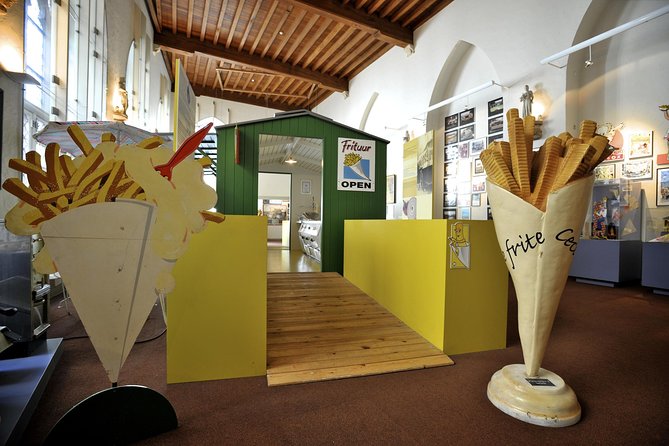
The first floor shifts from the potato to fries themselves. Here you follow the story of how fries came to Belgium and how they developed into a national specialty.
The museum presents fries as a cultural subject, not simply a cooking method. You’ll get a sense of how a basic potato dish became tied to Belgian food identity and the local habit of serving fries with a wide range of sauces and meals.
The exact balance of reading and visual presentation may not suit everyone. You should be ready for a lot of text, especially if you want to take in all the information rather than skim the main points.
That said, the material is approachable. The displays are designed for a broad age range, and the more child-friendly presentation can help families move through the museum without making the subject too dry.
For adults visiting without children, the museum is best viewed as a compact cultural stop. Do not expect a major national museum with rare objects and long galleries. Expect a focused explanation of a familiar food, delivered in a cheerful and accessible way.
The medieval cellar is where the visit pays off
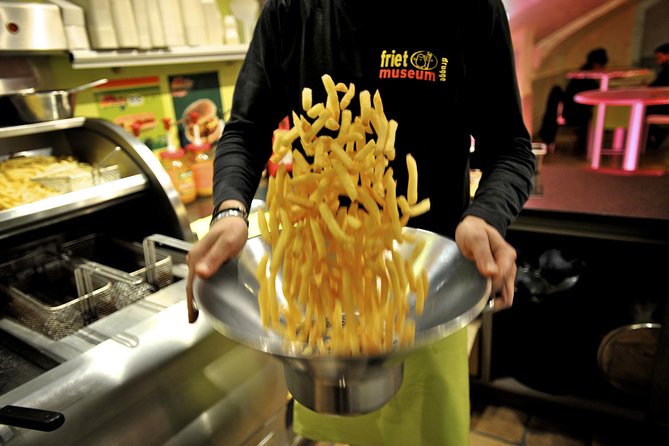
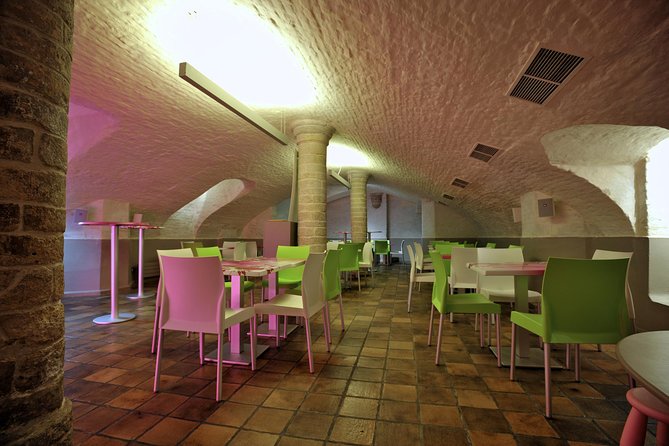
The basement is the most practical part of the experience. In the medieval cellars, you can buy and eat a serving of fries after seeing how the dish fits into Belgian culture.
This is not a tasting included with your ticket. Food and drinks cost extra, so budget for the portion separately. That detail is important because the museum’s food stop is one of its main attractions, yet the admission price covers the museum only.
The cellar setting adds character. You are not simply leaving an exhibit and walking into an unrelated takeaway counter. You are eating beneath the historic building, in an old space that gives the final stop a distinct Bruges feel.
The fries have received especially warm praise for their taste, and the food stop is often the reason people are glad they allowed time for the visit. I would plan to eat there if you want the full experience, while remembering that a good portion of fries can also be found elsewhere in Bruges.
The museum also gives you tips on eating fries like a local. This is useful if you are curious about the Belgian way of treating frites as their own food rather than just a side dish.
A few more Bruges half days worth weighing up
- Bruges: Small Group Boat Cruise and Guided Walking Tour
★ 4.8 · 4,102 reviews - Bruges: Walking Tour, Canal Boat Trip w/Beer Tasting Option
★ 4.4 · 2,759 reviews - Historical Walking Tour: Legends of Bruges
★ 5.0 · 2,541 reviews - Bruges: Choco-Story Chocolate Museum Guided Tour w/Tastings
★ 4.2 · 1,379 reviews
How long should you plan?
The stated visit time is about 40 minutes to one hour. That is realistic if you move at a steady pace and listen to the audio guide without stopping at every panel.
I would allow closer to an hour if you enjoy food history or want to read carefully. Add more time if you plan to buy fries in the cellar and eat them there.
This makes the Frietmuseum easy to fit between larger Bruges sights. You do not need to give up half a day, and you can use it as a short indoor stop during wet weather.
The museum is open daily from 10 a.m. to 5 p.m., with the last tickets sold at 4:15 p.m. The schedule works well for a morning visit, a midday snack stop, or a late-afternoon indoor activity, but do not arrive close to closing if you want to read everything and eat afterward.
It is near public transportation, and most people can participate. Children must be accompanied by an adult.
What the $14.44 price really buys you
At $14.44 per person, admission is not the cheapest way to spend an hour in Bruges. The value depends on whether you care about the subject and intend to use the cellar food stop.
The ticket includes entry and an audio guide. It does not include fries, drinks, or any other food, so the final cost will be higher if you eat there.
I see the price as reasonable for a short specialty museum, but not an automatic bargain. If you want a major collection, impressive art, or a guided tour, this will feel limited. If you like unusual museums and want a focused explanation of a Belgian food tradition, it can earn its place in your schedule.
The visit becomes better value when you combine the museum with lunch or a snack. You get the educational portion first, then finish with the dish the museum is explaining.
It is also a sensible rainy-day choice. Bruges offers plenty of beautiful outdoor sights, but wet weather can make a compact indoor attraction more appealing. The Frietmuseum gives you somewhere to spend an hour without requiring a full afternoon commitment.
Self-guided does not mean effortless
There is no named guide leading a group through the building. You move through the floors at your own pace with the included audio guide and displays.
That arrangement gives you freedom. You can pause, skip sections, or finish quickly if you have a tight schedule. A small maximum group size of 15 people is listed for the activity, which suggests a more limited setting than a large guided attraction, though the actual experience remains self-guided.
The tradeoff is that you must create your own rhythm. If you prefer a guide who tells stories, answers questions, and points out the best details, you may find the visit quiet or too dependent on reading.
The English presentation is a strength for English-speaking visitors. The museum has made an effort with its translations, and clear English information helps you follow the subject without guessing at the meaning of the displays.
Still, bring some patience for written material. One of the most useful expectations to set is that this is a museum with a lot to read, not a quick photo stop with a few captions.
Is it good for children?
The Frietmuseum is a natural fit for families because the subject is familiar, the displays are accessible, and the visit ends with food. Children may also enjoy the playful elements more than adults do.
The child-friendly approach is not a flaw, but it shapes the experience. Adults looking for a sophisticated examination of Belgian cuisine may find parts of the presentation simple.
I would choose it for a family afternoon, especially if you want an indoor activity with a clear finish. The museum’s short duration also reduces the risk of the visit becoming tiring.
For adults, I would book it because you enjoy unusual cultural attractions, not because you expect a major museum. It works best for curious eaters who like learning where everyday foods come from.
The building adds more than decoration
The Saaihalle is one of the prettiest buildings in Bruges, and the setting gives the museum more atmosphere than a modern shopfront would.
The old structure helps connect the food story to Bruges itself. You are not only learning about fries in an abstract way. You are doing it inside a historic building in the center of a city known for preserved medieval architecture.
The medieval cellars are the highlight of the setting. They provide a memorable place to buy fries and make the final part of the visit feel tied to Bruges rather than interchangeable with a food museum in another city.
The building also means stairs and several floors are part of the experience. Specific accessibility details are not provided, so if that is important for you, check directly before booking.
A few practical cautions
Book with the correct date and keep your confirmation available. One reported booking problem involved a reservation not appearing in the museum’s system, which led to confusion at entry and a request for payment before the issue was sorted out.
That does not define the normal visit, but it is a good reason to carry your booking confirmation and allow a little patience at the entrance. The museum’s own staff may need to verify an online reservation if the system does not show it.
The experience is usually booked about 13 days ahead, so you do not need to reserve months in advance. Still, planning ahead is sensible during a busy Bruges visit, especially if you want to fit the museum into a specific meal or sightseeing route.
Free cancellation is available when you cancel at least 24 hours before the start time. Changes or cancellations made less than 24 hours in advance are not accepted for a refund, and the cut-off follows local time.
Who should book the Frietmuseum?
I would book this if you meet at least two of these conditions:
- You enjoy food museums and local culinary traditions.
- You want a short indoor stop in Bruges.
- You are traveling with children.
- You plan to buy Belgian fries afterward.
- You like reading exhibits at your own pace.
- You are curious about how a familiar food became part of national identity.
I would skip it if you want a guided, highly interactive experience or if you dislike reading. It is also less appealing if you are already planning several food stops and would rather spend your limited time inside Bruges’ major historic sights.
The strongest part is the combination of clear food history, a handsome old building, and fries in the cellar. The weakest part is the uneven presentation, which can feel basic for adults and overly text-heavy for anyone expecting a quick attraction.
Should you book it?
Book the Frietmuseum if you want to understand Belgian fries before eating them. The visit is short, the English audio guide is included, and the medieval cellar gives you a natural place to finish with food.
Do not book it expecting a full meal, because the tasting costs extra. Do not book it expecting a formal guide, because you will be exploring the museum on your own.
For families, food lovers, and anyone looking for a rainy-day stop, the museum is a practical choice. For history buffs who want a large collection or a polished interactive show, it may feel average.
My advice is simple: pair it with a walk through central Bruges and treat the cellar fries as the payoff. At $14.44, the ticket makes the most sense when you enjoy the story as much as the snack.
FAQ
Where is the Frietmuseum located?
The Frietmuseum is in Bruges, Belgium, inside the historic Saaihalle building.
How long does the visit take?
Plan on about 40 minutes to one hour. You may need longer if you read the displays carefully or buy and eat fries in the basement.
What does the ground floor cover?
The ground floor explains the history of the potato, including its origin in Peru more than 10,000 years ago.
What is on the first floor?
The first floor covers the history of fries and how they came to Belgium.
Can I eat fries at the museum?
Yes. Fries are available to purchase in the medieval cellars in the basement.
Are food and drinks included in the admission price?
No. Food and drinks are not included, so you pay separately if you buy fries or other refreshments.
Is an audio guide included?
Yes. Audio guides are included with admission.
Is the experience available in English?
Yes. The experience is offered in English.
When is the Frietmuseum open?
It is open every day from 10 a.m. to 5 p.m. The last tickets are sold at 4:15 p.m.
Can I cancel my booking for a refund?
Yes, if you cancel at least 24 hours before the experience start time. Cancellations or changes made less than 24 hours in advance are not accepted for a refund.
Just added around Bruges
- 2-Hour Private Walking Tour of Bruges★ 5.0 · 13 reviews
- The Waffles ‘n Coffee Breakfast in Bruges Centre★ 4.5 · 9 reviews
- Ticket Expo Body Worlds in Bruges, Belgium★ 4.5 · 11 reviews
- Explore the Instaworthy Spots of Bruges with a Local★ 5.0 · 3 reviews
- Discover the secrets of Bruges by playing!★ 4.5 · 7 reviews
- Australian Battlefields Private Tour in Flanders from Bruges★ 5.0 · 15 reviews
- 6 Hour Bruges Shore Excursion from Zeebrugge Cruise Port★ 4.5 · 23 reviews
- Photo Tour “Jan van Eyck”★ 4.0 · 7 reviews
Waffle & Fries Tours, compared.

Historical Walking Tour with Chocolate & Waffle Tasting
Read our review →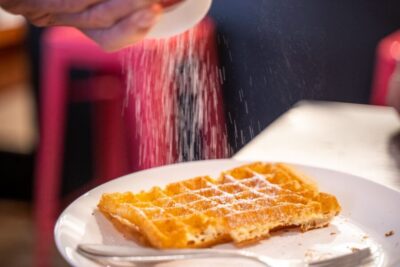
Belgian Waffle-Making Workshop with Beer Tasting
Read our review →
Brussels Walking and Tasting Tour (Beers,Chocolates&Fries/Waffle)
Read our review →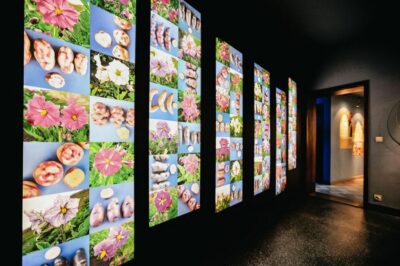
Historical Tour with Chocolate & Waffle Tasting
Read our review →
Brussels Chocolate Beer Waffle and Belgian Whiskey All-in-One (Small Group) Tour
Read our review →
Brussels Highlights Walking and Bus Tour w/ Waffle
Read our review →Browse the lists this tour appears in