
Reviewed · WALKING TOURS
Liege Private Walking Tour
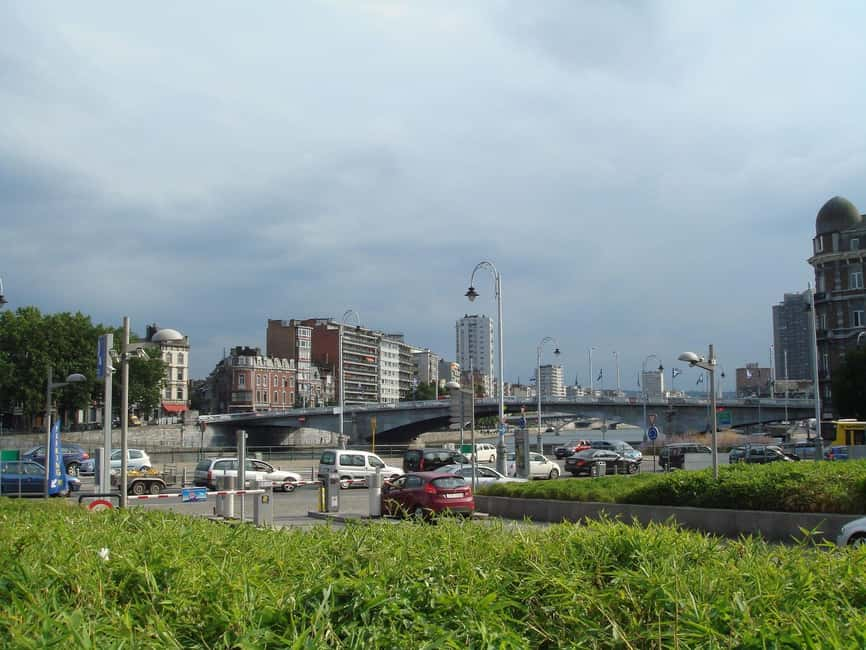
Liège’s appeal is not just its medieval buildings. It is the story of a city repeatedly caught between major powers, church factions, and local revolts. This private walk brings those layers together while you move from the Meuse River toward the old town, the Romanesque Church of St. Bartholomew, and the pedestrian streets of the Carré.
I like the private format, since your guide can adjust the pace and answer your group’s questions without a crowd in tow. I also like the clear historical sweep, from pre-Roman Liège through Habsburg and French rule. The main drawback is the price for a small party: $309 is strong value for a larger group, but expensive for one or two people, especially since entrance fees are not included.
Key points at a glance
- A 90-minute walk through Liège’s long political story: The route covers pre-Roman origins, the Liège Wars, the Counter-Reformation, the Thirty Years’ War, and the shift from Habsburg to French rule.
- A genuinely private group: The guide is reserved for your party, with space for up to 15 people.
- Medieval architecture in the old town: Expect attention to landmarks such as the 12th-century Romanesque Church of St. Bartholomew.
- Local guides with strong personal feedback: Joseph Gerkens, Hilbert, and Karl are named in the available comments as guides who brought humor, care, and strong historical detail.
- A useful finish in the Carré: Pedestrian streets, shops, restaurants, and nightlife make this a natural area for continuing your Liège visit.
- English and German tours: German is available, but confirm the language before booking because one German-language booking was changed to English shortly before the tour.
Why Liège makes a good walking-tour city
Liège sits along the Meuse River in Wallonia, and its position explains much of its character. This was not an out-of-the-way town. Its location made it strategically important, so control of Liège mattered to local rulers, church leaders, Habsburg authorities, and French forces.
That history can be hard to read from a map or absorb from a museum label. It makes more sense when a guide links places in the old town to the conflicts that shaped them. On this walk, you are not simply checking off buildings. You are following the effects of wars, religious change, revolts, and changing borders through the city center.
I find that especially useful in Liège because the city’s appearance can feel calm and inviting. The Meuse, old streets, cafés, and shops give the place an easygoing air. The tour adds the harder story underneath: this was a city that faced battles and political pressure again and again.
The 90-minute length keeps the experience manageable. You get a focused introduction without giving up half a day. If you arrive in Liège by train or are fitting the city into a wider Wallonia trip, that compact schedule is a real advantage.
More walking tours in Belgium:
- Bruges: Small Group Boat Cruise and Guided Walking Tour
★ 4.8 · 4,102 reviews - Bruges: Walking Tour, Canal Boat Trip w/Beer Tasting Option
★ 4.4 · 2,759 reviews - Historical Walking Tour: Legends of Bruges
★ 5.0 · 2,541 reviews
Starting beside the Meuse at Quai de la Goffe
The meeting point is Visitez Liège, Liège tourisme, at Quai de la Goffe 13, 4000 Liège. Starting by the river gives the walk a practical sense of place. You can begin by seeing Liège as a city shaped by movement, trade, water, and military importance rather than as a collection of unrelated monuments.
Your guide is scheduled to stay with your group alone. That matters because a private walk can respond to your interests. If your group cares most about architecture, you can ask for more attention to the city’s churches and older buildings. If political history is your priority, you can keep the focus on the Liège Wars, religious conflict, and the change from Habsburg to French control.
The provider allows possible customization on the spot. That does not mean you should expect a completely different itinerary, but it does give you room to make the walk fit your group. Tell the guide early if you want more time for photographs, more historical context, or a quicker pace.
There is no transport included. This is a walking tour, so the value comes from the guide’s interpretation and the places connected along the route. Wear shoes suited to city streets and allow enough time to reach the meeting point before the scheduled start.
From pre-Roman roots to the Liège Wars
The historical opening is one of the strongest parts of the concept. Liège was not created in the medieval period, and the walk sets the city in a much longer time frame by reaching back to pre-Roman roots.
That early context helps you understand why the area mattered before the famous churches and later political struggles. You will not only hear when a building was built. You will also get a sense of how the city developed into a prize worth fighting over.
The Liège Wars add a more turbulent chapter. The title can sound abstract until a guide explains how conflict affected a city’s rulers, streets, institutions, and people. This is where a private tour can be more useful than a standard audio guide. You can pause and ask what caused the wars, who held power, and how Liège changed afterward.
Do not expect a full military-history lecture in 90 minutes. The period coverage is broad, so the guide must move quickly across centuries. That is a benefit if you want a first visit overview, but less ideal if you already know Liège well and want a specialist discussion of one conflict.
Medieval Liège and the Church of St. Bartholomew
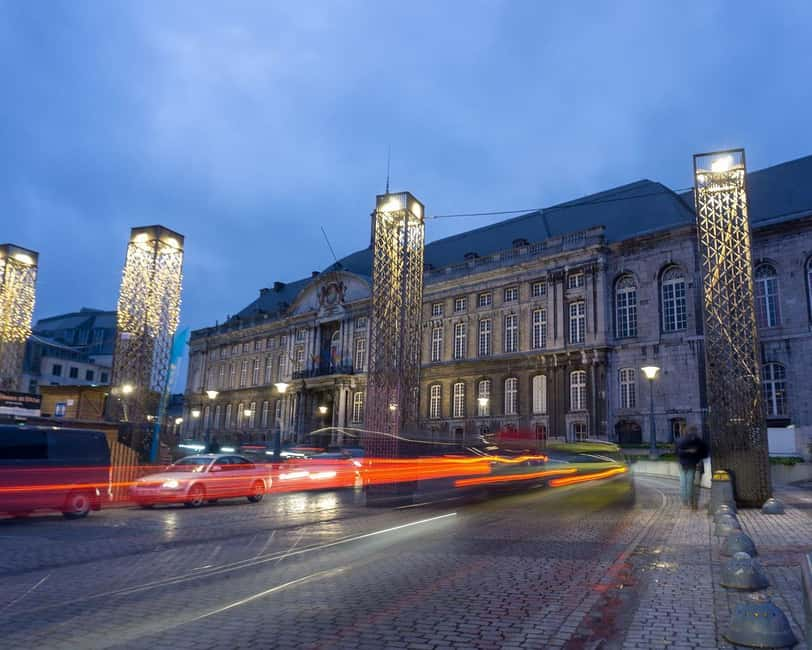
Liège’s old town is the visual heart of the experience. Medieval landmarks give the historical talk something solid to look at, and the 12th-century Romanesque Church of St. Bartholomew is a key example.
Romanesque architecture tends to feel sturdy and grounded, with strong forms that suit a city shaped by conflict and church power. A guide can help you notice what makes the building different from later Gothic work and explain where it fits into Liège’s development.
The supplied information does not promise an interior visit. Entrance fees are not included, so ask your guide whether the route includes going inside any landmark and what extra payment would be needed. If you only see the church from outside, you still get its place in the old town and its role in the city’s architectural story, but an interior visit would require separate planning.
I like this part of the tour because it connects architecture to history instead of treating a church as a photo stop. The building is not there only for decoration. It belongs to the religious and political life of Liège, which becomes especially important when the tour reaches the Counter-Reformation.
A few more Belgium half days worth weighing up
- Liege Walking Tours
★ 4.5 · 50 reviews - Small Group Liège to Aachen to Maastricht Border Crossing Tour
★ 5.0 · 26 reviews - e-Scavenger hunt Liège: Explore the city at your own pace
★ 4.0 · 16 reviews - Castle Guided Tour (English)
★ 4.0 · 16 reviews
The Counter-Reformation and the Thirty Years’ War
The Counter-Reformation section gives the walk a useful European frame. Liège was not isolated from the religious tensions that shaped much of Europe. Changes in belief, church authority, and political allegiance could affect daily life as well as rulers and institutions.
The Thirty Years’ War adds another layer. Even when fighting did not happen on every street, a major European conflict could alter power, finances, alliances, and security. A local guide can make that period easier to understand by tying broad events to Liège’s position and to the buildings around you.
This is the point where the tour’s wide historical range is both its strength and its limit. You receive a connected outline rather than a long treatment of each era. I would choose this walk if you want to understand how Liège fits into European history. I would not choose it as your only activity if your goal is an hour and a half devoted to one war or one religious movement.
The private setting should help you get more from these difficult subjects. You can ask for plain explanations instead of accepting dates and labels without context. That makes the history more useful once you continue sightseeing on your own.
Habsburg rule, French rule, and a changing city
The final political arc follows Liège from Habsburg rule to French control. This is one of the most helpful features for anyone who finds Belgian history confusing. Borders and rulers in this part of Europe changed often, and a local walk can put those shifts into a readable sequence.
The point is not simply to memorize who governed Liège. You want to understand how outside power affected a city with its own identity, institutions, and traditions. That tension between local life and larger political forces is a recurring theme of the tour.
I would pay close attention to how your guide explains change. A good version of this walk should make the transition feel connected to the earlier conflicts, not like a separate list of rulers. The available guide feedback supports that expectation. Joseph Gerkens was praised for bringing Liège closer through clear and appealing explanations, while Hilbert was singled out as an excellent guide. Karl was also noted for taking plenty of time with his group.
Those details matter because the tour covers a lot in a short period. The guide’s ability to explain, prioritize, and adjust is more important here than a long list of dates.
Carré streets, shops, food, and nightlife
The walk also brings you into the Carré, Liège’s pedestrian center with shops and a lively evening scene. This gives the tour a welcome change of pace after the heavier political history.
The Carré is a practical place to continue your day. You can browse, stop for food, or return later for nightlife. The tour does not include a meal or a dedicated tasting, so do not book it expecting a food tour. Instead, use the final setting as a way to connect the guided walk with your own plans.
I like ending in an active city area rather than at a single monument. After 90 minutes, you are left in a useful part of Liège instead of needing to arrange another transfer. The guide may also point out places that suit your interests, though the precise recommendations will depend on the conversation and the day.
Guides, languages, and the private format
Tours are offered in English or German. The language point deserves care. One German booking ended up with an English-speaking guide, with notice only one day before the tour. The guide adapted well, and the group handled some translation themselves, but that is still a meaningful issue if nobody in your party is comfortable in English.
Confirm your requested language before finalizing plans, especially if German is essential. Do not assume that selecting German guarantees a German-speaking guide under every circumstance.
Several guides receive specific praise in the available feedback. Joseph Gerkens was described as bringing impressive knowledge and a warm manner. Hilbert was called excellent, and Karl was praised for giving his group plenty of time. Another guide was noted for using humor and showing new parts of Liège while explaining the city’s past.
The private group format is the main reason to book this instead of a large public walk. Your group can ask questions, adjust the pace, and request some customization. It is also easier for a guide to explain difficult historical changes when the group can stop and clarify points.
Is $309 good value for 90 minutes?
The price is $309 for a group of up to 15 people. That works out to about $20.60 per person if you fill all 15 places, or $30.90 each for a group of 10. For a couple, however, the same price is $154.50 per person.
That makes the value depend almost entirely on group size. A family, reunion group, or party of friends can get good value from a private guide, especially if the alternative is booking several smaller tours. A couple or solo visitor should compare the price with a shared walking tour before committing.
The tour includes a local guide and possible on-the-spot customization. Entrance fees are not included, and no food or transport is listed. You are paying for a focused private explanation of Liège, not for a package of admissions and extras.
I would also consider the time saved. Ninety minutes is short enough to fit before lunch, dinner, a train, or another attraction. If the guide gives you a clear map of the city’s story, that orientation can improve the rest of your visit.
Who should book this Liège walk?
I would recommend it most strongly to:
- First-time visitors who want a clear introduction to Liège before exploring alone.
- History-minded groups interested in conflict, religion, rulers, and changing political control.
- Architecture fans who want context for medieval buildings such as St. Bartholomew.
- Families and friend groups large enough to share the $309 group price.
- Visitors with limited time who want a 90-minute overview rather than a half-day activity.
- English or German speakers who are comfortable confirming the guide language in advance.
I would be more cautious if you want a food-focused tour, a long museum visit, or detailed access to interiors. The walk is centered on streets, landmarks, and historical explanation, and entrance fees are separate.
Should you book the Liège Private Walking Tour?
Book it if you want a compact, private introduction to a city shaped by war, religion, and changing rulers. The old town architecture, the Meuse setting, St. Bartholomew, and the Carré give the walk plenty of variety, while the historical themes give it more substance than a simple orientation stroll.
The decision is mainly about price and language. At $309, it makes the most sense for a larger group that values a private guide. Confirm German availability if needed, and ask about any planned interior visits since admissions are extra.
If those points work for you, this is a sensible way to get your bearings fast and understand why Liège looks and feels the way it does.
FAQ
Where does the Liège private walking tour meet?
The meeting point is Visitez Liège, Liège tourisme, at Quai de la Goffe 13, 4000 Liège, Belgium.
How long does the tour last?
The walking tour lasts 90 minutes.
How much does the tour cost?
The price is $309 for a private group of up to 15 people.
Is the tour private?
Yes. A local guide is reserved for your group only, and the group can include up to 15 people.
Which languages are available?
The listed tour languages are English and German. Confirm the requested language before booking, as German availability may change.
Are entrance fees included?
No. Entrance fees are not included in the tour price.
Can I cancel the tour?
You can cancel up to 24 hours in advance for a full refund. The booking option also allows you to reserve now and pay later.
Just added around Belgium
- Standard vehicle from Brussels airport to city of Antwerp★ 5.0 · 4 reviews
- Visit of Bruges in 1 day private tour from Paris★ 5.0 · 3 reviews
- Luxury Minivan from Brussels airport to the city of Brussels★ 4.0 · 7 reviews
- Transfer Brussels Airport (BRU) –> City Center 7 PAX (ONE WAY)★ 5.0 · 7 reviews
- Luxury vehicle from Brussels airport to the city of Brussels★ 4.0 · 5 reviews
- Transfer Brussels Airport –> City MB E Class 1-3 PAX (ONE WAY)★ 5.0 · 6 reviews
- PRIVATE MPV TRANSFER FROM/TO BRUSSELS AIRPORT (Max 6 pax) ONE-WAY★ 5.0 · 4 reviews
- Transfer Brussels Airport –> Brussels MB V Class 7 PAX (ONE WAY)★ 5.0 · 4 reviews
Walking Tours, compared.

Small Group Boat Cruise and Guided Walking Tour
Read our review →
Walking Tour, Canal Boat Trip w/Beer Tasting Option
Read our review →

Historical Walking Tour with Chocolate & Waffle Tasting
Read our review →
Brussels Walking and Tasting Tour (Beers,Chocolates&Fries/Waffle)
Read our review →
Browse the lists this tour appears in