
Reviewed · WALKING TOURS
Bruges Guided Walking Tour: Stories, Mysteries and People
Bruges keeps its best stories just beneath the postcard surface. This two-hour walk links the Belfry, Basilica of the Holy Blood, canals, bridges, museums, and brewery district while asking lively questions: is the relic in the basilica really Christ’s blood, and why did Bruges seem to vanish overnight? I like the story-led approach and the chance to see more than 15 central landmarks without planning every turn.
I also like the small group limit of six people, which should make it easier to hear the guide and ask questions. Guides including Artur Savastieiev, Pascal, and Peter are praised for humor, clear storytelling, and useful local tips. The main drawback is pace: you cover a lot in two hours, and some people may prefer more walking and fewer stops for explanations.
Key points at a glance
- More than 15 sights in two hours: The route covers Bruges’ main squares, canals, bridges, churches, museums, and brewery quarter.
- Stories with a question-mark: Expect tales about the Holy Blood, the Black Death, 300 Madonnas, Bruges’ missing cats, and the city’s sudden decline.
- Small groups of one to six: This is a more personal setup than a large flag-following tour.
- English-speaking guides: Artur Savastieiev leads the experience, with Pascal and Peter also named in strong feedback.
- A photo-friendly route: Market Square, Rozenhoedkaai, Bonifacius Bridge, and the canals give you plenty of picture stops.
- Good value at $3.41: For a two-hour orientation walk, the price is unusually low, though extras such as drinks or tastings are not listed as included.
Starting beneath Bruges’ Belfry
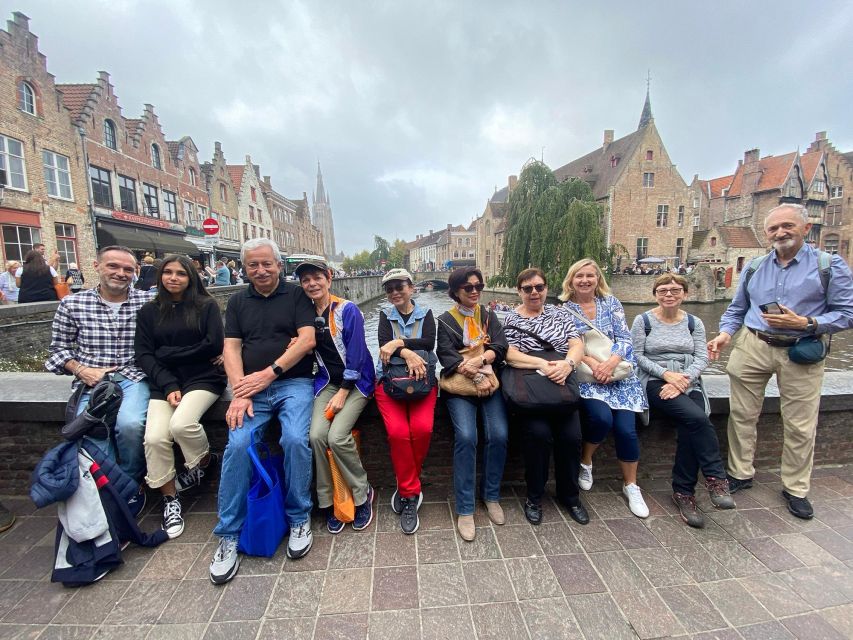
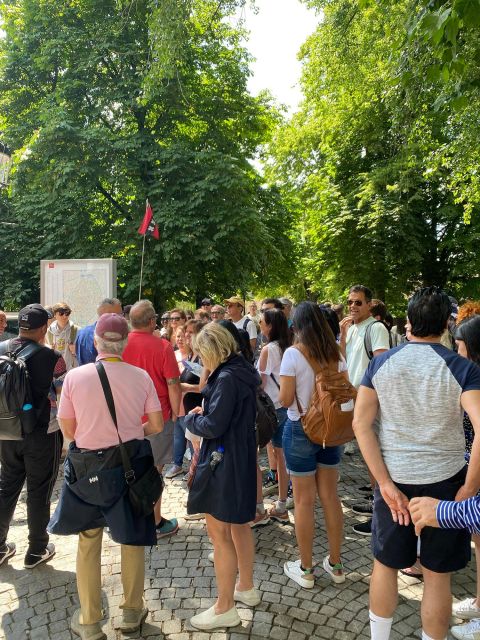
Meet near the Belfort Tower on Market Square, where your guide carries a yellow umbrella. That detail matters in Bruges, where a crowded square can make it hard to spot one person among tour groups, horse carriages, and people stopping for photos.
The walk begins in the historic center, a UNESCO World Heritage area known for its preserved medieval streets and squares. You do not need to arrange transport between sights. The route stays on foot and finishes back at the meeting point after passing through the main center.
The group size is currently limited to one to six people. That makes this a good choice if you want to ask about restaurants, chocolate shops, beer, or places to return later. It also means the guide can adjust the route somewhat for people with disabilities, although cobblestones still require extra effort and can be tiring.
Wear comfortable shoes. The distance may not look demanding on a map, but Bruges’ stones, frequent stops, and steady pace add up.
More Walking Tours in Bruges
- Bruges: Small Group Boat Cruise and Guided Walking Tour
★ 4.8 · 4,102 reviews - Bruges: Walking Tour, Canal Boat Trip w/Beer Tasting Option
★ 4.4 · 2,759 reviews - Historical Walking Tour: Legends of Bruges
★ 5.0 · 2,541 reviews
Market Square and the Belfry: Bruges in one glance
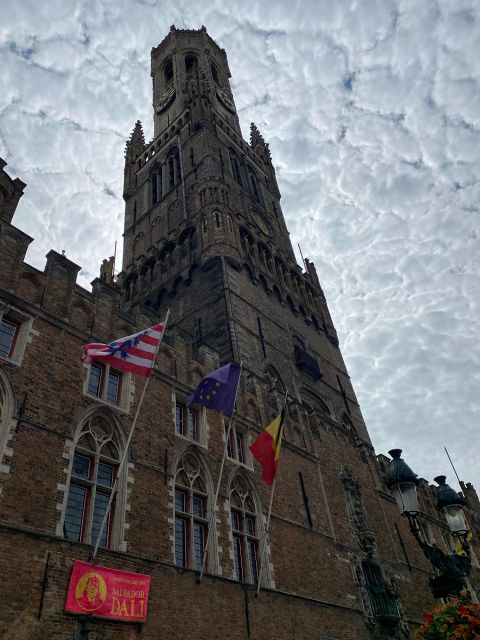
Market Square, or Markt, is the natural opening scene. You get a broad view of Bruges’ medieval center, with the Belfry rising above the buildings. The guide uses this first section to explain how the city grew around trade, canals, merchants, and civic power.
The Belfry stop lasts about 10 minutes and combines a photo pause with guided explanation. You do not climb the tower on this walk, so treat it as an introduction rather than a tower visit. The square is one of Bruges’ most photographed places, and the guide can help turn a quick picture stop into a better understanding of what you are seeing.
The route is especially useful on a first day in Bruges. You learn the basic shape of the center early, then recognize the same towers, waterways, and streets as you explore on your own.
Burg Square and the Basilica of the Holy Blood
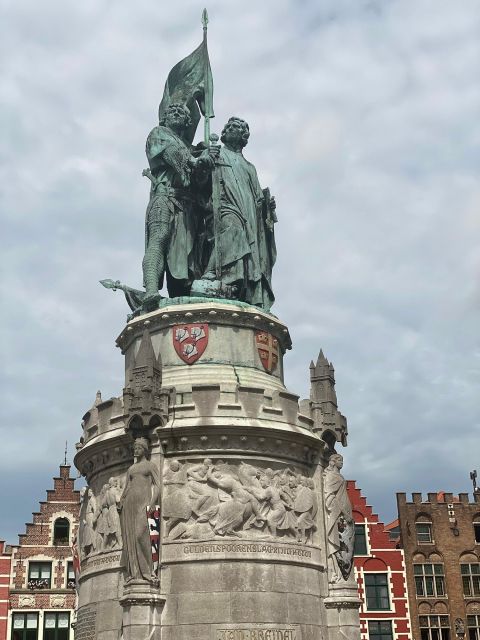
From Markt, the group walks to Burg Square, a more formal civic space filled with important buildings. The City Hall gets its own short photo stop, while Burg receives about 20 minutes of guided attention.
This is where the walk moves beyond pretty façades. You hear about the city’s political and religious past, then consider one of Bruges’ most famous questions at the Basilica of the Holy Blood: does the church preserve the actual Blood of Jesus Christ?
The basilica receives about 15 minutes. That is enough for an explanation and a look around, but not a long visit for detailed art study. If you want quiet time inside or a close look at every decorative feature, plan to return later.
The story works well because it connects belief, pilgrimage, relics, and Bruges’ place in medieval Europe. You do not have to accept the claim literally to appreciate why the relic has mattered for centuries.
Blinde-Ezelstraat, the Fish Market, and Huidenvettersplein
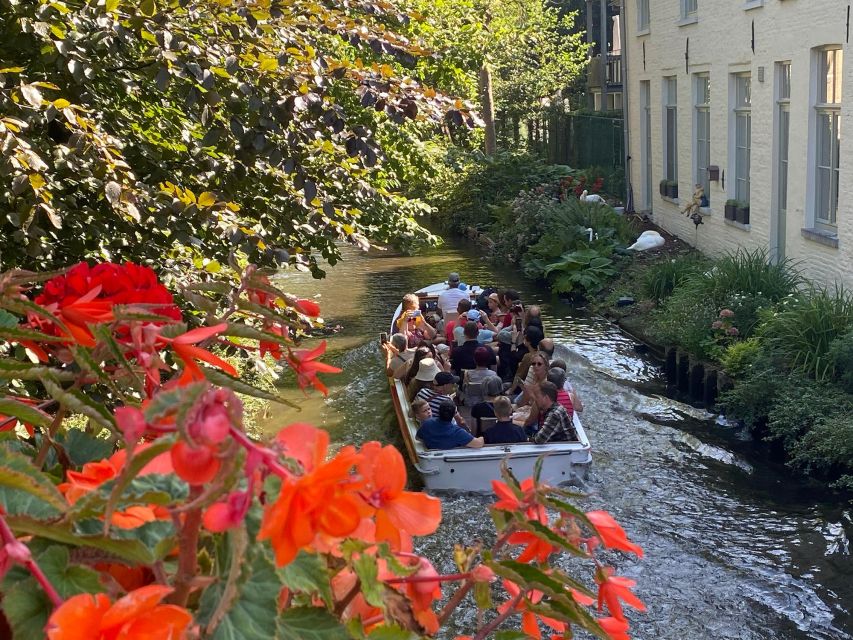
The short walk through Blinde-Ezelstraat leads toward the Fish Market, or Vismarkt. These smaller spaces change the mood after the large squares. You see narrower streets and working parts of the old center rather than only the grand landmarks.
At the Fish Market, the guide gives another short explanation and photo pause. Huidenvettersplein follows with about 10 minutes for sightseeing and stories. The route here is not about entering a major museum. It is about seeing how the old city fits together, with lanes, small squares, and canal-side views forming a connected scene.
This section also gives the guide room to discuss Bruges’ unusual stories. The walk raises questions about the Black Death and why Bruges had one of the lowest death rates during that period. The answer is part of the tour’s historical storytelling, so listen for the practical details rather than expecting a standard list of dates.
Same city, a completely different kind of day out:
- Bruges: Choco-Story Chocolate Museum Guided Tour w/Tastings
★ 4.2 · 1,379 reviews - From Bruges: Great War Flanders Fields Minibus Tour w/ Lunch
★ 4.9 · 1,257 reviews - Bruges: Guided Rickshaw Tour
★ 4.9 · 1,199 reviews - Round-Trip Shuttle Service from Zeebrugge to Bruges
★ 4.0 · 1,143 reviews
Rozenhoedkaai and the canals of the Venice of the North
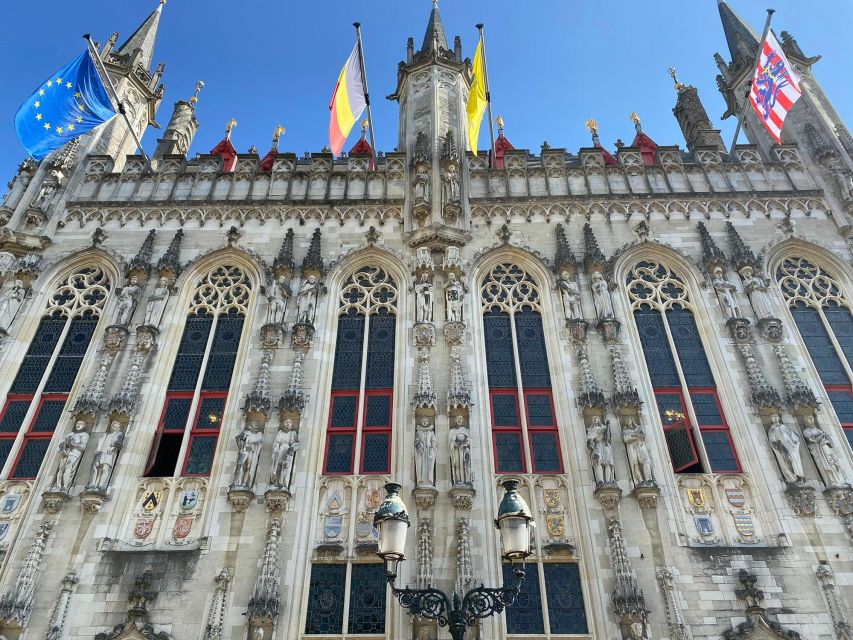
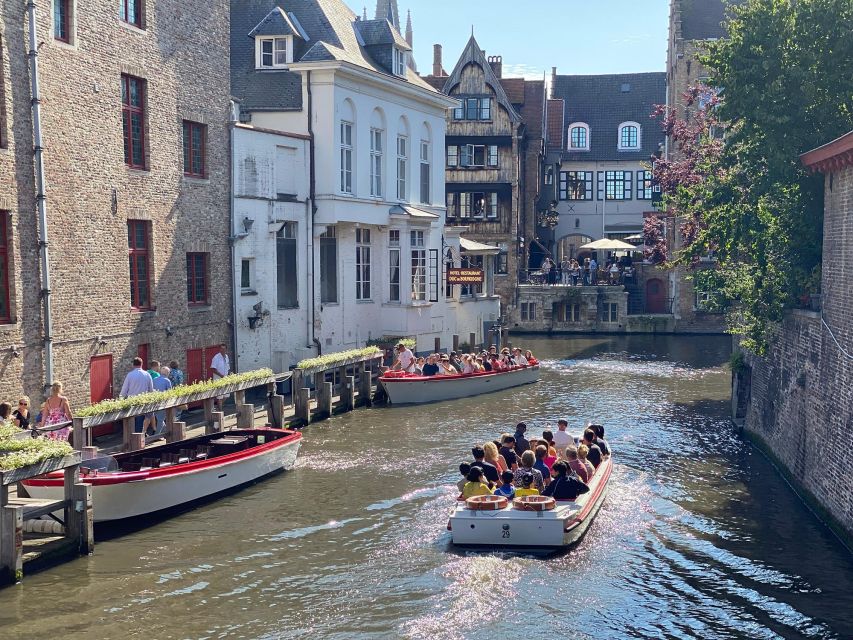
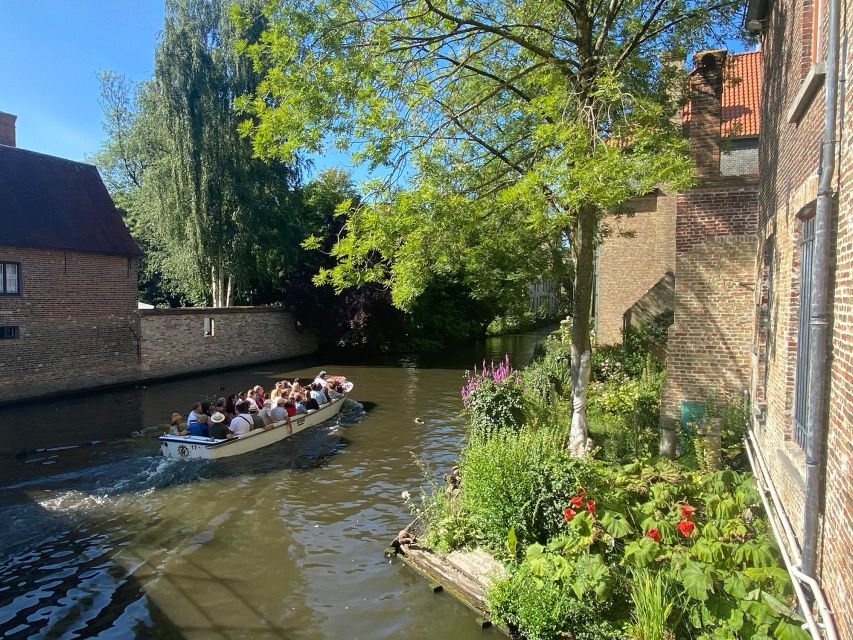
Rozenhoedkaai is one of the key photo stops. Water, historic façades, and a compact view of Bruges come together here, making it easy to understand why the city is called the Venice of the North.
The nickname is useful, but the guide gives it more substance by explaining the canals as working routes, not just scenery. You also hear why Bruges reportedly turned into a ghost town overnight. This story helps explain the city’s strange rhythm: great medieval prosperity, long decline, and later preservation as a historic center.
The group passes the 2be shop, The Beerwall, and 2be bar, then continues over or near the Nepomucenus Bridge and along De Dijver. These are short pass-by sections, so do not expect a beer tasting or a long stop at the bar. They work as links between the main squares and the quieter canal route.
Bonifacius Bridge and the city’s most romantic corner
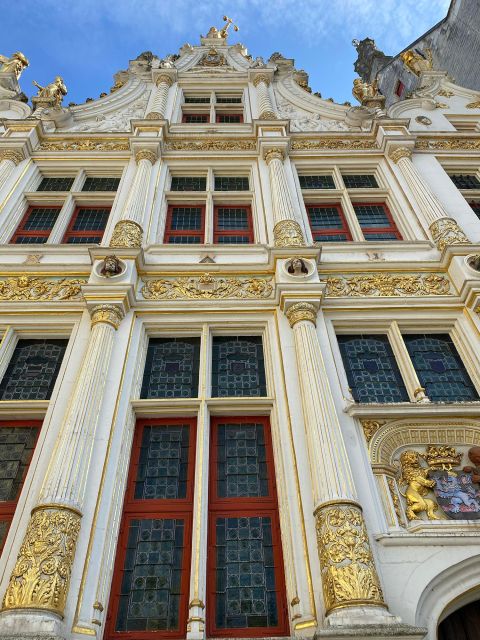
Bonifacius Bridge gets roughly 10 minutes for photos, sightseeing, and guided commentary. It is one of the places where Bruges can feel almost too perfectly arranged, with water, stone, trees, and old buildings in a tight view.
I like this stop because it gives you a different angle on the city after the larger squares. Market Square shows public power; the canals and bridges show Bruges at a more intimate scale.
Bring your camera, but do not spend the entire stop looking at a screen. The guide’s explanation helps you understand why this part of Bruges became such a favorite image. The route also gives you a chance to slow down briefly before the next cluster of cultural sights.
Gruuthuse, Our Lady, and Sint-Janshospitaal
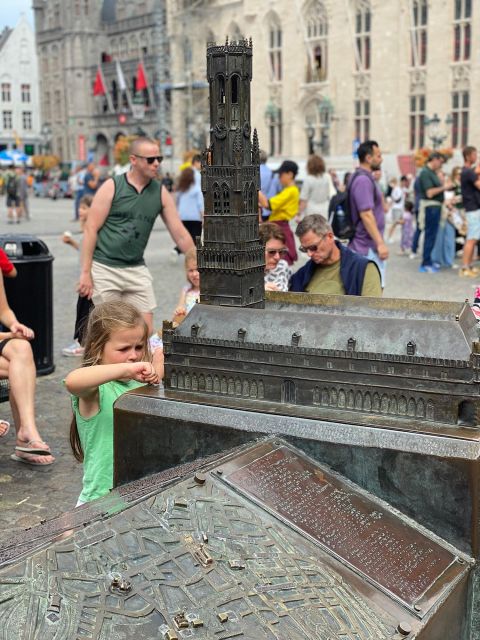
The Gruuthusemuseum receives about 10 minutes, listed as both a break and a guided stop. This is not a full museum visit. Instead, you get context for the building and its place in Bruges before continuing.
The Church of Our Lady follows with about 10 minutes of guided attention and a pass-by. Sint-Janshospitaal Museum is another short sightseeing stop. Together, these buildings show the close relationship between art, religion, medicine, wealth, and civic life in old Bruges.
If you are interested in painting, sculpture, or church interiors, mark these places for a separate visit. Two hours is enough to identify them and understand why they matter, but not enough to study their collections at length.
The route also gives you the chance to ask the guide where to spend your limited museum time. That local advice may be one of the most useful parts of the walk, especially if Bruges is only one stop on a short Belgium trip.
Stoofstraat and the story of 300 Madonnas
Stoofstraat offers a brief photo stop, guided explanation, and a little free time. This is where the tour’s close-looking habit becomes especially useful.
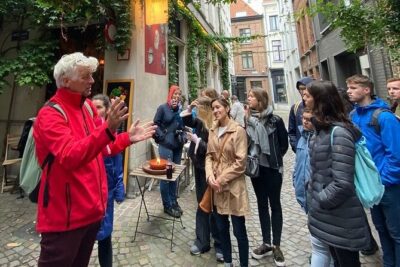
The guide points out that Bruges has around 300 Madonna figures on building façades and challenges you to spot them. You will not find all 300 during a two-hour walk, but the idea changes how you look at the streets. After the tour, you may notice small religious figures that would otherwise blend into the architecture.
This is a good example of the tour’s value. You are not only collecting landmark names. You are learning what to look for when you walk alone later.
The tour also raises the curious question of why there are no cats in Bruges. The answer is presented as part of the city’s local stories and unusual traditions. It adds a little humor to a route otherwise filled with churches, civic buildings, and medieval trade.
Halve Maan brewery and the final stop
The walk ends at Huisbrouwerij De Halve Maan, with about 15 minutes for a break, photos, and beer-related commentary. The brewery is a fitting finish because Belgian beer is part of Bruges’ present-day identity as much as its medieval buildings are part of its past.
The tour does not list a beer tasting as included. One account describes chocolate tasting as an added bonus, but you should treat that as a possible extra rather than a guaranteed part of every departure. Likewise, drinks at the brewery are not stated as included in the $3.41 price.
Ending at De Halve Maan gives you a practical choice. You can stay for a drink or meal, continue exploring, or use the location as a marker for the rest of your day. Since the activity ends back at the meeting point, you are not left at an unfamiliar edge of town.
How the guides shape the experience
The guide makes or breaks a story-based walking tour. Artur Savastieiev is the named experience provider, and Artur is specifically praised for humor, warmth, strong city knowledge, and recommendations for cafés and scenic places.
Pascal is also described as cheerful, inventive, and interactive. A useful detail is the use of headphones, which can help when the streets are crowded or the group is standing near traffic and other tour parties.
Peter is praised for personality and a large store of information. Across the different guide experiences, the strongest pattern is an entertaining delivery rather than a dry lecture.
That said, the pace can be brisk. One account describes the tour as high speed, while another would have preferred more walking and less standing. If you like frequent explanations, photos, and questions, that rhythm should suit you. If you want to cover ground quickly and stop only at major sights, it may feel slow in places.
Is $3.41 good value for two hours?
At $3.41 per person, this is an exceptionally inexpensive way to get oriented in central Bruges. You see more than 15 major sights, receive an English-speaking guide, and avoid the work of building your own route.
The value is strongest for first-time visitors who want context before exploring alone. A good guide can help you decide which churches, museums, canals, and food stops deserve more of your time.
The price does not mean every Bruges expense is covered. Museum entry, drinks, food, and any tasting are not listed as included. Think of the activity as a low-cost walking introduction, not a full sightseeing pass.
You can also cancel up to 24 hours before the start for a full refund, and reserve now while paying later. Check the available start times before booking, since the duration is fixed at two hours but departure times vary.
Who should book this Bruges walk?
I would choose this tour if you want a lively overview with unusual stories rather than a formal academic lecture. It suits couples, solo visitors, families with older children, and small groups who want the guide to answer questions directly.
It is especially useful if Bruges is your first stop in Belgium. The route introduces the city’s layout, major photo points, churches, canals, beer culture, and local legends in one compact session.
You may want another option if you need long museum visits, a very slow walking pace, or a detailed architectural study. The route is packed, and two hours leaves little room to linger.
The tour is wheelchair accessible, but the cobblestones can require extra effort. The guide can choose a more convenient route for people with disabilities and companions, though the surface and duration may still cause fatigue.
Should you book it?
Book this walk if you want maximum orientation for very little money and enjoy a guide who mixes facts with humor. Artur, Pascal, and Peter bring the personality that helps Bruges’ churches, bridges, and odd local stories stick in your memory.
Go in expecting a fast overview, not a series of long interior visits. Wear good shoes, arrive near the Belfry with the yellow umbrella in mind, and keep some time afterward for the places that catch your interest. For a first look at Bruges, this is a practical and entertaining starting point.
FAQ
How long does the Bruges walking tour last?
The tour lasts two hours.
What language is the tour conducted in?
The live tour guide speaks English.
Where does the tour start?
The meeting point is near the Belfort Tower on Market Square in Bruges. Look for the guide with a yellow umbrella.
Where does the tour finish?
The activity ends back at the meeting point, after the route reaches Huisbrouwerij De Halve Maan.
How many people can join?
Current bookings accept small groups of one to six people. Larger groups should consider a private tour option.
What sights are included?
The route includes Market Square, the Belfry, Burg Square, City Hall, the Basilica of the Holy Blood, the Fish Market, Huidenvettersplein, Rozenhoedkaai, Bonifacius Bridge, Gruuthusemuseum, Church of Our Lady, Sint-Janshospitaal Museum, Stoofstraat, and De Halve Maan brewery, among other stops.
Is the tour wheelchair accessible?
Yes. The guide can choose a more convenient route for people with disabilities and companions, but Bruges’ cobblestones may require extra effort and can cause tiredness.
Can I cancel the booking?
Yes. You can cancel up to 24 hours in advance for a full refund.
Is food or drink included?
Food and drink are not listed as included. The route ends at De Halve Maan brewery, and chocolate tasting has occurred as an extra on some tours, but it is not guaranteed as part of every booking.
Just added around Bruges
- 2-Hour Private Walking Tour of Bruges★ 5.0 · 13 reviews
- The Waffles ‘n Coffee Breakfast in Bruges Centre★ 4.5 · 9 reviews
- Ticket Expo Body Worlds in Bruges, Belgium★ 4.5 · 11 reviews
- Explore the Instaworthy Spots of Bruges with a Local★ 5.0 · 3 reviews
- Discover the secrets of Bruges by playing!★ 4.5 · 7 reviews
- Australian Battlefields Private Tour in Flanders from Bruges★ 5.0 · 15 reviews
- 6 Hour Bruges Shore Excursion from Zeebrugge Cruise Port★ 4.5 · 23 reviews
- Photo Tour “Jan van Eyck”★ 4.0 · 7 reviews
Walking Tours, compared.

Small Group Boat Cruise and Guided Walking Tour
Read our review →
Walking Tour, Canal Boat Trip w/Beer Tasting Option
Read our review →

Historical Walking Tour with Chocolate & Waffle Tasting
Read our review →
Brussels Walking and Tasting Tour (Beers,Chocolates&Fries/Waffle)
Read our review →
Browse the lists this tour appears in