
Reviewed · TICKETS
Bruges: Musea Sculpta | Monumental Sculptures Entry ticket
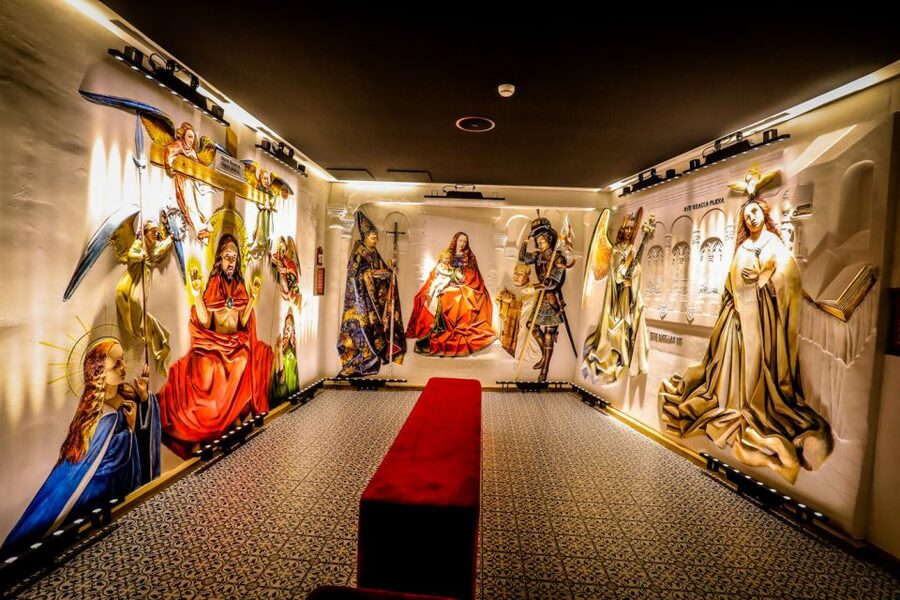
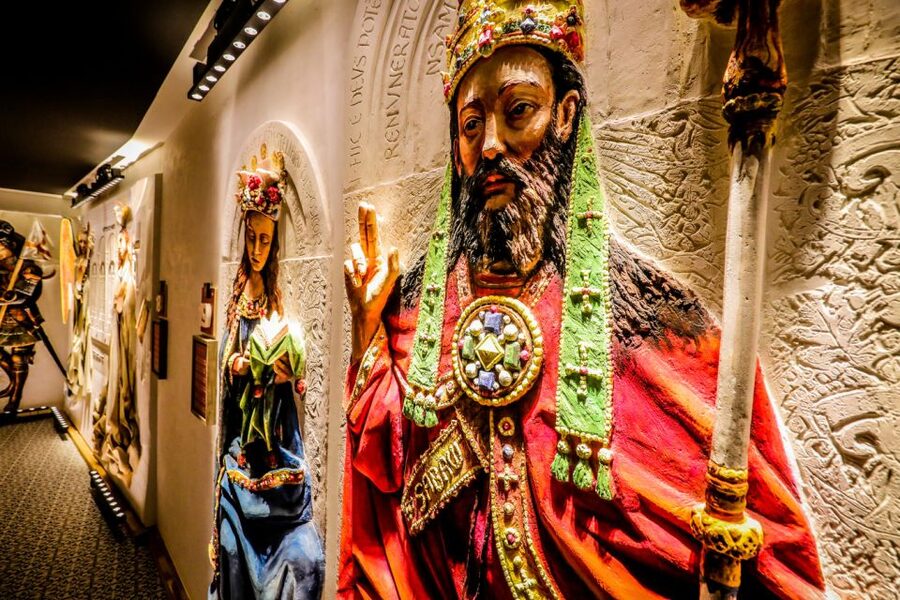
The most unusual thing about Musea Sculpta is its way of making famous Flemish paintings physical. Instead of studying tiny figures on a panel, you walk past 700 square metres of plaster sculpture, where small details from Bosch, Memling, and the van Eyck brothers are enlarged on the walls.
I like the excellent audio guide, which points out details such as the unicorn and explains the beliefs of the period. I also like the quiet courtyard garden, a welcome place to sit after the 265-metre gallery. The main caution is that the subject matter is strongly Christian, and there are fewer written display panels than some visitors expect.
Key Points
- Walk through three famous works in relief: See scenes from Bosch’s Garden of Earthly Delights, Memling’s Last Judgement, and the van Eyck brothers’ Adoration of the Mystic Lamb in three dimensions.
- Follow a 265-metre sculpture gallery: The route turns familiar paintings into large-scale wall scenes made from 22 tons of gypsum.
- Use the audio guide: Commentary is available in English, Dutch, French, Spanish, and German, with background on symbols and medieval beliefs.
- Look for small details: The guide draws attention to features that are easy to miss in the original works, including a unicorn.
- Rest in the courtyard: Sofas are provided in every room, and the garden offers a peaceful break with a fine view.
- Enter through De Pelikaan: Find the large white townhouse, brown gate, and pelican statue on the roof.
Why Musea Sculpta Feels Different
Musea Sculpta is not a conventional painting museum. You do not stand in front of original panels under careful lighting. Instead, you move through a long series of wall sculptures made in gypsum by artists from America, Belgium, Germany, Italy, Ukraine, Poland, Russia, and Spain.
The scale changes everything. Details that are normally tiny become large enough to inspect from several feet away. Figures, animals, gestures, and symbols project from the walls, giving familiar paintings a new physical presence.
That approach works especially well with the Flemish primitives, whose paintings reward close looking. Their works are packed with religious symbols and small scenes. A painted object may carry a meaning that is easy to miss when you are looking at an image in a guidebook or standing several metres from a museum panel.
You should come here expecting an interpretation of famous art, not a collection of original masterpieces. The appeal lies in seeing details made clear through sculpture and hearing them explained in context.
A few more Bruges half days worth weighing up
- Bruges: Small Group Boat Cruise and Guided Walking Tour
★ 4.8 · 4,102 reviews - Bruges: Walking Tour, Canal Boat Trip w/Beer Tasting Option
★ 4.4 · 2,759 reviews - Historical Walking Tour: Legends of Bruges
★ 5.0 · 2,541 reviews
Entering De Pelikaan in Central Bruges
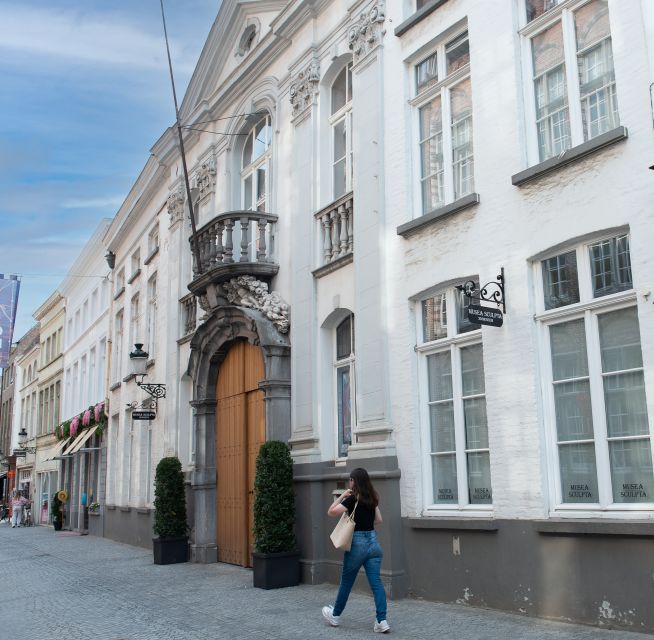
Musea Sculpta occupies the historic townhouse called De Pelikaan. The entrance is easy to identify: look for a large white building, a brown gate, and a statue of a pelican on the roof.
You enter through an impressive gatehouse dating from 1703. That entrance sets the tone nicely. The building itself gives the visit a sense of place before you reach the sculptures, and the courtyard later provides a calm contrast to the enclosed gallery.
A Dutch or English host or greeter is available. The venue is wheelchair accessible, which is useful in a historic building where access can sometimes be uncertain. Arrive before 5pm, since that is the stated arrival cutoff.
The ticket is valid for one day, so you are not tied to a short timed visit. That matters in Bruges, where you may be fitting the museum between canals, churches, meals, and crowded central streets. Check the available starting times when you book, but plan enough room to move at your own pace rather than rushing through the audio stops.
The 265-Metre Gallery of Sculptures
The main visit takes place along a 265-metre-long gallery. The route is made up of monumental gypsum sculptures, with the works spread across roughly 700 square metres of exhibition space.
The project used 22 tons of gypsum. That number gives you a sense of the physical scale, but it is the enlarged details that matter most. A small figure from a famous painting can become a full wall scene. A symbol that once required a magnifying glass or a detailed art book becomes something you can inspect directly.
The sculptures were made by international artists, and the varied hands behind the work are part of the attraction. You are not simply looking at flat reproductions. The artists have translated painted scenes into relief, using depth and shadow to make the compositions readable from the gallery floor.
I would take your time in each room. Look first without the audio guide, then listen to the explanation and return your eyes to the sculpture. That simple rhythm helps you notice how much information has been packed into each scene.
Sofas are available in every room. Use them. The seating makes it possible to pause without blocking the route, and it is especially useful if you want to listen to the full commentary rather than skim from one sculpture to the next.
Bosch, Memling, and the Van Eyck Brothers in Relief
Three major works form the heart of the visit.
Same city, a completely different kind of day out:
- Bruges: Choco-Story Chocolate Museum Guided Tour w/Tastings
★ 4.2 · 1,379 reviews - From Bruges: Great War Flanders Fields Minibus Tour w/ Lunch
★ 4.9 · 1,257 reviews - Bruges: Guided Rickshaw Tour
★ 4.9 · 1,199 reviews - Round-Trip Shuttle Service from Zeebrugge to Bruges
★ 4.0 · 1,143 reviews
Bosch’s Garden of Earthly Delights
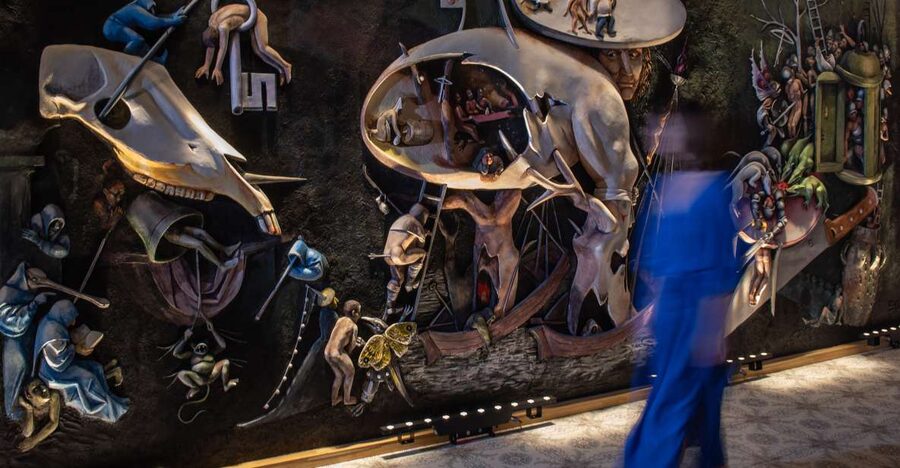
Jheronimus Bosch’s Garden of Earthly Delights is famous for its strange creatures, crowded scenes, and unsettling mix of pleasure, sin, and punishment. In a normal reproduction, the sheer number of details can turn the painting into a visual blur.
The sculpted version gives those details more room to register. The audio guide helps you understand what you are looking at and why certain figures and objects mattered to people of the period.
This is also where the playful side of Musea Sculpta comes through. You may find yourself searching the relief for unusual figures and animals, including the unicorn mentioned in the audio commentary. It turns the visit into a visual hunt without reducing the work to a simple game.
Bosch’s imagery will appeal to you if you enjoy art that is odd, packed with symbols, and open to questions. If you prefer clear explanations and simple scenes, the work may feel busy, but the audio guide gives you a useful path through it.
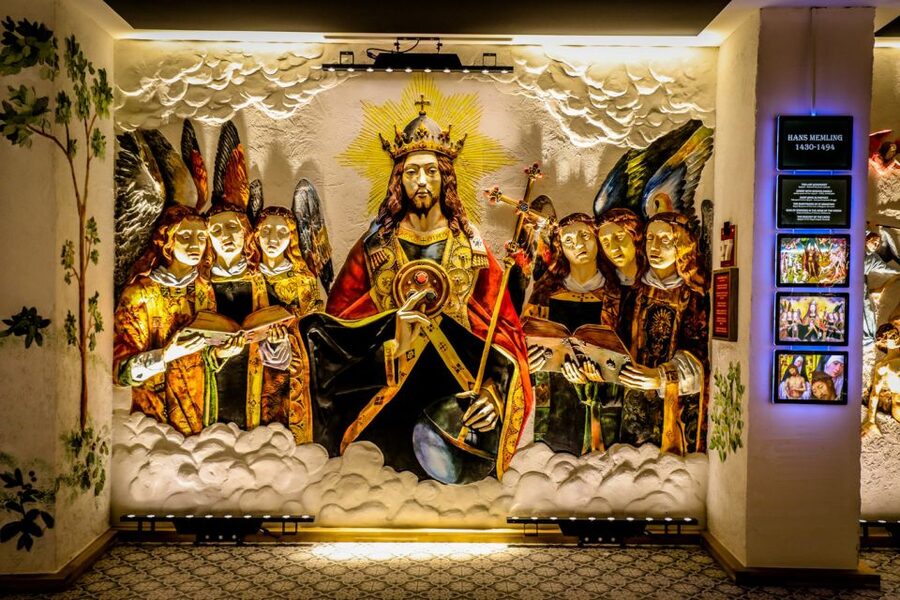
Memling’s Last Judgement
Hans Memling’s Last Judgement brings the Christian subject matter into sharper focus. The work presents religious ideas about sin, salvation, punishment, and the afterlife, so this section is not light entertainment.
The relief format helps you separate figures and gestures that can blend together in a painted reproduction. You can study how the scene is organized and how the sculpted forms guide your attention across the wall.
This is also the section that may determine whether Musea Sculpta suits you. One visitor found the experience more focused on Jesus and Christian themes than expected. That is a fair warning. The museum is built around Flemish religious art, so you should not book it expecting a broad survey of secular Belgian painting.
At the same time, you do not need a specialist background in Christianity or medieval art. The audio guide provides background on the beliefs of the period, giving you enough information to understand why the scenes were made and what the symbols were meant to communicate.
The Adoration of the Mystic Lamb
The third major work is the Adoration of the Mystic Lamb by the van Eyck brothers. The original Ghent Altarpiece is one of the best-known works connected with early Netherlandish painting, and seeing parts of it translated into relief gives you another way to read its figures and details.
The sculpture does not replace seeing the original artwork, but it can sharpen your awareness of individual elements. The physical depth makes the scene easier to scan, while the audio commentary helps tie the visual details to the religious ideas behind the work.
If you have already seen the van Eyck masterpiece in a book or museum image, Musea Sculpta offers a fresh comparison. If you have not, the visit still works as an introduction, though you should treat it as an artistic interpretation rather than the original object.
Why the Audio Guide Matters
The audio guide is included with admission and is available in English, Dutch, French, Spanish, and German. It is not an optional extra you need to budget for.
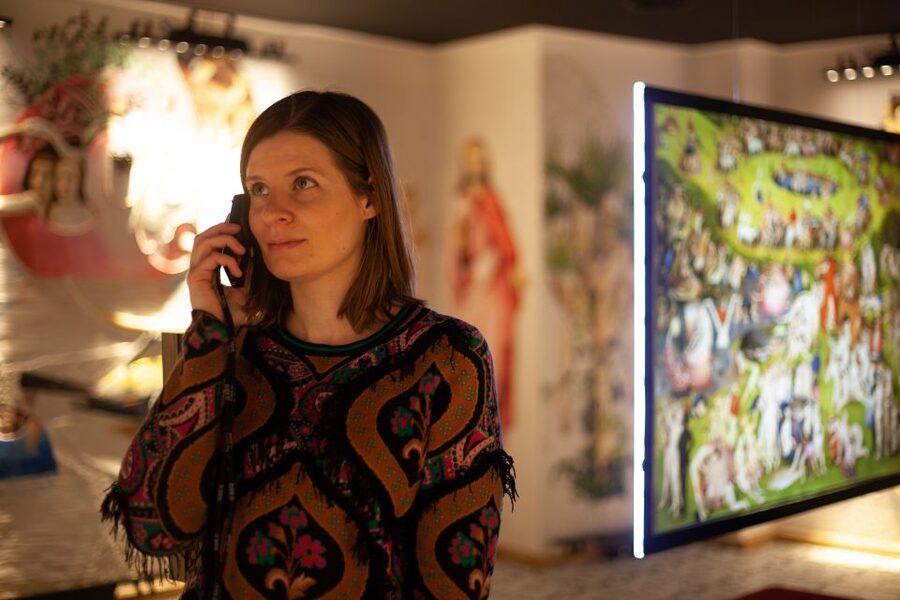
I consider it central to the experience. The sculptures are striking on their own, but without explanation you could miss why a small character, animal, or object matters. The commentary points out details and provides background on the beliefs of the time.
The guide also lets you set your own pace. You can listen carefully to each section, skip ahead, or pause when a sculpture catches your attention. That freedom suits the format better than a tightly managed group tour.
The English option is particularly helpful for visitors who want more than labels. The available written information is not the main strength of the museum, so the audio guide carries much of the interpretation. If you prefer reading extensive panels at your own speed, you may find the presentation a little thin.
A Quiet Pause in the Courtyard Garden
The courtyard garden gives Musea Sculpta a useful breathing space. After the long indoor gallery, you can sit down, have a drink, and let the images settle.
The garden is described as having one of the nicest views, though the exact view is not specified. What matters practically is that it offers a peaceful break within the visit rather than requiring you to leave the museum and find another place to rest.
This is a good stop for a slower Bruges day. You can make the museum visit part of a relaxed wander instead of treating it as a quick indoor attraction. The sofas in each room also help, but the garden provides the clearest change of pace.
Pets are not allowed, so plan accordingly. Wi-Fi is included, although the sculptures and audio guide are the reasons to come, not the internet connection.
Is the $11 Ticket Good Value?
At about $11 per person, Musea Sculpta is priced below many major art attractions. The value depends on what you want from a museum.
You get entry to a unique presentation, the audio guide, access to the courtyard garden, seating throughout the rooms, and Wi-Fi. There is no extra charge listed for the multilingual audio commentary. For a visitor interested in Bosch, Memling, or the van Eyck brothers, that is a reasonable price for a focused cultural stop.
The museum will not replace Bruges’ major original artworks. It also may not satisfy you if you want wall after wall of written analysis or a large collection of paintings. Think of the ticket as payment for a new viewing method, one that turns flat compositions into monumental plaster scenes.
The visit offers better value if you use the audio guide and take time with the details. A quick walk through the rooms would miss much of the point.
Who Will Enjoy This Visit Most?
I would recommend Musea Sculpta to several kinds of visitors:
- You enjoy unusual museums that do not follow the usual painting-and-label format.
- You want to understand details in Bosch, Memling, or the van Eyck brothers.
- You like audio guides and prefer to set your own pace.
- You need a wheelchair-accessible attraction.
- You want a quiet place to sit during a day in central Bruges.
- You are curious about medieval Christian art and symbolism.
I would be more cautious if you are looking for secular art, original paintings, or extensive written panels. The Christian themes are not a minor part of the visit. They define much of the material, and the audio guide is more important than the signage.
Families may enjoy the larger-than-life figures and the search for unusual details such as the unicorn. Still, the religious subject matter and long gallery may not suit every child. The venue does not allow pets.
Practical Details Before You Go
Musea Sculpta is in Flanders, in the centre of Bruges at De Pelikaan. Look for the white building, brown gate, and pelican statue.
The experience is listed as lasting one day because the ticket is valid for one day, not because you need to spend an entire day inside. The gallery is 265 metres long, and the audio guide gives you reason to linger, but the exact time needed depends on how closely you listen and how long you use the garden.
Admission costs about $11 per person. You can cancel up to 24 hours in advance for a full refund, and the reserve-now, pay-later option keeps your plans flexible.
Wheelchair access is available. Audio commentary is offered in English, Dutch, French, Spanish, and German. Host or greeter support is available in Dutch and English. Plan to arrive before 5pm.
Should You Book Musea Sculpta?
Book it if you want an unusual, fairly priced art stop that makes famous Flemish paintings easier to inspect. The large plaster reliefs, strong audio guide, and peaceful courtyard work well together, especially for a visitor who likes symbols, strange details, and art with a story to tell.
Skip it if you want original masterpieces, long written explanations, or a break from religious subjects. Musea Sculpta is focused and distinctive, not broad. For many visitors, that focus is exactly why the $11 ticket works.
FAQ
Where is Musea Sculpta located?
Musea Sculpta is located in the historic townhouse De Pelikaan in Bruges, Flanders, Belgium. Look for a large white building with a brown gate and a pelican statue on the roof.
What artworks are shown at Musea Sculpta?
The sculptures interpret details from Jheronimus Bosch’s Garden of Earthly Delights, Hans Memling’s Last Judgement, and the van Eyck brothers’ Adoration of the Mystic Lamb.
Are the original paintings displayed?
The experience presents wall sculptures in gypsum based on details from the famous paintings. The supplied information does not state that the original paintings are displayed.
How large is the sculpture gallery?
The gallery is 265 metres long, with about 700 square metres of monumental gypsum sculptures.
What are the sculptures made from?
The monumental sculptures are made from gypsum. The artists used 22 tons of gypsum for the project.
Is an audio guide included?
Yes. An audio guide is included with admission.
Which audio guide languages are available?
The audio guide is available in English, Dutch, French, Spanish, and German.
Is Musea Sculpta wheelchair accessible?
Yes. Musea Sculpta is wheelchair accessible.
Are pets allowed inside?
No. Pets are not allowed.
What is the cancellation policy?
You can cancel up to 24 hours in advance for a full refund. A reserve-now, pay-later option is also available.
Just added around Bruges
- 2-Hour Private Walking Tour of Bruges★ 5.0 · 13 reviews
- The Waffles ‘n Coffee Breakfast in Bruges Centre★ 4.5 · 9 reviews
- Ticket Expo Body Worlds in Bruges, Belgium★ 4.5 · 11 reviews
- Discover the secrets of Bruges by playing!★ 4.5 · 7 reviews
- Explore the Instaworthy Spots of Bruges with a Local★ 5.0 · 3 reviews
- Australian Battlefields Private Tour in Flanders from Bruges★ 5.0 · 15 reviews
- 6 Hour Bruges Shore Excursion from Zeebrugge Cruise Port★ 4.5 · 23 reviews
- Photo Tour “Jan van Eyck”★ 4.0 · 7 reviews
Tickets, compared.

Atomium Entry Ticket with Design Museum Ticket
Read our review →
Browse the lists this tour appears in