
Reviewed · MUSEUMS
Bruges: Ticket Museum Sint-Janshospitaal
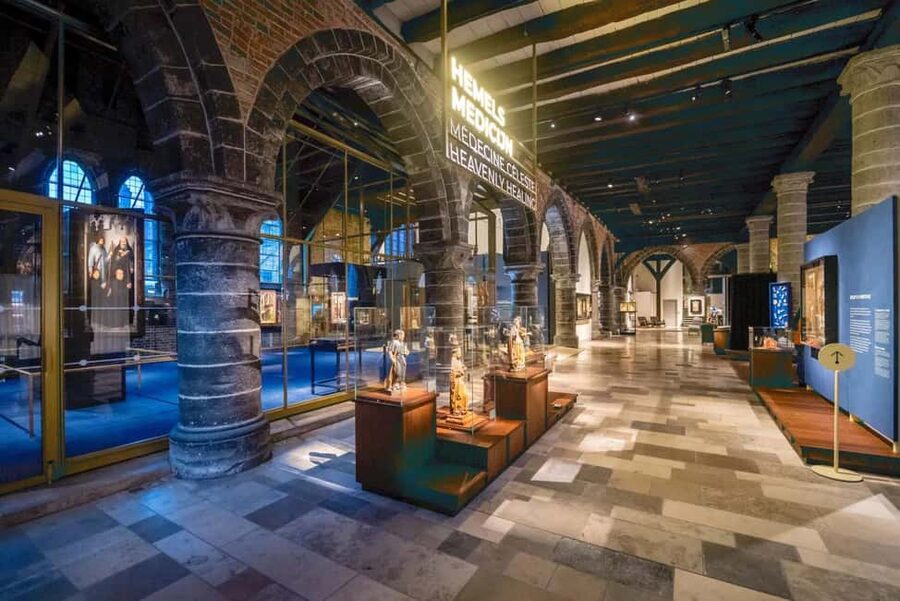
The most unusual part of this Bruges museum visit is the setting itself: you walk through a 12th-century hospital where care was given for centuries, then move from Hans Memling’s quiet religious art to bold contemporary work about the human body and compassion. I like the way the building and its collection tell the same story from different angles.
I also like the preserved 17th-century apothecary, complete with an herb garden, and the freedom to explore for a full day instead of being tied to a guided schedule. The main caution is that some contemporary pieces may feel unsettling, especially an artwork showing a human and animal form that one recent visitor found unpleasant.
Key points to know
- A medieval hospital is the main attraction: The building gives the collection a setting that is as important as the art.
- Hans Memling’s works belong here: Several major pieces were made specially for St John’s Hospital and have remained connected to it since the 15th century.
- Contemporary art changes the mood: Works by Berlinde De Bruyckere and Patricia Piccinini bring modern questions about care, pain, and empathy.
- The old pharmacy is unusually complete: Its authentic 17th-century interior and herb garden offer a clear look at past medicinal practice.
- You get a full day of access: The ticket is valid for one day, with skip-the-line entry and wheelchair access.
- Families should note the age rule: Children under 13 can get a free ticket at the box office, and children need a passport or ID card.
Entering Bruges’ 12th-century hospital
St John’s Hospital is not a museum built to imitate the past. The institution began as a place where sick people, poor people, pilgrims, and those needing a bed could receive care or shelter. Its long life as a working hospital is what gives the visit its weight.
As you walk through the old rooms, the building helps you picture care as a daily task rather than an abstract idea. Hospitality was part of the institution’s purpose, and the museum keeps that theme in view through objects, artworks, and stories about empathy.
I find this more rewarding than a standard art gallery because the setting explains why the art is here. You are not just looking at religious paintings in a neutral room. You are seeing works that once served people who were ill, frightened, or nearing the end of life.
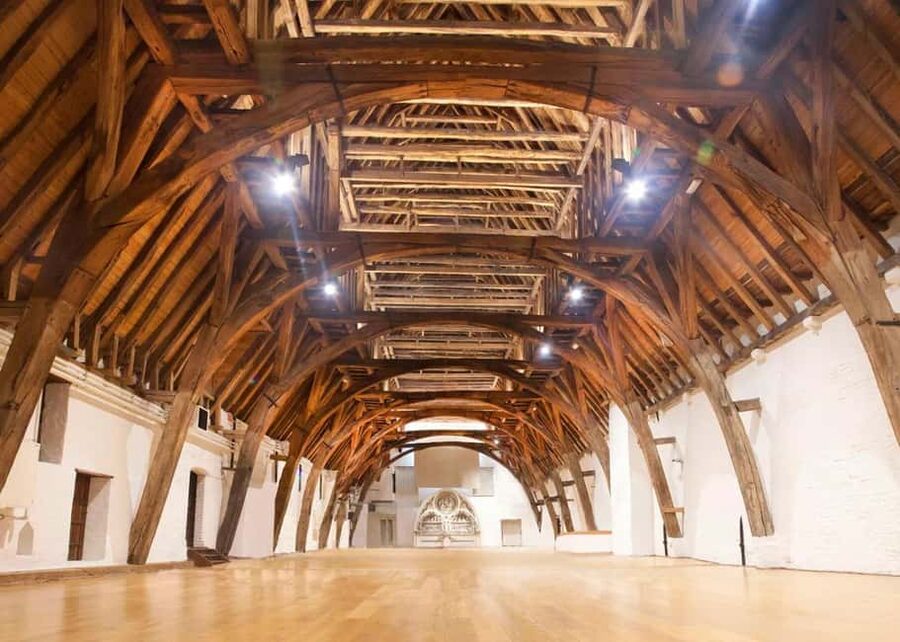
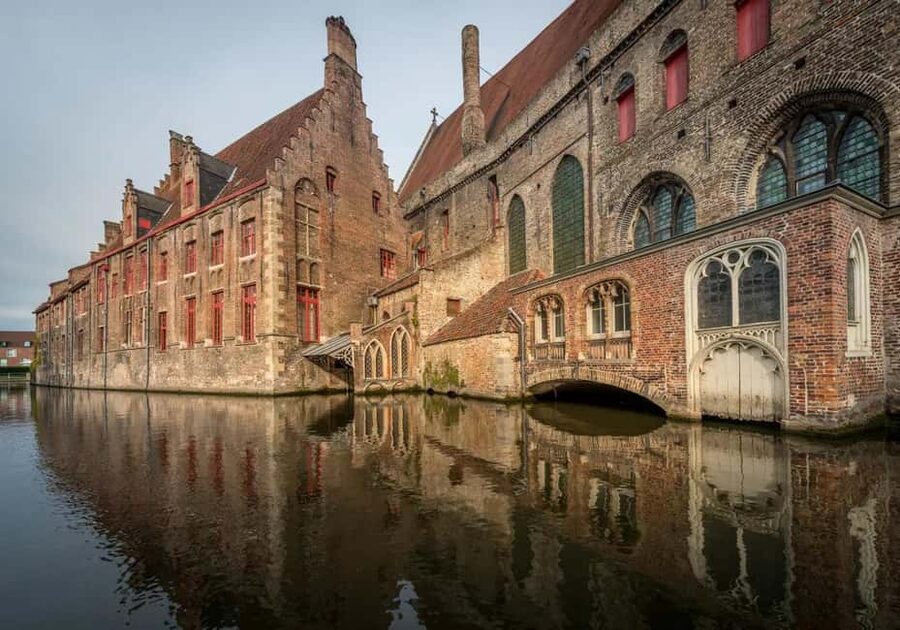
The architecture is also a good reason to visit even if medieval painting is not your usual interest. The old walls, hospital spaces, and surviving structure give you something solid to look at between the displays. The building may be the best introduction to Bruges’ past because it connects grand art with ordinary human need.
More Museums in Bruges
- Bruges: Choco-Story Chocolate Museum Guided Tour w/Tastings
★ 4.2 · 1,379 reviews - Choco-Story: The Chocolate Museum in Bruges
★ 4.0 · 544 reviews - Bruges: Chocolate Making Workshop and Chocolate Museum Entry
★ 4.6 · 395 reviews
Hans Memling’s masterpieces in their original home
The artistic center of the visit is the collection of works by Hans Memling, one of the best-known Flemish Primitives. Memling created several major works especially for St John’s Hospital, and they have been associated with the institution since the 15th century.
That connection matters. These paintings were not simply purchased by a modern museum and placed in an old building. They were made for this hospital and used within its setting. Their original purpose becomes easier to understand when you remember the people who saw them while receiving treatment or serving the sick.
Memling’s work is known for careful detail, controlled faces, and finely observed religious scenes. Give yourself time to look closely rather than rushing from one painting to the next. Notice the small details, the expressions, and the way the figures are arranged. The quiet mood suits the hospital’s former role.
You do not need to be an art specialist to appreciate this room. The key is to let the setting do some of the explaining. A painting can feel distant in a large national gallery, but here the connection between art, worship, and medical care is easier to grasp.
If Memling is your main reason for buying the ticket, allow enough time for the old art before turning to the contemporary galleries. The museum’s modern work is important, but the Memling collection is the part that gives St John’s Hospital its international appeal.
Modern art asks harder questions
The museum places historic art beside contemporary work by Berlinde De Bruyckere and Patricia Piccinini. This is not a random change of subject. The newer pieces continue the museum’s concern with the body, vulnerability, care, and the line between human and animal.
The shift can be striking. You move from carefully composed Flemish religious images to art that may look raw, strange, or physically uncomfortable. That contrast is deliberate. The older works show how people once understood suffering and salvation, while the newer works ask how we respond to fragile bodies today.
I would not choose this museum expecting every room to be gentle or pretty. One recent response was strongly negative toward a human-animal figure, and that is useful to keep in mind. Some visitors will find such work moving or thought-provoking. Others may find it disturbing.
That emotional range is part of the museum’s character, but it also means the visit is not ideal for everyone. If you are visiting with young children, stay aware of the contemporary displays and be ready to move on if a piece is too intense. The available information does not give a detailed age guide for individual artworks.
You may also find opportunities to make your own artworks during the visit. That adds a welcome change of pace after the more serious displays. The details of the activity can vary, so treat it as a possible bonus rather than the main reason to book.
The old pharmacy and its herb garden
The final stop that deserves real attention is the hospital pharmacy. It has an authentic 17th-century interior, not just a few old bottles arranged in a modern case, and it opens onto a herb garden.
This is where the history of medicine becomes practical. Before modern drugs and laboratories, treatment depended heavily on plants, mixtures, storage, and the experience of the person preparing remedies. The pharmacy gives you a way to think about how care worked in earlier centuries.
I like this part because it is easy to understand. You can look at the space and imagine the daily work involved in preparing medicines for people in the hospital. The herb garden adds another layer, showing the link between the plants used for remedies and the finished preparations kept indoors.
Do not rush through the pharmacy simply because it comes near the end. It is smaller in scale than the main art collection, but it may be the clearest part of the visit for anyone interested in medicine, science, gardens, or everyday life.
More museums and galleries in Bruges:
- Bruges: Musea Brugge Card with Entry to 11 Museums
★ 4.6 · 328 reviews - Bruges: The Beer Experience Museum Entry with Audio Guide
★ 4.4 · 201 reviews - Salvador Dalí Exhibition in Bruges Admission Ticket
★ 3.5 · 118 reviews - Brussels: Atomium Entry Ticket with Design Museum Ticket
★ 4.4 · 9,254 reviews
How much time should you allow?
The ticket is valid for one day, so you are not forced into a quick visit. That is useful in Bruges, where you may want to see the museum between other sights, lunch, or a walk through the historic center.
A full day does not mean you need to spend all day inside. It means you can take your time and return within the ticket’s valid period if the admission arrangement allows it. Check the available starting times when booking, since the ticket information says availability determines the entry time.
For a focused visit, plan around the Memling collection, the contemporary rooms, and the pharmacy. If you read every panel and stop to consider the artwork, you will need more time than someone making a quick circuit.
The lack of a stated guided tour is worth noting. You appear to be buying admission rather than a scheduled tour with a named guide. That gives you freedom, but you will need to set your own pace and decide how much context you want to take in.
Is the $17 ticket good value?
At $17 per person, the ticket is fairly priced if you want several experiences in one stop: medieval architecture, major Flemish painting, modern sculpture and installation work, hospital history, and an old pharmacy.
The value is strongest for visitors who would otherwise buy separate admissions to several types of attractions. You are not paying only to see Memling. You are also paying to enter a preserved historic institution and to see how its original purpose shapes the art.
The ticket is less compelling if your only goal is a short look at one or two paintings. In that case, the contemporary galleries and pharmacy may feel like extras rather than reasons to stay. The full-day validity helps solve that problem because you can fit the museum around the rest of your Bruges plans.
Skip-the-line entry adds practical value, especially during busy sightseeing periods. The information does not promise a completely private visit or a quiet building, so do not expect solitude. It does remove one common nuisance: waiting at the regular ticket line.
The museum is also wheelchair accessible, which makes the ticket more useful for visitors who need step-free access. Since details about every room and route are not provided, you should still confirm any specific access needs before arrival.
Practical details for families and light packers
Children under 13 can obtain a free ticket at the box office. You will need a passport or ID card for children, so bring the required identification rather than assuming a booking confirmation is enough.
Large bags and luggage are not allowed. That rule matters if you are arriving before hotel check-in or leaving Bruges with suitcases. Plan to store larger items elsewhere before heading to the museum.
Pets are not permitted, though assistance dogs are allowed. Flash photography is also prohibited. Bring a camera if you like, but use it without flash and follow any additional signs inside.
The ticket includes admission only. There is no stated guide, transport, food, drink, or special workshop included in the price. If you are comparing it with a guided Bruges tour, remember that this is a self-directed museum visit.
You can cancel up to 24 hours in advance for a full refund, and the reserve-now, pay-later option lets you hold a place without paying immediately. Those terms are useful if your Bruges plans may change, but check the booking conditions before you confirm.
Who will enjoy St John’s Hospital most?
I would recommend this museum to anyone who likes art with a strong sense of place. Memling fans will find the original hospital connection especially meaningful, while visitors who know little about Flemish painting can still enjoy the works through their setting.
It also suits people who want a break from Bruges’ streets without leaving the city’s past behind. The building, pharmacy, and collection all belong to the same story, so the visit feels connected rather than pieced together.
Families may appreciate the free ticket option for children under 13 and any opportunity for children to create their own art. Still, keep the contemporary rooms in mind. Some imagery may not suit every child.
This is not the best choice if you dislike modern art involving altered, vulnerable, or human-animal bodies. You can focus on the building, Memling, and pharmacy, but the contemporary work is an important part of the museum rather than a minor side display.
Should you book this museum ticket?
Book it if you want a museum that links medieval care, Flemish art, modern empathy, and old medicine in one place. The $17 price is sensible for a full-day ticket with skip-the-line entry, and the pharmacy gives the visit a strong finish.
Think twice if you want only a quick, cheerful art stop or if disturbing contemporary sculpture is likely to spoil your day. For most culture-focused visits to Bruges, though, St John’s Hospital offers more than a famous painting. It gives you a building, a collection, and a human story that belong together.
FAQ
How long is the St John’s Hospital Museum ticket valid?
The ticket is valid for one day. Check availability when booking because the available entry times determine when you can begin your visit.
How much does admission cost?
The listed price is $17 per person.
Are children under 13 admitted for free?
Yes. Children under 13 can obtain a free ticket at the box office. Bring a passport or ID card for children.
Is the museum wheelchair accessible?
Yes, the activity information states that the museum is wheelchair accessible.
Can I bring luggage or a pet?
Large bags and luggage are not allowed. Pets are not permitted, but assistance dogs are allowed.
Can I take photographs inside?
Photography rules prohibit flash photography. Use a camera without flash and follow any additional museum instructions.
Just added around Bruges
- 2-Hour Private Walking Tour of Bruges★ 5.0 · 13 reviews
- The Waffles ‘n Coffee Breakfast in Bruges Centre★ 4.5 · 9 reviews
- Ticket Expo Body Worlds in Bruges, Belgium★ 4.5 · 11 reviews
- Explore the Instaworthy Spots of Bruges with a Local★ 5.0 · 3 reviews
- Discover the secrets of Bruges by playing!★ 4.5 · 7 reviews
- Australian Battlefields Private Tour in Flanders from Bruges★ 5.0 · 15 reviews
- 6 Hour Bruges Shore Excursion from Zeebrugge Cruise Port★ 4.5 · 23 reviews
- Photo Tour “Jan van Eyck”★ 4.0 · 7 reviews
Museums, compared.

Atomium Entry Ticket with Design Museum Ticket
Read our review →
Choco-Story Brussels: Chocolate Museum Entrance with Tasting
Read our review →
Choco-Story Chocolate Museum Guided Tour w/Tastings
Read our review →
2.5-Hour Chocolate Museum Visit with Workshop
Read our review →
The World of Banksy Museum Permanent Exhibition
Read our review →

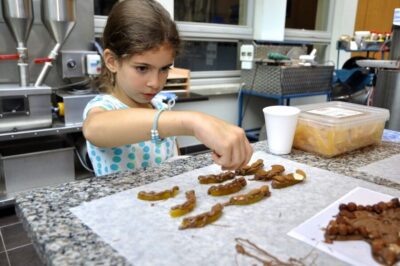
Chocolate Making Workshop and Chocolate Museum Entry
Read our review →Browse the lists this tour appears in