
Reviewed · DARK SIDE & LEGENDS TOURS
Brussels: 2-Hour Dark Side of Brussels Private Tour
Brussels looks polished by day, but this private evening walk takes you behind the gilded facades to stories of revolts, executions, torture, and forgotten heroes. I like the way it uses famous places such as Grand Place and Sablon as doorways into less familiar corners, rather than treating the city as a string of postcard views.
I also like the private format. You can set the pace, ask questions, and take breaks, which helped one group with a bad knee manage the hills comfortably. The main consideration is time: with 11 stops in two hours, this is a brisk storytelling walk, and some uphill streets require comfortable shoes.
Key points to know before you book
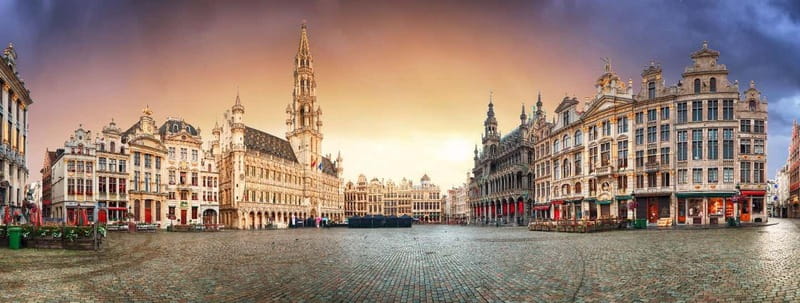
- Grand Place gets a darker introduction: Learn the grim stories behind Brussels’ most polished square.
- Anneessens Tower adds a rare stop: See a lesser-known remnant of the city’s medieval defenses.
- The route climbs through historic Brussels: Expect hills around Sablon and the Palace of Justice.
- Private guiding changes the pace: You can slow down, ask questions, or pause when needed.
- The guide makes or breaks the evening: Dan, Rahain, and Sebastián are praised for clear stories, humor, and personal attention.
- You pay for the group, not each person: At $199 for up to two people, the value is strongest for couples or friends who want a private walk.
Why Brussels’ dark past makes a good evening walk
The usual Brussels visit leans toward chocolate, Art Nouveau, beer, and the ornate Grand Place. Those are worthwhile, but they can leave the city feeling too neat. This tour takes a different route through the capital, asking what happened behind those handsome buildings and public squares.
You hear about revolts, executions, torture methods, political struggle, and people whose names are not printed on every souvenir. The subject matter is grim, but the guide does not need to make the evening gloomy from start to finish. Dan is praised for adding context and detail without losing his friendly manner. Rahain is noted for strong banter, while Sebastián used humor to balance the more serious material.
That tone matters. A dark-history walk can become a parade of misery if the guide piles on one tragedy after another. Here, the best version of the tour gives you the setting, explains why events happened, and lets the stories reveal how Brussels developed. You get a better sense of the city as a place where public beauty and private suffering have long existed side by side.
Because the group is private, the guide can adjust the level of detail. If you want political history, ask for more context. If you prefer legends and odd stories, say so. The route can also be tailored to your interests, though the listed stops give the tour a clear shape.
More dark side and legends walks in Brussels:
- Evening Tour: The Dark Side of Brussels
★ 4.5 · 435 reviews - Historical Walking Tour: The Story of Brussels – by Legends
★ 5.0 · 164 reviews - Guided tour: Brussels Crime Scenes
★ 5.0 · 128 reviews
Grand Place starts the story beneath the gold
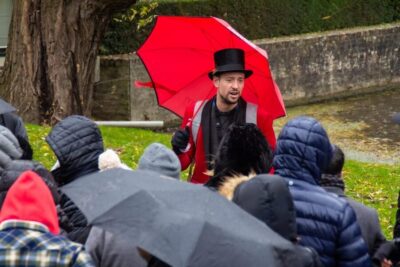
Meet in front of the city hall at Grand Place 8. Look for the red umbrella, an easy marker in one of Brussels’ busiest public spaces.
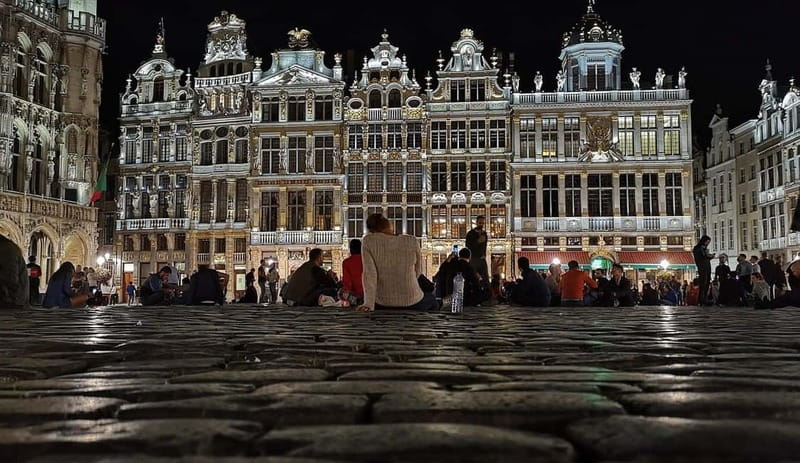
The square is one of Europe’s great architectural set pieces, with ornate guild buildings and the city hall forming an impressive first scene. This walk does not simply admire the stonework. It points out the darker events connected with the square and explains how power, punishment, and public life once occupied this same stage.
You have only about 10 minutes here, so do not expect an architectural lecture on every facade. The purpose is to establish the contrast that drives the whole walk: Brussels presents beauty first, then reveals the harder stories underneath.
Starting here also makes practical sense. Grand Place is central and easy to identify, so you can arrange dinner or a drink nearby before or after the tour. Since the route continues through several older neighborhoods, arrive ready to walk rather than treating the meeting point as a quick photo stop.
Saint-Jean Square and Anneessens Tower reveal a less polished city
From the central square, the walk moves toward Place Saint-Jean and Anneessens Tower. These stops shift the mood away from Brussels’ grand ceremonial center and toward smaller spaces with more complicated stories.
Saint-Jean Square gives the guide room to discuss revolts and the people who challenged authority. The value here is not simply seeing another square. It is learning how ordinary public spaces could become sites of conflict, protest, punishment, or remembrance.
Anneessens Tower is one of the more distinctive stops. It is not as obvious to most first-time visitors as Grand Place or Sablon, and it adds a physical reminder of Brussels’ older defenses. You get a clearer sense that the city was once enclosed, contested, and less comfortable than its chocolate shops suggest.
The tower is also a good example of this tour’s appeal. You are not just ticking off famous monuments. You are connecting overlooked structures to the city’s political and social past. Keep your expectations realistic, though. This is a guided look from the route, not a long indoor visit or a museum tour.
Rue de Rollebeek and the Comic Wall add contrast
Rue de Rollebeek brings the route into another older stretch of the city. The guide uses the street as part of the wider story, linking the physical route to the lives, disputes, and dark episodes that shaped Brussels.
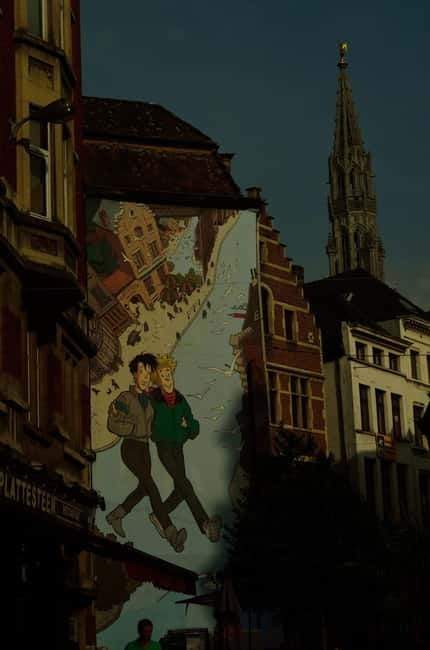
Then comes the Comic Wall, a striking change of tone. Brussels is famous for its comic-book culture, and the wall adds color and playfulness to an evening that has so far focused on bloodier subjects. The stop helps explain that the city’s identity is not only medieval churches and political monuments. It also includes popular art and modern public culture.
I like this contrast because it keeps the tour from becoming one-note. A good guide can move from grim history to visual humor without making either subject feel out of place. You may also find the Comic Wall useful as a photographic pause, especially if you want a lighter moment during the walk.
A few more Brussels half days worth weighing up
- Brussels: 2 hours Private Walking Tour of the Comics Walls
★ 4.8 · 13 reviews - Brussels: 2-Hour Walking Tour of the Historic Center with a Local Guide
★ 4.8 · 8 reviews - 2 Hour Beer Tasting with Local Beer Sommelier in Brussels
★ 5.0 · 3 reviews - Guided Bike Tour: 2 Hours Highlights of Antwerp
★ 5.0 · 347 reviews
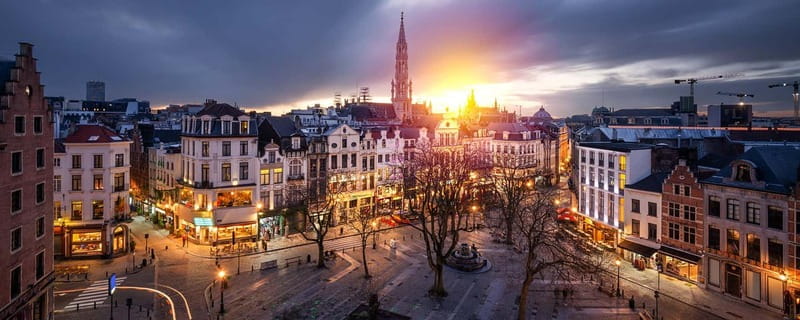
Sablon brings churches, legends, and uphill streets
The route reaches Place du Grand Sablon and the Church of Our Blessed Lady of the Sablon. Sablon is one of Brussels’ most attractive areas, but this tour looks beyond its polished appearance.
The church gives the guide a strong setting for stories about mystery, belief, and the city’s older traditions. The building’s presence is important even if you only discuss it from outside or spend a short time nearby. It shows how religious spaces could carry stories that were part devotion, part legend, and part civic memory.
Place du Petit Sablon follows as another carefully designed public space. Here, the tour can connect monuments, political memory, and the way Brussels chooses to present its past. The stop is brief, so listen for the guide’s main point instead of trying to inspect every statue.
This is also where the physical demands become more noticeable. The route includes hills, and one person with a bad knee found the private pace helpful because the group could slow down and stop. The experience is listed as wheelchair accessible, but you should still discuss your needs when booking, since the route includes slopes and several streets rather than one flat promenade.
The Palace of Justice supplies the city view
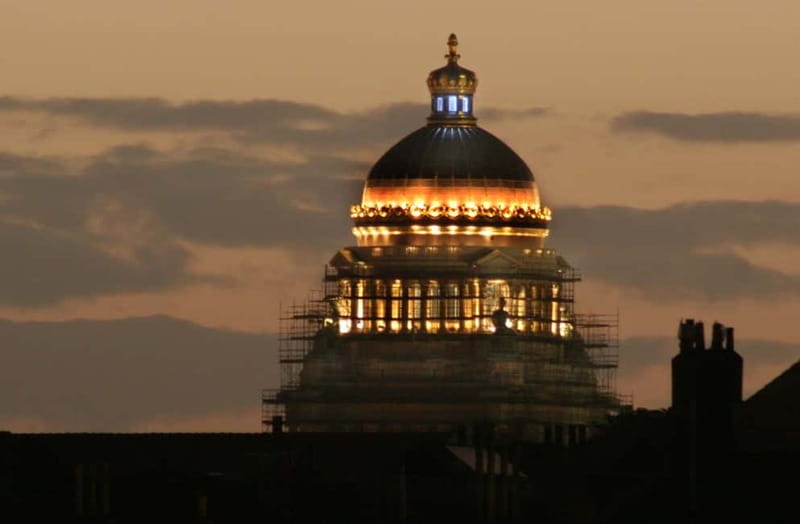
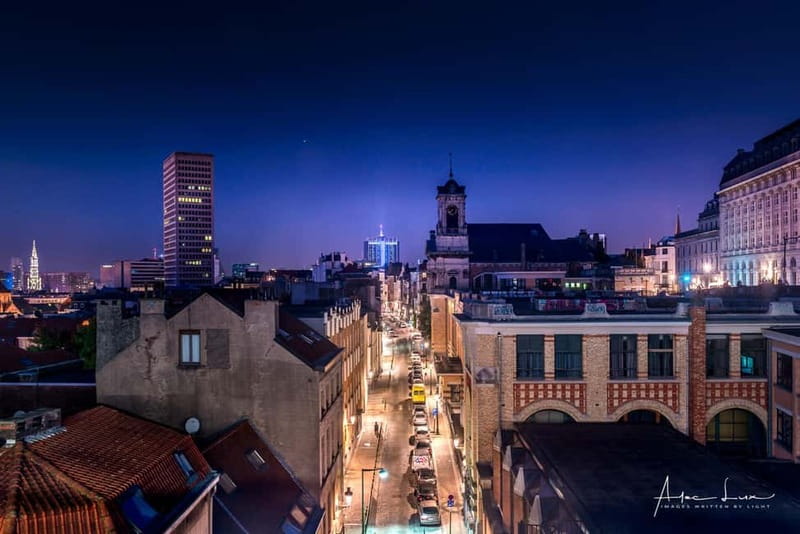
The Palace of Justice is the route’s big visual finish. The building itself is imposing, and its position gives you a broad view over Brussels. After two hours of narrow streets, squares, churches, and old towers, the outlook helps you see how the separate parts of the city fit together.
This is one of the tour’s strongest moments because the view is not just a pretty ending. It gives the stories a wider frame. You have been hearing about power, punishment, public spaces, and changing neighborhoods. From above, you can look back over the city and consider how those layers sit together.
Do not expect a long sunset stop unless your guide and timing allow it. The itinerary gives roughly 10 minutes to the Palace of Justice, and the tour has many stops to cover. If views matter most to you, tell the guide early and ask how much time can be spent there.
The route then includes Place du Jeu de Balle and Notre Dame de la Chapelle. Place du Jeu de Balle adds another neighborhood setting, while the Church of Our Lady of the Chapel gives the walk a final historic landmark. The listed route ends at the church, although the meeting information also says the activity ends back at the meeting point. Confirm the exact finishing arrangement when you book if you need to coordinate a train, dinner, or taxi.
How the two-hour pace feels
Two hours sounds generous until you count the stops. The route gives about 10 minutes each to most locations, with five minutes at Notre Dame de la Chapelle. That means the guide needs to keep the story moving.
I see this as a strength for visitors who want an introduction rather than a full historical course. You cover a lot of ground, hear several different kinds of stories, and finish with a useful sense of Brussels’ older neighborhoods. You will not get a long interior visit at every church or detailed architectural analysis of every building.
The private format helps. If your mother needs a break, you want to ask about an execution story, or one stop catches your interest, the guide can respond to your group instead of following a rigid crowd schedule. The tour is also a good choice for two people who prefer conversation to a large group’s stop-and-start rhythm.
Wear shoes with proper support. The tour runs rain or shine, and the combination of evening weather, hills, and older streets makes sensible footwear more important than stylish footwear. Bring a waterproof layer if rain is possible, since the experience is outdoors.
Guides, storytelling, and the right tone
The guide is the central part of this experience. The route itself is useful, but a poor storyteller could make even Anneessens Tower feel like a passing wall. The strongest guide will give each stop a clear point, explain the context, and connect one location to the next.
Dan is praised for being friendly and personable while giving useful background at both well-known and lesser-known sites. Rahain is described as bringing strong knowledge and banter to the grim material. Sebastián is praised for storytelling that made the serious subject engaging, with humor used as a counterweight rather than a distraction.
You should expect a conversational style, not a dry lecture. That is especially helpful with torture and execution stories, which can become sensational if they are not handled carefully. The best approach gives you enough detail to understand the past without turning suffering into entertainment.
The tour is offered in English, Dutch, and French. Since it is private, you have a better chance of asking for clarification or requesting a slower explanation than you would on a large group walk.
Is $199 good value for two people?
The price is $199 per group of up to two people. For a couple, that works out to $99.50 each. For a single person, it is a costly two-hour walk, but the private guide and flexible pace are part of what you are buying.
I think the price makes the most sense if you value personal attention. You are not paying for admission to a major museum or a long excursion. You are paying for a focused route, live storytelling, and the ability to shape the conversation around your interests.
It is also good value for a short stay in Brussels. If you have only one evening, the tour gives you a guided introduction to Grand Place, Sablon, Saint-Jean, Anneessens Tower, the Palace of Justice, and several smaller areas. You can then return to the neighborhoods that interest you most on your own.
The value is weaker if you want extensive interior access, a slow photography walk, or a broad survey of all Brussels history. In that case, pair this with a daytime historic walk or museum visit. One person specifically found it useful alongside a separate daytime historic tour because the two experiences showed different sides of the city.
Who should book the Dark Side of Brussels tour?
I would choose this tour if you have already seen the main central sights or want a different way to understand them. It suits couples, friends, and small private groups who enjoy stories about political conflict, punishment, mystery, and overlooked corners.
It is also a strong fit for university groups and curious students. The blend of serious history and humor keeps the subject accessible, while the private format gives the guide room to answer questions.
Families should consider the tone carefully. The content includes executions, torture, and grim episodes, so it may not suit young children or anyone who prefers light sightseeing. The private setup does let you ask the guide to adjust the detail, but the tour’s main identity remains dark history.
People with mobility concerns should not rule it out automatically. It is listed as wheelchair accessible, and the private pace can accommodate breaks, but the route includes hills. Contact the provider before booking if you need precise route advice.
FAQ
How long does the Dark Side of Brussels tour last?
The tour lasts two hours. Most listed stops receive about 10 minutes, while Notre Dame de la Chapelle receives about five minutes.
Where does the tour start?
It starts at Grand Place 8, in front of the city hall on Brussels’ main square. Look for the red umbrella.
What languages are available?
The live guide can conduct the tour in English, Dutch, or French.
Is this a private tour?
Yes. The booking is for a private group, with the listed price covering up to two people.
Is the tour wheelchair accessible?
The activity is listed as wheelchair accessible. The route does include hills, so you should discuss specific mobility needs with the provider before booking.
What happens if it rains?
The tour takes place rain or shine. Bring suitable clothing and wear comfortable shoes.
Should you book it?
Book this tour if you want Brussels to feel less polished and more human. The route gives you famous squares, overlooked towers, churches, neighborhood streets, and a fine city view, but the real value is the context connecting them.
I would especially recommend it for two people who want a private evening walk and enjoy serious history with some humor. Skip it if you want a flat route, long indoor visits, or a gentle introduction aimed at children. For the right audience, this is a smart way to see the capital after dark, with enough structure to be useful and enough flexibility to feel personal.
Just added around Brussels
- Standard vehicle from Brussels airport to city of Antwerp★ 5.0 · 4 reviews
- Luxury Minivan from Brussels airport to the city of Brussels★ 4.0 · 7 reviews
- Transfer Brussels Airport (BRU) –> City Center 7 PAX (ONE WAY)★ 5.0 · 7 reviews
- Luxury vehicle from Brussels airport to the city of Brussels★ 4.0 · 5 reviews
- Transfer Brussels Airport –> Brussels MB V Class 7 PAX (ONE WAY)★ 5.0 · 4 reviews
- Transfer Brussels Airport –> City MB E Class 1-3 PAX (ONE WAY)★ 5.0 · 6 reviews
- PRIVATE MPV TRANSFER FROM/TO BRUSSELS AIRPORT (Max 6 pax) ONE-WAY★ 5.0 · 4 reviews
- Brussels: City Walk with Audioguide in 7 Languages on your Phone★ 3.5 · 4 reviews
Dark Side & Legends Tours, compared.

Historical Walking Tour: The Story of Bruges – by Legends
Read our review →
Browse the lists this tour appears in