
Reviewed · WALKING TOURS
Ghent: Walking Tour from Friday Market to the Cathedral
Ghent reveals its best side when you connect the grand city streets with the medieval lanes beside the canals. This private 150-minute tour does just that, moving from the coach route through St. Peter’s Quarter to a walking circuit around the Belfry, Friday Market, old harbor, and St. Bavo’s Cathedral. I like the three-tower view and the chance to see Jan Van Eyck’s Mystic Lamb in the cathedral. I also like the private format, which keeps the pace flexible for a group of up to 20.
The main drawback is that entrance fees, tastings, and lunch are extra, and 150 minutes is short for a city with this much to see. A private group price of $388 can make good sense for a larger party, but it is a serious cost for only a few people. The guide was praised as great in one verified booking, while another rating simply called the experience okay, so your guide will matter.
Key things to know before you book
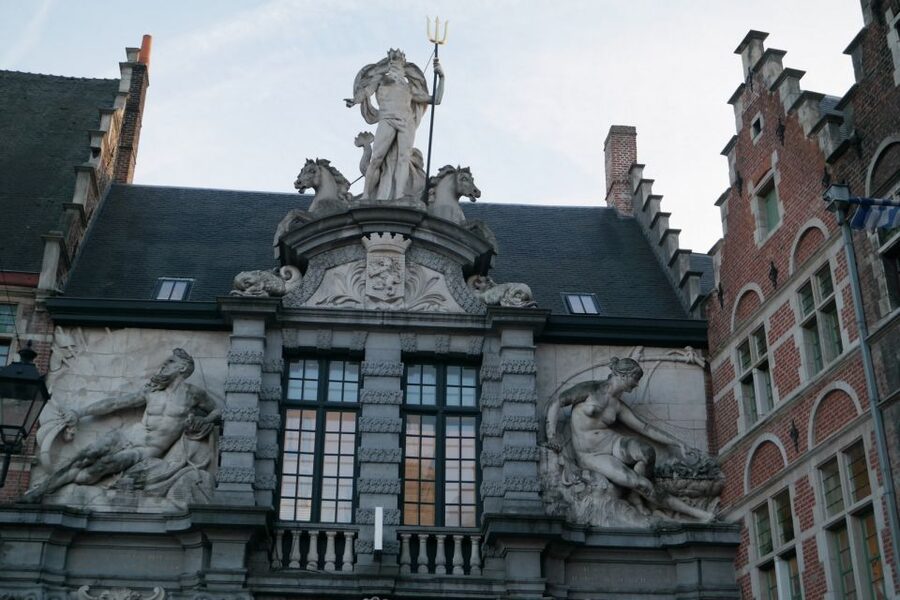
- The tour links two sides of Ghent: a coach circuit through modern and early twentieth-century districts, followed by a walk in the medieval center.
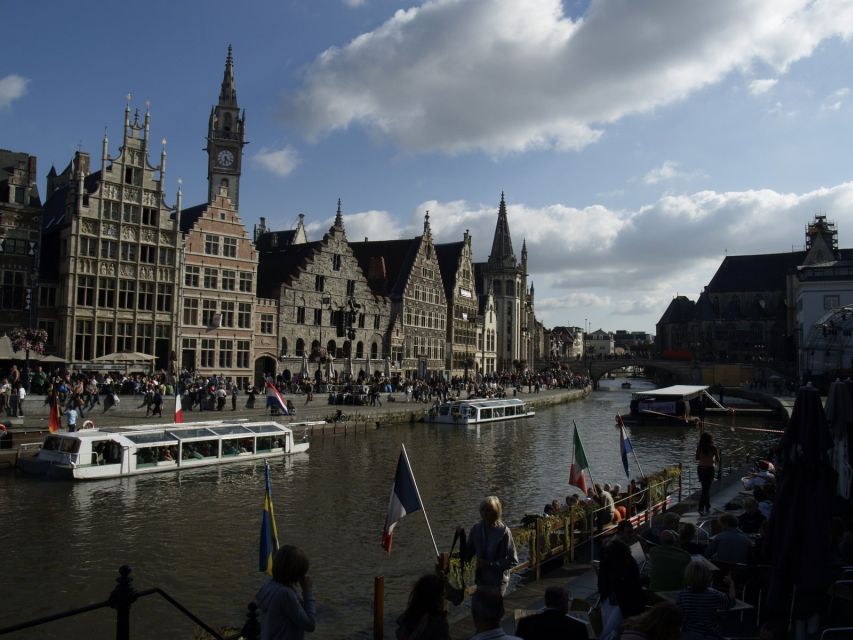
- The old harbor gives you the classic view: St. Michael’s Church and Ghent’s three famous towers line up from this part of the city.
- St. Bavo’s Cathedral is a major stop: you can see works connected with Jan Van Eyck and Peter Paul Rubens, including the Mystic Lamb.
- The private format suits groups: one price covers up to 20 people, which can bring the per-person cost down sharply.
- The walking portion has real variety: markets, canals, churches, a fortress, Patershol, the Town Hall, and the Belfry all fit into the route.
- Plan for extras: admission fees, food, beer, chocolate, waffles, tastings, and lunch are not included, though the guide provides recommendations.
Ghent in two acts: coach streets and medieval lanes
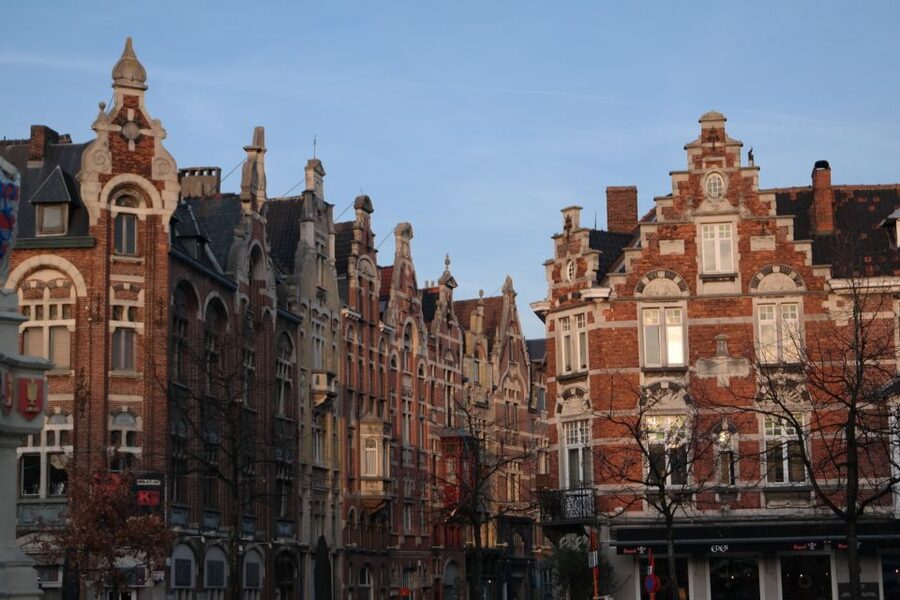
This experience begins with a coach tour before turning into a walking tour. That matters because Ghent is not only a medieval center. Its story also includes grand avenues, railway architecture, Art Nouveau and Art Déco façades, socialist institutions, and the major rebuilding carried out before the 1913 universal exhibition.
During the coach portion, you pass through the Millionaires’ Quarter and around St. Peter’s station. The nearby avenues show off Art Nouveau and Art Déco exteriors, giving you a different view of the city from the stone churches and canal houses that dominate most first visits.
The route also includes St. Peter’s Square, St. Peter’s Church, and Vooruit, the building associated with the socialist trade union. These stops help explain how Ghent developed beyond its old center. You are not simply being taken from one photogenic landmark to another. You are seeing the contrast between civic ambition, industrial society, religion, and medieval trade.
The coach section is especially useful if you have limited time or prefer not to cover every district on foot. It gives you a broad sense of Ghent before the guide slows down in the old center. The tradeoff is simple: every minute spent on the coach is a minute not spent inside the medieval streets, so this is best for someone who wants an overview rather than a long, single-area walking tour.
More Walking Tours in Ghent
- Historical Walking Tour: Legends of Gent
★ 5.0 · 1,761 reviews - Ghent: Belgian Chocolate Walking Tour with Tastings
★ 4.9 · 259 reviews - Gastronomic Walking Tour of Gent – Tasters included
★ 5.0 · 199 reviews
Starting near Sint-Jakobskerk and Woodrow Wilson Square
The stated meeting point is Saint-Jacobskerk, also called Sint-Jakobskerk in Dutch, where the group can leave the coach. The walking route is described as beginning at Woodrow Wilson Square. Since the information names both places, confirm the exact handoff with the provider when booking, especially if your group is arriving independently rather than as part of a coach transfer.
Woodrow Wilson Square puts you close to the historic center and the route toward St. Bavo’s Cathedral. From here, the old city unfolds in a compact sequence of churches, lanes, markets, canals, and public buildings.
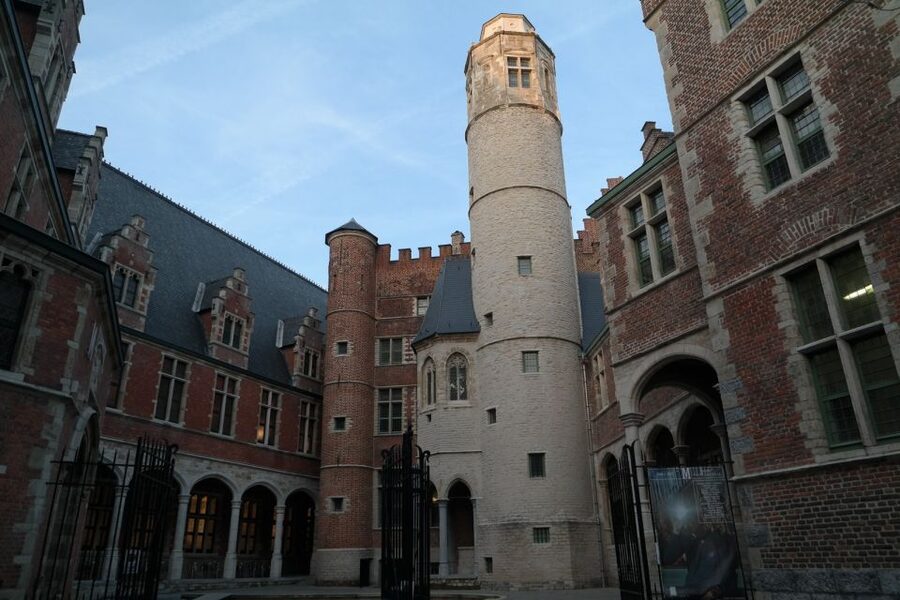
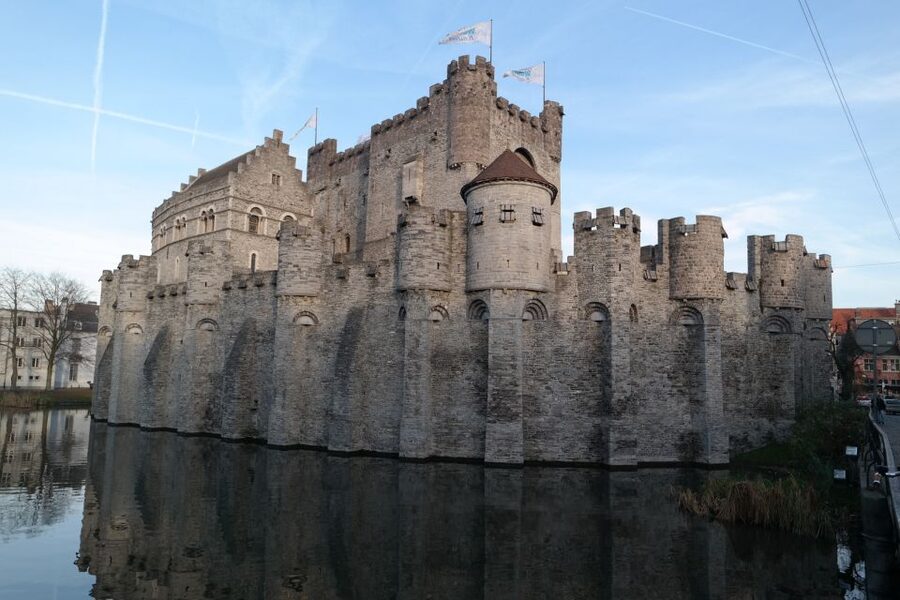
One early sight is Gerard de Duivelsteen, a fortified building that adds a rougher, defensive note to the route. It is a useful reminder that medieval Ghent was not only a trading town of impressive façades. It also needed strong walls, guarded entrances, and military buildings.
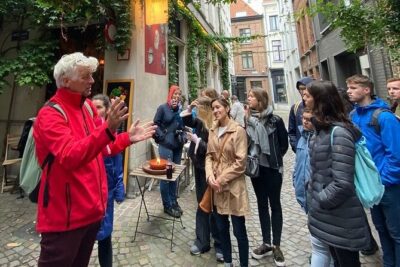
The guide’s value here lies in explaining what you are looking at. Ghent’s buildings can appear close together, but the reasons for their shape and position are not always obvious on your own. A private guide can connect the fortress, cathedral, market areas, and waterways into one readable story.
St. Bavo’s Cathedral and the Mystic Lamb
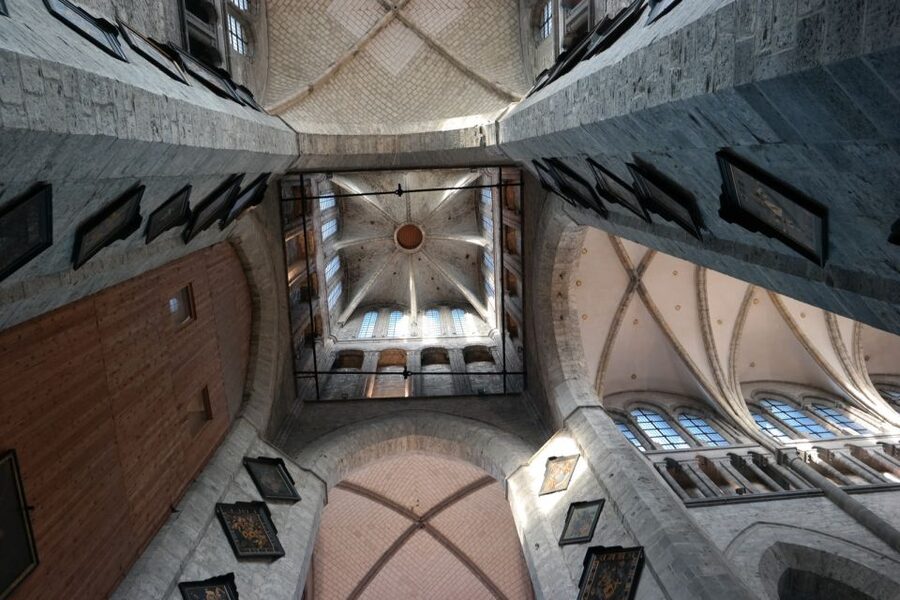
St. Bavo’s Cathedral is one of the most important stops on the tour. Its great draw is Jan Van Eyck’s Mystic Lamb, also known as the Ghent Altarpiece. The experience information also points to paintings by Peter Paul Rubens, giving you more than one major name to look for inside the church.
Do not treat the cathedral as a quick exterior photo stop. The interior is where the artistic value of this tour rises, but entrance fees are not included. You should budget separately for admission if you want to see the artworks inside, and it is sensible to confirm the current entry arrangements before the tour.
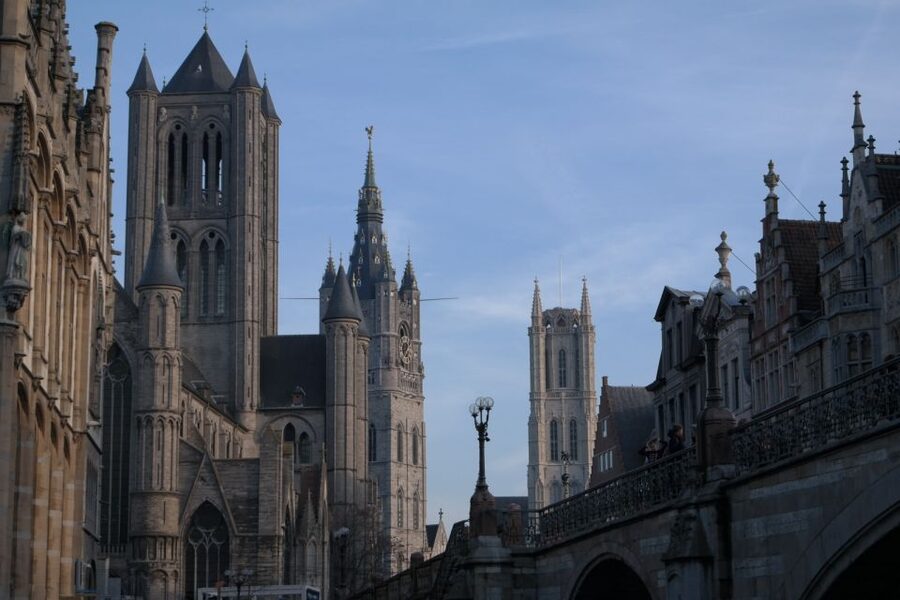
The cathedral also anchors the view of Ghent’s three towers. From the old harbor and other parts of the center, you can see the tower of St. Nicholas’ Church, the Belfry, and St. Bavo’s tower together. The cathedral is therefore both an art stop and one of the key points in the city’s famous skyline.
I like this combination because it gives you two ways to understand Ghent. The paintings show the city’s artistic importance, while the towers show its civic and religious power from the outside. If you are mainly interested in art, allow extra time beyond the scheduled 150 minutes. If your group wants a fast overview, listen carefully to the guide and decide which interior visits deserve your own later return.
The Belfry, Town Hall, and Friday Market
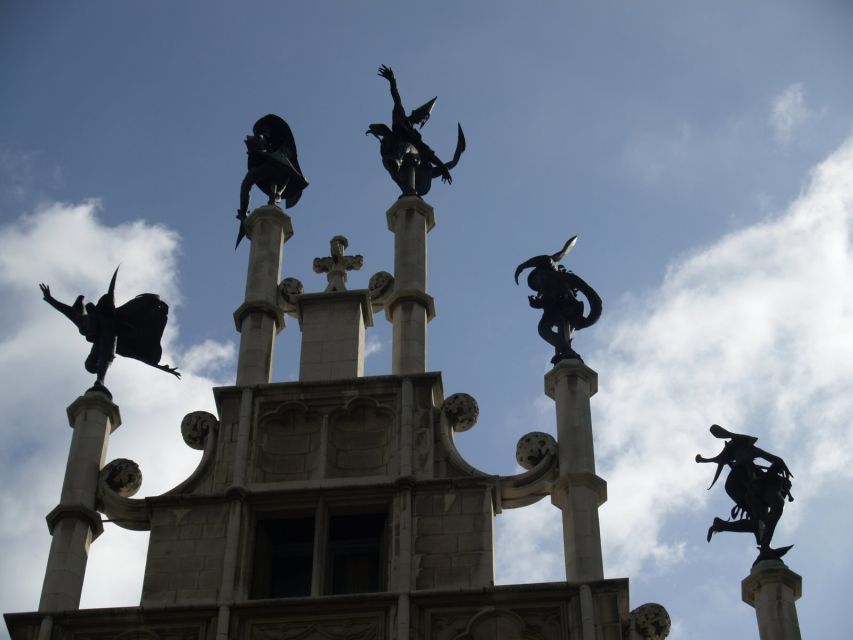
From the cathedral, the route brings you toward the Belfry and Town Hall. The Belfry is one of Ghent’s defining landmarks, and it represents the city rather than a single church or ruler. It belongs to the public face of Ghent, alongside the market and municipal buildings.
The Town Hall adds another layer. Its architecture and civic role help show how local government grew alongside trade and urban wealth. In a short tour, you may not have time to explore every architectural detail, but the guide can point out the changes in style and function that make the center more than a collection of old façades.
Friday Market gives the walk an open public space after the narrower streets. The square is tied to Ghent’s commercial and civic life, and its position makes it a natural place to understand how people, goods, and local politics once met.
The market is also a good spot to ask for food suggestions. Chocolate, waffles, beer, restaurants, bars, and museums are not included, but the tour does include recommendations for enjoying them. That is useful if this is your first day in Ghent and you want to turn a sightseeing circuit into a wider plan for the afternoon.
More market visits in Ghent:
Patershol and the old Fish Market
Patershol brings you into a more intimate part of the historic center. The area is known for picturesque streets, and the route uses it to show you the close-up scale of old Ghent. Here, the pleasure comes from small details and changing views rather than one grand monument.
The old Fish Market adds a direct link to the city’s waterways and food trade. Ghent was shaped by canals and by the Scheldt and Leie rivers, so a market associated with fish belongs naturally in the story. It also helps explain why the center developed around water, commerce, storage, and public exchange.
This is one reason I prefer the walking section to a simple monument checklist. You move between major landmarks and ordinary urban spaces, seeing how markets, religious buildings, defensive structures, and canals fit together. The drawback is that a 150-minute tour cannot linger everywhere. If you like taking architectural photos or stopping for food, the planned route may feel brisk.
The old harbor and Ghent’s three towers
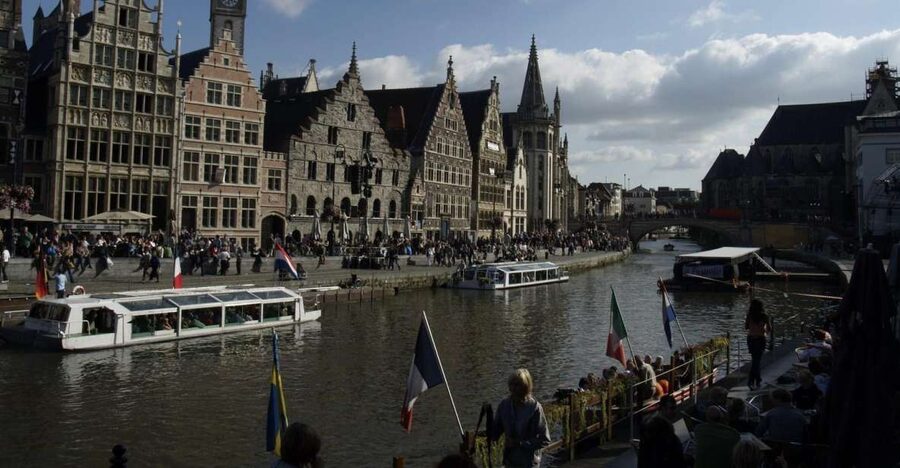
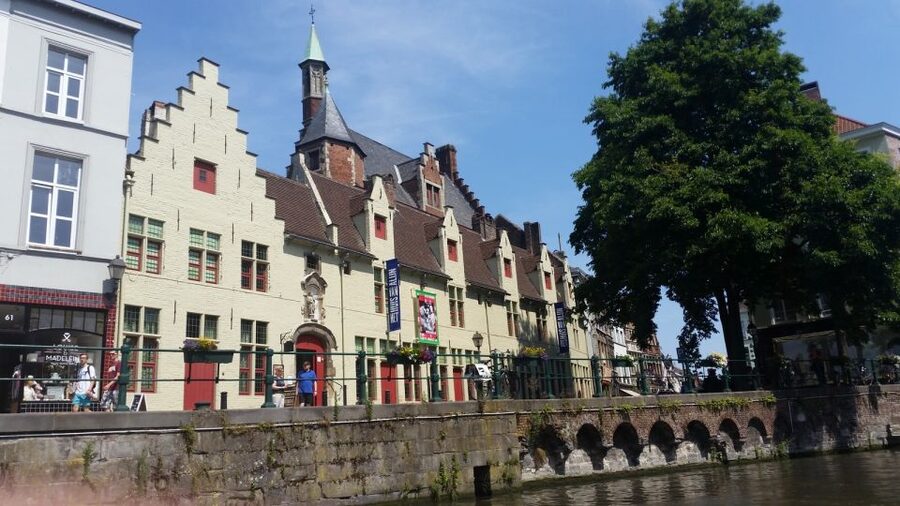
The old harbor provides one of the most rewarding viewpoints on the route. From here, you get the finest stated views of St. Michael’s Church, along with the three towers that define Ghent’s skyline: St. Nicholas’ Church, the Belfry, and St. Bavo’s Cathedral.
This is the spot where the city makes visual sense. The towers rise in sequence, showing the center’s religious and civic importance, while the harbor explains the role of water in Ghent’s growth. You can take in much of the old center without needing a high lookout or a long climb.
I would pay attention to the guide’s positioning here. A good explanation can help you identify each tower and understand why the view is famous. Since one verified booking gave the guide top marks for being great, the live commentary is clearly an important part of the experience. No individual guide names are provided, so you cannot choose a particular person in advance.
The harbor is also a natural place for photographs, but remember that photo stops take time. If your group wants a full set of pictures, the guide may need to keep the walk moving to reach the cathedral, markets, and other listed sights within the two-and-a-half-hour schedule.
European institutions and the modern city
The tour also includes information about the buildings of the European Parliament, Commission, and Council. The supplied details place this learning within the wider coach portion, alongside Ghent’s modern districts and major avenues.
This part may appeal to you if you want more than old stones and church interiors. It places Ghent within present-day European public life and gives the coach route a wider purpose. You are seeing how the city relates to modern institutions while also learning about its older commercial and religious center.
The information does not promise entry into those institutions, so expect commentary and exterior views rather than an inside visit. That distinction matters if you are specifically booking a European Parliament tour. Here, the institutions are one part of a broad city introduction.
What $388 means for a private group
The price is $388 per group of up to 20 people. For a full group, that works out to less than $20 per person before any admission fees or food costs. For two people, the same price is much harder to justify.
The private format is the strongest reason to consider the cost. Your group does not share the guide with strangers, and the route can be discussed at a pace that suits your party, within the fixed 150-minute window. Families, school groups, company groups, and extended parties may find the arrangement practical.
For a small couple or solo visitor, a regular group walk could offer better value if available. The price also does not cover entrance fees, tastings, or lunch. You should treat the tour fee as payment for transport, guide service, and the private city overview, not as an all-inclusive day out.
The tour does include recommendations for chocolate, waffles, beer, restaurants, bars, and museums. That is a modest but useful extra. You can use the guide’s suggestions to plan what comes next, but you will pay for those meals, drinks, tastings, and museum visits yourself.
Languages, timing, and who should book
Live guiding is available in Dutch, English, French, and German. The language choice makes this a practical option for mixed-language groups, though you should select or confirm the preferred language when arranging the tour.
The 150-minute length works well as a first introduction to Ghent. You get the broad coach circuit, then a concentrated walk through the old center. It is not enough time for a slow museum visit, a full meal, several tastings, and detailed exploration of every church.
I would recommend it most strongly if you want:
- A private guide for a family or group of friends
- A short introduction that covers both modern and medieval Ghent
- A planned route through the main historic sights
- Help understanding the three towers and the city’s canals
- Recommendations for food, beer, museums, and later sightseeing
I would be more cautious if you want a relaxed art tour focused mainly on the Mystic Lamb, or if your group has only one or two people and is sensitive to the total price. In those cases, the extra admissions and private-group fee may make the experience less attractive.
The cancellation terms are helpful for uncertain schedules: you can cancel up to 24 hours ahead for a full refund, and you can reserve now and pay later. Those policies do not change the tour’s value, but they reduce the risk of committing while your itinerary is still taking shape.
Should you book this Ghent tour?
Book it if you want a private, efficient introduction to Ghent that connects the coach-accessible districts with the old center’s best-known sights. The old harbor view, the three towers, Patershol, the Friday Market, and St. Bavo’s Cathedral give the walking portion plenty of substance, while the Art Nouveau streets, Vooruit, St. Peter’s Square, and European institutions add useful context.
The deciding factor is group size. At $388, the tour becomes much better value when shared by a large party of up to 20. For a small group, compare the cost with a standard walking tour and reserve extra time for the cathedral if the Mystic Lamb is your main reason for coming.
The strongest praise available is for the guide, with one verified booking calling the guide great. Another rating was simply okay, so go in expecting a solid city orientation rather than a guaranteed life-changing performance. For a group that values private transport, clear sightseeing coverage, and practical recommendations, this is a sensible way to get your bearings in Ghent.
FAQ
How long does the Ghent tour last?
The experience lasts 150 minutes, or two and a half hours.
What languages are available?
Live guiding is available in Dutch, English, French, and German.
Is this a private tour?
Yes. It is offered as a private group experience for up to 20 people.
Where is the meeting point?
The stated meeting point is Saint-Jacobskerk, known in Dutch as Sint-Jakobskerk, where guests can leave the coach. The walking route is described as starting at Woodrow Wilson Square, so confirm the exact meeting and handoff details when booking.
Are entrance fees and food included?
No. Entrance fees, tastings, and lunch are not included. Recommendations for chocolate, waffles, beer, restaurants, bars, and museums are included.
Can I cancel the booking?
You can cancel up to 24 hours in advance for a full refund. The booking also offers reserve now and pay later.
Just added around Ghent
- Historic Highlights, by a local guide★ 5.0 · 9 reviews
- Discover Ghent while playing! Escape game – The alchemist★ 4.0 · 4 reviews
- Walking Food Tour in Ghent★ 5.0 · 13 reviews
- Discover Ghent while playing! Escape game – The Walter case★ 4.5 · 4 reviews
- Discover Ghent with a self-guided Outside Escape city game tour!★ 4.0 · 10 reviews
- e-Scavenger hunt Kortrijk: Explore the city at your own pace★ 4.5 · 15 reviews
- Ghent Walking Tour with Audioguide on Your Smartphone★ 4.5 · 13 reviews
- Private Ghent Beer & Brewery Tour by a young local★ 5.0 · 12 reviews
Walking Tours, compared.

Small Group Boat Cruise and Guided Walking Tour
Read our review →
Walking Tour, Canal Boat Trip w/Beer Tasting Option
Read our review →

Historical Walking Tour with Chocolate & Waffle Tasting
Read our review →
Brussels Walking and Tasting Tour (Beers,Chocolates&Fries/Waffle)
Read our review →
Browse the lists this tour appears in