

Reviewed · ESCAPE GAMES & SCAVENGER HUNTS
Discover Ghent while playing! Escape game – The Walter case
The clever hook here is that a simple blackmail investigation turns into a two-hour race against a hidden bomb. You walk through Ghent as a private detective, using your phone to choose suspects, routes, and search areas rather than following a fixed guide.
I like the private format for families and friends, and I like that the game sends you past some of Ghent’s best-known sights. The price is also easy to share, at $23.16 for a group of up to six. The main drawback is that the story takes time to get going, and the city itself is not always part of the puzzle.
Key points to know
- A city-wide detective story: The Walter Case begins with blackmail and develops into a bomb threat with a two-hour countdown.
- You choose the route: The app lets your group decide which suspects to question and where to search.
- Built for small private groups: Up to six people can play together, with no strangers added to your team.
- A smartphone is the main tool: You do not need specialist equipment, but every player should be ready to work with the app.
- Good for families: The puzzles are described as moderate, and the route passes several famous Ghent sights.
- Not a traditional city tour: The game takes you through Ghent, but it does not aim to explain the city’s culture or monuments in depth.
A bomb countdown gives Ghent a new purpose

The Walter Case starts with what sounds like a routine crime: someone is blackmailing a billionaire chief executive. Then the stakes jump. A bomb is hidden somewhere in Ghent, and your group has two hours to find enough clues to defuse it.
That setup gives the walk a clear purpose. Instead of simply moving from one attraction to another, you have a reason to watch the app, compare ideas, and decide what to do next. Every turn can feel like part of the investigation because the story asks you to pick a route and follow leads.
The game runs for about two hours and 30 minutes. The central story mentions a two-hour countdown, so the extra time likely allows for walking, solving tasks, and making choices. Do not treat the full duration as a tightly timed two-hour race. Your actual pace depends on how quickly your group reads the information and agrees on its next move.
I like this format for a group that wants an activity with a bit more energy than a standard sightseeing walk. It gives children and adults a shared task, and it creates plenty of chances to stop, discuss clues, and make a wrong guess without having a guide standing over you.
More escape games and city hunts in Ghent:
- e-Scavenger hunt Ghent: Explore the city at your own pace
★ 4.5 · 41 reviews - e-Scavenger hunt Kortrijk: Explore the city at your own pace
★ 4.5 · 15 reviews - Discover Ghent with a self-guided Outside Escape city game tour!
★ 4.0 · 10 reviews
Starting at Jakobijnenstraat in central Ghent
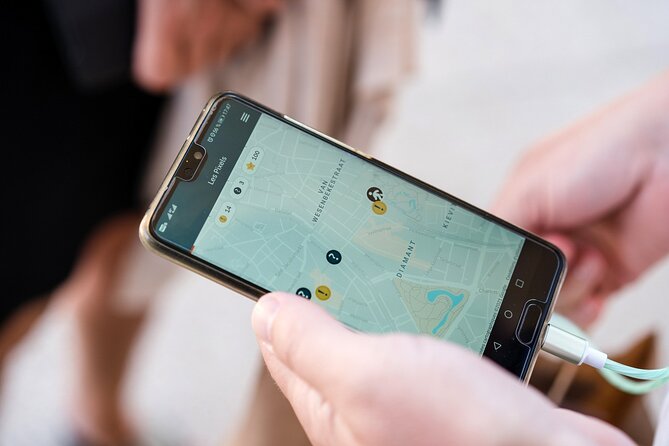
The listed starting point is Jakobijnenstraat, 9000 Gent, Belgium. The activity also ends back at the same meeting point, which makes the logistics simple. You are not left trying to find a separate finish location across town, and you can plan dinner or your next stop from the same part of Ghent.
The location is described as easy to find. Even so, I would give your group a few minutes to gather, check your phones, and make sure everyone understands how the app works before the clock becomes important. A city game is much more fun when the group is ready to solve the first task instead of standing on the pavement sorting out phone access.
The listed operating window is daily from midnight to 11:30 p.m. That gives you a wide choice of start times, but the practical choice is still important. Daylight can make street details and public spaces easier to read, especially for families with children. A later start may suit friends who want to pair the game with an evening in Ghent, but you should be comfortable navigating the city at that hour.
No live guide is listed. The application provides the instructions, story, and missions, so your group controls the pace. This is useful if you prefer privacy, but it also means you cannot rely on a person to explain a confusing clue right away.
Following the app instead of a fixed walking route
The app guides you to different points around the city. At each point, you may need to solve a puzzle, complete a mission, question a suspect, or search for useful information. The route is not simply a straight line from one stop to the next. Your choices affect where the investigation goes.
That is the game’s most interesting feature. You are not just waiting for the next instruction. You must decide which lead seems worth following. One group may question a different suspect than another group, and that can change the order in which the story unfolds.
This freedom also creates the main challenge. You need to keep track of what the app has told you and what your team has already tried. With six people, it helps to give everyone a role. One person can read the case details, another can watch the map, and others can study the puzzle or look at the surroundings.
The experience works best when you talk through decisions out loud. If one person controls the phone and keeps the clues private, the rest of the group can lose interest. Let children read short sections, spot details, and suggest the next move. The puzzles are described as neither too easy nor too hard, which makes the game suitable for a mixed-age family group.
What the route offers, and what it does not
The route passes some of Ghent’s best-known sights. That gives you a useful way to get your bearings in the city while the game moves you from place to place. For a child, a famous building or public space can become part of the story rather than just another stop on an adult sightseeing list.
But do not book The Walter Case as a full introduction to Ghent’s history, art, or architecture. The city’s monuments are present along the route, yet they are not fully explained through the story. The game focuses on the fictional case, not on the culture of Ghent.
That difference matters. If your goal is to learn why Ghent’s buildings look the way they do, choose a dedicated walking tour or museum visit as well. If your goal is to see parts of the city while giving your group a puzzle to solve, this activity fills a different role.
I see it as a good companion to sightseeing rather than a replacement for it. You could play first, then return to the sights that caught your attention. Or you could use the game as a way to keep a family interested during a first walk through the center.
A few more Ghent half days worth weighing up
- Ghent: 50-Minute Medieval Center Guided Boat Trip
★ 4.5 · 5,637 reviews - Historical Walking Tour: Legends of Gent
★ 5.0 · 1,761 reviews - Ghent: 40 Minute Medieval Center Guided Boat Tour
★ 4.4 · 884 reviews - Evening Tour of the Dark Side of Gent
★ 5.0 · 646 reviews
The opening story may take patience

The first part is not an instant rush. The story spends time introducing the case and its characters before the clues begin to fit together. That slower start may test the patience of a group that wants puzzles right away.
I would set expectations before you begin. Tell children that the first section is about understanding the investigation, not solving a rapid series of riddles. Once the pieces start to connect, the game becomes more satisfying because you understand why the suspects and locations matter.
This gradual start also helps groups that are new to urban escape games. You get time to learn how the app presents information and how the team should work together. The tradeoff is that the first part may feel long if everyone came mainly for quick physical challenges.
The story reportedly builds toward a surprising ending. I will not spoil it, but that kind of payoff gives your early patience a purpose. You are not simply ticking off unrelated tasks. You are waiting for the case to make sense.
Puzzles that use the city, but not always clearly
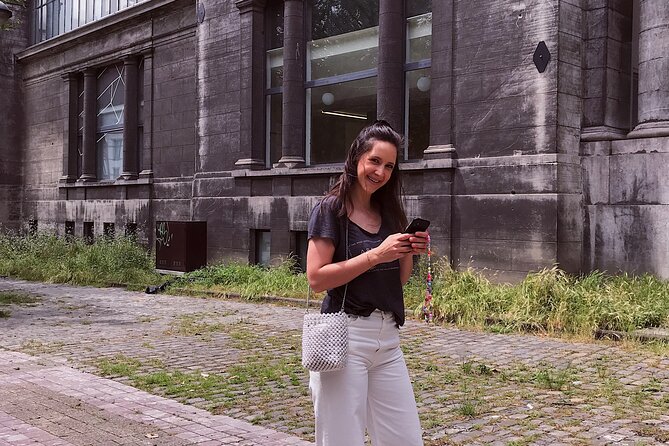
The game combines tasks in the application with information found around you. This is the part that can make an urban escape game feel special. You are walking through real streets, then using something nearby to move the case forward.
Still, do not assume every clue is hidden in the architecture. One point of friction is that the puzzles may not always make their logic obvious. You might begin by studying the surroundings, expecting a clear visual clue, when the answer is actually tied more closely to the app.
That means your group should read each instruction carefully before searching every doorway and monument. Try the information in the application first, then use the street setting as directed. If you get stuck, pause and review the wording rather than scattering the group in search of a clue that may not be there.
This is also where the private format helps. You can take a few minutes to discuss the problem without holding up another group. At the same time, there is no on-site game master to offer a quick nudge, so a confusing puzzle can slow you down more than it would at a staffed escape room.
Why the private group format works well

The booking covers a private group of up to six people. That is a strong size for this kind of activity. Six people offer enough ideas to solve a puzzle, but the group is still small enough to stay together on city streets.
For a family, the format avoids the awkward mix of joining strangers with different ages and puzzle skills. Parents can help younger children follow the plot, while older children can take ownership of the app and clues. The game has been described as a good way for young children to get to know a city, especially because the tasks are not at either extreme of difficulty.
For friends, the appeal is different. You can make the case competitive within the group, divide up observations, or simply enjoy the comedy of several people arguing about the next suspect. The activity is more social than watching a guide speak for two hours.
There is one practical limit. Six people sharing one smartphone screen can become crowded. If your group is at the maximum size, use teamwork rather than letting one person do everything. The supplied information says you only need a smartphone, so check that the phone is charged and that your group is comfortable sharing it.
Price and value at $23.16 per group

At $23.16 for up to six people, the price is about $3.86 per person if you fill the group. Even with fewer players, the total remains low compared with many guided activities or private entertainment options.
The value comes from combining a city walk with a structured game. You get roughly two and a half hours of activity, a private format, and a story that gives your route a purpose. For a family, that can be a practical way to add something different to a day of sightseeing without paying an individual admission for every member.
The price is less compelling if you expect a polished, guide-led explanation of Ghent. There is no listed live guide, and the cultural content is limited. You are paying for the game system and story, not for detailed commentary about the city.
I would judge the value by asking one question: does your group want to solve something together? If yes, the cost is easy to justify. If only one person enjoys puzzles and everyone else wants a monument tour, spend the money elsewhere.
Who should book The Walter Case
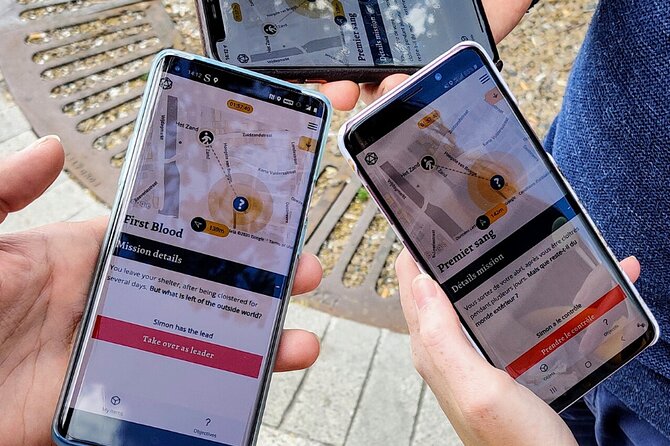
I would recommend this activity to families with children, couples who like mystery games, and friend groups that enjoy making decisions together. It is especially useful on a first visit when you want to cover several central areas of Ghent while keeping the walk active.
It also suits groups that prefer to set their own pace. You can pause, discuss, and continue without matching a guide’s schedule. The private setting is a plus for anyone who dislikes performing in front of strangers.
I would be more cautious if you dislike phone-based activities or become frustrated when a puzzle does not explain itself at once. The game depends on the application, and some clues may require careful reading rather than obvious physical discoveries.
It is also not the right pick if your main reason for visiting Ghent is cultural education. The route includes known sights, but the game does not fully explain the city or its monuments. Pair it with a proper history or architecture visit if that knowledge matters to you.
Booking, timing, and practical details
Confirmation is provided at booking. You can cancel for a full refund if you do so at least 24 hours before the scheduled start time. Cancellations or changes made within 24 hours are not refunded or accepted, and the cut-off uses local time in Ghent.
The meeting point is Jakobijnenstraat, and the activity returns there. The location is near public transportation, which helps if you are arriving from another part of the city. Service animals are allowed, and the activity states that most people can participate.
Because the game takes place on city streets, wear shoes you can walk in comfortably. That is simple advice, but the route and puzzle pace can keep you moving longer than a normal monument visit. Keep your phone charged, and decide before starting who will carry the device and who will help read the clues.
The listed hours run every day from 12:00 a.m. to 11:30 p.m. Since the story uses a countdown, start on time and avoid cutting things close before another reservation. The activity ends where it begins, so you can plan around that fixed point.
Should you book The Walter Case in Ghent?
Book it if you want a low-cost private game that gets your group walking through Ghent, solving moderate puzzles, and making choices inside a detective story. Families will likely get the most from it, especially if children need a reason to stay interested during city sightseeing.
Skip it if you want a detailed account of Ghent’s history or a guide who explains every monument. The Walter Case uses the city as its playing area, but the fictional investigation remains the main event.
My practical verdict: choose it as a playful way to see Ghent, not as your only city tour. Give the opening story time to build, share the phone among the group, and remember that the answer may be in the app rather than on the nearest building. With those expectations, the Walter Case offers a good amount of private entertainment for the price.
FAQ
Where does The Walter Case start?
The activity starts at Jakobijnenstraat, 9000 Gent, Belgium.
Where does the activity finish?
The game ends back at the meeting point on Jakobijnenstraat.
How long does the urban escape game last?
The listed duration is approximately two hours and 30 minutes.
How many people can join one group?
One private group can include up to six people.
What do I need to play?
You only need a smartphone to take part in the game.
Is the activity available every day?
The listed opening hours run Monday through Sunday from 12:00 a.m. to 11:30 p.m., for the stated operating period from November 15, 2021, through June 18, 2026.
Can I cancel for a full refund?
Yes. You can receive a full refund if you cancel at least 24 hours before the experience start time. Cancellations or changes within 24 hours are not refunded or accepted.
Just added around Ghent
- Historic Highlights, by a local guide★ 5.0 · 9 reviews
- Discover Ghent while playing! Escape game – The alchemist★ 4.0 · 4 reviews
- Walking Food Tour in Ghent★ 5.0 · 13 reviews
- Discover Ghent with a self-guided Outside Escape city game tour!★ 4.0 · 10 reviews
- e-Scavenger hunt Kortrijk: Explore the city at your own pace★ 4.5 · 15 reviews
- Ghent Walking Tour with Audioguide on Your Smartphone★ 4.5 · 13 reviews
- Private Ghent Beer & Brewery Tour by a young local★ 5.0 · 12 reviews
- Private Hidden Gems Walking Tour in Ghent★ 5.0 · 12 reviews
Escape Games & Scavenger Hunts, compared.


e-Scavenger hunt Antwerp: Explore the city at your own pace
Read our review →
e-Scavenger hunt Bruges: Explore the city at your own pace
Read our review →
Bruges Scavenger Hunt and Highlights Self Guided Audio Tour
Read our review →

Beer Tasting and Scavenger Hunt in Brussels – About 3 Hours
Read our review →
e-Scavenger hunt Mechelen: Explore the city at your own pace
Read our review →
Romantic Bruges: Love Between the Canals Exploration Game
Read our review →Browse the lists this tour appears in