
Reviewed · HISTORICAL TOURS
Mons : The Van Gogh House
Vincent van Gogh’s artistic life began in an unlikely place: Cuesmes, a small working-class community near Mons where he served as a preacher before turning toward art. The Van Gogh House lets you see that early chapter in the actual place where his direction changed.
I like the visit for two clear reasons: the authentic setting and the chance to connect Van Gogh’s later work with the rural and industrial world that first shaped him. The house is small, though, and the experience is self-guided, so anyone expecting a large museum or a live guide may find it limited.
Key points to know before visiting
- Van Gogh lived here from 1879 to 1880, during the turning point between preaching and painting.
- The visit moves through the garden, pavilion, house, and audio installation, with each stop adding a little context.
- The house is modest in size, so this is a focused memorial visit rather than a full museum day.
- The final audio presentation places Van Gogh in the Borinage, linking his early surroundings to his later work.
- Admission is listed at $5 per person, making it an inexpensive addition to a Mons itinerary.
- Bring your ticket by email and arrive in your selected time slot, since access is arranged around timed entry.
Why Cuesmes matters to Van Gogh’s story
The Van Gogh House is not mainly about the famous painter of sunflowers and starry skies. It takes you further back, before worldwide fame, when Vincent van Gogh was still trying to understand his place in the world.
From 1879 to 1880, he lived and worked in the Borinage, a part of Wallonia shaped by rural life and coal-mining communities. At that point, he was a preacher. His experience among working people and his attention to hardship, faith, labor, and humble surroundings would remain important throughout his life.
That makes Cuesmes valuable even though the house itself is small. You are not simply looking at an old building. You are visiting a place tied to the moment when Van Gogh began moving from religious work toward art.
I find this kind of site most rewarding when you already know at least a little about Van Gogh. The visit does not attempt to cover his entire career. Instead, it gives you a physical starting point for understanding the subjects and moods that later appeared in his paintings and drawings.
More history walks around Belgium:
- Ghent: 50-Minute Medieval Center Guided Boat Trip
★ 4.5 · 5,637 reviews - Historical Walking Tour: Legends of Bruges
★ 5.0 · 2,541 reviews - Historical Walking Tour: Legends of Antwerp
★ 5.0 · 1,837 reviews
Starting in the garden
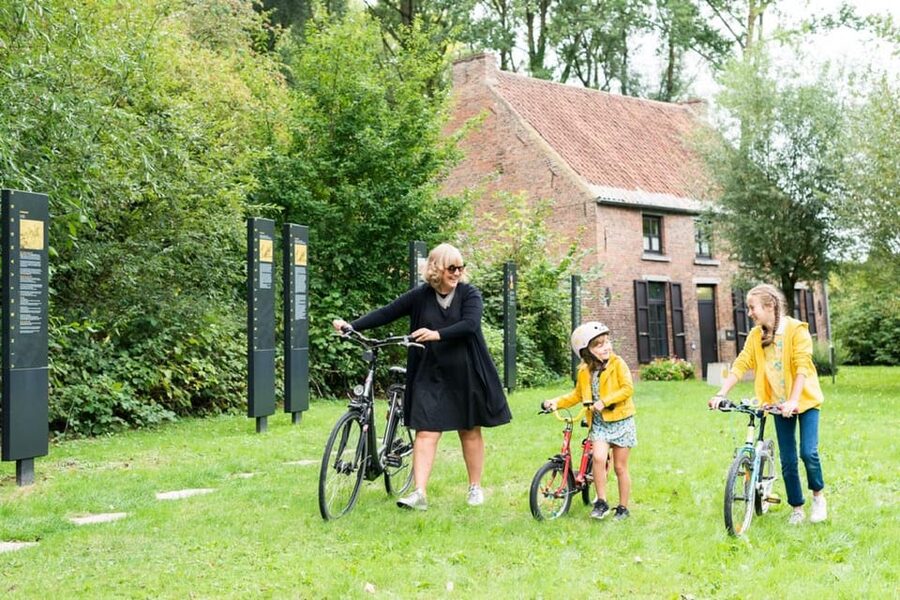
Your visit begins outside, in the garden at the entrance. This is a useful opening because it gives you a moment to adjust to the scale of the site before entering the buildings.
The setting helps establish the atmosphere of Cuesmes. The place is connected to both rural surroundings and a working-class community, two sides of the Borinage that influenced Van Gogh. The garden is not presented as a grand formal attraction. Its value is in creating a quiet sense of place before the more explanatory parts of the visit.
You should allow yourself a little time here rather than rushing straight indoors. Look at the relationship between the garden, the house, and the surrounding area. The point is not to find a dramatic view, but to notice the modest setting Van Gogh knew during these early years.
This opening also helps set expectations. The Van Gogh House is a small place of remembrance, not a large art museum with room after room of paintings. Its strength comes from location and atmosphere.
The renovated pavilion adds the first layer of context
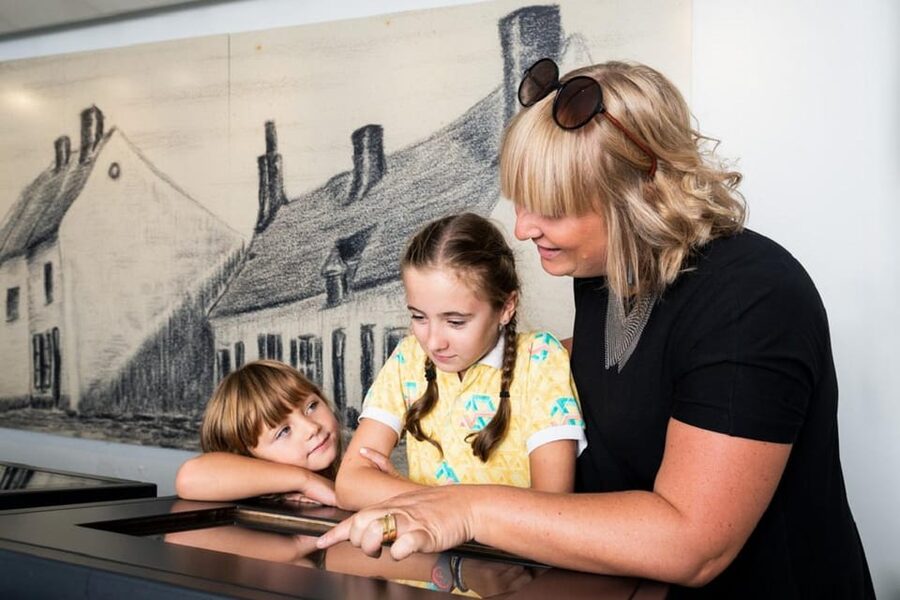
From the garden, the route continues into a renovated pavilion. This part of the visit provides an introduction to the site and Van Gogh’s connection with the Borinage.
The pavilion gives the experience a more modern presentation than the house itself. It helps explain why Cuesmes matters before you enter the intimate historic space. Think of it as preparation for the house rather than a separate attraction.
The contrast between the updated pavilion and the modest home is useful. The modern space can present information and interpretation in a way that the small house cannot. At the same time, it keeps the original building from being overloaded with displays.
If you are visiting with children or students, this section may be especially helpful. It gives a clear starting point for the story, and the site can work as an introduction to Van Gogh’s early development. One visitor specifically praised the patience and clear explanations of a staff member working with pupils, but this should not be confused with a standard guided tour. The ticket includes entry, not a personal guide.
Inside the small house where Van Gogh lived and worked
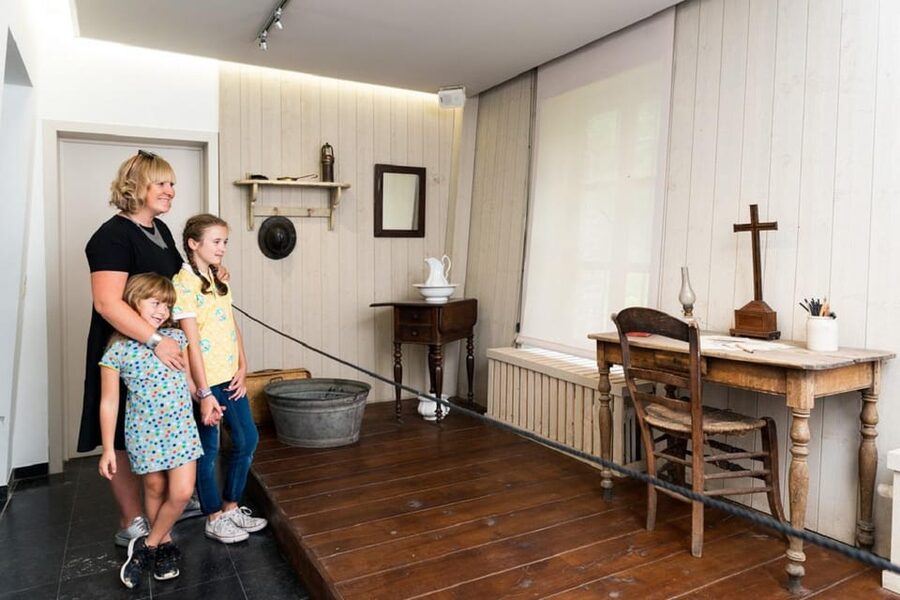
The central part of the visit takes you through the house itself. This is the most important stop because it is the authentic place where Van Gogh lived and worked during his time in the Borinage.
The building is small and simple. That is part of its appeal, but also the main limitation. You will not find a large collection of original Van Gogh paintings or a long sequence of exhibition rooms. The house is best understood as a personal and historical setting.
The restricted size means the visit can feel brief if you are looking for a full afternoon of art. One person found the house extremely limited and wanted more information. That criticism is fair. The site offers a close connection to Van Gogh, but not a large amount of material.
I would approach the house with the right question: not How many objects will I see? but What does this place tell me about Van Gogh before he became Van Gogh? The modest rooms make his early circumstances easier to picture. They also show why the Borinage mattered to his outlook.
The building should appeal most to people who value original places connected to artists. If you mainly want famous paintings, you may find the visit underpowered. If you like tracing an artist’s development through the places he knew, the house earns its small admission fee.
Same city, a completely different kind of day out:
- Brussels: Atomium Entry Ticket with Design Museum Ticket
★ 4.4 · 9,254 reviews - From Brussels: Guided Day Trip to Bruges and Ghent
★ 4.6 · 8,353 reviews - From Brussels: Bruges & Ghent Day Tour – 2 Fairytale Cities
★ 4.7 · 8,242 reviews - Choco-Story Brussels: Chocolate Museum Entrance with Tasting
★ 4.3 · 4,883 reviews
The audio installation puts the Borinage into focus
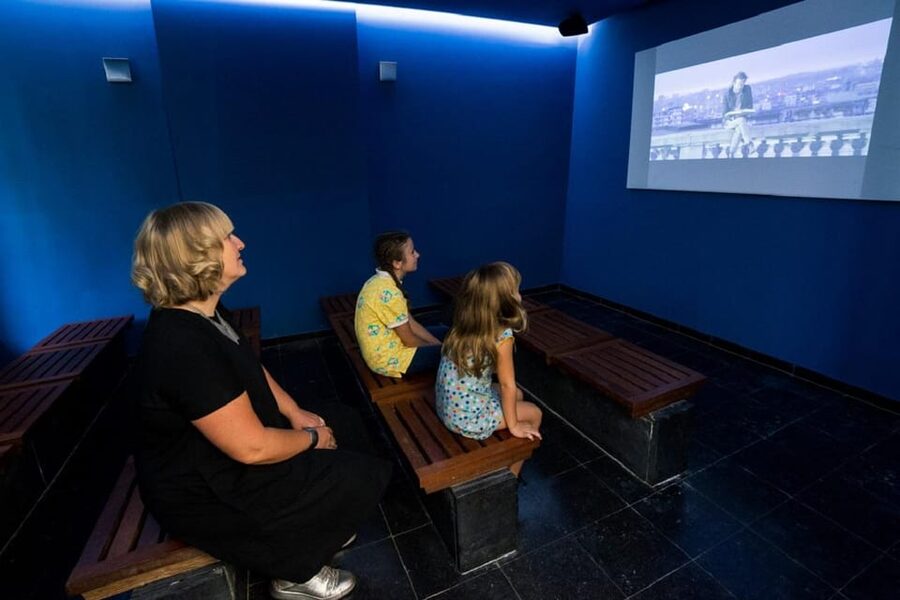
The visit ends with an audio installation that places Van Gogh and his work in the wider setting of the Borinage. This is an important part of the experience because the house alone cannot explain the full meaning of his time in Cuesmes.
The audio presentation connects the artist with the region’s rural and working-class references. It helps you think about how place can shape an artist’s subjects and concerns. Van Gogh carried the impressions of the Borinage with him throughout his life, and this final section makes that connection clear.
The length may not suit everyone. One recent visitor found the film interesting but too long. That is a useful warning if you prefer a quick stop or have a tightly packed day in Mons. Give yourself time for the presentation, but do not assume that a longer format automatically means more useful information for you.
The final audio element also fills a gap created by the lack of a live guide. You receive interpretation, but it comes through the site’s presentation rather than conversation with an expert. You cannot easily ask follow-up questions or adjust the visit to your interests.
What the $5 admission gives you
At a listed price of $5 per person, the Van Gogh House is an inexpensive cultural stop. The value depends on what you want from it.
For a Van Gogh enthusiast, the price is easy to justify. You are entering an authentic place tied to a crucial period of his life, and the visit includes the garden, renovated pavilion, house, and audio installation. It gives you a physical connection that a general biography or art gallery cannot provide.
For a casual visitor, the calculation is different. The house is small, there is no guided tour included, and the experience may not fill a large part of your day. The admission remains modest, but you should treat it as one focused stop in the Mons region rather than a full-day attraction.
The current rating is 3.9 from 22 ratings, which fits the experience well. The strongest positive reactions focus on the setting, the interest of the visit, and clear assistance from staff. The lower reactions focus on the small size and the amount or length of the information. Both sides are reasonable.
I would pair the Van Gogh House with other sights in Mons or the surrounding area. That way, the modest length becomes an advantage. You can visit Cuesmes for its connection to Van Gogh, then continue your day instead of expecting the house to carry the entire itinerary.
Planning your arrival in Cuesmes
You can reach the site by your own transport or by public transport. If you use a bus, check the timetable in advance. The available information does not promise frequent service, so confirming the route before leaving is sensible.
Your booking is tied to a selected time slot. Arrive during that window rather than treating the ticket as an open visit at any point in the day. The ticket is sent by email, and you need to show it at the museum reception.
There has been at least one serious ticket-checking problem at the entrance, with a visitor spending about 45 minutes trying to locate the booking on the provider’s computer. The admission was eventually accepted, but this is exactly the sort of avoidable delay that can spoil a short visit.
I would save the ticket to your phone before arriving. If possible, keep the confirmation email easy to open, and bring a backup screenshot. This is especially useful if you have a timed public transport connection or other Mons plans.
The host or reception support is available in Dutch, English, and French. The activity itself is not described as guided, so language support means you can handle arrival and basic assistance in those languages, not that an interpreter accompanies you through the house.
Who will enjoy this visit most
The Van Gogh House suits you if you like artist homes, local history, and places that explain how a creative life began. It is also a good choice if you are already visiting Mons and want a short cultural outing connected to the wider Walloon region.
Art students and Van Gogh specialists may appreciate the focus on his early influences. The Borinage was not just a backdrop. It offered the rural and working-class references that stayed with Van Gogh and helped shape his attention to ordinary people and difficult lives.
Families can also use the site as a simple introduction to Van Gogh’s early years. The small scale keeps the visit manageable, though the longer audio or film section may test the patience of younger children.
I would be less likely to recommend it as the only reason for a full day in the area. The house contains too little space and too few displays for that. It works best when you build the rest of your day around Mons and treat Cuesmes as a meaningful stop.
The site is wheelchair accessible, which makes it a practical option for visitors who need step-free access. Specific details about every surface or facility are not provided, so you may still want to confirm any personal access needs before setting out.
How to get the most from the modest scale
Read a little about Van Gogh’s time as a preacher before you arrive. You do not need a long biography. Just knowing that he came to the Borinage as a religious worker and began turning toward art will make the rooms feel more significant.
Take your time in the garden. The outdoor setting helps you picture the community around Van Gogh better than a wall label can. Then pay attention to how the pavilion frames the house and how the final audio presentation returns to the wider region.
Do not judge the experience by the number of objects on display. The main attraction is the connection between artist and place. A small house can sometimes say more about an artist’s beginnings than a large gallery filled with later masterpieces.
At the same time, do not expect the site to answer every question. With no guided tour included, you will have to bring some curiosity of your own. If you want detailed discussion of Van Gogh’s technique, paintings, or full career, you will need other museums or reading to complete the picture.
Should you book the Van Gogh House?
Book it if you want an authentic Van Gogh location, a low admission price, and a focused look at the period when he moved from preaching toward art. The garden, house, and Borinage context give the visit genuine value, especially for anyone interested in the sources of his later work.
Skip it if you want a large museum, many original artworks, or a guided experience with extensive explanation. The house is restricted in size, the visit is self-guided, and the audio presentation may feel long to some people.
For most visitors already exploring Mons, I think it is worth adding, provided you keep your expectations modest. Arrive with your emailed ticket ready, check public transport times in advance, and allow the Van Gogh House to be what it is: a small, authentic place that marks the beginning of a much larger artistic story.
FAQ
Where is the Van Gogh House located?
The Van Gogh House is in Cuesmes, a small municipality in the Mons region of Wallonia, Belgium.
When did Vincent van Gogh live at the house?
Van Gogh lived and worked there between 1879 and 1880.
What does the visit include?
Entry includes access to the garden, renovated pavilion, small house, and an audio installation about Van Gogh and the Borinage.
Is a guided tour included?
No. The entry ticket does not include a guided tour.
How much does admission cost?
The listed price is $5 per person.
What languages are available?
Host or reception support is available in Dutch, English, and French.
Do I need to arrive at a set time?
Yes. You should arrive during the time slot you selected when booking.
How do I receive my ticket?
Your entry ticket is sent by email. Show it at the museum reception.
Is the Van Gogh House wheelchair accessible?
Yes, the site is listed as wheelchair accessible.
Just added around Belgium
- Standard vehicle from Brussels airport to city of Antwerp★ 5.0 · 4 reviews
- Visit of Bruges in 1 day private tour from Paris★ 5.0 · 3 reviews
- Luxury Minivan from Brussels airport to the city of Brussels★ 4.0 · 7 reviews
- Transfer Brussels Airport (BRU) –> City Center 7 PAX (ONE WAY)★ 5.0 · 7 reviews
- Luxury vehicle from Brussels airport to the city of Brussels★ 4.0 · 5 reviews
- Transfer Brussels Airport –> Brussels MB V Class 7 PAX (ONE WAY)★ 5.0 · 4 reviews
- Transfer Brussels Airport –> City MB E Class 1-3 PAX (ONE WAY)★ 5.0 · 6 reviews
- PRIVATE MPV TRANSFER FROM/TO BRUSSELS AIRPORT (Max 6 pax) ONE-WAY★ 5.0 · 4 reviews
Historical Tours, compared.



Historical Walking Tour with Chocolate & Waffle Tasting
Read our review →
THE Storytelling Tour of Bruges | First Day Must | History & Tips
Read our review →
Tell Me About Brussels! | First Day Must-Do | Local Storytellers
Read our review →Browse the lists this tour appears in