
Reviewed · GUIDED
Guided tour of Bruges
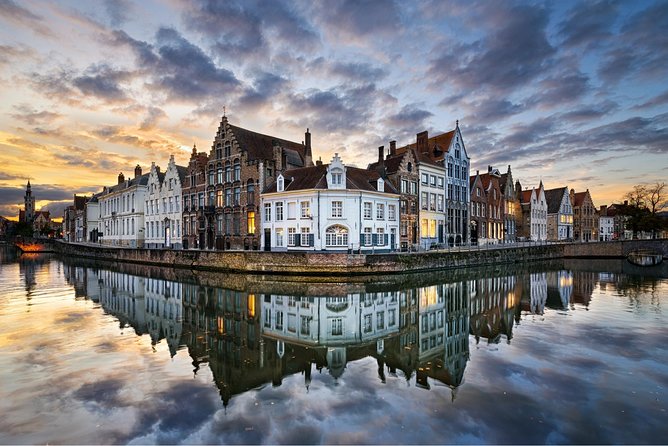
Bruges is easy to admire and easy to misunderstand. Its canals, stepped houses, and polished squares can feel like a pretty stage set until someone explains how beer, trade, religion, illness, and guilds shaped the city. This Spanish-language walking tour does that, moving from Minnewater through the Beguinage and old commercial quarters to Markt Square.
I like the well-chosen route, which links major sights without asking you to pay separate admission fees. I also like the finish at a certified artisan chocolate shop, where you taste chocolate and learn how to tell handmade product from factory-made sweets. The main concern is meeting the guide: one customer had trouble finding the local guide and received confusing help, so arrive early and confirm the meeting point carefully.
Key points at a glance
- Spanish-language walking tour: Hear the stories of Bruges in Spanish from a local professional guide.
- A strong central route: See Minnewater, the Beguinage, Gruuthuse, St. John’s Hospital, Burg Square, canals, and Markt Square.
- Mostly exterior sightseeing: The tour explains churches, palaces, bridges, and squares from outside rather than providing broad interior access.
- Chocolate with context: Finish at Chocolalino for an artisan tasting and practical buying advice.
- Small maximum group: The tour is capped at 24 people, though larger groups must use headphones.
- Good low-cost orientation: At $22.51 per person, it offers a useful first look at Bruges, with free cancellation up to 24 hours before the start.
Why this Spanish tour works well in Bruges
Bruges rewards a walking tour because the city’s beauty can distract you from its story. A canal looks lovely, but knowing that waterways once supported trade gives the view more meaning. A quiet courtyard may seem decorative, but learning that it belonged to a religious community helps you read the city with sharper eyes.
This tour is aimed at Spanish-speaking visitors who want that context without relying on an English guide or a written guidebook. You will walk through the historic center with a local professional guide, stopping often for short explanations and photographs.
The route is also practical for a first visit. It begins near Bargeplein, beside Katelijnparking, and ends at Markt 20, right in the center. You finish close to restaurants, bars, chocolate shops, and the main sights, so the tour can serve as a useful orientation before exploring Bruges on your own.
The published duration is about two hours, though the operator notes that it can run closer to two and a half hours depending on the guide and the group. Plan for the longer estimate. That gives you time to listen, take photographs, and avoid rushing from one stop to the next.
A few more Bruges half days worth weighing up
- Bruges: Small Group Boat Cruise and Guided Walking Tour
★ 4.8 · 4,102 reviews - Bruges: Walking Tour, Canal Boat Trip w/Beer Tasting Option
★ 4.4 · 2,759 reviews - Historical Walking Tour: Legends of Bruges
★ 5.0 · 2,541 reviews
From Minnewater to the Beguinage
The walk begins at Minnewater, often called the Lake of Love. The explanation given here is more interesting than the usual romantic nickname. The Dutch word minne can relate to common or shared, and Minnewater was linked to the old port and to the daily life of the city.
You get about five minutes here, enough for an introduction and a quick look. Do not expect a long stop or a detailed study of the waterway. Its value is as a starting point, connecting Bruges today with the working city that once depended on its port.
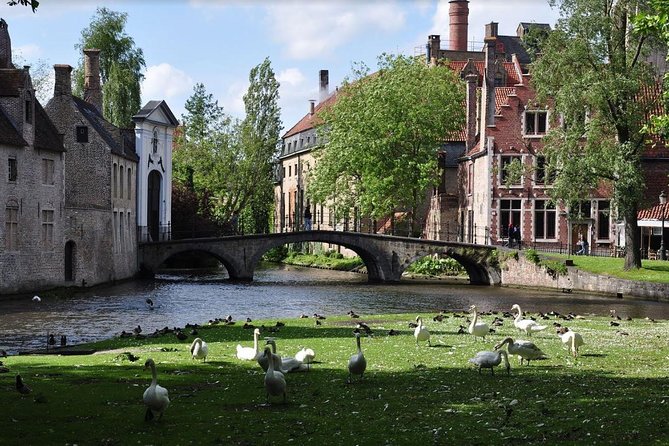
From Minnewater, the group continues to the Princely Beguinage Ten Wijngaarde. This is one of Bruges’ most distinctive places: a calm complex associated with beguines, women who lived in a religious community without taking formal monastic vows in the same way as nuns.
The guide presents the Beguinage as a medieval world of quiet courtyards and white buildings, and explains its UNESCO World Heritage status. You have about ten minutes here. That is enough to appreciate the silence and take in the setting, but not enough for a slow, private visit or detailed interior exploration.
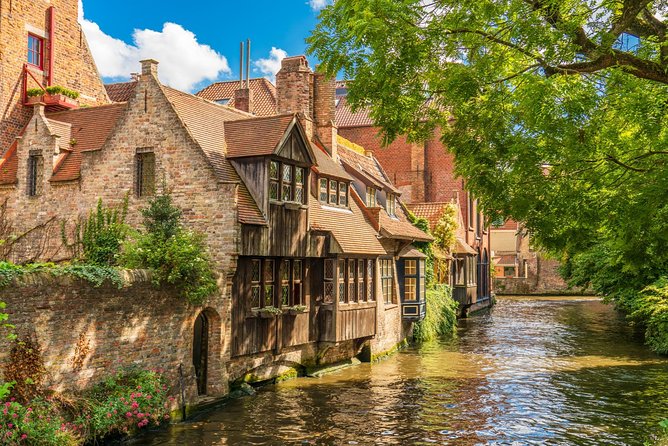
A small bridge nearby provides one of the route’s best photo pauses. Bring your camera out before the group moves on. Bruges can look especially graceful from these narrow crossings, where water, old walls, and passing boats often share the frame.
Beer, old houses, and Bruges’ powerful families
At Walplein, the guide turns to Bruges beer. The stop lasts about five minutes, so this is a short introduction rather than a brewery visit or tasting. Still, it gives you a useful local subject to ask about later, especially when your guide offers suggestions for places to eat and drink.
The next stop, Stoofstraat, focuses on original medieval houses. This is a good example of why a guide helps. On your own, you may notice that some façades look older than others, but you may not know what features to look for. The explanation is brief, yet it gives you a better eye for the buildings as you continue through town.
At Gruuthusemuseum, the group pauses outside for around five minutes. The guide connects the building with the Gruuthuse family, one of the most powerful families in Bruges. The focus is on the people and power behind the architecture, not on an extended museum visit.
That distinction matters. If you want to tour the museum’s collections, you will need to arrange that separately. This experience uses the museum as part of a wider walking route, allowing you to understand its place in the city without stopping for a full indoor visit.
Medieval care at St. John’s Hospital
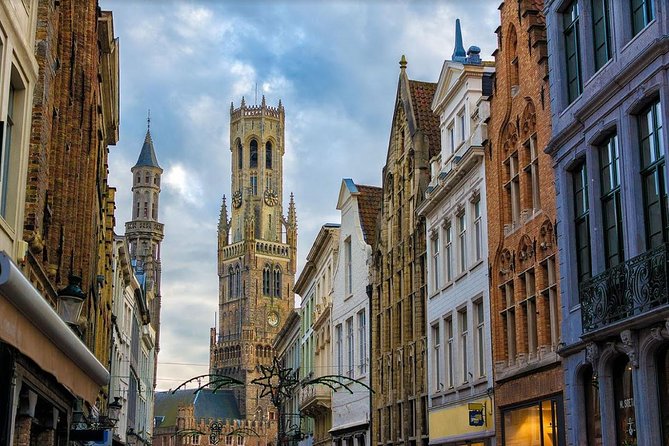
The stop at St. John’s Hospital lasts about eight minutes and looks at how healthcare worked in medieval Bruges. The old hospital is one of the route’s strongest history stops because it connects a visible building with ordinary life: sickness, care, charity, and the limits of medicine in earlier centuries.
Again, the explanation takes place in front of the building. You are not booking a dedicated museum tour or an extended interior visit. If the hospital interests you, note it as a place to return to after the walk.
Nearby, the Church of Our Lady receives a short exterior explanation. The guide discusses the church and the famous white marble Virgin and Child sculpture by Michelangelo, which is inside. The five-minute stop gives you the essential context, but it does not replace seeing the work in person.
This is one of the tour’s clear limitations. The route covers many important buildings, but most are treated from the outside. You get a broad understanding of Bruges and a list of places worth revisiting, rather than a series of interior admissions.
Same city, a completely different kind of day out:
- Bruges: Choco-Story Chocolate Museum Guided Tour w/Tastings
★ 4.2 · 1,379 reviews - From Bruges: Great War Flanders Fields Minibus Tour w/ Lunch
★ 4.9 · 1,257 reviews - Bruges: Guided Rickshaw Tour
★ 4.9 · 1,199 reviews - Round-Trip Shuttle Service from Zeebrugge to Bruges
★ 4.0 · 1,143 reviews
Guilds, bridges, and the best canal views
Huidenvettersplein, or Tanners’ Square, shifts the story from religion and aristocracy to trade. The guide explains the old guild system and the role of working groups in medieval Bruges. The ten-minute stop gives this section a little more time than some of the earlier buildings.
The square is useful because it helps you see Bruges as a commercial city, not just a picturesque one. Merchants, craftspeople, and guilds helped shape the streets you are walking through. Look at the scale and arrangement of the surrounding buildings while the guide explains how the trades fit into city life.
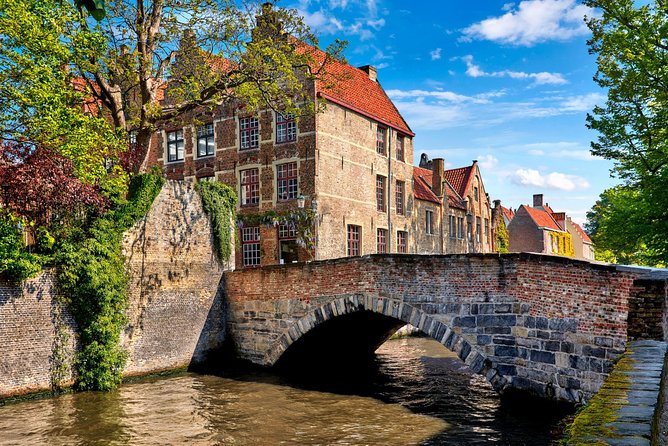
At St. Bonifacius Bridge, the group hears a local legend and has time for photographs. This is a five-minute stop, so the emphasis is atmosphere and storytelling. The bridge is one of the route’s most charming settings, but remember that the small space can feel crowded when a group gathers for pictures.
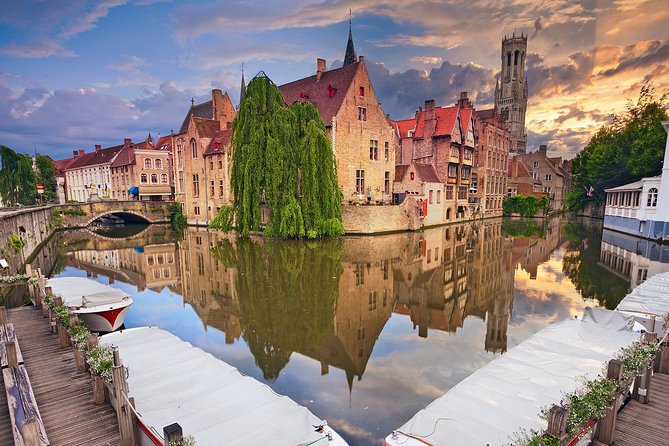
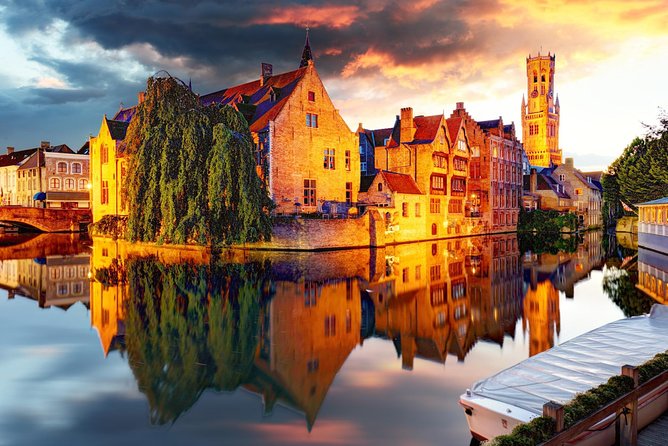
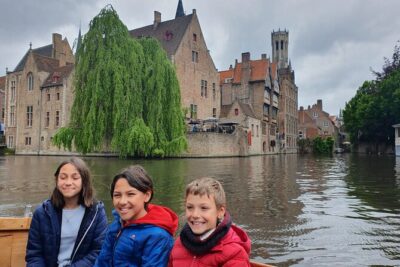
The Quai du Rosaire, also called Rozenhoedkaai, is the classic canal view. The tour spends about ten minutes here, and the guide points out why this spot has become one of Bruges’ most recognizable scenes. Water, historic façades, and the curve of the quay make it a natural place to pause.
The guide also suggests returning in the late afternoon or after dinner. That is practical advice. The light and mood change as the day goes on, and the quay can be a fine place to revisit even if you do not take a boat ride.
A canal cruise is not included. The tour only introduces the setting and explains the appeal of the waterways. If you want to ride, you will pay separately and arrange it on your own.
Burg Square and the political heart of the city
Burg Square is the longest sightseeing stop, at about fifteen minutes. It is the political center of Bruges and brings together buildings from more than a thousand years of city life.
This is where the route’s themes come together. You have seen religious communities, hospitals, merchants, guilds, wealthy families, and waterways. At Burg Square, the guide explains the different architectural styles and the city’s political importance.
I would pay close attention here, since the square can be hard to read without help. Its buildings do not all belong to one period or one design. The guide’s job is to explain how the pieces fit together and to point out what deserves a second look after the group leaves.
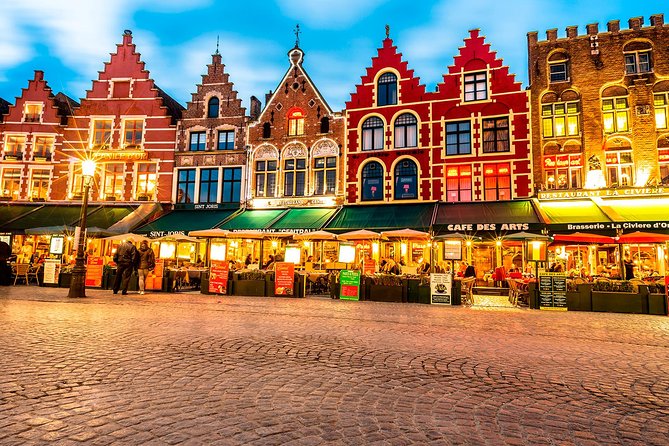
The walk ends at Markt Square, at Markt 20. Your guide explains the buildings around the plaza and gives tips on restaurants, bars, and shops selling traditional chocolate. This is a useful ending because you are not left at an isolated meeting point. You are already in the center, ready to continue your day.
What happens at Chocolalino
The final stop is Chocolalino, a certified artisan chocolate shop. You spend about eight minutes tasting artisan chocolates while the guide explains how to distinguish handmade chocolate from industrial product.
This is not a full food tour, and meals and drinks are not included. The tasting is small, but it adds a local food angle to a walk that otherwise focuses on buildings and history. It also gives you a practical way to judge the many chocolate shops you will see in Bruges.
You should treat the tasting as an introduction, not a shopping requirement. The guide offers advice on where to buy traditional chocolate, and you can use that information later. Ending with chocolate also keeps the mood light after a route packed with churches, hospitals, political buildings, and medieval trade.
Price, group size, and the headphone issue
At $22.51 per person, this is a modest price for a guided introduction to central Bruges. You are paying mainly for the Spanish-language explanation and the route planning, not for museum admissions or a meal.
The value is strongest if you want help getting your bearings. In two to two and a half hours, you cover a wide section of the historic center and receive suggestions for food, drink, chocolate, and places worth returning to. If you already know Bruges well, the tour may feel too basic, especially because the major interiors are not included.
The maximum group size is 24 people. That is not a private walk, but it is more manageable than a large coach group. Groups larger than 24 must use radios and headphones, and the operator may sometimes use this system because of local tourism rules.
You can use your own headphones if required. If you do not have them, the guides offer a pair for €1. This is a small extra cost, but it is worth knowing before you arrive.
The overall score is 4.6 from 54 ratings, with 91 percent recommending the experience. One serious practical warning comes from a failed meeting experience: a customer could not find the local guide and found the help confusing. I would arrive early at Bargeplein, keep the booking confirmation available on your phone, and make sure you can identify the guide before the walk begins.
Who should book this walk
I would choose this tour if you speak Spanish and want a clear first look at Bruges. It suits first-time visitors who prefer a walking route with history, photographs, local food tips, and a small chocolate tasting rather than a long museum visit.
It also works well for someone with only part of a day in Bruges. The end point at Markt Square puts you close to the center’s restaurants and bars, and the route gives you a sensible list of places to revisit later.
You may want something else if you need wheelchair-specific planning, extensive indoor access, a private guide, or a full food experience. The supplied details say most people can participate, but they do not provide specific accessibility information. The route includes bridges, squares, canals, and historic streets, so ask the provider directly if you have mobility concerns.
Keep the weather in mind. The experience requires good weather and may be moved or canceled if conditions are poor. If it is canceled for weather or because the minimum number of participants is not reached, you can choose another date or receive a full refund.
Should you book it?
Book this tour if you want Spanish-language context, a well-planned route through Bruges, and practical tips for the rest of your stay. The chocolate tasting is a pleasant extra, while the strongest value comes from linking the city’s canals, guilds, hospitals, churches, and squares into one understandable story.
Skip it if you mainly want interior visits, a boat ride, or a long tasting session. For everyone else, $22.51 is a fair price for a compact introduction, provided you arrive early and confirm exactly where to meet the guide.
FAQ
Is the Bruges tour conducted in Spanish?
Yes. The experience includes a Spanish-speaking local professional guide who explains the city’s history and landmarks.
How long does the tour last?
The tour is advertised at about two hours, but it may last closer to two and a half hours depending on the guide and the group.
Where does the tour begin?
It begins at Bargeplein, beside Katelijnparking on Bargeweg in Bruges.
Where does the tour end?
It ends at Markt 20 in central Bruges, close to restaurants, bars, and shops.
Is chocolate included?
The tour includes a tasting of artisan chocolates at Chocolalino. Other food and drinks are not included.
Are museum and church admission fees included?
The stated stops are free exterior visits. The tour does not include separate admission to museums or other interiors.
Are headphones required?
Groups of more than 24 people must use headphones. The guides provide them for €1 per pair, and you may use your own headphones. Local tourism rules may also require radio systems at times.
Can I cancel for a refund?
Yes. You can cancel at least 24 hours before the start time for a full refund. Cancellations or changes made within 24 hours are not refunded or accepted.
Just added around Bruges
- 2-Hour Private Walking Tour of Bruges★ 5.0 · 13 reviews
- The Waffles ‘n Coffee Breakfast in Bruges Centre★ 4.5 · 9 reviews
- Ticket Expo Body Worlds in Bruges, Belgium★ 4.5 · 11 reviews
- Discover the secrets of Bruges by playing!★ 4.5 · 7 reviews
- Explore the Instaworthy Spots of Bruges with a Local★ 5.0 · 3 reviews
- Australian Battlefields Private Tour in Flanders from Bruges★ 5.0 · 15 reviews
- 6 Hour Bruges Shore Excursion from Zeebrugge Cruise Port★ 4.5 · 23 reviews
- Photo Tour “Jan van Eyck”★ 4.0 · 7 reviews
Guided, compared.
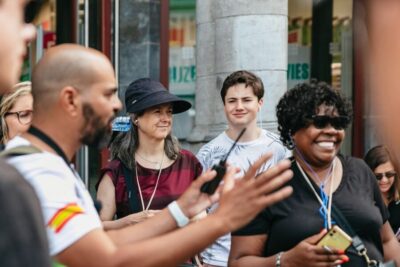


Small Group Boat Cruise and Guided Walking Tour
Read our review →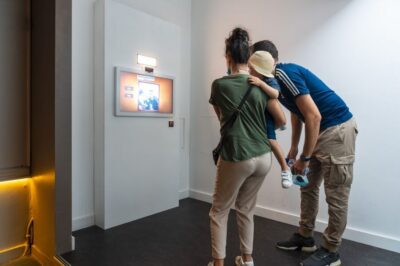
Choco-Story Chocolate Museum Guided Tour w/Tastings
Read our review →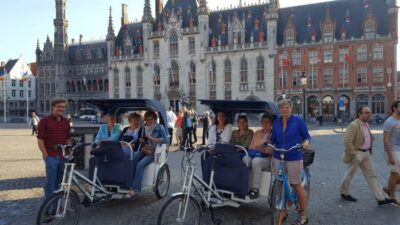
Browse the lists this tour appears in