
Reviewed · ATOMIUM TICKETS & TOURS
Excursion to Antwerp and Ghent by bus from Brussels with stop at the Atomium
Antwerp and Ghent give you two very different Belgian city experiences in one long day. You begin with a quick photo stop at the Atomium, then walk Antwerp’s riverfront, medieval center, Rubens-linked churches, and shopping streets before moving on to Ghent’s canals, towers, guild houses, and old market squares.
I like the Spanish-speaking guide and the way the day mixes guided orientation with free time. I also like the practical bus connection, since arranging Antwerp and Ghent independently in one day takes more planning. The tradeoff is pace: with roughly 90 minutes of free time in each city, you will see the main sights but will not have room for a relaxed museum visit.
Key points at a glance
- Three Belgian highlights in one day: Photograph the Atomium, then visit Antwerp and Ghent without changing trains.
- Antwerp’s art and medieval center: See Rubens-linked churches, the cathedral, Grote Markt, Het Steen, and the famous hand symbol.
- Ghent’s postcard views: Walk across St. Michael’s Bridge and along Graslei and Korenlei beside the Lys River.
- Spanish-language storytelling: Guide assignments vary, with past departures praised for guides including Pablo, Marc, Carlos Manuel, Estela, Pili, Jesús, and others.
- Useful free time: You get about 1.5 hours in Antwerp and another 1.5 hours in Ghent, depending on traffic and group pace.
- A long but efficient day: The tour lasts about 10 hours and returns to the Brussels meeting point.
Why this day trip works from Brussels
At $55.73 per person, this is priced as a transport-and-orientation day rather than a museum-heavy tour. That matters because the real value is the amount of ground you cover: Brussels, the Atomium, Antwerp, and Ghent in one outing, with a guide to explain what you are seeing.
I would consider it good value if you have only a few days in Belgium and want a first look at both cities. You avoid arranging separate train tickets, finding city centers, and working out how to get back to Brussels after a full day.
The start is at 8:30 a.m. at Carrefour de l’Europe near Brussels Central Station. You must make your own way there because hotel pickup and return are not included. The bus is air-conditioned, and the group can reach as many as 45 people, so expect a proper coach excursion rather than a small private tour.
More ways into the Atomium:
- Brussels: Atomium Entry Ticket with Design Museum Ticket
★ 4.4 · 9,254 reviews - Antwerp and Ghent Day Trip from Brussels With Atomium Photo Stop
★ 4.5 · 210 reviews - From Brussels: Day Trip to Ghent with Atomium
★ 4.7 · 163 reviews
The Atomium photo stop takes 15 minutes
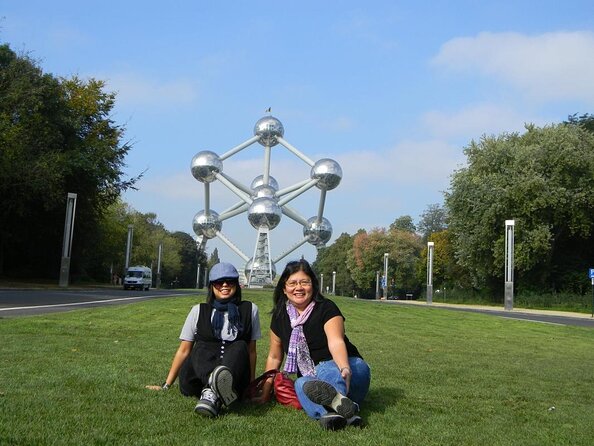
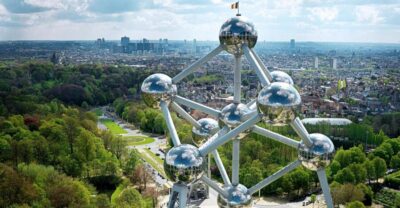
The first stop is the Atomium, the distinctive Brussels monument formed like a giant molecular structure. This is a short outdoor stop for photographs, not a visit inside the building.
That distinction is important. You will have about 15 minutes, so use the time for a quick look and a few pictures. You should not expect time to visit the exhibitions or ride up into the spheres.
Still, the stop adds something useful. The Atomium is one of Belgium’s best-known modern landmarks, and seeing it at the start gives the day a clear sense of place before the tour moves into Antwerp’s older streets.
Antwerp begins at the Scheldt River
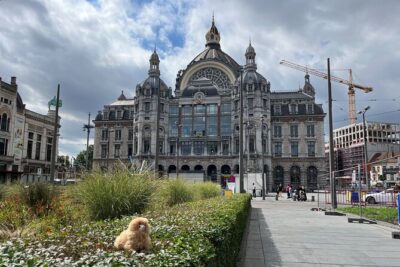
The bus drops you near Plantinkaai, and the group walks toward the center along the river route. At Steenplein, you pause for a bathroom break, hear a short introduction to Antwerp, and receive the practical details for the afternoon meeting point.
This is a sensible beginning. Antwerp can feel spread out when you first arrive, so learning where the bus will collect you saves confusion later. The river and modern towers also give you a quick introduction to the city’s position as a major port.
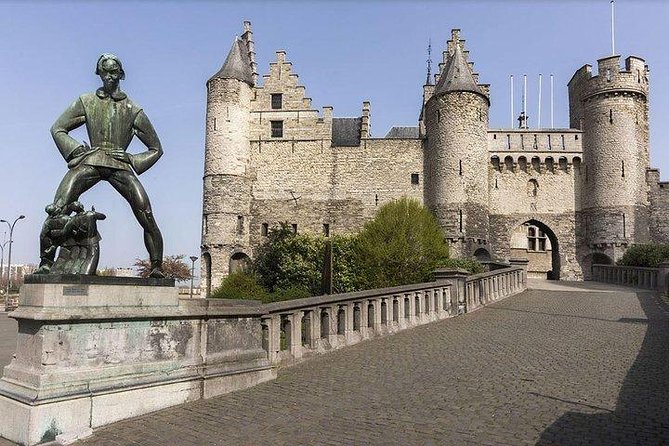
The stop at Het Steen follows. This castle is one of Antwerp’s best-known medieval buildings, and the guide explains its place in the city’s story. You also hear why roofs in Belgium and the Netherlands often have their distinctive shapes.
The visit is brief, only about seven minutes. Think of it as a guided glance and a photo opportunity, not a castle tour.
Antwerp’s old trade quarter and Grote Markt
At Vleeshuisstraat, the guide explains the former meat market and how trade was organized in earlier centuries. This is one of the more useful stops because the building is not treated as an isolated monument. You get a sense of how commerce shaped the streets around it.
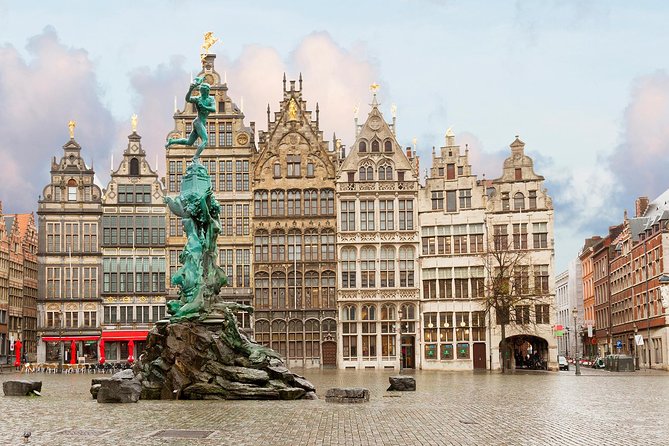
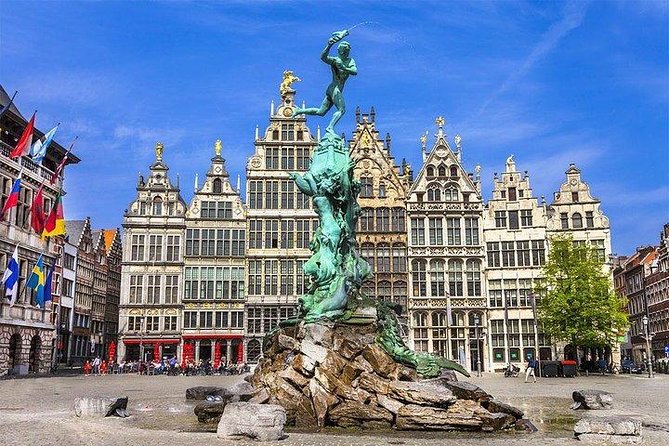
The walk then reaches Grote Markt, Antwerp’s main historic square. Here you see the town hall, ornate guild houses, and the Brabo statue. The guide tells the legend connected with the sculpture, which features a giant hand and helps explain why that symbol appears so often in Antwerp.
Allow yourself a few minutes to look upward. The guild houses are easy to rush past when the group is moving, but their decorated façades are one of the square’s main rewards. The guided explanation helps you notice details you might otherwise miss.
A few more Brussels half days worth weighing up
- From Brussels: Guided Day Trip to Bruges and Ghent
★ 4.6 · 8,353 reviews - From Brussels: Bruges & Ghent Day Tour – 2 Fairytale Cities
★ 4.7 · 8,242 reviews - Choco-Story Brussels: Chocolate Museum Entrance with Tasting
★ 4.3 · 4,883 reviews - Bruges and Ghent – Belgium’s Fairytale Cities – from Brussels
★ 4.0 · 4,809 reviews
Rubens, churches, and Antwerp’s cathedral
The next stop is the Church of St. Charles Borromeus, formerly associated with St. Ignatius of Loyola. You go inside and receive an explanation of a Rubens painting in its religious and artistic setting.
The tour then heads toward the Cathedral of Our Lady. Along the way, the guide talks about how Belgian politics works, an unusual but potentially useful piece of context if you are trying to understand the country beyond its buildings.
Inside the cathedral, the guide points out its architectural styles and works by Rubens. The visit is scheduled for about 15 minutes, so you should not expect to study every chapel or artwork at length. You will, however, get a clear introduction to one of Antwerp’s major landmarks.
In front of the cathedral is a sculpture with an emotional story behind it. The tour uses this stop to connect public art with local memory, rather than treating the square as just another photo location.
At Groenplaats, the guide explains how the former cathedral cemetery became today’s green square. It is also a good place to photograph the cathedral and the Rubens sculpture nearby.
Meir offers Antwerp’s modern contrast
The walk continues to Meir, Antwerp’s main shopping avenue. This section changes the mood from medieval buildings and religious art to grand commercial architecture.
Look for the giant hand sculpture along the avenue. The guide connects it with Antwerp and wider Belgian symbolism, building on the story introduced at Grote Markt.
You then have about 1.5 hours of free time in Antwerp, though traffic and the group’s pace can affect the exact schedule. This is enough for lunch, a quick independent walk, or a return to one nearby sight that caught your attention.
It is not enough for a leisurely museum visit plus a long meal. I would use this break for something simple: eat near the central area, browse Meir, revisit Grote Markt, or take photographs. Your guide can suggest places to eat, but food and drinks are not included.
The bus ride to Ghent is part of the tradeoff
After free time, you return to Plantinkaai for the bus to Ghent. This transfer is convenient, but it is also where the schedule is most exposed to road conditions.
A previous departure experienced a major delay between Antwerp and Ghent after an accident caused traffic problems. The operator apologized and explained that the delay was outside its control. That is a useful warning: a 10-hour bus day can stretch longer, and you should avoid booking a tight evening connection afterward.
The bus is the tour’s main practical advantage, but it also creates the main risk. Trains are usually less vulnerable to highway congestion, while a group coach cannot move until everyone is back at the meeting point.
Ghent opens with towers and medieval streets
The bus arrives near Ghent, and the group walks about five minutes toward the center. The guided walk begins at Ghent Town Hall, where you learn about the building’s mix of architectural styles.
From there, the tour reaches the Belfry of Ghent. The guide explains the tower, its role in the city, and the dragon connected with it. You will not be climbing the tower as part of this tour, but the exterior explanation helps you understand why the Belfry is such a central symbol.
St. Bavo’s Cathedral receives the longest stop, about 25 minutes. You see both the outside and inside, including the famous Adoration of the Mystic Lamb by the Van Eyck brothers.
The painting is one of the most important works connected with Ghent, and the guide gives it a memorable hook by explaining its reputation as one of the most stolen paintings in history. Your time inside remains limited, so if the altarpiece is your main reason for visiting Ghent, pay close attention and keep your own sightseeing focused.
Ghent’s churches and guild houses
The walk continues to St. Nicholas Church, where the guide notes that Belgian churches can host concerts and other events. It is a short stop, but it adds a little present-day context to the old building.
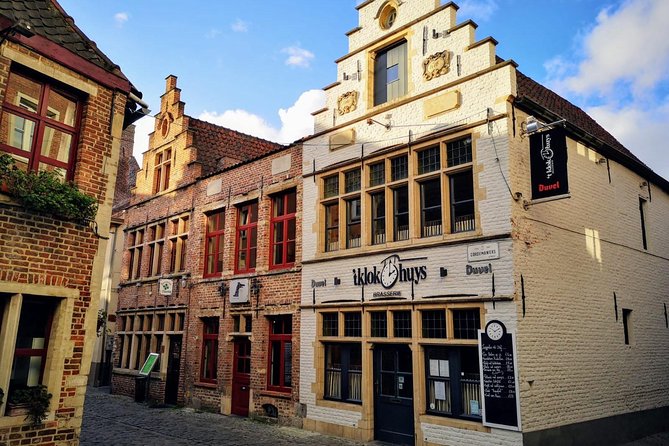
At the Masons’ Guild Hall, you learn what guild houses were and why their façades were distinctive. This is a useful link back to Antwerp’s Grote Markt, since both cities use decorated guild buildings to show how trade and civic life once worked.
Korenmarkt follows. The square sits in front of St. Nicholas Church, and the guide explains the unusual story connected with the former post office building. You have only a few minutes here, but the location is one of the natural centers of Ghent’s old town.
St. Michael’s Bridge gives you the classic view
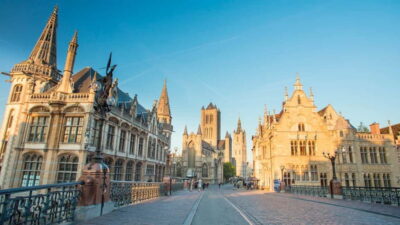
St. Michael’s Bridge is one of the best photo stops of the day. From here, you can take in several of Ghent’s famous towers and the historic buildings around the river.
The guide also explains the tower of St. Michael’s Church, giving the view a bit more meaning than a simple stop for photographs. Bring a phone or camera ready because this is one of the places where the group may pause only briefly.
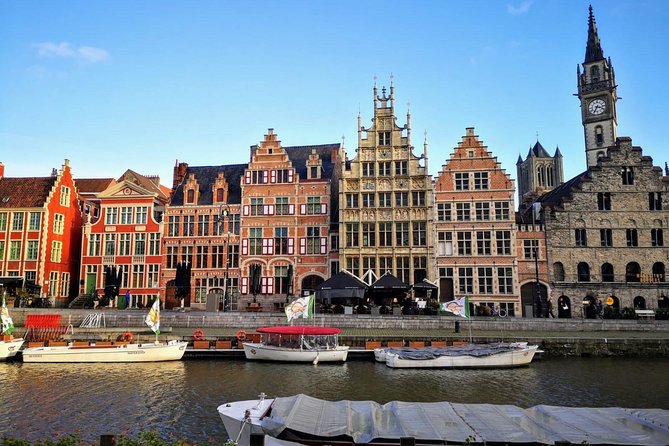
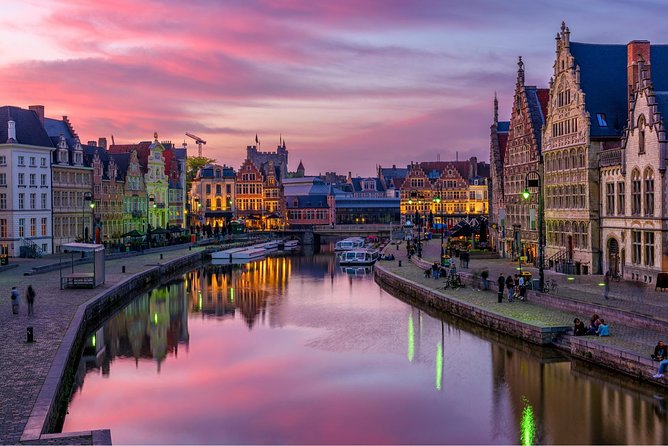
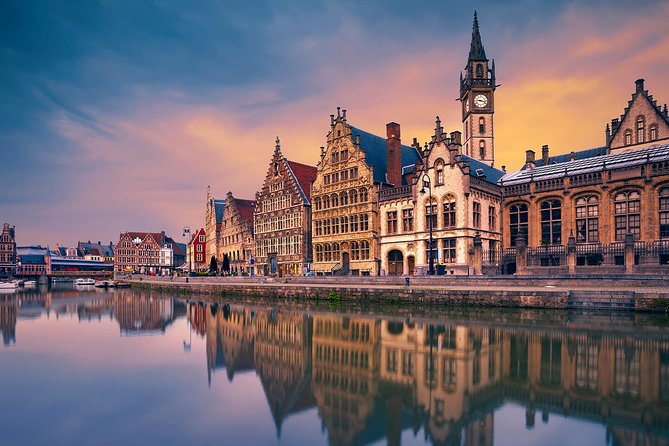
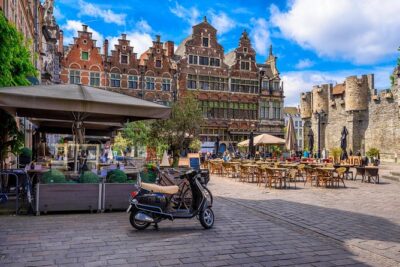
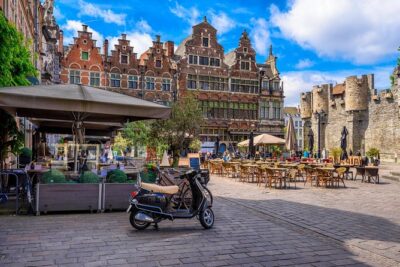
After the bridge, the walk follows the Lys River along Graslei and Korenlei. These quays are lined with historic buildings, including the former grain house and the building now used as the Marriott Hotel.
This is likely to be one of your favorite sections. The water, façades, bridges, and closely packed old buildings create the strongest visual contrast with Antwerp’s broad shopping avenue. You get time for photographs, but the walk remains guided and brisk.
Meat halls, cuberdons, and Sint-Veerleplein
The tour continues to the 15th-century meat house, once a covered market. The guide explains its original purpose, giving you another look at how food trade shaped the medieval city.
Across from it, at Kleine Vismarkt, you stop at a traditional street stall. The seller explains cuberdons, the cone-shaped sweet most associated with Ghent. This is a small but enjoyable local detail, particularly if you want to try a food connected with the city rather than simply stop for a generic snack.
The guided walk ends at Sint-Veerleplein. Here you hear about the square and the buildings around it, then receive suggestions for eating and souvenir shopping.
The guide also repeats the bus departure details. Pay attention. With several stops and free time, it is easy to become distracted, and missing the meeting time would turn a convenient day trip into a difficult evening.
You receive about 1.5 hours of free time in Ghent. Use it for a meal, more photographs along the canals, a short independent walk, or a return to a favorite square. As in Antwerp, the time is useful but tight.
What the Spanish guide adds
The quality of this tour depends heavily on the guide. The guides assigned to past departures have included Pablo, Marc, Carlos Manuel, Estela, Pili, Jesús, and others. Individual styles differ, but the strongest descriptions consistently focus on clear explanations, humor, friendliness, and a large number of small facts and curiosities.
Pablo was especially praised for turning the day into an entertaining circuit, while Marc was described as bringing stories to life. Carlos Manuel was noted for his formal training and broad command of the subject. Estela was praised across several excursions for making the walking tours lively and easy to follow.
You should not book on the assumption that one particular guide will lead your departure. Names and assignments can change. The reliable point is that this is designed as a Spanish-language tour, which can make the historical and political explanations easier to follow than a multilingual group outing.
The guide also gives you maps and suggestions for independent time. That small service matters on a packed day because you can choose how to spend your limited free time instead of wandering without a plan.
Who will get the most from this tour
I would choose this excursion if you want an efficient first look at Antwerp and Ghent, especially if you are staying in Brussels for only a short time. It suits visitors who prefer having transport, meeting points, and a Spanish-speaking escort arranged in advance.
It also works well for people who like guided context but still want some freedom. The walking tours explain the main sights, then you can eat or explore alone in both cities.
I would be more cautious if you want slow travel. Ten hours, two cities, a photo stop, several walking sections, and two bus transfers make this a full day. You will spend much of it on your feet, and the schedule can change with traffic.
Families can participate, but children from birth to age three must use an approved safety chair on the bus. You need to bring the appropriate chair yourself.
The group may reach 45 people, so this is not the right choice if you want a quiet, personal tour. It is a practical group outing with the benefits and limits that come with that format.
Is $55.73 a fair price?
For $55.73, the price is reasonable if you value convenience. Round-trip coach transport, a Spanish-speaking professional guide, guided walks in both cities, maps, and local suggestions would cost more in time and planning if arranged separately.
The price does not include food, drinks, hotel pickup, or entry tickets. The listed stops are mainly exterior visits, with entry into the churches when included in the walking route. You should budget separately for lunch and any optional admission you choose during free time.
The biggest value is not the number of included attractions. It is the chance to see two important Belgian cities in one day without managing the transport yourself.
Booking advice and cancellation terms
Your booking is confirmed at the time of reservation, and you can cancel for a full refund up to 24 hours before the 8:30 a.m. start time. Changes made inside that 24-hour window are not accepted, and the payment is not refunded for a late cancellation.
The tour depends on suitable weather and a minimum number of participants. If the operator cancels for either reason, you are offered another date or experience, or a full refund.
I would leave some flexibility after the tour because road traffic can affect the return time. That is especially important if you have an evening train, restaurant reservation, or airport transfer.
Should you book the Antwerp and Ghent day trip?
Book it if you want maximum coverage with minimum planning. The Atomium, Antwerp’s Rubens connections, medieval squares, Ghent’s canals, St. Bavo’s Cathedral, and the Van Eyck altarpiece make this a strong introduction to northern Belgium.
Skip it if you want to spend half a day in one museum, linger over lunch, or explore either city at a slow pace. The schedule is packed, the free time is short, and a traffic delay is possible.
For a first visit from Brussels, I think the balance is worthwhile. Go in expecting an organized sampler, not a relaxed city break, and you will know exactly what this tour can deliver.
FAQ
Where does the tour start?
The tour starts at 8:30 a.m. at Carrefour de l’Europe, Carr de l’Europe, 1000 Brussels, near public transportation.
Does the tour include hotel pickup?
No. Hotel pickup and return are not included. You must reach the Brussels meeting point yourself.
Is the tour conducted in Spanish?
Yes. A professional Spanish-speaking guide leads the tour.
How long does the tour last?
The excursion lasts approximately 10 hours and returns to the Brussels meeting point.
How much free time do I get in Antwerp and Ghent?
You get approximately 1.5 hours of free time in Antwerp and about 1.5 hours in Ghent. The exact amount can change with traffic and the pace of the group.
Are food and drinks included?
No. Food and drinks are not included, though the guide can suggest places to eat.
What happens if I need to cancel?
You can cancel for a full refund up to 24 hours before the experience starts. Cancellations or changes made less than 24 hours before departure are not accepted for a refund.
Just added around Brussels
- Standard vehicle from Brussels airport to city of Antwerp★ 5.0 · 4 reviews
- Luxury Minivan from Brussels airport to the city of Brussels★ 4.0 · 7 reviews
- Transfer Brussels Airport (BRU) –> City Center 7 PAX (ONE WAY)★ 5.0 · 7 reviews
- Luxury vehicle from Brussels airport to the city of Brussels★ 4.0 · 5 reviews
- Transfer Brussels Airport –> City MB E Class 1-3 PAX (ONE WAY)★ 5.0 · 6 reviews
- PRIVATE MPV TRANSFER FROM/TO BRUSSELS AIRPORT (Max 6 pax) ONE-WAY★ 5.0 · 4 reviews
- Transfer Brussels Airport –> Brussels MB V Class 7 PAX (ONE WAY)★ 5.0 · 4 reviews
- Waterloo Private Battlegrounds Tour with Lion Hill★ 4.5 · 9 reviews
Atomium Tickets & Tours, compared.

Atomium Entry Ticket with Design Museum Ticket
Read our review →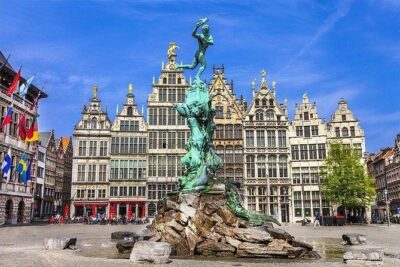
Antwerp and Ghent Day Trip from Brussels With Atomium Photo Stop
Read our review →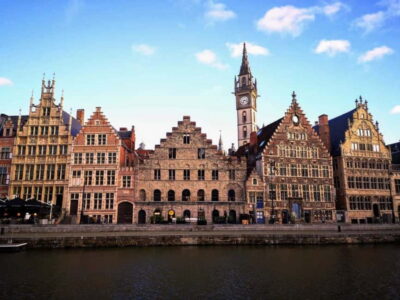
Belgium in a Private Day Antwerp Atomium Brussels with Tastings
Read our review →Browse the lists this tour appears in