
Reviewed · BRUSSELS TOURS
Architecture Tour of Brussels
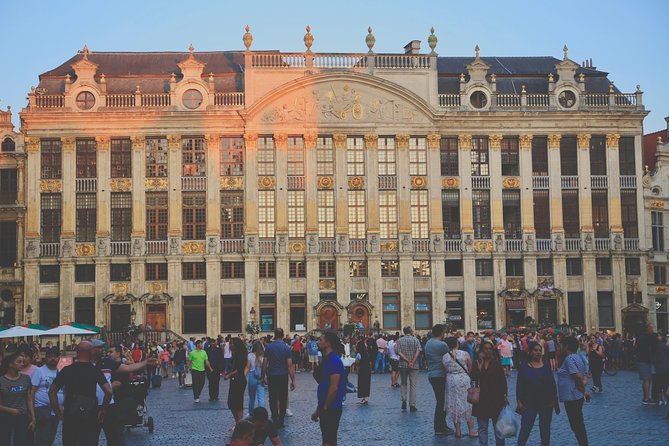
Brussels reveals its best stories through its buildings, and this walking tour connects them in a tidy two-hour route. You begin at Grand Place, follow streets shaped by markets, theaters, rivers, commerce, and revolution, then finish at Mont des Arts with a classic view toward the City Hall tower and Royal Palace. The architect guide adds a useful layer, helping you see why facades, streets, and public spaces look the way they do.
I like the wide range of styles packed into one walk, from the Gothic and Baroque decoration of Grand Place to the elegant glass roof of Galeries Royales Saint-Hubert and the church architecture around the Sablon. I also like the evening start at 8:00 pm, when the old center can feel especially atmospheric and you can photograph Brussels from Mont des Arts at the end.
The main consideration is pace. Ten stops in about two hours means some places receive only five or ten minutes, and there is no transport included. You will see plenty, but this is an introduction to Brussels architecture rather than a slow, detailed inspection of every building.
Key points to know before you book
- An architect guide shapes the walk: Guides including Gamaal and Jimmy have been praised for clear explanations, humor, local recommendations, and adapting the route to group interests.
- Grand Place sets the tone: You examine how a wooden market square became one of Europe’s great Gothic and Baroque spaces.
- The route covers ten central stops: You pass major landmarks, churches, theaters, shopping arcades, statues, and cultural buildings without needing a separate museum ticket.
- Mont des Arts supplies the finale: The view takes in the old city, City Hall tower, and Royal Palace.
- The group is limited to 18 people: That is small enough for questions, though the exact feel depends on how many places are filled.
- The price is modest for a guided city introduction: At $30.10 per person, the value comes from the connections between buildings rather than admission to interiors.
Why this Brussels walk works best as an introduction
The route is built around connections. Instead of treating Grand Place, Manneken Pis, the Sablon, and Mont des Arts as isolated photo stops, the guide links them through the city’s growth.
You hear how Brussels developed from a market town with wooden houses into a capital filled with Gothic, Baroque, neoclassical, and modern cultural buildings. That approach suits you if you want to understand the city before exploring it on your own.
The guide’s architectural training matters here. A standard sightseeing walk might tell you what a building is called. This tour aims to explain how its facade works, why the street took its present shape, and what role the building played in Brussels life.
The walk is offered in English and begins at 8:00 pm outside the Godiva shop at Grand Place 21/22. It ends back at the meeting point. Since transport is not included, you should be ready to walk between the stops and arrange your own way to and from the square.
A few more Brussels half days worth weighing up
- Brussels: Atomium Entry Ticket with Design Museum Ticket
★ 4.4 · 9,254 reviews - From Brussels: Guided Day Trip to Bruges and Ghent
★ 4.6 · 8,353 reviews - From Brussels: Bruges & Ghent Day Tour – 2 Fairytale Cities
★ 4.7 · 8,242 reviews
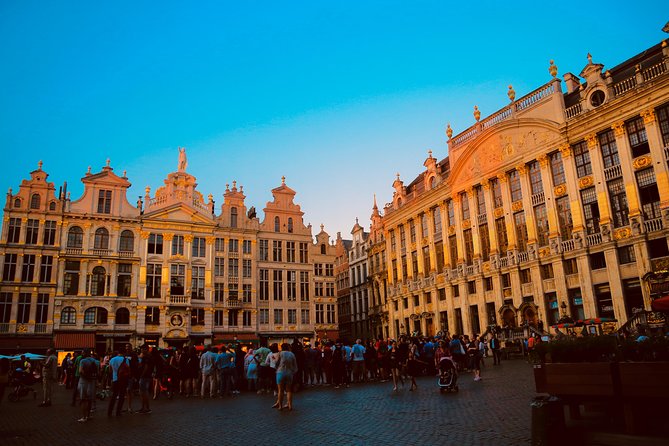
Grand Place: from wooden market houses to ornate facades
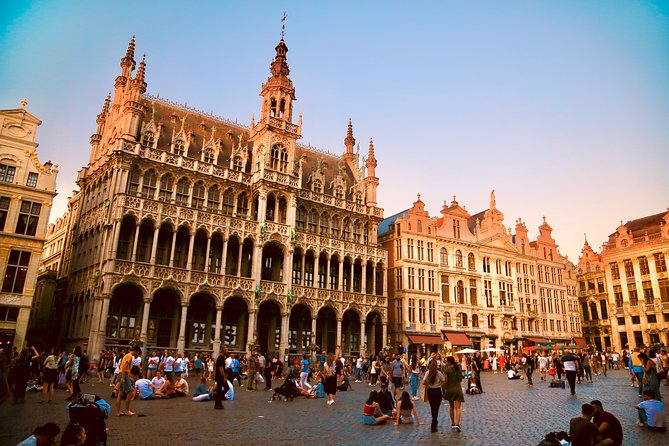
The first 20 minutes focus on Grand Place, the most important visual opening for this tour. It is a UNESCO World Heritage site and one of the most visited places in Belgium.
The useful part is the change over time. The square began as a market area surrounded by wooden houses. Fire, rebuilding, civic ambition, and changing tastes helped produce the stone facades you see today.
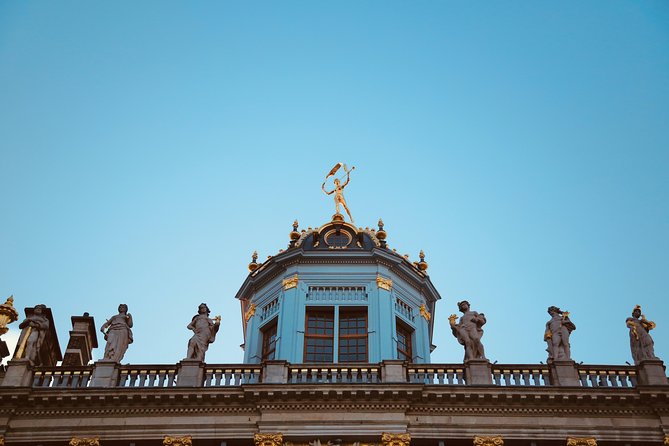
You study the architecture rather than simply taking a picture and moving on. Gothic and Baroque forms appear in the decorative fronts, guild buildings, and civic structures around the square. The guide also brings in the famous people who lived there, giving the buildings a human side.
Grand Place is a strong start because almost every traveler can appreciate it visually, but the explanation helps you look past the gold trim and ornate details. In the evening, the square may also offer a more atmospheric setting for the opening talk.
Galeries Royales Saint-Hubert and the idea of a shopping arcade
After Grand Place, the walk spends about 20 minutes at Galeries Royales Saint-Hubert. The arcade is presented as the first shopping mall in the world and is the same age as Belgium.
Here, the focus shifts from squares and guild architecture to urban planning and commercial ambition. You learn about the architect who imagined the project, then worked through contacts and persistence to make it real.
The glass-covered passage is more than a pleasant place to window-shop. It shows how nineteenth-century Brussels created a controlled public space where shopping, walking, dining, and social life could happen under one roof.
The route also points out cafes associated with famous authors. That detail gives the arcade a literary connection, though the short stop means you should expect an overview rather than a full literary tour.
La Monnaie and Place De Brouckereplein
The 10-minute stop at La Monnaie introduces the royal theater and its long role in city life. The guide also points out the shopping street nearby and explains the revolution connected with the area.
This is one of the tour’s strongest examples of architecture tied to politics and public events. A theater is not just a performance hall. It can become a gathering place, a civic symbol, and part of the story of national change.
The next stop, Place De Brouckereplein, also lasts about 10 minutes. The discussion centers on the De Brouckere palace and the old river route through Brussels.
The lost or altered waterway is important because it shows how the city’s defenses and movement once depended on water. You get a sense of how the urban center functioned before modern streets and public works reshaped it.
These two stops are brief, so you will not receive a full architectural survey of either site. Their value is in showing how theaters, rivers, streets, and political events helped shape the city you see today.
Same city, a completely different kind of day out:
- Choco-Story Brussels: Chocolate Museum Entrance with Tasting
★ 4.3 · 4,883 reviews - Bruges and Ghent – Belgium’s Fairytale Cities – from Brussels
★ 4.0 · 4,809 reviews - Brussels: Hop-On Hop-Off Bus Tour
★ 4.0 · 4,016 reviews - Brussels: Entry Ticket to Mini-Europe
★ 4.5 · 2,870 reviews
La Bourse and the commercial life of Brussels
The Brussels Stock Exchange, or La Bourse de Bruxelles, receives another 10-minute stop. The guide traces its development from Bruges to Grand Place and finally to this square.
That movement tells you something about the changing center of trade. Institutions do not remain fixed when a city’s commercial power shifts. Their location follows business, access, and political importance.
The building now forms part of Brussels’ art scene, adding a modern cultural use to its earlier financial role. This is a good example of the tour’s wider theme: buildings often collect new purposes without losing their old identity.
You should expect an exterior-focused explanation here. The stop is short, and admission to interiors is not included anywhere on the walk.
Manneken Pis, the city’s smallest major attraction
The 15-minute stop at Manneken Pis is handled with a healthy dose of honesty. The tour calls him Brussels’ greatest disappointment, which is fair warning if you expect a grand monument.
The statue is small. Its fame is much larger than its size, and the guide explains several stories connected with the boy. You also hear about his wardrobe of more than 1,200 uniforms and climb toward the wardrobe museum.
This stop works because it does not pretend Manneken Pis is a grand architectural sight. Instead, it explains how a modest statue became a city symbol through legends, humor, tradition, and public affection.
You should keep your expectations in check. This is a quick look at a famous curiosity, not a major museum visit. The larger value comes from understanding why Brussels embraces playful, slightly irreverent symbols alongside its formal civic buildings.
Jacques Brel and the human side of Brussels
The Jacques Brel statue receives only five minutes, but the question behind it is useful: why does this singer have a sculpture here?
The stop shifts attention from buildings to cultural identity. It reminds you that a city is not defined only by palaces, churches, and squares. Music, language, and local figures also shape how Brussels presents itself.
Because the stop is so short, you will not get a full biography. Treat it as a compact cultural note in the middle of the architectural route.
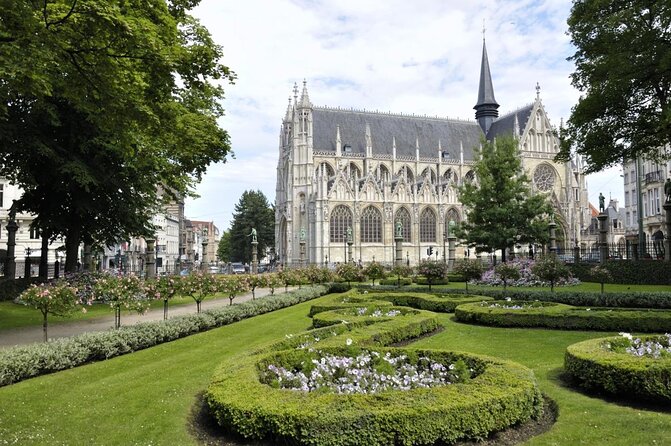
The Sablon, chocolate, and Notre Dame des Victoires
At Notre Dame des Victoires au Sablon, the tour allows about 15 minutes. The focus combines the church and Brussels chocolate.
This pairing makes sense for a city walk. The church represents the city’s religious and architectural traditions, while chocolate connects the area to one of Belgium’s best-known foods and modern visitor interests.
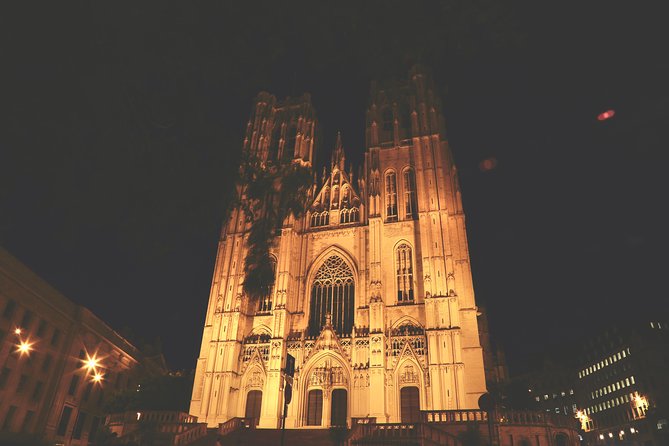
The church gives you another chance to compare styles with what you saw at Grand Place. Look closely at the stonework, vertical lines, and overall scale. The stop is not designed as a long interior visit, but the exterior and surrounding district add variety after the commercial and civic parts of the route.
The Sablon is also a good place to listen to the guide’s practical suggestions. Gamaal, one of the guides associated with this experience, has been praised for adjusting explanations to group interests and offering restaurant tips. That can be useful if this walk is one of your first evenings in Brussels.
BOZAR and the city’s modern cultural voice
The BOZAR Centre for Fine Arts receives just five minutes. The guide invites you to consider what lies behind its large walls.
That short stop works as a prompt rather than a full visit. BOZAR is treated as part of Brussels’ continuing cultural life, not as a building frozen in the past.
If you are interested in art, you may want to return on your own at another time. The walking tour does not include admission, and the schedule does not leave room for an exhibition visit.
Mont des Arts: the right place to finish
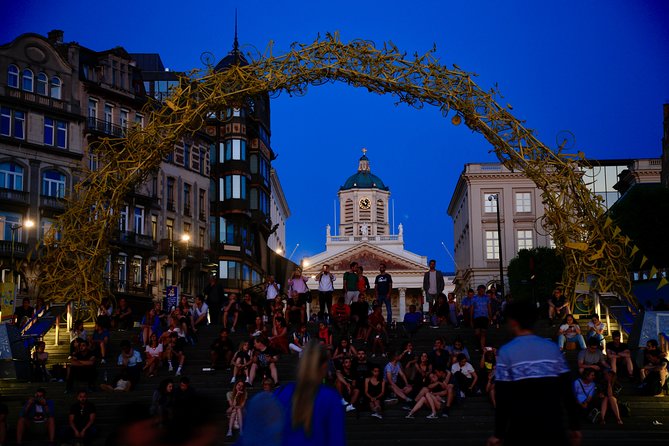
The final 20 minutes take place at Mont des Arts, where you get a broad view across central Brussels.
The usual photograph here looks toward the old city and City Hall tower, with the Royal Palace visible at the other end. This viewpoint helps you understand the relationship between the buildings you have just visited.
After two hours of street-level details, the panorama gives you a chance to step back and see the city as a whole. The old center, civic landmarks, and royal quarter fit into one frame.
This is also why the evening timing makes sense. You finish at 8:00 pm or later, depending on the pace, when the light and city mood may be more appealing than during the busiest part of the day. The guide has adapted the walk to strong wind before, so the route can continue in less-than-perfect conditions, though you should dress for the weather.
What the $30.10 price gets you
At $30.10 per person, this is reasonably priced for a two-hour guided introduction led by a local professional. You are paying for interpretation, route planning, and the ability to connect ten stops into one story.
You are not paying for transport, museum admission, food, or a long visit inside any attraction. The cost makes the most sense if you want context and orientation rather than a series of included tickets.
A private-feeling experience is possible when the group is small. The maximum is 18 people, and past departures have sometimes felt close to private tours. You should not assume that every departure will be private, but the group limit is still helpful for asking questions.
The tour is also a good value if you have limited time in Brussels. It covers many major central sights without requiring you to plan the route yourself. If you already know the old center well, however, you may prefer a specialist museum visit or a longer architecture-focused experience.
The guide makes the biggest difference
The strongest part of this experience is the guide’s ability to explain buildings in plain language. Gamaal has been praised for detailed explanations, humor, and tailoring the route to what the group wants to learn. Jimmy has also been praised for strong site selection, funny stories, local suggestions, and handling difficult wind during the walk.
Those details matter because the itinerary is ambitious. A flat recital of names and dates would make ten stops feel rushed. A guide who answers questions and changes emphasis can make the same route feel personal.
Some comments connected with this provider refer to Bruges, including one mention of a next-morning visit there. That is separate from this Brussels route, so you should make sure you are booking the Brussels architecture walk if that is your goal.
Who should book this evening walk
I would choose this tour if you want:
- A first look at Brussels’ central architecture
- A guide who can connect buildings with politics, trade, religion, and local culture
- A compact route covering ten major points
- A small-group setting with a maximum of 18 people
- A final viewpoint for photos
- An English-language walk at a moderate price
You may want something else if you need step-free transport, long interior visits, or a slow study of just two or three buildings. The tour requires walking between stops, and several locations receive only five or ten minutes.
The experience also suits solo visitors and couples who want company in the evening. It gives you a ready-made route and the chance to meet others without committing to a full-day activity.
Should you book the Brussels architecture tour?
Book it if you want a practical first orientation with real architectural content. The route is varied, the price is fair, and the finish at Mont des Arts gives the walk a satisfying visual payoff.
Go in knowing that this is a fast overview. You will not linger inside every landmark, and transport is not included. Still, with a good guide such as Gamaal or Jimmy, the walk can turn familiar sights into places you understand.
The tour has a five-out-of-five rating from 10 submitted ratings, with all recommending it. More important for your decision, the praise centers on the guide’s explanations, humor, flexibility, and useful local advice. If those qualities matter more to you than museum entry or a leisurely pace, this is a solid way to meet Brussels.
FAQ
How long is the Architecture Tour of Brussels?
The tour lasts approximately two hours.
What time does the tour start?
It starts at 8:00 pm.
Where does the tour begin?
The meeting point is outside Godiva Grand Place at Grand Place 21/22, 1000 Bruxelles, Belgium.
Where does the tour end?
The activity ends back at the meeting point.
What language is the tour offered in?
The tour is offered in English.
How many people can join the group?
The maximum group size is 18 people.
Is transport included?
No. Transport is not included, so you need to make your own way between the walking route and the meeting point.
Can I cancel for a full refund?
Yes. You can cancel up to 24 hours before the start time for a full refund. Changes or cancellations made less than 24 hours before the start time are not accepted for a refund.
Just added around Brussels
- Standard vehicle from Brussels airport to city of Antwerp★ 5.0 · 4 reviews
- Luxury Minivan from Brussels airport to the city of Brussels★ 4.0 · 7 reviews
- Transfer Brussels Airport (BRU) –> City Center 7 PAX (ONE WAY)★ 5.0 · 7 reviews
- Luxury vehicle from Brussels airport to the city of Brussels★ 4.0 · 5 reviews
- PRIVATE MPV TRANSFER FROM/TO BRUSSELS AIRPORT (Max 6 pax) ONE-WAY★ 5.0 · 4 reviews
- Transfer Brussels Airport –> Brussels MB V Class 7 PAX (ONE WAY)★ 5.0 · 4 reviews
- Transfer Brussels Airport –> City MB E Class 1-3 PAX (ONE WAY)★ 5.0 · 6 reviews
- Waterloo Private Battlegrounds Tour with Lion Hill★ 4.5 · 9 reviews
Brussels Tours, compared.

Atomium Entry Ticket with Design Museum Ticket
Read our review →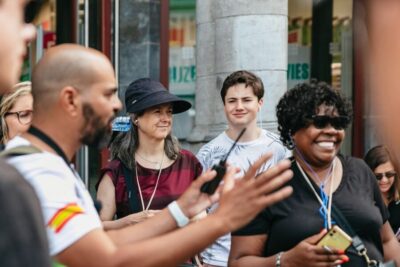

Choco-Story Brussels: Chocolate Museum Entrance with Tasting
Read our review →
Bruges and Ghent – Belgium’s Fairytale Cities – from Brussels
Read our review →

Hungry Mary’s Famous Beer and Chocolate Tour in Brussels
Read our review →Browse the lists this tour appears in