
Reviewed · WALKING TOURS
Brussels: 2-hours “Art Nouveau” Walking Tour
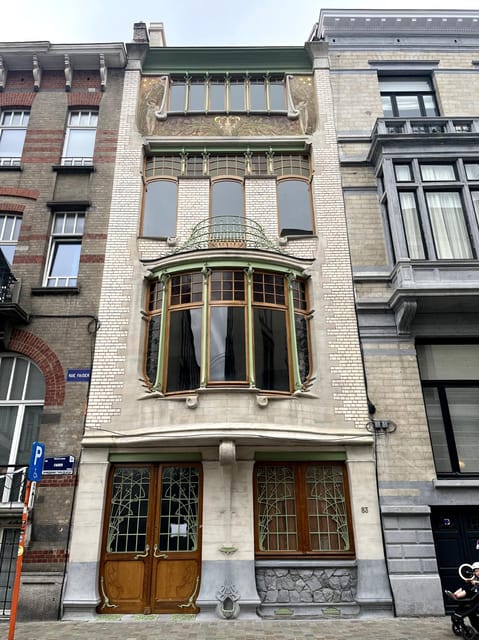
Brussels is where Art Nouveau became a serious architectural language, not just a decorative fad. In two hours, this private tour links famous façades by Victor Horta and other leading designers with the ideas behind their curling ironwork, plant forms, mosaics, and unusual lines.
I like the wide range of buildings, from Maison Cauchie and Maison Saint Cyr to Hôtel Tassel and Hôtel van Eetvelde. I also like that a strong guide can make a later visit to the Horta Museum far more rewarding. The main caution is practical: the tour is advertised as walking, but one recent guest was driven between sites, so confirm the plan and meeting point before you go.
Key points to know
- See many Art Nouveau landmarks in one short outing, including work by Horta, Hankar, Cauchie, Stoclet, and Hannon.
- Start at Merode, in front of Brasserie Carpe Diem by the Merode Metro station.
- Expect a private English-language tour, with guides such as David, Davit, Yves, or Eric depending on the booking.
- Learn to spot different Art Nouveau trends, rather than simply photographing ornate façades.
- Allow for changing transport arrangements, since at least one tour operated partly by car despite the walking-tour description.
- Consider the price carefully, since $136 per person is easier to justify for a private group with an excellent architecture guide.
Why Brussels is the right place for Art Nouveau
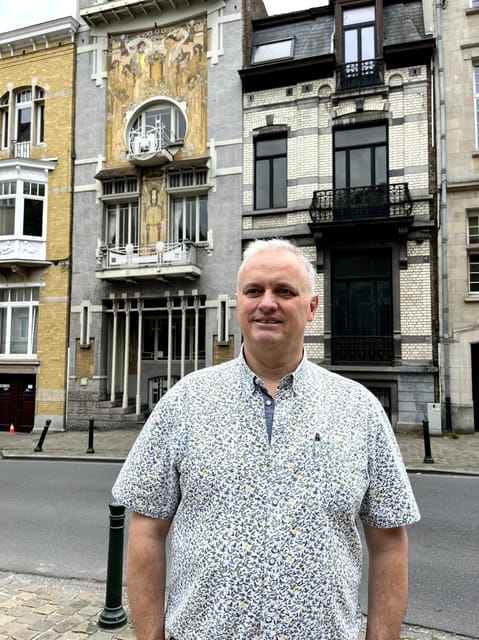
Brussels gives Art Nouveau a particularly clear setting. The style emerged at the end of the 19th century, when architects began pushing away from copied historical styles and looking for fresher forms.
Instead of treating a building as a box with decoration added afterward, Art Nouveau designers worked toward a unified design. Door handles, balconies, windows, tiles, staircases, and wall paintings could all belong to the same visual idea.
That is the central lesson of this tour. You are not simply ticking off attractive houses. You are learning how to read them.
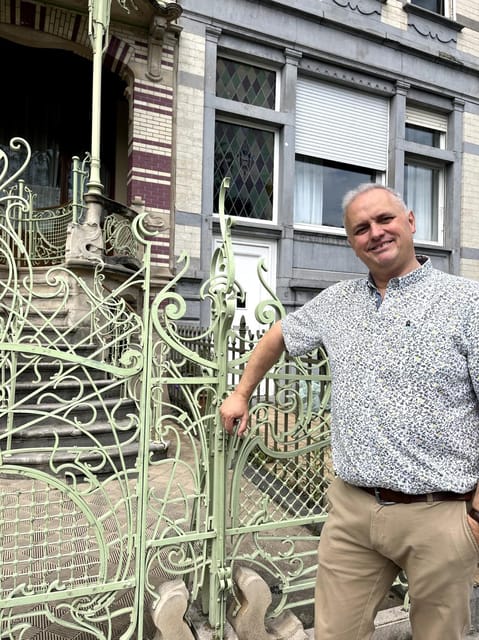
A good guide points out the things you might miss while walking past: the way a doorway curves into the façade, the repeated use of botanical shapes, or the relationship between a window and the ironwork below it. Brussels has enough Art Nouveau architecture that finding the buildings is one challenge, but understanding why they matter is another.
More Walking Tours in Brussels
- Brussels: Historical Walking Tour with Chocolate & Waffle Tasting
★ 5.0 · 1,165 reviews - Brussels Walking and Tasting Tour (Beers,Chocolates&Fries/Waffle)
★ 5.0 · 929 reviews - Brussels Chocolate Walking Tour and Workshop
★ 4.5 · 885 reviews
Meeting at Merode and beginning at Cinquantenaire
The meeting point is in front of Brasserie Carpe Diem, opposite the Merode Metro station. The station has three exits, so use the product-page photo and allow time to identify the correct one. This is not a detail to brush aside. One booking went badly because the meeting information was wrong, and time was lost before the guide was found.
The tour begins near the entrance to Parc du Cinquantenaire. The park provides a useful opening setting because it connects Brussels’ grand public architecture with the more personal townhouses you will see later.
The first guided portion is listed as about 15 minutes. Here, your guide introduces the birth of Art Nouveau, explains the features that made the style modern at the time, and outlines its main trends.
That introduction matters. Brussels Art Nouveau was not one single look. Some architects favored flowing, plant-like curves. Others used more geometric forms or a stricter, more controlled design. If your guide handles this section well, you will begin to notice the difference between a façade by Horta and one by another designer before anyone gives you the name.
Maison Cauchie and the art of the façade
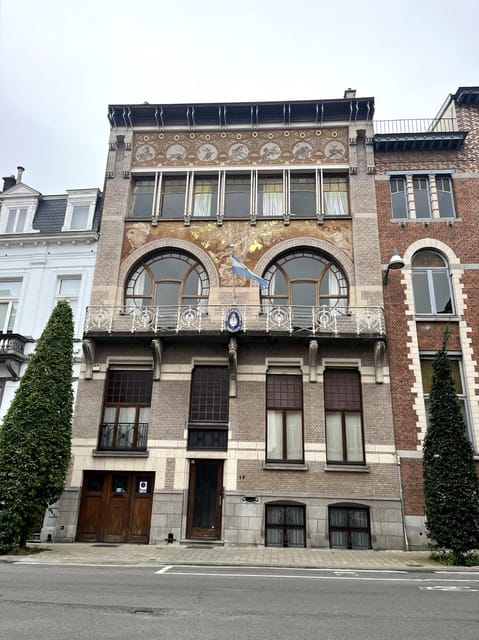
Maison Cauchie is one of the tour’s most memorable stops. Its exterior is known for the close relationship between architecture and graphic decoration.
The building shows how Art Nouveau could turn a private residence into a kind of public artwork. The façade is not merely a wall with a few flourishes. It communicates its style through lines, ornament, and carefully arranged details.
Your guide can help you look beyond the first impression. Notice how the decoration works with the windows and entrance rather than sitting apart from them. This is the kind of detail that is easy to miss if you are touring Brussels alone with only a list of addresses.
Maison Cauchie also helps explain why Art Nouveau was so modern. Its designers were willing to make a building look new rather than respectable in the traditional sense. That break with convention is a major theme of the tour.
Palais Stoclet and a more controlled Art Nouveau
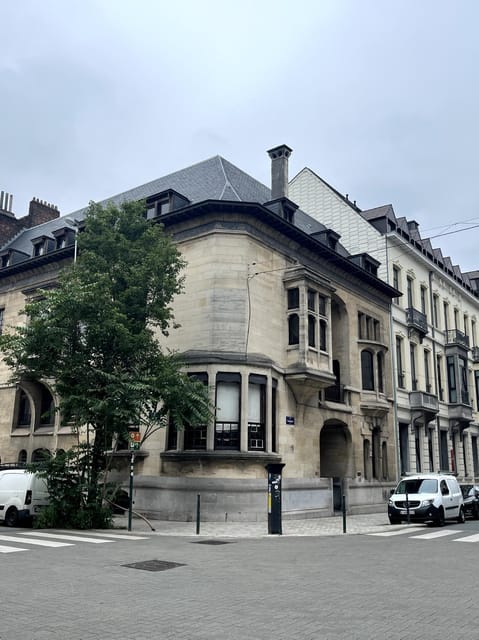
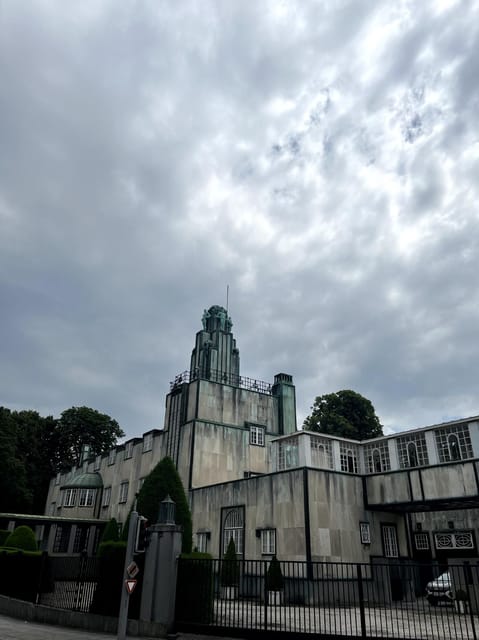
The Palais Stoclet gives you a different side of the movement. It is an important example of Art Nouveau’s more geometric and formal direction.
You should not expect every stop to offer the same decorative curls. The point of including Stoclet is to show that Art Nouveau could be restrained, ordered, and almost severe compared with the flowing façades found elsewhere.
The building is also a useful reminder that Art Nouveau was not limited to one architect or one neighborhood. Its ideas developed in several directions, and Brussels became a place where those approaches could be seen side by side.
The tour’s program is subject to availability, and the exact sequence can change. That is worth remembering here, since exterior viewing conditions and access may affect how long the group spends at individual sites.
More Art Nouveau walks in Brussels:
- Brussels 3-Hour Guided Art Nouveau Tour
★ 4.0 · 282 reviews - Brussels: Art Nouveau Pass – Entry to Three Locations
★ 4.0 · 108 reviews - Brussels: Art Nouveau Walking Tour with a Local Guide
★ 5.0 · 5 reviews
Maison Saint Cyr and Brussels’ ornate residential style
Maison Saint Cyr is among the most eye-catching buildings included in the route. Its narrow façade and elaborate treatment show how much visual drama could be packed into a relatively small urban house.
This is a good place to think about scale. Art Nouveau was not only used for grand public buildings. It appeared in city homes, where architects had to work within tight plots and still create a distinctive address.
Maison Saint Cyr rewards patient looking. The details can feel almost theatrical, but the building remains part of an ordinary street. That mix is one reason Brussels is so enjoyable for architecture walks: remarkable design often appears in places where you might otherwise be focused on traffic, shops, or your map.
Horta’s Hôtel van Eetvelde and Hôtel Tassel
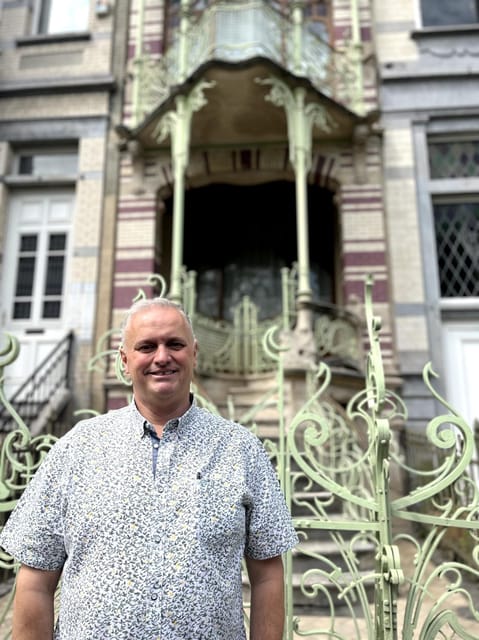
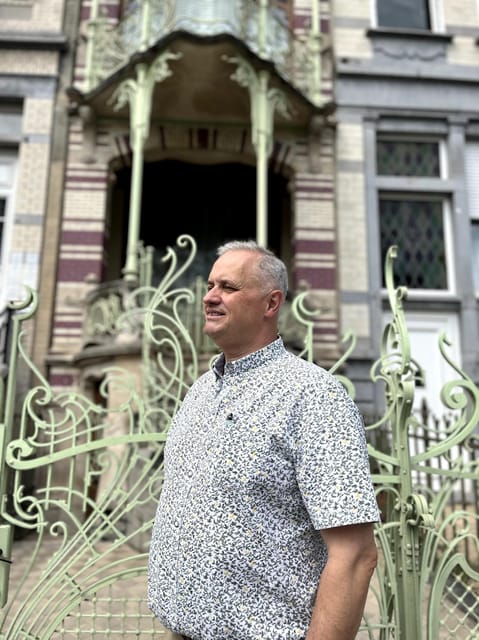
Victor Horta is the name most visitors associate with Brussels Art Nouveau, and this tour includes several of his major works. Hôtel van Eetvelde and Hôtel Tassel are especially important because they show how Horta changed domestic architecture.
Horta’s work is often discussed through curves, but the deeper point is the way he connected spaces and materials. A strong explanation should cover more than the familiar whiplash line. It should help you understand how light, metal, glass, stone, and interior planning work together.
Hôtel Tassel is particularly significant within the story of Brussels Art Nouveau. It is frequently treated as one of the movement’s foundational townhouses, and seeing it in the context of other architects’ work makes its design choices easier to appreciate.
Hôtel van Eetvelde adds another layer. It gives you a chance to compare Horta’s approach across different commissions rather than treating his architecture as one repeated formula.
The experience does not include interior admission to every building. Much of the route is about exterior architecture, so you should not book it expecting a museum-style indoor tour at each address.
Maison Van Dyck, Maison Roosenboom, and Hôtel Ciamberlani
The route also includes buildings that help fill in the larger picture: Maison Van Dyck, Maison Roosenboom, Hôtel Ciamberlani, and a house associated with Horta’s brother.
These stops are valuable because they keep the tour from becoming a single-architect pilgrimage. You get a broader view of the movement and see how different designers handled façades, proportions, decoration, and materials.
The listed itinerary gives about 1.5 hours to the main architectural portion, followed by around 15 minutes at Hôtel Ciamberlani. That timing suggests a brisk route with several exterior stops rather than a long pause at one address.
If you enjoy photography, this variety is useful. You can compare entrances, windows, balconies, stonework, and decorative panels within a compact period of architectural history. If you prefer long historical talks at each site, two hours may feel tight.
Maison Hankar, Maison Horta, and Maison Hannon
The final group of named buildings includes Maison Hankar, Maison et Atelier Horta, and Maison Hannon. Together, they widen the story beyond the most famous Horta addresses.
Maison Hankar is important for understanding the early development of Brussels Art Nouveau. Maison et Atelier Horta links the architect’s private and professional life to the buildings he designed. Maison Hannon adds another example of how Art Nouveau could combine structure and decoration in a residential setting.
The value here is the sequence. You see several architects and commissions close together, then start to recognize recurring ideas. A balcony may feel less like an isolated flourish and more like part of a larger design system.
The exact schedule can change, so treat the named buildings as the intended scope rather than a guaranteed stop-by-stop promise. Ask your guide at the beginning which addresses are planned that day.
Walking tour or car-assisted sightseeing?
The experience is presented as a walking tour, but the practical details are not fully consistent. One guest specifically praised Yves for taking the group in his car, which allowed them to see more than expected. Another guest said the tour was conducted by car rather than on foot and felt that this did not match the description.
That difference matters. A car can cover more ground and connect buildings spread across Brussels’ different districts. It can also reduce the physical effort of a route that otherwise requires sustained walking.
But if you booked because you wanted to study façades on foot, pause for photographs, and feel the neighborhoods at street level, a car-based format may disappoint. The safest approach is to ask in advance whether your booking is walking only, partly vehicle-assisted, or flexible depending on the day.
Do not assume that every guide or departure will follow the same pattern. The experience is a private group tour, and the guide may adapt the route.
The guide makes or breaks this two-hour tour
The strongest praise goes to the guides who bring clear enthusiasm and solid architectural explanations. David was described as informed and articulate, Davit as passionate, and Eric as someone who made the afternoon engaging. Maeve’s experience also points to an important benefit: many of these houses are difficult to locate and connect without help.
The names and ages of guides may vary. One booking expected the older man shown in the promotional photograph but met a much younger guide instead. That is not automatically a problem, but it is useful to know that the pictured guide is not guaranteed.
The negative experience also shows why guide quality matters. A pleasant personality is not enough if the person cannot explain the architecture. This tour is worth the price only when the guide adds real interpretation.
At $136 per person, the cost is high for two hours. It becomes easier to justify for a private group that wants a focused introduction, especially if the guide covers many buildings and adjusts the route to your interests. For a solo visitor or couple watching costs closely, the price may feel steep unless Art Nouveau is a central part of your Brussels plans.
Who will get the most from this tour?
I would choose this tour if you already care about architecture, plan to visit the Horta Museum, or want a fast introduction before exploring Brussels independently.
It also suits you if you prefer asking questions rather than joining a large group. A private format can make it easier to stop when a detail catches your eye or ask why one building looks more geometric than another.
The tour is less suitable if you need wheelchair access. The activity is specifically not suitable for wheelchair users, and the route includes city streets and multiple exterior stops.
You should also think about pace. Two hours can introduce a lot, but it cannot provide a full architectural study of every building listed. Bring comfortable shoes, even if the guide later uses a car for some connections.
Smoking is not allowed during the activity. Transport tickets are not included if public transport is needed.
My booking advice for Art Nouveau fans
Book this tour if you want a private, concentrated look at Brussels Art Nouveau and are willing to pay for a guide who can explain what you are seeing. The best version gives you the names, dates, design differences, and visual clues you need to appreciate the city’s architecture for the rest of your stay.
Before paying, confirm two things: the exact Merode meeting point and the expected transport arrangement. Those checks address the main practical weakness.
I would be especially keen to take it before visiting the Horta Museum. The tour can give you a useful street-level framework, while the museum lets you study Horta’s design ideas in greater detail. If you are mainly seeking a relaxed neighborhood walk, the uncertainty over car use and the $136 price may point you toward another option.
FAQ
Where does the Art Nouveau tour begin?
You meet in front of Brasserie Carpe Diem, opposite the Merode Metro station. The station has three exits, so check the meeting-point photo carefully.
How long does the tour last?
The tour lasts two hours. The listed schedule includes about 15 minutes at Cinquantenaire, around 1.5 hours visiting sites, and about 15 minutes at Hôtel Ciamberlani.
What language is the tour offered in?
The live tour guide speaks English.
Is this a private tour?
Yes. The group type is listed as a private group.
Which Art Nouveau buildings may be included?
The program names Maison Cauchie, Palais Stoclet, Maison Saint Cyr, Maison Van Dyck, Hôtel van Eetvelde, Hôtel Tassel, Maison Roosenboom, Hôtel Ciamberlani, Maison Hankar, Maison et Atelier Horta, Maison Hannon, and a house associated with Horta’s brother.
Is the tour always on foot?
It is described as a walking tour, but the transport arrangement can vary. A recent booking used a car to reach more buildings, while another guest said the car-based format did not match the description. Confirm this before departure.
Is the tour suitable for wheelchair users?
No. The activity is listed as unsuitable for wheelchair users.
Just added around Brussels
- Standard vehicle from Brussels airport to city of Antwerp★ 5.0 · 4 reviews
- Luxury Minivan from Brussels airport to the city of Brussels★ 4.0 · 7 reviews
- Transfer Brussels Airport (BRU) –> City Center 7 PAX (ONE WAY)★ 5.0 · 7 reviews
- Luxury vehicle from Brussels airport to the city of Brussels★ 4.0 · 5 reviews
- Transfer Brussels Airport –> Brussels MB V Class 7 PAX (ONE WAY)★ 5.0 · 4 reviews
- Transfer Brussels Airport –> City MB E Class 1-3 PAX (ONE WAY)★ 5.0 · 6 reviews
- PRIVATE MPV TRANSFER FROM/TO BRUSSELS AIRPORT (Max 6 pax) ONE-WAY★ 5.0 · 4 reviews
- Waterloo Private Battlegrounds Tour with Lion Hill★ 4.5 · 9 reviews
Walking Tours, compared.

Small Group Boat Cruise and Guided Walking Tour
Read our review →
Walking Tour, Canal Boat Trip w/Beer Tasting Option
Read our review →

Historical Walking Tour with Chocolate & Waffle Tasting
Read our review →
Brussels Walking and Tasting Tour (Beers,Chocolates&Fries/Waffle)
Read our review →
Browse the lists this tour appears in