

Reviewed · 3-HOUR EXPERIENCES
Brussels 3-Hour Guided Art Nouveau Tour
Brussels Art Nouveau is best understood from the street, where curved ironwork, stained glass, carved stone, and flowing façades turn ordinary homes into works of art. This three-hour walk takes you from the Grand-Place to the Bailli district, then finishes at the Victor Horta Museum, following a route most first-time city tours skip.
I like the strong architectural focus and the way guides such as Maria connect design to politics, technology, and daily life. I also like the use of printed interior photographs, since most buildings are viewed from outside. The main drawback is clear: you walk quite a bit, including an uphill stretch, and the tour does not include entry to the houses.
- Hotel Tassel: See Victor Horta’s early masterpiece, built in 1893 and 1894.
- Bailli district: Explore Brussels’s largest concentration of Art Nouveau buildings.
- Interior photographs: Learn what lies behind closed doors when you cannot enter the homes.
- Architectural context: Understand how iron, glass, wood, and stone were shaped into new forms.
- Horta Museum finish: End beside the architect’s former home and studio, with museum admission separate.
- Three language options: Join the tour in English, French, or Spanish for $35 per person.
Why This Brussels Art Nouveau Walk Is Worth Your Time
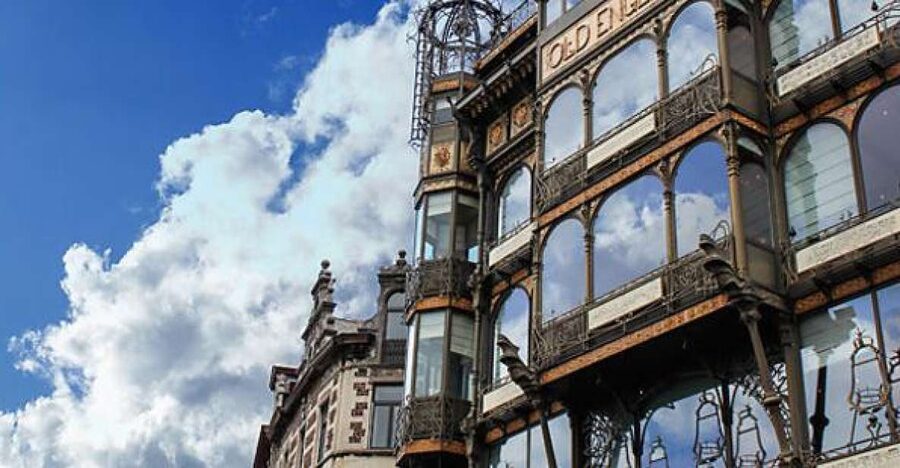
Brussels is one of the best cities in Europe for Art Nouveau, but its finest examples are scattered beyond the Grand-Place. You can find a few striking façades on your own, yet the details are easy to miss without someone pointing them out.
This tour gives you a useful framework. Instead of simply admiring pretty buildings, you learn why the style mattered and how architects used new materials in fresh ways. Your guide explains the relationship between iron, glass, wood, and stone, then shows how those materials work together on actual houses.
The tour also takes you into the Bailli district, described as a village within the city. That change of setting is part of the appeal. You leave the busiest central streets and spend time in a residential area filled with Art Nouveau façades and architect-designed homes.
At $35, the tour offers fair value if you want interpretation rather than a self-guided list of addresses. You are paying for three hours of focused explanation, a local guide, and a route that would take some planning to assemble alone. It is less useful if you only want interior access, since museum admission and building entries are not included.
Meeting at the Grand-Place and Taking the Tram
The tour begins at 10:00 at Brussels’s Grand-Place. Look for the guide holding a white umbrella. This is a practical meeting point, though the square can be crowded, so arrive with enough time to locate the guide rather than rushing in at the start.
From the Grand-Place, the group takes a tram toward the Bailli district. The transport is part of the route, not a sightseeing ride in itself. You should expect the fare to be separate, since transportation is not included in the price.
The route involves walking and includes an uphill section early on. One person described the walk as all uphill at first, with the Art Nouveau highlights becoming stronger after about an hour. That is useful to know if you prefer a flat city stroll. Wear comfortable shoes, as the tour lasts three hours and combines pavement, public transport, and residential streets.
The activity is listed as wheelchair accessible, but you should still confirm the practical route details before booking if you need step-free access at every point. The uphill walking and tram segment may matter more to you than the general accessibility label.
More Art Nouveau walks in Brussels:
- Brussels: Art Nouveau Pass – Entry to Three Locations
★ 4.0 · 108 reviews - Brussels: 2-hours “Art Nouveau” Walking Tour
★ 4.5 · 7 reviews - Brussels: Art Nouveau Walking Tour with a Local Guide
★ 5.0 · 5 reviews
Old England House and the City’s Art Nouveau Story
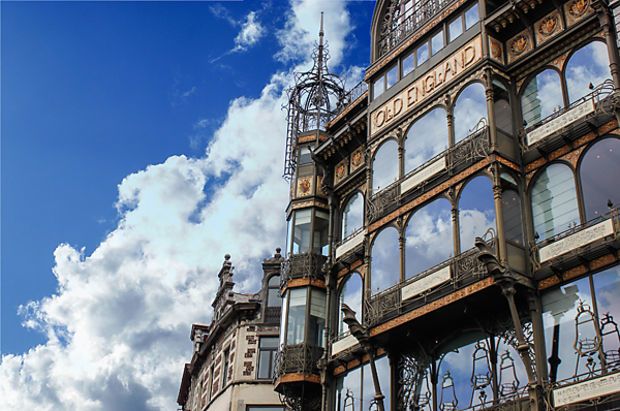
The first named stop is Old England House, now associated with the Musical Instrument Museum. Its elaborate metalwork and curved decorative details make it a good introduction to Brussels Art Nouveau.
This building helps you see how the style reached beyond private homes. Art Nouveau was not limited to one architect or one kind of client. It appeared in commercial buildings, cultural spaces, and family residences, with each project using decoration in a different way.
Your guide also sets the city scene before the tour reaches the residential district. The best guides on this route do not treat the houses as isolated façades. They explain the social and technological setting that allowed architects to experiment with new structures and materials.
That wider context is one reason the tour earns strong marks from people who want more than a photo stop. You learn to look at the whole façade, not just the most obvious swirl or flower shape.
Hotel Tassel, Victor Horta’s Breakthrough
Hotel Tassel is one of the key stops. Victor Horta built it in 1893 and 1894, and it is central to any understanding of Brussels Art Nouveau.
From the outside, look for the way the design avoids the rigid symmetry common in older architecture. The decoration is not simply pasted onto a plain wall. The lines, materials, and structural elements work together in a more organic way.
The guide explains Horta’s role and places the building within the development of the style. You will likely hear how Horta treated iron as both a structural material and a decorative one. This is where the basic theme of the tour becomes concrete: industrial materials could be shaped into elegant, flowing forms.
The limitation is that you view Hotel Tassel from outside. You cannot inspect the stairway, rooms, or interior details during this tour. That is why the guide’s explanations and any photographs she brings are so useful. If interior architecture matters most to you, plan a separate museum visit.
Van Rysselberghe House and Hotel Otlet
The route continues with buildings linked to Octave Van Rysselberghe. The Van Rysselberghe House dates from 1912, while Hotel Otlet was built between 1894 and 1898 by Van Rysselberghe and Henry van de Velde.
Seeing several architects in one district helps you compare approaches. Art Nouveau was not one fixed formula. One façade may lean toward bold curves and elaborate ornament, while another may use a calmer arrangement of windows, stone, and metal.
Hotel Otlet is especially useful for understanding how architecture and interior planning were connected. You cannot go inside, but the guide can explain the relationship between the outside and the unseen rooms. Printed images of interiors may help you imagine details that are otherwise hidden.
This part of the route rewards close attention. You are not simply collecting famous names. You are learning to ask why a doorway, balcony, window, or band of stone was placed where it was.
A few more Brussels half days worth weighing up
- Brussels: Private 3-Hour Sightseeing Walking Tour
★ 4.6 · 112 reviews - Beer Tasting and Scavenger Hunt in Brussels – About 3 Hours
★ 4.5 · 35 reviews - Private Wellness (3 hours)
★ 5.0 · 6 reviews - 3-Hour Antwerp Bike Tour
★ 5.0 · 113 reviews
Four More Houses in the Bailli District
The next group of stops shows the range of architects working in Brussels:
- Hotel Goblet d’Alviella, designed by Octave Van Rysselberghe in 1882
- Hotel Ciamberlani, designed by Paul Hankar in 1897
- The home of painter René Janssens, built by Paul Hankar in 1898
- A house linked to architect Armand Van Waesberghe
The names may blur together if you are new to the subject, but the sequence is helpful. Your guide can compare Hankar’s work with Horta’s and explain how different designers handled decoration, structure, and the street frontage.
Hotel Ciamberlani is associated with Paul Hankar, one of the important figures in Brussels Art Nouveau. The painter René Janssens’s home adds another angle, showing that the movement appealed to artists as well as wealthy householders.
As you walk, the guide can point out features you might otherwise pass without noticing. Look for unusual window shapes, curved lines in stone or iron, patterned surfaces, and decorative details that seem to grow across the façade.
One advantage of this neighborhood is that you see the buildings in their real setting. These are not isolated monuments behind barriers. They are part of ordinary streets, which makes the tour feel more like architectural detective work than a formal museum visit.
The Beukman House and Paul Hankar’s Home
The Beukman House, designed by Albert Roosenboom in 1900, adds another name to the route. By this point, you should have enough examples to recognize that Brussels Art Nouveau includes several personalities and periods.
The tour also passes the private home of Paul Hankar. That stop is valuable because an architect’s own house can reveal how he wanted his ideas to work in daily life. Again, the visit is exterior only, but the setting gives the guide a chance to discuss Hankar’s role and design choices.
A good guide makes this portion interactive. You are encouraged to spot recurring details, compare façades, and ask questions. Past groups have especially valued Maria’s enthusiasm and her ability to link architectural choices to the social and political ideas of the period.
The bilingual or multilingual format can affect the pace. If the guide explains everything in two languages, the tour may run longer than a single-language walk or feel slower between stops. The benefit is language flexibility, but you should allow some patience if your group includes English and French speakers together.
Finishing at the Victor Horta Museum
The tour ends in front of the Victor Horta Museum, located in the architect’s former home and studio. This is a smart endpoint because the walk has prepared you to notice the kind of details the museum preserves indoors.
Admission is not included. You need a separate museum ticket, and it is wise to reserve it in advance if you hope to enter immediately after the tour. Several people have been disappointed after reaching the museum without a ticket for the next available time.
The museum can make the tour’s exterior observations easier to understand. You may recognize Horta’s use of curves, ironwork, light, and connected interior spaces with much greater confidence after seeing examples across the city.
If you cannot visit the museum, the tour still works. The walk covers enough buildings to explain the style. Still, the museum is the natural follow-up, especially if you want to see interiors rather than façades.
What the Guide Adds to the Buildings
The guide is the heart of this experience. Maria has led many of the tours and is praised for her preparation, enthusiasm, and personal research. She has also used postcards and printed images to show interiors that the group cannot enter.
Her strongest contribution is making connections. Art Nouveau becomes easier to understand when you see how new construction methods, changing social ideas, and artistic movements affected one another. The tour can also include discussion of links between Art Nouveau and political parties of the period, an unusual angle that adds substance to the walk.
The quality of the experience depends partly on your guide and the group. Past guides have included Danielle and Mary or Marie, and the descriptions suggest a consistent focus on clear explanations and questions. Still, the pace may vary, especially when the guide translates into more than one language.
You should not expect a silent photo walk. This is a talk-heavy activity, with frequent explanations at each building. That suits you if you enjoy history, architecture, and discussion. If you prefer to explore at your own pace, a self-guided route may feel more comfortable.
Exterior Views Only: The Main Limitation
The biggest practical issue is that the tour does not enter the houses. You will see the outside of Hotel Tassel, Hotel Otlet, Hotel Ciamberlani, the Beukman House, and the other stops from public areas.
That is not a flaw unique to this tour. Many private homes are not open for casual visits. Still, you should book with the right expectations. The experience is about façades, urban context, and explanation, not a series of interior tours.
The printed photographs help. They let you see staircases, rooms, and decorative schemes that would otherwise remain invisible. Bring your own camera, too, but remember that the guide’s explanation is the part you cannot reproduce easily from a street address.
If you want more buildings, ask the guide for extra addresses or use the Horta Museum’s Art Nouveau guide after the walk. The route covers a strong sample, but not every Art Nouveau house in the area.
Language, Cost, and Who Will Enjoy It
The tour is offered in English, French, and Spanish. Confirm your chosen language when booking, particularly if the starting time has several language groups.
At $35 per person, the price is reasonable for a three-hour guided walk with a specialist focus. You also get a route through a part of Brussels that ordinary city walks often leave out. The value drops if you are mainly paying for museum entry, since that costs extra and the buildings are not open to the group.
I would recommend this tour to:
- First-time Brussels visitors who want an activity beyond the central square
- Architecture and design enthusiasts
- People who enjoy learning how buildings reflect social change
- Visitors who want a guide to help identify Art Nouveau details
- Anyone planning to visit the Victor Horta Museum afterward
I would be more cautious if you dislike uphill walking, long explanations, or exterior-only sightseeing. The tour is also less appealing if you already know the Bailli district well and have your own detailed Art Nouveau route.
The activity allows free cancellation up to 24 hours before the start, and you can reserve now and pay later. Those terms make it easier to fit into a changing Brussels schedule. The tour is listed as wheelchair accessible, but the walk and tram ride still deserve a practical check before booking.
Should You Book This Art Nouveau Tour?
Book it if you want to understand why Brussels became so important to Art Nouveau, not merely photograph a few handsome houses. The guide-led route, the Bailli district, and the architectural comparisons give you much more than a quick look at decorated façades.
Plan for comfortable shoes, a tram fare, and a separate Horta Museum ticket. If you reserve the museum in advance and accept that the tour remains outdoors, this is a focused and fairly priced introduction to Brussels architecture.
FAQ
Where does the Brussels Art Nouveau tour begin?
The tour begins at the Grand-Place in Brussels. Look for the guide holding a white umbrella.
What time does the tour start?
The tour starts at 10:00.
How long does the tour last?
The guided walk lasts three hours.
What languages are available?
The tour is available in English, French, and Spanish.
Does the tour include the Victor Horta Museum?
No. The tour ends in front of the Victor Horta Museum, but museum admission is not included.
Can I enter the Art Nouveau houses?
No. The buildings are viewed from outside during the tour. Guides may use photographs to show interior details.
Is transportation included?
The route includes a tram ride, but transportation costs are not included.
What should I bring?
Bring comfortable shoes because the tour includes considerable walking and an uphill section.
Can I cancel the booking?
Yes. You can cancel up to 24 hours in advance for a full refund. You can also reserve now and pay later.
Just added around Brussels
- Standard vehicle from Brussels airport to city of Antwerp★ 5.0 · 4 reviews
- Luxury Minivan from Brussels airport to the city of Brussels★ 4.0 · 7 reviews
- Transfer Brussels Airport (BRU) –> City Center 7 PAX (ONE WAY)★ 5.0 · 7 reviews
- Luxury vehicle from Brussels airport to the city of Brussels★ 4.0 · 5 reviews
- Transfer Brussels Airport –> Brussels MB V Class 7 PAX (ONE WAY)★ 5.0 · 4 reviews
- Transfer Brussels Airport –> City MB E Class 1-3 PAX (ONE WAY)★ 5.0 · 6 reviews
- PRIVATE MPV TRANSFER FROM/TO BRUSSELS AIRPORT (Max 6 pax) ONE-WAY★ 5.0 · 4 reviews
- Waterloo Private Battlegrounds Tour with Lion Hill★ 4.5 · 9 reviews
3-Hour Experiences, compared.
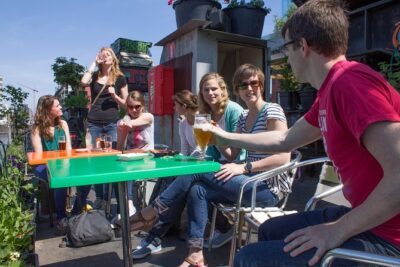
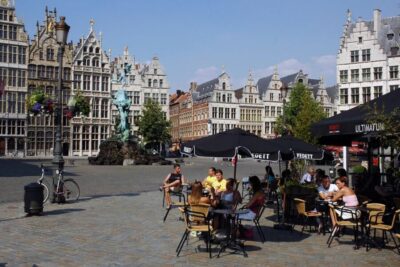

Beer Tasting and Scavenger Hunt in Brussels – About 3 Hours
Read our review →
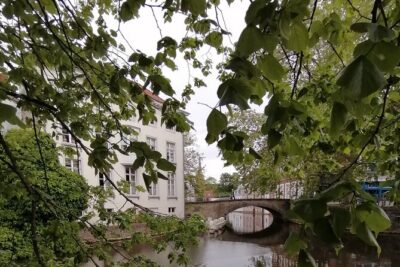
BRYGGJA ROMANTICA – 3 Hour Romantic Tour in Bruges
Read our review →
Private 3-hour walking tour of Bruges with official tour guide
Read our review →Browse the lists this tour appears in