
Reviewed · GUIDED
Brussels Politics Tour: Private & Personalized with a Local Guide
Brussels makes more sense when you connect its grand EU buildings with the neighborhoods where ordinary life carries on around them. This private tour does just that, moving from European politics and public parks to Matongé’s Congolese culture and the bold Atomium. The focus is conversation, not a memorized script.
I like the private format, since you can stop and ask about EU energy policy, administrative structures, colonial history, or local life without holding up a group. I also like the pre-tour questionnaire, which gives your guide a chance to shape the outing around history, food, politics, or lesser-seen corners of Brussels.
The main consideration is distance. Three hours is not much time for the European Quarter, Matongé, the Atomium, and Mini-Europe, and no private vehicle is included. Your host may suggest public transport or a local taxi, with those costs paid separately.
Key points to know before booking
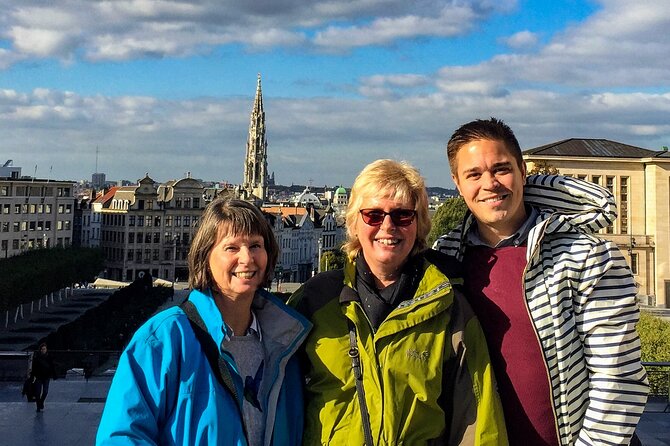
- Political conversation takes center stage: Guides such as Andrea, Michael, and Laurence have handled detailed questions about EU policy, current affairs, history, and culture.
- The route can be tailored: A short questionnaire and direct contact with your host let you name your interests and must-sees before meeting.
- The tour links several parts of Brussels: Expect a mix of the European Parliament area, Parc Léopold, Cinquantenaire, Matongé, and the Atomium zone.
- It is private and on foot: Only your party takes part, but longer transfers may require public transport or a taxi at your own cost.
- The value comes from access to a local mind: At $137.24 per person, the price makes the most sense for couples, families, or small groups who want discussion rather than a standard city walk.
- You get flexibility, not attraction admission: Food, drinks, entry tickets, transport, and gratuities are not included.
Brussels politics begins with a conversation
The best reason to book this experience is simple: you can ask the questions that do not fit neatly into a guidebook. Brussels is both Belgium’s capital and a working center for European institutions. That can make the city feel split between local neighborhoods and international offices, unless someone helps you connect the two.
Your host is there to explain how those worlds meet. You might discuss how the European Union affects housing, jobs, streets, languages, or the daily rhythm of the city. You can also steer the talk toward European administration, current policy, energy concerns linked to the war involving Russia and Ukraine, or Belgium’s own political culture.
That freedom is a major difference from a large group tour. On a standard walk, you hear the guide’s chosen story and move on. Here, you can stop and ask why an institution matters, who it represents, or how a European decision reaches people living in Brussels.
The guides named in the feedback each brought a different strength. Andrea handled detailed questions about EU structures and policy. Michael offered thoughtful discussion across a broad range of subjects and adapted well to the group. Laurence combined history, politics, culture, Belgian coffee, and hot chocolate, while also taking careful account of special needs.
Those details point to the kind of guide you should expect: a person who talks with you, not simply at you. Still, political discussion is personal by nature. If you prefer a tightly scripted tour with only established facts and dates, this format may feel more open-ended than you want.
A few more Brussels half days worth weighing up
- Brussels: Atomium Entry Ticket with Design Museum Ticket
★ 4.4 · 9,254 reviews - From Brussels: Guided Day Trip to Bruges and Ghent
★ 4.6 · 8,353 reviews - From Brussels: Bruges & Ghent Day Tour – 2 Fairytale Cities
★ 4.7 · 8,242 reviews
Reading the European Parliament area
The European Parliament area is the natural heart of the experience. Here, your host explains how the Parliament functions, whom it represents, and why its work matters beyond Brussels.
You should expect the value to come from explanation rather than a formal institutional visit. Tickets to attractions are not included, and the experience is primarily a walking tour. The focus is on seeing the setting and understanding its role.
This part can be especially useful if EU structures seem confusing. The Parliament is only one piece of the Union’s decision-making system, and a local guide can help separate the institutions, their responsibilities, and their relationship with member states.
You can also ask how the EU presence changes Brussels. The city receives officials, diplomats, journalists, lobbyists, assistants, and visitors from across Europe. That international population affects offices, restaurants, languages, transport patterns, and the feel of whole streets.
Do not expect a campaign speech or a single approved political view. The strongest part of this tour is the chance to discuss ideas. Andrea’s ability to answer questions about administrative structures, policy, and energy issues suggests that a serious conversation is possible, provided you use your time well.
Before you go, think of two or three questions you truly want answered. Asking about the institution you are looking at will produce a more useful experience than waiting for a general lecture.
A pause at Parc Léopold
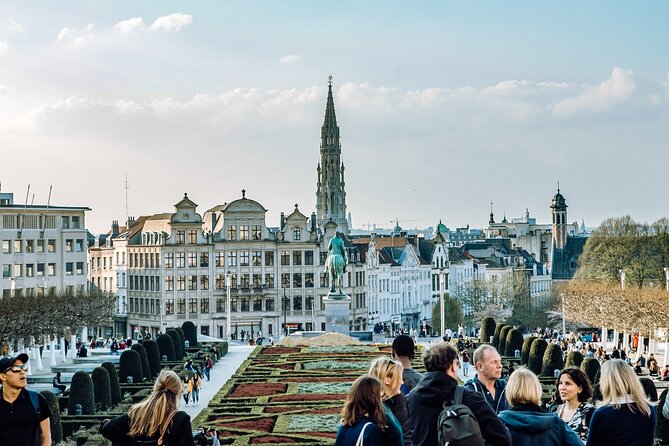
Parc Léopold offers a change of pace from the surrounding institutional buildings. This quiet green space sits between EU offices, creating a useful contrast: political decisions are made nearby, while people walk, pause, and enjoy a more ordinary urban setting.
I like this stop because it adds human scale. Brussels is not only offices, security gates, formal meetings, and policy papers. It is also a city where residents live beside major institutions and use public spaces in the same way people do elsewhere.
Your host can connect the park to the experience of Brussels residents. The point is not simply to admire trees and paths. It is to consider how a neighborhood functions when an international political center occupies so much of the surrounding area.
This stop may suit you if you enjoy seeing how a city works between major sights. It may feel less important if you want a tour packed with monuments. The park is a pause, and that pause helps the political discussion breathe.
Cinquantenaire and the idea of Europe
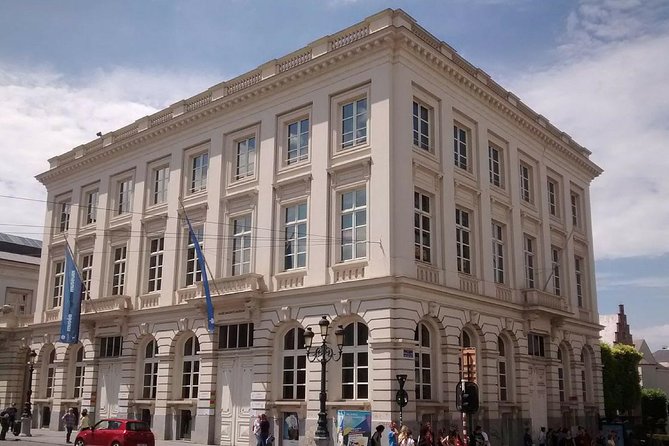
The arches and gardens of Cinquantenaire provide one of the tour’s strongest visual moments. This 19th-century park reflects Belgian national pride, while the surrounding Brussels of today is closely tied to European unity and integration.
That contrast gives your guide a natural way to explain how ideas of nation and Europe sit beside each other. Belgium has its own identity, language communities, symbols, and history. At the same time, Brussels presents itself as a place where European cooperation takes physical form.
You will not need to treat the park as a separate history lecture. Its value here is the connection between place and politics. A national monument can help frame a discussion about how European institutions operate within a Belgian city rather than in some abstract capital with no local character.
The park also gives you a more open setting after the denser European Quarter. Wear comfortable shoes, since the experience is primarily on foot and the route may cover several areas. The host may recommend public transport when the distances become too long for a practical walk.
Same city, a completely different kind of day out:
- Choco-Story Brussels: Chocolate Museum Entrance with Tasting
★ 4.3 · 4,883 reviews - Bruges and Ghent – Belgium’s Fairytale Cities – from Brussels
★ 4.0 · 4,809 reviews - Brussels: Hop-On Hop-Off Bus Tour
★ 4.0 · 4,016 reviews - Brussels: Entry Ticket to Mini-Europe
★ 4.5 · 2,870 reviews
Matongé brings local culture into the route
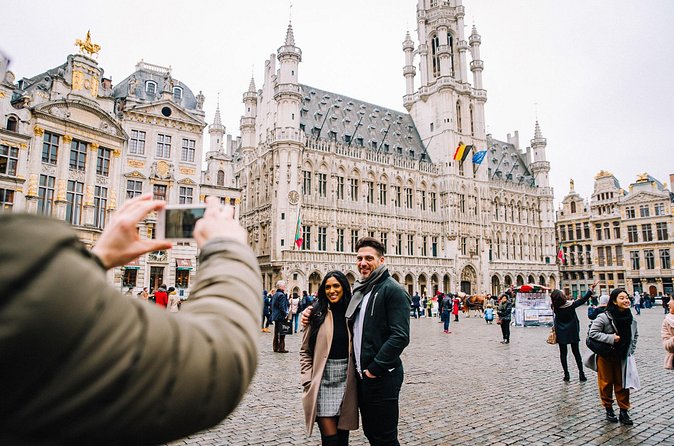
Matongé adds a different voice to the tour. This Congolese neighborhood is known for its shops, cafés, murals, and strong cultural presence. Your host introduces the area through both its colonial past and its place in present-day Brussels.
This is one of the most useful stops for anyone who wants the city to feel like more than a collection of official sights. Matongé shows how migration, memory, commerce, food, art, and identity shape a neighborhood.
The subject also requires care. Belgium’s colonial legacy is not a decorative footnote, and a short tour cannot cover every part of it. Still, placing Matongé in the route gives you a chance to ask direct questions about how that past continues to influence the city.
The stop may appeal to you most if you care about culture and social history. You can ask your host to point out local shops, murals, or cafés, but remember that food and drinks are not included. If you want to try Belgian coffee, hot chocolate, or something connected to the area, budget separately and tell your host in advance.
Matongé also makes the tour less predictable. Many city walks stay around the Grand Place and central monuments. This route makes room for a neighborhood that helps explain Brussels as a lived-in city.
The Atomium and Mini-Europe finish with spectacle
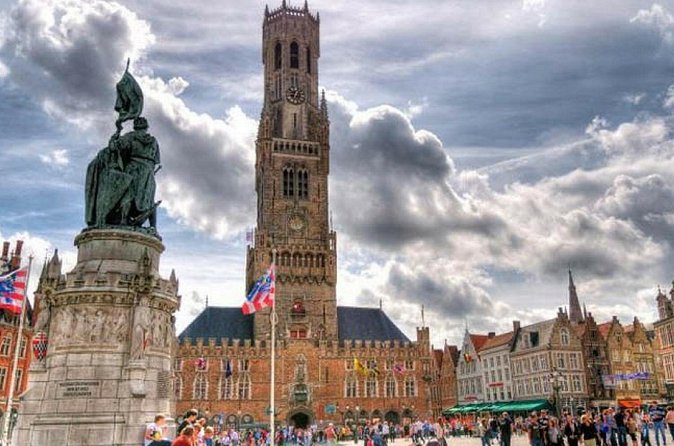
The Atomium is Brussels’ most recognizable modern structure, and the nearby Mini-Europe exhibit adds a playful look at the continent’s landmarks. Together, they bring the tour from political institutions and local identity to ideas of progress, connection, and European unity.
Your host can explain why these attractions matter beyond their appearance. The Atomium reflects the optimism of the 1950s and the belief that science and progress could shape a better future. Mini-Europe presents the continent as a set of places that can be seen, compared, and linked within one small area.
At the same time, this is where the route raises its biggest timing question. The Atomium area is not close to the European Quarter or Matongé, and the full experience lasts about three hours. Since the tour has no private vehicle, you may need public transport or a local taxi. Those costs are extra, and the exact plan should be discussed with your host after booking.
Do not assume you will receive full admission time at every attraction. Tickets are not included, and the tour description presents these sites as part of the route and commentary rather than promising entry into each one. If the Atomium or Mini-Europe is a top priority, tell the host before the day of the tour and confirm how much time can be devoted to it.
The pairing is still smart. The Atomium offers a memorable symbol, while Mini-Europe gives the guide another way to discuss the continent and its shared identity. You get a different side of Brussels from the formal institutions downtown.
What three hours can realistically cover
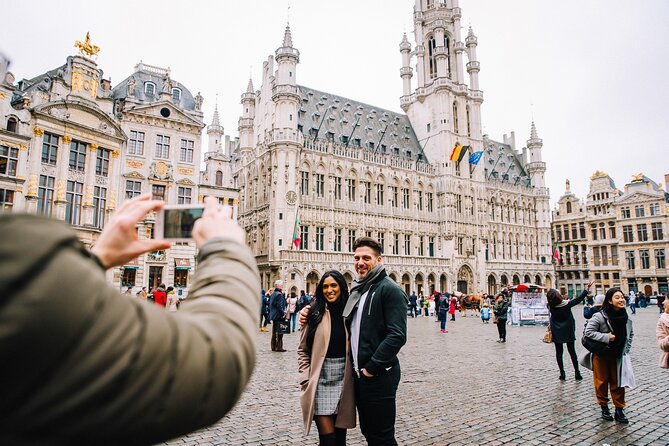
Three hours is enough for a focused introduction, especially with a private guide who adjusts the pace. It is not enough to explore every stop at length, linger over food, enter several attractions, and move between distant neighborhoods without compromise.
I would think of this as a guided conversation with selected views of Brussels, not a full museum-and-monument day. The more destinations you request, the more time you may spend transferring. The more time you spend discussing one topic, the fewer stops you may reach.
That is not a flaw, but you need to set priorities. You might choose EU politics plus the European Quarter and Cinquantenaire. Another plan could focus on culture, Matongé, and the Atomium. The questionnaire and direct communication with your host are valuable because they let you make that choice early.
Flexible start times help fit the tour around your schedule. Pickup can be arranged at your selected hotel, with the walk beginning from there. If your hotel is not available as a pickup choice, you can select a central meeting point, such as Starbucks at Grand Place 4.
The tour ends back at the meeting point. Confirm the exact starting arrangements after booking, since the host and the planning team will help settle the final details.
Price, private attention, and group value
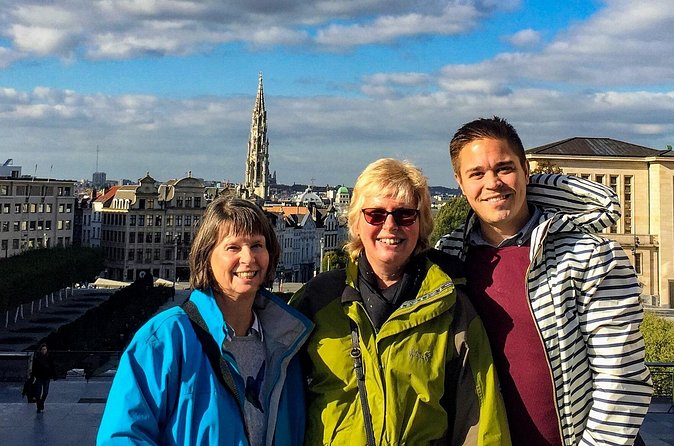
At $137.24 per person, this is not the cheapest way to see Brussels. Its value depends on the size of your party and how much you care about asking questions.
For one person, the cost may feel high for a three-hour walking experience that excludes food, attraction tickets, and transport. For a couple, family, or small group, the private format becomes easier to justify. You are paying for time with one host, a route shaped around your interests, and the ability to change the conversation as you go.
Group discounts are offered, but the amount is not specified. Check the current total for your party before booking. Also allow for public transport or taxi costs if you want to connect the European Quarter with Matongé and the Atomium in the same session.
The strongest value comes when you prepare. Send clear interests in the questionnaire. If you care most about EU institutions, say so. If you want local culture, colonial history, food, or less familiar parts of Brussels, name those priorities. A private tour only earns its price when you use its flexibility.
Who should book this Brussels experience?
I would recommend it to you if you enjoy conversation, current affairs, and seeing how politics affects daily life. It is also a good match for a first visit when you want a broad orientation before exploring Brussels on your own.
The tour suits couples and small groups who want privacy. Families may appreciate the flexible pace, though political discussion may need to be adjusted for younger children. The guide can also account for special needs when you explain them ahead of time. Service animals are allowed, and most participants can take part.
It is less suitable if you want a fixed schedule, extensive museum time, or a vehicle between every stop. It may also disappoint if you expect attraction admission to be included. This is a walking experience with local commentary, not an all-inclusive sightseeing package.
The reviews give the clearest picture of its strengths: Laurence was praised for handling special needs with care and combining politics, history, culture, coffee, and hot chocolate. Andrea was valued for serious discussion of EU policy, administration, and energy issues. Michael was appreciated for flexible, thoughtful conversation. Those are meaningful advantages, but the guide you receive may differ, and each host will bring a personal style.
Should you book it?
Book this tour if you want Brussels explained through its political institutions, local neighborhoods, and European identity, and if you enjoy asking questions along the way. The private format, flexible start time, and host contact make it a good choice for a tailored introduction.
Skip it if you mainly want entry to the Atomium, Mini-Europe, or other attractions, since tickets are extra. Also reconsider if you dislike walking, open political discussion, or the possibility of using public transport between distant stops.
For the best result, choose your top two priorities before booking. That simple step will help your host use three hours well and keep the tour from becoming a rushed checklist.
Free cancellation is available up to 24 hours before the start time. Changes or cancellations made later are not accepted for a refund.
FAQ
Is this a private tour?
Yes. Only your group participates, and the route is personalized around your interests.
How long does the tour last?
The experience lasts approximately three hours.
Is transportation included?
No private vehicle is included. The tour is primarily on foot, and your host may suggest public transport or a local taxi for longer distances. Those costs are separate.
Are attraction tickets included?
No. Tickets to attractions, along with food and drinks, are not included.
Where does the tour start and end?
The stated central meeting point is Starbucks at Grand Place 4, 1000 Brussels. Hotel pickup can be arranged, and the activity ends back at the meeting point.
Can I choose the starting time?
Yes. Flexible start times are available when you book. After booking, the planning team and your host will confirm the meeting details and help with final arrangements.
Just added around Brussels
- Standard vehicle from Brussels airport to city of Antwerp★ 5.0 · 4 reviews
- Luxury Minivan from Brussels airport to the city of Brussels★ 4.0 · 7 reviews
- Transfer Brussels Airport (BRU) –> City Center 7 PAX (ONE WAY)★ 5.0 · 7 reviews
- Luxury vehicle from Brussels airport to the city of Brussels★ 4.0 · 5 reviews
- Transfer Brussels Airport –> Brussels MB V Class 7 PAX (ONE WAY)★ 5.0 · 4 reviews
- Transfer Brussels Airport –> City MB E Class 1-3 PAX (ONE WAY)★ 5.0 · 6 reviews
- PRIVATE MPV TRANSFER FROM/TO BRUSSELS AIRPORT (Max 6 pax) ONE-WAY★ 5.0 · 4 reviews
- Waterloo Private Battlegrounds Tour with Lion Hill★ 4.5 · 9 reviews
Guided, compared.


Small Group Boat Cruise and Guided Walking Tour
Read our review →
Choco-Story Chocolate Museum Guided Tour w/Tastings
Read our review →
Browse the lists this tour appears in