

Reviewed · DARK SIDE & LEGENDS TOURS
Evening Tour: The Dark Side of Brussels
Brussels after dark is at its best when the grand squares give way to stories of punishment, political trouble, old fortifications, and the city’s less polished corners. This walking tour follows that thread from the center to the Marolles, using familiar landmarks as clues to the city’s stranger past.
I like the very low booking price and the way the walk links famous sights with places many first-time visitors skip. I also like the range of guides, including Rahim, Sebastian, Ann Marie, David, and Ian, who bring different styles to the storytelling. The main catch is that The Dark Side of Brussels promises more grim material than every departure delivers, and the route can be more strenuous than the description suggests.
Key points to know before booking
- The tour is more dark history than nightlife: Expect stories of torture, murder, punishment, suicide, politics, and lesser-known events, not a tour of Brussels’ modern underworld.
- The route covers nine central stops: You walk from the Grand Place area through Sablon and the Marolles, ending at Kapellekerk.
- The Palais de Justice offers a major visual payoff: Its hilltop position brings broad views across Brussels.
- The Marolles gives the walk a local feel: Place du Jeu de Balle and Kapellekerk shift the tour away from the usual postcard route.
- The guides can make or break the evening: Strong departures have included Rahim, Sebastian, Ann Marie, David, Ian, and Gunny.
- Bring tip money: The $3.62 group price is unusually low, and the guide’s income appears to depend heavily on tips.
What The Dark Side Of Brussels Really Covers
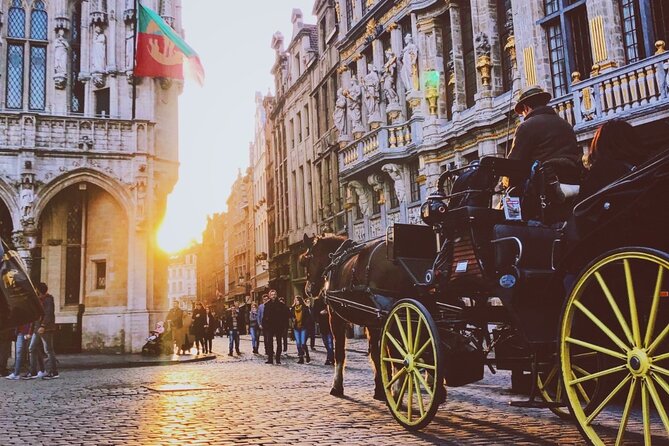
The title can lead you in the wrong direction. This is not mainly a tour of haunted buildings, crime scenes, adult nightlife, or modern Brussels after midnight. It is closer to an evening history walk, with unsettling stories attached to churches, squares, courthouses, neighborhoods, and old city structures.
You might hear about torture, murder, suicide, punishment, political power, and the darker side of civic life. Yet the tour also covers art, architecture, social change, and the basic story of Brussels. Several guides have been praised for mixing strange facts with a wider explanation of how the city developed.
That broader approach is useful. I would choose this walk if you want to understand why certain places matter, not simply collect a list of spooky anecdotes. If you want a tightly scripted ghost tour, the name may set your expectations too high.
The advertised duration is about two hours, though one departure ran well beyond that. The route includes repeated stretches of walking, cobblestones, hills, and pauses in public squares. A reasonable level of walking fitness helps, especially on the climb toward the Palais de Justice and the later walk into the Marolles.
More dark side and legends walks in Brussels:
- Historical Walking Tour: The Story of Brussels – by Legends
★ 5.0 · 164 reviews - Guided tour: Brussels Crime Scenes
★ 5.0 · 128 reviews - Private Tour: The Dark Side of Brussels
★ 5.0 · 20 reviews
Starting Near The Grand Place
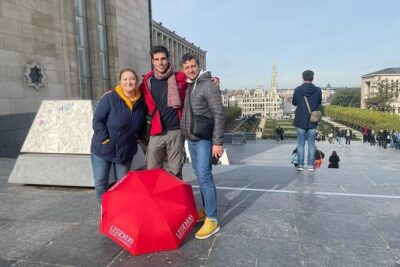
The meeting information gives the start as Grand Place, also called Grote Markt, while the first listed stop is Place du Grand Sablon. The guide has also been described as meeting people in front of City Hall on the main square. Because the Grand Place can be crowded, arrive early and make sure you know exactly where to look for the guide.
This is the one practical weakness worth taking seriously. One person could not locate the guide despite arriving early and searching after the scheduled start. The guide’s response placed the meeting point in front of City Hall, but the exchange shows why you should not rely on a vague glance around the square.
Once the group gets moving, the central location is convenient. Grand Place is close to public transport, and the walk remains within central Brussels. The group can reach as many as 35 people, so stay near the guide and listen for the meeting instructions at each stop.
Place Du Grand Sablon And Place Saint-Jean
The first substantial area is the Grand Sablon, a handsome square tied to markets, food, craft, and old Brussels life. The description presents it as a marketplace full of produce and handmade goods, though the evening focus is less about shopping and more about the setting and stories connected to the district.
The Sablon works well at night because it gives you a change of mood from the busy Grand Place. You can expect an introduction to the area, followed by about ten minutes at Place Saint-Jean. This square has an old-world feel, with cafes, historic buildings, and the Church of St. John the Baptist as its main visual feature.
These opening stops are not necessarily the darkest parts of the walk. Their value is context. You begin with attractive public spaces, then learn how ordinary-looking squares can carry difficult or surprising chapters from the city’s past.
Tour Anneessens And Rue De Rollebeek
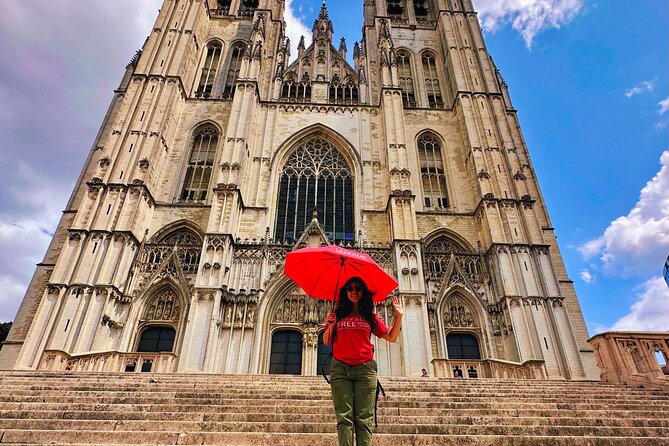
Tour Anneessens brings a different side of Brussels. The district is described through its mix of architecture, markets, communities, and modern city life. This is one of the places where the tour’s real subject becomes clear: Brussels is not just a polished center of grand facades, beer halls, and European institutions.
The stop lasts about ten minutes, enough for a short talk rather than a full neighborhood visit. You may find the presentation more social and political here than gruesome. That can be a plus if you want the guide to explain how the city works, though it may disappoint you if you booked only for macabre tales.
Rue de Rollebeek offers a quieter contrast. Its cobblestones, cafes, and small shops provide a pleasant walking stretch through the Sablon area. The street itself is attractive, but the guide’s narration is what gives it a place in the route. This is a good example of the tour’s method: use an ordinary street as a starting point for less familiar facts.
More evening outings in Brussels:
- Brussels: Sightseeing Sunset Bus Tour
★ 3.8 · 70 reviews - Brussels: Private Beers, Bars, and Live Music Tour by Night
★ 5.0 · 6 reviews - Evening Tour: The Dark Side of Bruges
★ 5.0 · 956 reviews - Evening Tour of the Dark Side of Gent
★ 5.0 · 646 reviews
Notre Dame Du Sablon And The Palais De Justice
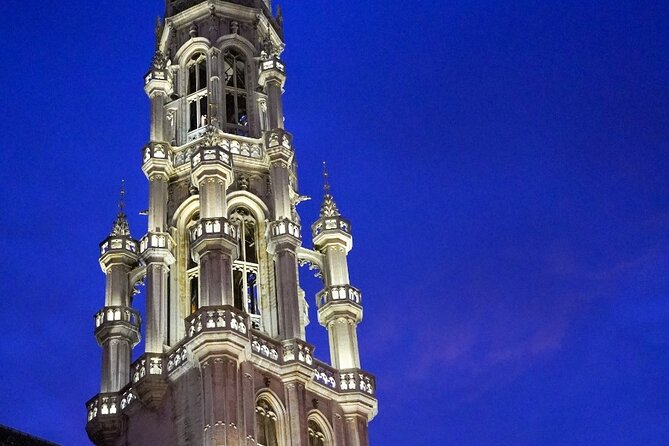
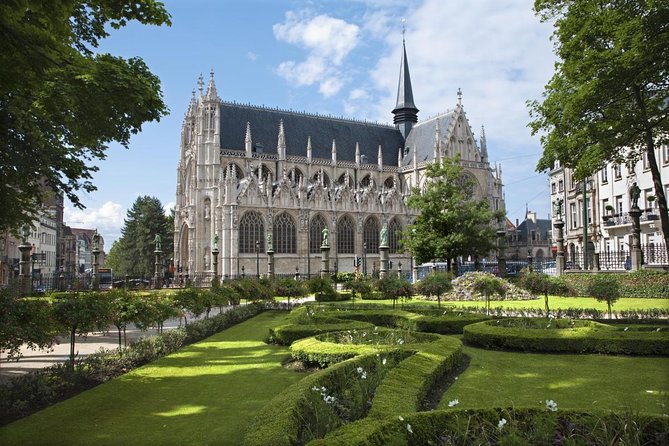
Notre Dame du Sablon is one of the strongest architectural stops. This Gothic church has elaborate detail and stained-glass windows, and its setting gives the group a calm pause in the middle of the walk. The church also helps show how religion, ceremony, and city identity were tied together in older Brussels.
The tour allows about ten minutes here. Do not expect a long interior visit or a full architectural lecture. Instead, you get a compact explanation that connects the building and district to the evening’s wider themes.
The Palais de Justice is the route’s biggest landmark. This huge neoclassical courthouse sits above the city and is known for its commanding scale. The building itself is impressive, but the hilltop position matters just as much. From here, you get sweeping views over Brussels, giving the walk a useful pause after several close-up streets and squares.
This is also where the physical effort becomes more noticeable. The route is not a flat, easy stroll from one cafe to the next. If you have mobility concerns, note that most participants can join, service animals are allowed, and the activity is near public transport, but the supplied information does not promise a step-free route.
Petit Sablon And The Meaning Of The Statues
Square du Petit Sablon is a small, formal garden surrounded by 48 bronze statues representing medieval guilds. It is a pleasant place to stop, but the statues also offer a way to discuss work, trade, status, and civic power in earlier Brussels.
I like this section because it rewards looking closely. The square can pass quickly on a standard city walk, yet the figures and layout invite questions about who controlled the city and how ordinary occupations shaped public life.
Again, the stop may feel more cultural than dark. That is not a flaw if you understand the tour as an exploration of uncomfortable or overlooked history. It is a drawback only if you expect every stop to involve crime, death, or supernatural stories.
Place Du Jeu De Balle And The Marolles
The walk becomes more distinctive as it reaches Place du Jeu de Balle in the Marolles. This square is associated with the daily flea market, where you can find old photographs, second-hand clothing, vintage furniture, and assorted objects.
By evening, the market may not be operating, but the square still helps you understand the neighborhood. The Marolles has a more everyday character than the formal Sablon. This is where the route feels less like a standard monument circuit and more like a walk through a real Brussels district.
The neighborhood also fits the tour’s tone. The stories here connect more naturally with working-class life, old city customs, and the less polished side of Brussels. A guide with a strong voice and a gift for storytelling can make this section memorable.
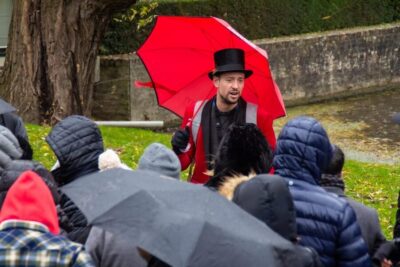
Several guides have earned especially warm praise for their delivery. Rahim has been described as funny, energetic, and eager to teach. Sebastian has been praised for being entertaining and well informed. Ann Marie has been noted for telling legends clearly and taking questions. David has been credited with projecting his voice well and handling a fairly large group.
Those names are useful, but guide assignments can change. I would book for the route and format, not for a guarantee that one particular guide will lead your departure.
Kapellekerk, The Quiet Finish
The tour ends at Église Notre-Dame de la Chapelle, known in English as Kapellekerk, in the Marolles. The church refers back to a chapel founded here in 1134, and its Gothic exterior gives the walk a suitably old ending.
This final stop is brief, listed at about five minutes. You are not finishing at a major transport hub or returning to Grand Place. The end point is on Rue des Ursulines near the Brussels-Chapel station area, in a neighborhood that is useful for continuing your evening.
The ending is practical as well as atmospheric. You can leave the group and continue exploring the Marolles, or use public transport nearby. If you have a train to catch, watch the time closely. One participant missed part of the group after falling behind and had a scheduled train from central Brussels.
Price, Tips, And What You Get
At $3.62 per group of up to six, the price is strikingly low. You are not paying for an expensive attraction or a reserved historic interior. You are paying a small booking amount for an English-language walking experience led by a professional guide.
The low price changes the etiquette. The tour operates in the style of a tip-supported walk, and the guides depend on tips for their earnings. Several people specifically urged participants to carry euros and tip according to the value of the guiding. I would budget for a proper tip if the guide gives you two hours of useful storytelling.
There have also been practical annoyances. One person did not receive a voucher because the supply ran out. Another departure was canceled when the minimum number of participants was not met, according to the cancellation terms. If the tour does not reach its required minimum, you should be offered another date or experience, or a full refund.
You can cancel for a full refund up to 24 hours before the start time. Changes or cancellations inside that 24-hour window are not accepted for a refund.
Who Will Enjoy This Walk
I would recommend the tour to you if you:
- Want an inexpensive introduction to Brussels after dark
- Enjoy unusual facts alongside major monuments
- Like walking through different neighborhoods rather than staying around Grand Place
- Appreciate stories about punishment, politics, social life, and difficult events
- Are comfortable with a route that may vary in emphasis depending on the guide and group
I would be cautious if you want a pure ghost tour, a carefully fixed itinerary, or a short and effortless stroll. The route can be more than two hours, some guides speak softly, and the focus may shift from dark tales to general city history.
For solo visitors, the format can work well. A person traveling alone has no trouble joining a group, and the evening setting gives you a structured way to see central Brussels without planning every street yourself. Families should decide based on the children’s tolerance for stories involving death, punishment, and murder.
Should You Book The Dark Side Of Brussels?
Book it if you want a low-cost evening walk with unusual history, attractive squares, the Palais de Justice viewpoint, and a finish in the Marolles. The best guides turn the route into a lively lesson about Brussels, with Rahim, Sebastian, Ann Marie, David, Ian, and Gunny all associated with strong departures.
Do not book it expecting nonstop horror or a guaranteed script. The title is theatrical, while the experience is usually a night history tour with darker chapters. Arrive early at the Grand Place, confirm the City Hall meeting spot, wear comfortable shoes, stay close to the group, and bring euros for a tip. With those expectations, this is a very good value and a useful first look at Brussels beyond its prettiest postcard views.
FAQ
How long does the Dark Side of Brussels tour last?
The tour lasts approximately two hours, although one departure continued for well over two hours.
Where does the tour start?
The stated meeting point is Grand Place, also called Grote Markt, in Brussels. The guide has been described as meeting participants in front of City Hall on the main square.
Where does the tour finish?
The tour ends at Notre-Dame de la Chapelle, also called Kapellekerk, on Rue des Ursulines in Brussels.
What language is the tour offered in?
The tour is offered in English.
How many people can join the tour?
The maximum group size is 35 people.
Is the tour suitable for most participants?
Most participants can take part, and service animals are allowed. The route involves considerable walking, and the supplied information does not promise a step-free itinerary.
Can I cancel for a refund?
Yes. You can cancel at least 24 hours before the start time for a full refund. Cancellations or changes made less than 24 hours before the start time are not accepted for a refund.
Just added around Brussels
- Standard vehicle from Brussels airport to city of Antwerp★ 5.0 · 4 reviews
- Luxury vehicle from Brussels airport to the city of Brussels★ 4.0 · 5 reviews
- Luxury Minivan from Brussels airport to the city of Brussels★ 4.0 · 7 reviews
- Transfer Brussels Airport (BRU) –> City Center 7 PAX (ONE WAY)★ 5.0 · 7 reviews
- Transfer Brussels Airport –> Brussels MB V Class 7 PAX (ONE WAY)★ 5.0 · 4 reviews
- Transfer Brussels Airport –> City MB E Class 1-3 PAX (ONE WAY)★ 5.0 · 6 reviews
- PRIVATE MPV TRANSFER FROM/TO BRUSSELS AIRPORT (Max 6 pax) ONE-WAY★ 5.0 · 4 reviews
- Waterloo Private Battlegrounds Tour with Lion Hill★ 4.5 · 9 reviews
Dark Side & Legends Tours, compared.

Historical Walking Tour: The Story of Bruges – by Legends
Read our review →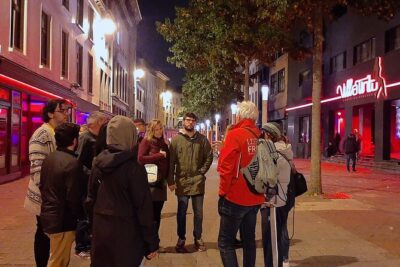
Historical Walking Tour: The Story of Brussels – by Legends
Read our review →Browse the lists this tour appears in