
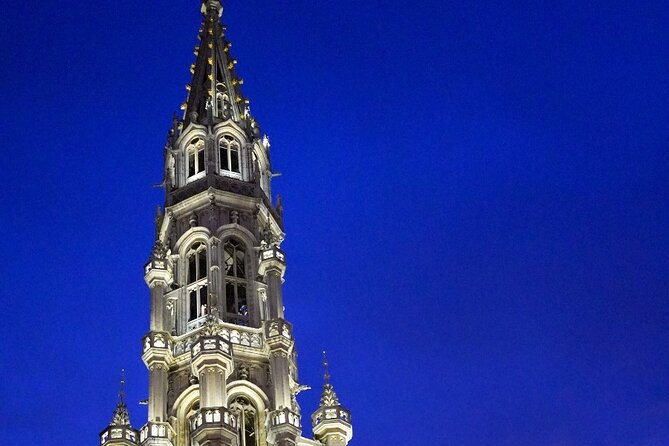
Reviewed · DARK SIDE & LEGENDS TOURS
Private Tour: The Dark Side of Brussels
Brussels has a darker side than chocolate, Art Nouveau, and comic murals. This private walk links grand churches and royal-looking squares with the Marolles, the old working-class quarter, while bringing in stories of crime, punishment, beheadings, and forgotten city life. Sebastian and Dan are among the guides named for this experience, and both bring a lively, personal touch.
I like the route’s small-group format, since your guide can adjust the pace and explain the details that interest you. I also like the ending at Place du Jeu de Balle and Kapellekerk, where Brussels feels less polished and more lived-in. The main drawback is the pace: nine stops in about two hours leaves little time for long visits or interior sightseeing.
Key points at a glance
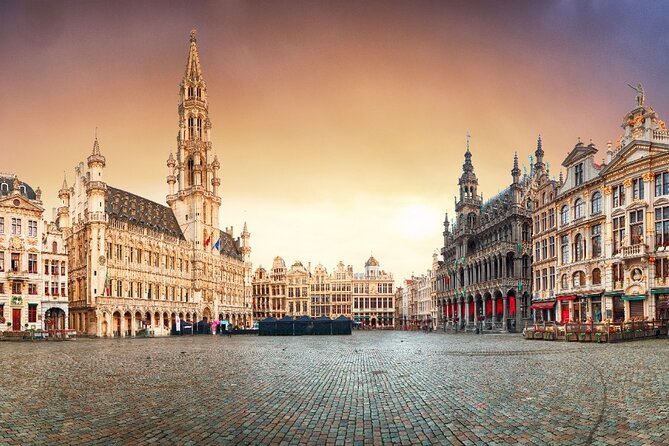
- Dark local stories: Expect tales linked to gothic churches, public punishment, and Brussels’ less tidy past.
- Private walking tour: Only your group takes part, with an English-speaking professional guide.
- Nine central stops: The route connects Sablon, the Palais de Justice, Petit Sablon, the Marolles, and Kapellekerk.
- Strong guide-led experience: Sebastian and Dan are praised for clear explanations, humor, and tailoring the walk to the group.
- A useful neighborhood contrast: The tour moves from elegant squares and monumental buildings into the old Marolles district.
- Good value for a group: At $105.02 per person, the price makes the most sense when shared by several people who want a private outing.
Why this Brussels walk feels different

Many first walks through Brussels stay close to the Grand Place, the Manneken Pis, and the usual chocolate shops. This route takes a different tack. It uses handsome squares and churches as a frame for stories about power, religion, law, and punishment.
The title may suggest a ghost tour, but the information provided does not promise supernatural tales. Think instead of the darker human side of the city: gothic religious buildings, old districts, public justice, and stories connected with executions. If you enjoy history with a slightly grim edge, the subject should suit you well.
The private setup matters. You are not joining a large crowd, and only your own group participates. That gives the guide room to answer questions, adjust the rhythm, and tailor the visit. One guide, Dan, is specifically noted for shaping the route for a group that could not take a general city tour. That flexibility is useful if you have already seen Brussels’ main sights or want a more focused introduction.
The tour lasts about two hours. That is long enough to connect several central areas, but not long enough to linger at every church, study every statue, or browse the flea market. You should treat it as a guided city walk, not a series of full museum visits.
More dark side and legends walks in Brussels:
- Evening Tour: The Dark Side of Brussels
★ 4.5 · 435 reviews - Historical Walking Tour: The Story of Brussels – by Legends
★ 5.0 · 164 reviews - Guided tour: Brussels Crime Scenes
★ 5.0 · 128 reviews
From the Grand Place area to Grand Sablon
The stated meeting point is at Grand Place, also called Grote Markt, while the first named stop is Place du Grand Sablon. These areas are central, but they are not the same square. Confirm the precise meeting instructions before you set out, especially since a private guide may arrange a practical nearby meeting spot.
Place du Grand Sablon gives the walk an elegant opening. The square is known for its market life, food stalls, artisan goods, and connection to Brussels’ old commercial culture. The description also refers to the Grand Marché, so you can expect a setting where daily city life matters as much as the surrounding buildings.
You get about ten minutes here. That is enough for your guide to establish the area and point out details, but it is not a shopping session. If the market is active, you might find fresh produce, crafts, and Belgian treats. If not, the square still works as a useful starting point for understanding the contrast between polished Sablon and the rougher neighborhoods later in the walk.
Place Saint-Jean and the first historical shift
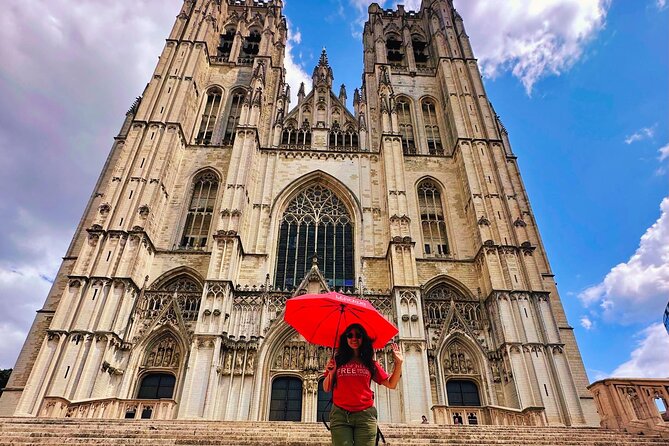
The next ten-minute stop is Place Saint-Jean, a small square with old architecture, cafes, and the Church of St. John the Baptist as its focal point. It offers a calmer pause after the open activity of Sablon.
This is the kind of stop where a guide adds more value than a map. On your own, you might admire the church and move on. With a guide, you get the setting for a story, a local detail, or an explanation of how the square fits into Brussels’ past.
Do not expect a long church visit here. The schedule gives each location only a short slot, so the emphasis is on context and storytelling rather than detailed architectural study.
Tour Anneessens and the city’s mixed character
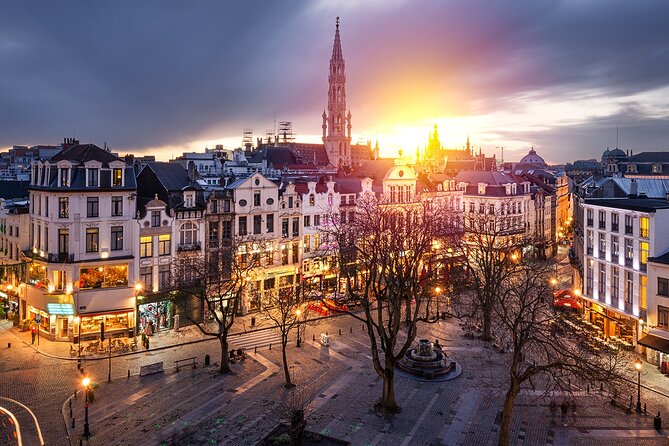
Tour Anneessens brings you into a district known for a varied community, lively streets, older buildings, and a mix of architectural styles. The route uses this area to show that Brussels is not one uniform city center.
For me, this is one of the more useful parts of the walk. Grand squares can make Brussels look carefully arranged and aristocratic. Anneessens adds another layer, with a more everyday urban feel. The tour’s darker theme also fits here, since the guide can connect the area’s past and present without limiting the story to famous monuments.
Again, the planned time is about ten minutes. You will get an orientation and a few focused stories rather than a full neighborhood tour. If you want to explore Anneessens at length, plan a separate walk.
A few more Brussels half days worth weighing up
- Brussels: Atomium Entry Ticket with Design Museum Ticket
★ 4.4 · 9,254 reviews - From Brussels: Guided Day Trip to Bruges and Ghent
★ 4.6 · 8,353 reviews - From Brussels: Bruges & Ghent Day Tour – 2 Fairytale Cities
★ 4.7 · 8,242 reviews - Choco-Story Brussels: Chocolate Museum Entrance with Tasting
★ 4.3 · 4,883 reviews
Rue de Rollebeek and Notre Dame du Sablon
Rue de Rollebeek brings the group back toward the picturesque side of central Brussels. Cobblestones, cafes, and small shops give the street an old-fashioned feel, while the route keeps moving between historic character and modern city life.
The nearby Notre Dame du Sablon is one of the tour’s strongest visual stops. This gothic church is known for detailed stonework and stained glass. The church offers a quieter setting, and its religious purpose gives the guide a natural way to explain how faith shaped the city.
You have roughly ten minutes here. That is enough to look at the exterior and, if access allows, take a brief look inside. Since the tour does not promise a dedicated interior visit, you should not book it as a church architecture tour. Its real strength is the combination of setting, structure, and the story your guide attaches to it.
The Palais de Justice and Brussels from above
The Palais de Justice is the most monumental stop on the route. Its enormous neoclassical structure dominates the hill and is one of Brussels’ most recognizable buildings. The courthouse is also known for its scale, making it a natural backdrop for stories about law and punishment.
The elevated position offers sweeping views over Brussels. That gives you a welcome change from close street scenes and church facades. Bring your camera, but also listen closely here, since the building’s purpose connects directly with the tour’s darker subject.
The scheduled visit lasts about ten minutes. You should expect an outside explanation and a viewpoint rather than a courthouse tour. The building itself is imposing, but the guide’s interpretation is what makes the stop more than a quick photo break.
Petit Sablon’s statues and a gentler pause
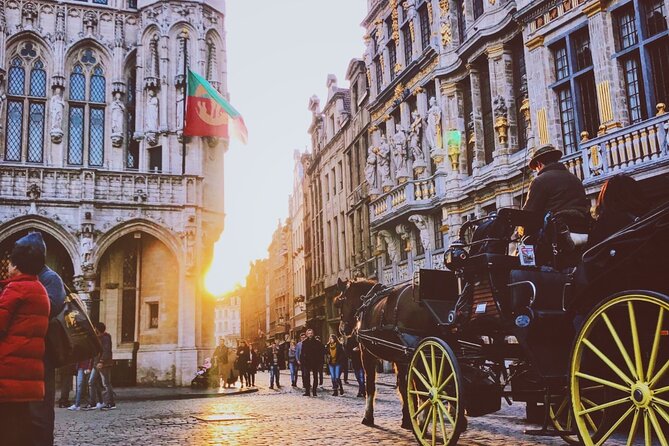
Petit Sablon is a carefully arranged garden square surrounded by 48 bronze statues representing medieval guilds. Its clipped greenery, fountains, and stonework create a more decorative mood than the Palais de Justice or Anneessens.
This stop gives the walk some breathing room. The statues also help explain Brussels’ craft and trade traditions, adding a social side to the city’s grand architecture. You can stroll, take photographs, and notice how the square presents an idealized version of the past.
There is a useful contrast here. Petit Sablon is pretty and controlled, while the route later moves into the Marolles, where the atmosphere is more informal. The guide can use that contrast to show how different parts of central Brussels developed and how the city’s social divisions appear in its streets.
Place du Jeu de Balle and the Marolles
Place du Jeu de Balle is where the tour becomes most grounded in present-day neighborhood life. The square is home to a flea market every day, with old photographs, second-hand clothing, vintage furniture, small objects, and assorted curiosities.
The market’s appeal is not polished sightseeing. It is the chance to see a place used for trade and browsing, with an atmosphere that feels open and local. You might find something worth buying, but the better reason to visit is to watch the square function as a neighborhood meeting point.
This is also the point where the Marolles becomes central to the experience. The district is known for its distinctive local character and mixed architectural feel. The tour does not simply rush you through a famous monument list. It finishes by bringing you into a part of Brussels where ordinary commerce and old city traditions remain visible.
The schedule allows about ten minutes here, so shopping will be limited. If the flea market interests you, return another day with more time and cash for browsing. During the tour, keep your attention on the guide and use the short stop to get your bearings.
Kapellekerk and the walk’s final note
The tour ends at the Church of Our Lady of the Chapel, commonly called Kapellekerk. This gothic church is in the Marolles and traces its name to a chapel founded here in 1134.
Ending here makes sense. The church brings the walk back to religion and older Brussels, while the surrounding neighborhood keeps the setting from feeling too formal. After stories about law, punishment, and the city’s darker past, a medieval church provides a quiet final image.
The final stop is listed as about five minutes. It is a conclusion, not a full guided church visit. The official end point is on Rue des Ursulines, at Brux.-Chap or Brus.-Kap. From there, you are in a popular Brussels neighborhood and can continue exploring on your own.
What the $105.02 price really buys
At $105.02 per person, this is not the cheapest way to spend two hours in Brussels. The value depends heavily on your group size and your interest in private guiding.
For one or two people, the cost is fairly high for a short walking tour. For a larger group, the private format becomes more attractive, especially if group discounts apply. You are paying for a professional guide, a custom-feeling experience, and the chance to ask questions without competing with a large tour group.
The price also covers an angle that a standard city introduction may not offer. Instead of a broad overview of every major sight, you get one focused theme across several neighborhoods. That makes the tour more worthwhile after you have already seen the Grand Place or if you prefer social history and unusual stories to a basic monument checklist.
There are no paid admissions included, and the stops are described as free. That keeps the cost simple, but it also means the main product is the guide’s interpretation and your time on the streets.
Who should book this private experience?
I would recommend it to you if you like walking, local history, gothic architecture, and stories that are a little grim. It should suit couples, families with older children, friends, and small groups who want a private outing in English.
The tour is also a good fit if you have limited time in Brussels. In two hours, you cover several central districts and finish in the Marolles. It gives you a useful first look at places you might return to later.
You may want something else if you prefer long interior visits, art museums, food tastings, or a slow market morning. Nine stops in about two hours means a steady pace. The tour is also not presented as a dedicated ghost walk, so book it for factual city stories rather than promises of supernatural encounters.
The experience is near public transportation, service animals are allowed, and most people can participate. Still, it is a walking tour through central streets and squares, so comfortable shoes are a sensible choice. Bring a little flexibility for weather and market conditions.
Booking confirmation is provided at the time of purchase. You can cancel for a full refund up to 24 hours before the start time, but changes or cancellations inside that window are not accepted.
My verdict on The Dark Side of Brussels
I would book this tour if I wanted Brussels with more bite than the standard postcard route. The best features are the private guide, the shift from elegant Sablon to the Marolles, the Palais de Justice viewpoint, and the daily flea market at Place du Jeu de Balle.
The strongest praise goes to the guides’ storytelling and personality. Sebastian is described as entertaining and well informed, while Dan is noted for adapting the walk to the group. That matters here because the route itself is compact and the guide must make the short stops count.
At $105.02 per person, check the group discount and compare the price with your party size. For a private group that wants dark city history and a flexible English-language walk, it is a good choice. For solo visitors seeking the lowest-cost introduction to Brussels, a public walking tour may offer better value.
FAQ
How long does The Dark Side of Brussels tour last?
The tour lasts approximately two hours.
Where does the tour start?
The stated meeting point is Grand Place, also called Grote Markt, in Brussels. The first named stop is Place du Grand Sablon, so confirm the exact meeting instructions before arrival.
Where does the tour end?
The tour ends at Kapellekerk, or the Church of Our Lady of the Chapel, on Rue des Ursulines in Brussels.
Is this a private tour?
Yes. Only your group participates in the activity.
What language is the tour offered in?
The tour is offered in English.
Can I cancel for a full refund?
Yes. You can cancel at least 24 hours before the experience start time for a full refund. Cancellations or changes made less than 24 hours before the start time are not accepted for a refund.
Just added around Brussels
- Standard vehicle from Brussels airport to city of Antwerp★ 5.0 · 4 reviews
- Luxury Minivan from Brussels airport to the city of Brussels★ 4.0 · 7 reviews
- Transfer Brussels Airport (BRU) –> City Center 7 PAX (ONE WAY)★ 5.0 · 7 reviews
- Luxury vehicle from Brussels airport to the city of Brussels★ 4.0 · 5 reviews
- Transfer Brussels Airport –> Brussels MB V Class 7 PAX (ONE WAY)★ 5.0 · 4 reviews
- Transfer Brussels Airport –> City MB E Class 1-3 PAX (ONE WAY)★ 5.0 · 6 reviews
- PRIVATE MPV TRANSFER FROM/TO BRUSSELS AIRPORT (Max 6 pax) ONE-WAY★ 5.0 · 4 reviews
- Waterloo Private Battlegrounds Tour with Lion Hill★ 4.5 · 9 reviews
Dark Side & Legends Tours, compared.

Historical Walking Tour: The Story of Bruges – by Legends
Read our review →
Browse the lists this tour appears in