
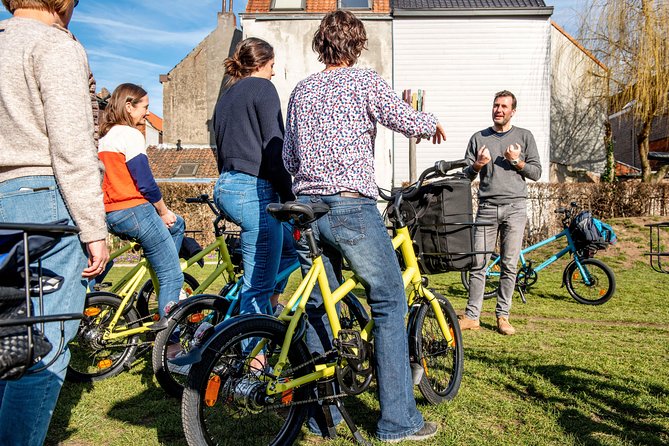
Reviewed · HISTORICAL TOURS
Bicycle tour in historic Ghent
Ghent’s best surprise is how quickly its story changes once you leave the postcard center. This 2.5-hour bicycle tour links medieval abbeys and beguinages with university buildings, street art, parks, rivers, and a former industrial site. You see the city as a living place, not just a handsome row of canals and guildhalls.
I like the route for two reasons. First, it reaches corners you would probably skip on foot, including Prinsenhof, Muinkpark, and the quiet Groot Begijnhof Sint-Elisabeth. Second, the break at Dok Brewing Company adds a local, easygoing pause, with time for a drink and, according to the tour description, a pastry or beer stop depending on the group.
The main consideration is pace. One published account describes Tim riding with considerable momentum and not always noticing when someone fell behind. There may also be little time for photographs, and the explanations are designed as a broad introduction rather than a detailed history lecture.
Key points to know before you book
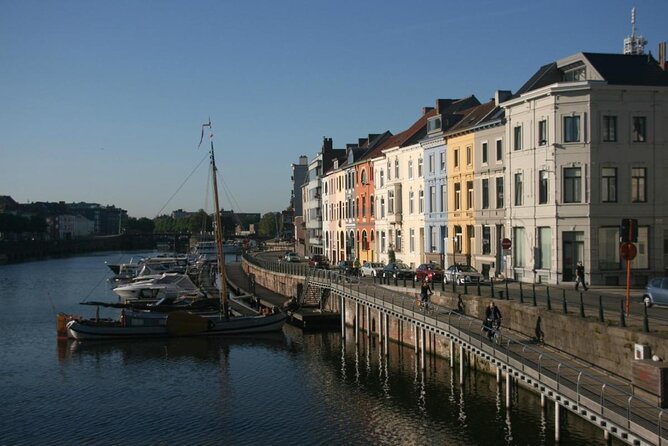
- A wider view of Ghent: The route moves beyond the central medieval streets to university districts, parks, river junctions, beguinages, and the north side’s former industrial zone.
- Tim leads the ride: He is the guide and owner of CityCycling.Gent, and the experience is offered in English.
- Small-group format: The maximum group size is 16 people, which should feel more manageable than a large coach excursion.
- A useful first-day activity: Cycling helps you learn the shape of Ghent quickly, then you can return to the places you want to explore on foot.
- Simple inclusions: A bicycle and helmet are supplied. Drinks and food at the break are extra.
- Good value for active sightseers: At $54.31 per person, you are paying for a guided route, local orientation, equipment, and access to places spread across the city.
Why cycling gives you a better first look at Ghent
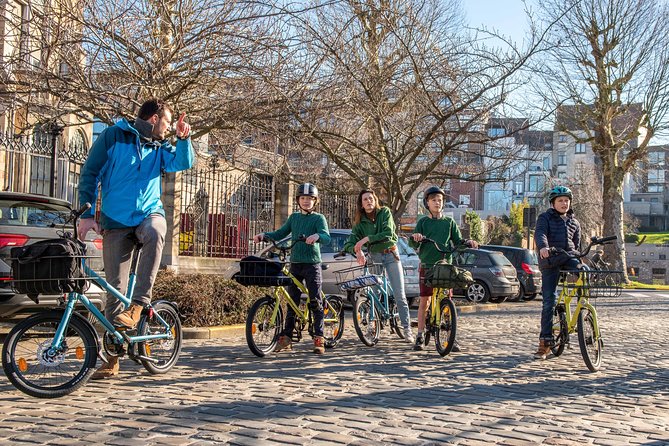
Ghent is compact enough to explore on foot, but its sights are scattered across several neighborhoods. The famous medieval core gets most of the attention, while important places sit farther out along the Scheldt and Leie rivers or near the old university quarter.
A bicycle solves that problem neatly. You can cover more ground without spending the whole day walking between stops. The route also lets you see changes in architecture and neighborhood character. A quiet abbey courtyard can be followed by a modernist university tower, then an old industrial site turned into a cultural and beer destination.
This is not a high-speed cycling excursion in the sporting sense. The stops are short, usually about 10 minutes, with a 15-minute pause at Dok Brewing Company. Still, you need to feel comfortable riding in an urban setting and staying with a group.
The maximum group size is 16. That is small enough for a personal feel, but not so small that the guide can watch every rider every second. Stay alert at intersections, keep the rider ahead of you in sight, and speak up if you need the pace reduced.
More Historical Tours in Ghent
- Ghent: 50-Minute Medieval Center Guided Boat Trip
★ 4.5 · 5,637 reviews - Historical Walking Tour: Legends of Gent
★ 5.0 · 1,761 reviews - Ghent: 40 Minute Medieval Center Guided Boat Tour
★ 4.4 · 884 reviews
Starting quietly at St. Peter’s Abbey
The ride begins in the inner garden of Sint-Pietersabdij, or St. Peter’s Abbey. This is a strong starting point because it gives you a calm courtyard before the movement of the city begins.
The abbey is one of Ghent’s historic religious sites, and the garden offers a pleasant place to meet and get settled on the bicycle. Since admission is free, the stop is about orientation and atmosphere rather than an extended interior visit.
From here, Tim can frame Ghent as a city shaped by religious institutions, trade, waterways, and later urban growth. You get a first sense that the tour will not simply repeat the standard old-town circuit.
Modern Ghent at the Tower of Books
De Boekentoren, or the Tower of Books, is the university library and one of Ghent’s recognizable landmarks. Its 20th-century modernist design provides a sharp contrast with the medieval buildings that dominate many first-time visits.
This stop is useful because it broadens your picture of Ghent. The city is not preserved in one historical period. It has a strong university presence and a modern architectural identity, too.
You will have about 10 minutes here, enough for an explanation and a quick look. If architecture interests you, this is a stop where you may wish for more time or a chance to take several photographs. The tour’s purpose is to connect the landmark to the larger ride, not provide a full architectural study.
Culture at the Bijloke Music Centre
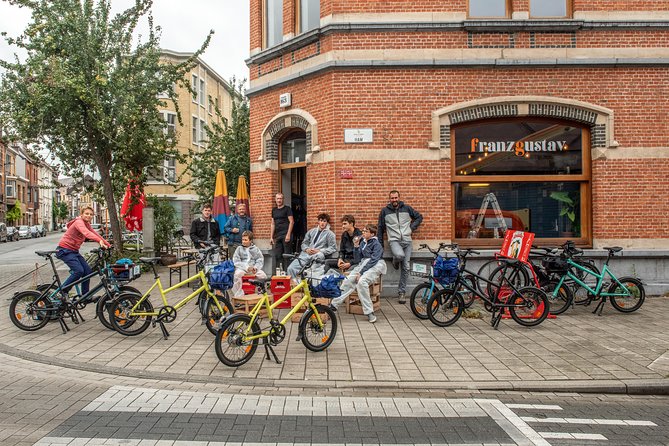
The Bijloke area brings together music, visual arts, and cultural institutions. STAM, Ghent’s city museum, is also located here, making this a useful place to understand how the city presents its past and its present.
The stop helps connect historic Ghent with its current cultural life. You are not only cycling past old stone buildings. You are also seeing places where residents attend concerts, visit exhibitions, and learn about the city.
As with the other stops, the visit lasts around 10 minutes. I would treat this as a preview. If STAM interests you, make a note to return later with more time, since the bicycle tour does not include museum admission or a dedicated museum visit.
More history walks around Ghent:
- Ghent: 40-Minute Historical Boat Tour of City Center
★ 4.3 · 430 reviews - Private Historical Tour: The Best of Ghent
★ 5.0 · 115 reviews - Chocolate history workshop Ghent
★ 5.0 · 34 reviews - Ghent: Private Tour in Historical Center
★ 4.9 · 22 reviews
A pause in the Groot Begijnhof Sint-Elisabeth
The Groot Begijnhof Sint-Elisabeth offers one of the route’s calmer moments. It is close to the city center but has a quieter mood, with streets and buildings connected to the beguine tradition.
Beguinages are especially valuable stops on a city tour because they reveal a form of community life that is easy to miss among grand churches and civic buildings. The setting is less about a single monument and more about the layout, silence, and sense of enclosure.
You get around 10 minutes here. That is enough to notice the peaceful character, but not enough for a long, slow exploration. Please remember that this is a place where quiet behavior matters. Keep your voice down and follow the guide’s lead.
Prinsenhof and the birth of Charles V
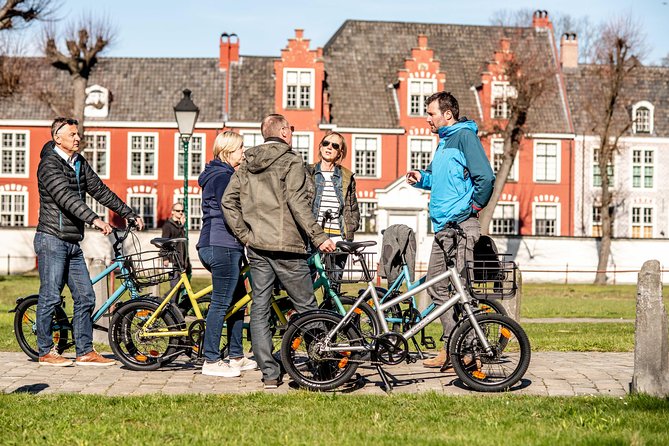
Prinsenhof introduces one of Ghent’s most important royal connections. Emperor Charles V, one of the most powerful leaders in 16th-century Europe, was born here.
The stop gives Tim a chance to explain how local places connect to events far beyond Belgium. Ghent was not an isolated medieval town. Its political and economic importance brought it into the orbit of major European rulers.
The route does not present Prinsenhof as a full palace visit. You are making a brief stop, hearing the connection, and moving on. That format works well if you want a broad city overview, but history-minded visitors may want to return independently for more detail.
A beer break at Dok Brewing Company
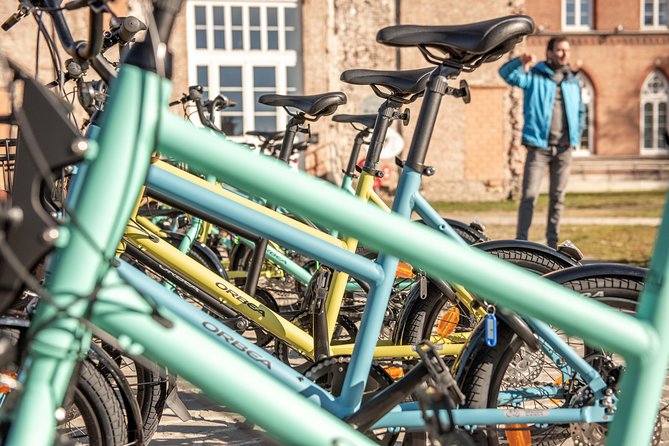
The stop at Dok Brewing Company changes the rhythm of the tour. Located on an old industrial site in northern Ghent, the brewery is part of a more modern and creative side of the city.
This is one of the tour’s most practical touches. A short break gives you a chance to rest, chat with the group, and take in a neighborhood you might not reach on a standard walking route. The setting also shows how old industrial areas can find new uses.
Food and drink are not included in the price, so plan to pay separately if you want something. One account of the tour praised the chance to have a pastry and good beer here. Treat that as an optional purchase, not part of the package.
The 15-minute pause is brief. You should not expect a long brewery tasting or a full meal. It is a refreshment stop within a larger city ride.
Where two rivers meet at Portus Ganda
Portus Ganda sits where the Leie and Scheldt meet. These waterways helped shape Ghent’s wealth, trade, and physical form, so this is one of the most meaningful stops for understanding why the city developed where it did.
The marina gives you a change of scenery from the inner streets. Water, bridges, and open views make the city feel less enclosed. Tim can use the junction to connect geography with commerce and urban growth.
The visit lasts about 10 minutes. It is a good time to take a few photographs, though the overall ride keeps moving. If you like taking careful architectural pictures, have your camera ready before stopping rather than waiting until the final seconds.
St. Bavo’s Abbey, one of the oldest sites
St. Bavo’s Abbey sits near the meeting point of the Scheldt and Leie and is described as Ghent’s oldest building and one of the major medieval sites in Flanders.
That makes it one of the route’s most important historical stops. The abbey helps explain the religious foundations of Ghent and gives you a physical link to the city’s earliest development.
The tour allows about 10 minutes here. You will gain useful context, but this is not a guided interior visit with a long examination of the buildings. If medieval architecture is your main interest, you may want to schedule a separate visit after the ride.
The UNESCO beguinage at Our Lady Ter Hooyen
Our Lady Ter Hooyen is a beautifully preserved beguinage and a UNESCO World Heritage Site. It is another reminder that Ghent’s story includes organized communities, daily routines, and residential spaces, not just rulers and churches.
This stop pairs well with the Groot Begijnhof Sint-Elisabeth. Seeing two beguinages during one ride lets you compare their atmosphere and setting. It also gives the route a clear theme: some of Ghent’s most rewarding places are quiet and easy to pass without noticing.
Again, the stop is about 10 minutes. You will see the setting and learn why it matters, but you will not have time for an unhurried architectural survey.
Finishing through Muinkpark
The final stop is Muinkpark, a former part of Ghent Zoo. Today, the park is surrounded by homes in Art Deco, modernist, and Burgundian styles.
This is a fitting ending because it brings together urban change and residential architecture. Ghent’s past is not locked inside monuments. It also appears in parks, house fronts, street plans, and former attractions that have changed purpose.
The park offers a less formal ending than a major cathedral or castle. You finish with a sense of how local neighborhoods fit together, then cycle back to the meeting point at Voetweg 46.
What the pace and guiding style are really like
Tim is described as enthusiastic, friendly, and full of information about Ghent. He also takes the group to places you might not find by yourself, which is the central strength of this experience.
The guiding style appears to favor movement and a steady stream of local facts. That works well if you want to cover a lot of ground and get ideas for the rest of your stay. It may feel less satisfying if you want long explanations, lots of questions, or time to study every site.
One account specifically criticized the pace, noting that Tim did not always notice when someone had fallen behind. I would take that seriously, especially if you are a nervous cyclist or traveling with someone who rides slowly. This is a group ride, not a private tour, and you should be prepared to manage your own position in the group.
The route’s English-language format is useful for international visitors. Confirmation arrives at booking, the meeting point is near public transportation, and most people can participate. No special admission tickets are needed for the listed stops.
Is $54.31 a fair price?
At $54.31 per person, the cost is reasonable if you want more than a basic bicycle rental. You receive the bicycle, helmet, a 2.5-hour route, and a local guide who handles the planning and navigation.
The value comes from the spread of the itinerary. Reaching abbeys, beguinages, the university district, Portus Ganda, Muinkpark, and the north side by foot would take much longer. A bicycle lets you connect these pieces in one morning or afternoon.
The price is less attractive if you only want the medieval center. You could explore the central streets on foot without booking a tour, and this ride intentionally spends plenty of time outside the most famous core.
Food and drinks are extra. Free cancellation is available until 24 hours before the start time, while later cancellations or changes are not refunded. The experience also requires a minimum number of participants, so a cancellation for that reason results in another date, another experience, or a full refund.
Who should book this Ghent bicycle tour?
I would choose this tour early in a Ghent visit if you enjoy active sightseeing and want help getting oriented. It suits people who like architecture, local neighborhoods, urban history, parks, and a few pleasant surprises beyond the standard center.
It is also a good match for visitors with only a short stay. The route gives you a useful map of the city, and Tim’s recommendations can help you decide what to do afterward. One particularly useful approach is to mark the places you want to revisit on foot, such as STAM, the abbeys, or the beguinages.
You may want a different experience if you dislike cycling in traffic, need frequent photo stops, or prefer lengthy historical talks at each monument. The tour covers a lot, and its explanations are broad rather than academic.
Should you book it?
Book it if you want to see the other Ghent, beyond the famous medieval center. The mix of abbeys, beguinages, university architecture, rivers, parks, and a former industrial district gives you a fuller sense of the city. The small-group limit, supplied bicycle, helmet, and English-language guiding make the arrangement simple.
Go in expecting a brisk overview, not a slow photo tour or a detailed museum visit. Stay near the group, be ready to ride at a steady pace, and bring a little extra money for the brewery stop. For active visitors who value local orientation and less obvious sights, $54.31 is a fair price.
FAQ
How long does the bicycle tour in Ghent last?
The tour lasts approximately 2 hours and 30 minutes.
Where does the tour start and finish?
It starts at Voetweg 46, 9000 Gent, Belgium, and finishes back at the same meeting point.
Is bicycle equipment included?
Yes. Use of a bicycle and a bicycle helmet are included.
What language is the tour offered in?
The tour is offered in English.
How large is the group?
The maximum group size is 16 people.
Can I cancel for a full refund?
Yes. You can cancel at least 24 hours before the experience start time for a full refund. Cancellations or changes made less than 24 hours before the start time are not refunded.
Just added around Ghent
- Historic Highlights, by a local guide★ 5.0 · 9 reviews
- Discover Ghent while playing! Escape game – The alchemist★ 4.0 · 4 reviews
- Walking Food Tour in Ghent★ 5.0 · 13 reviews
- Discover Ghent while playing! Escape game – The Walter case★ 4.5 · 4 reviews
- Discover Ghent with a self-guided Outside Escape city game tour!★ 4.0 · 10 reviews
- Ghent Walking Tour with Audioguide on Your Smartphone★ 4.5 · 13 reviews
- e-Scavenger hunt Kortrijk: Explore the city at your own pace★ 4.5 · 15 reviews
- Private Ghent Beer & Brewery Tour by a young local★ 5.0 · 12 reviews
Historical Tours, compared.



Historical Walking Tour with Chocolate & Waffle Tasting
Read our review →
THE Storytelling Tour of Bruges | First Day Must | History & Tips
Read our review →
Tell Me About Brussels! | First Day Must-Do | Local Storytellers
Read our review →Browse the lists this tour appears in