
Reviewed · HISTORICAL TOURS
Private Historical Tour: The Best of Ghent
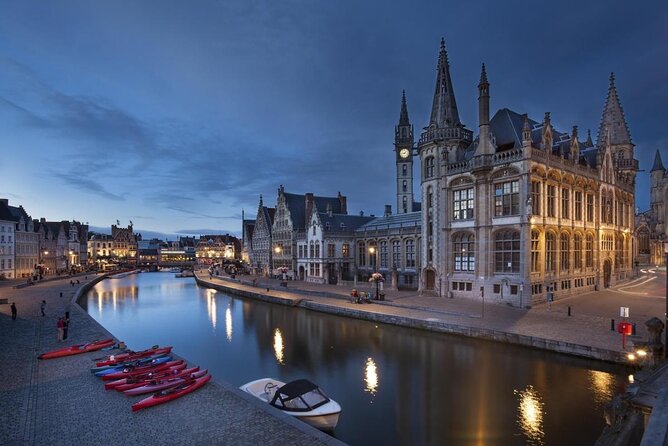
Ghent’s best introduction may be the view from St. Michael’s Bridge, where the canals frame the city’s famous three towers. From there, this private walk threads through old quays, a castle, a former hospital, a street reserved for graffiti, and the cathedral that houses the Van Eyck brothers’ Ghent Altarpiece. It gives you the city’s big story in about two hours without asking you to spend the morning inside museums.
I like the private format, which lets you ask questions, adjust the pace, and focus on what interests your group. I also like the range of stops: you get medieval trade, local legends, civic politics, religion, and modern street art rather than a parade of pretty façades. The main drawback is value. At $105.82 per person, you pay for personal attention, but admission to the major sights is not included.
Key points to know before booking
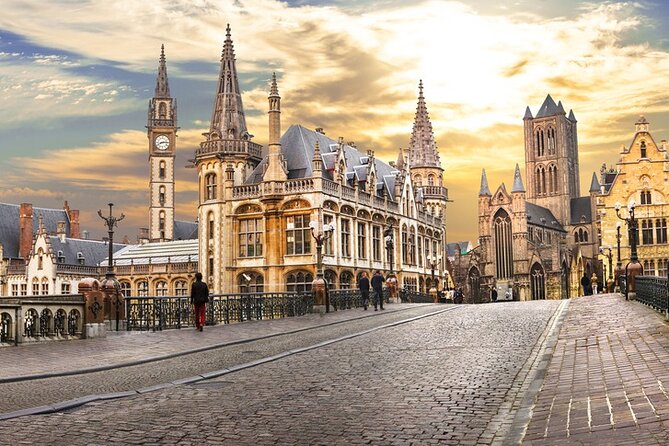
- Twelve central stops cover Ghent’s canals, castle, cathedral, belfry, town hall, and street art.
- The tour stays outdoors, so you see major buildings but do not receive included entry to Gravensteen, the Belfry, or St. Bavo’s Cathedral.
- A private guide makes the difference, especially if you want questions answered or the pace adjusted.
- The walk ends at the Belfry, a useful location for continuing sightseeing around St. Bavo’s Square.
- Local storytelling is the main product, with legends, political conflicts, and odd details woven into the route.
- The price is easiest to justify for a small group, since the booking is restricted to your party.
Starting at St. Michael’s Bridge
The tour begins at Hostel Uppelink on Sint-Michielsplein, beside St. Michael’s Bridge. This is an excellent opening point because Ghent reveals its medieval character in one broad view. The waterways, old commercial buildings, and three towers line up in a way that quickly explains why the city mattered.
Your guide begins with Ghent as a medieval trading center. That context matters. The city was not simply built around a castle or church. Its canals, merchants, guilds, and textile trade shaped the streets you see today.
The three towers are St. Nicholas’ Church, the Belfry, and St. Bavo’s Cathedral. You will see all three again later, but the bridge gives you the clearest first look. Allow about 15 minutes here, mostly for orientation and photographs.
More Historical Tours in Ghent
- Ghent: 50-Minute Medieval Center Guided Boat Trip
★ 4.5 · 5,637 reviews - Historical Walking Tour: Legends of Gent
★ 5.0 · 1,761 reviews - Ghent: 40 Minute Medieval Center Guided Boat Tour
★ 4.4 · 884 reviews
Graslei and Korenlei, Ghent’s old port
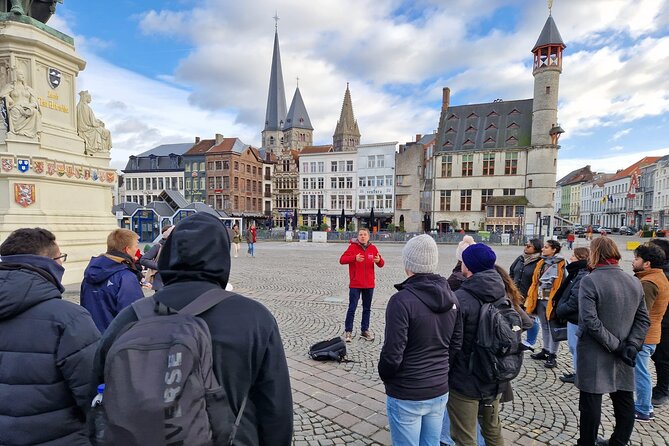
A short walk brings you to Graslei and Korenlei, the canal-side quays at the center of old Ghent. These are among the city’s most attractive views, but the guide adds useful purpose to the architecture by explaining which buildings were tied to trade.
Look closely at the façades. Their shapes and details reflect the commercial life of the old port, not just decorative taste. Your guide helps turn the canal from a postcard view into a working part of the city’s past.
This stop is brief, around 10 minutes, so do not expect a detailed architectural lecture on every building. Instead, you get a clear explanation of how goods, merchants, and civic power connected in this small area.
The route also touches on the Design Museum and a local example of Ghent’s stubborn character. The precise feature discussed can depend on the guide and the day, but the point is clear: Ghent has long had a strong-minded civic identity. That local attitude becomes a theme throughout the walk.
The Great Butchers’ Hall and the darker side of trade
At Het Groot Vleeshuis, you look across the water toward the medieval covered Great Butchers’ Hall. The building recalls a time when food sales were regulated and concentrated in designated places.
The stop is not limited to picturesque medieval commerce. Your guide also shares darker facts about the hall and the systems that supported it. That change in tone is useful. Ghent’s old center is beautiful, but its buildings were shaped by strict rules, unequal power, and practical concerns that were not always pleasant.
You spend about 10 minutes here. It is another outside stop, so anyone hoping to explore the hall’s interior should plan separate time.
Gravensteen, a castle in the city center
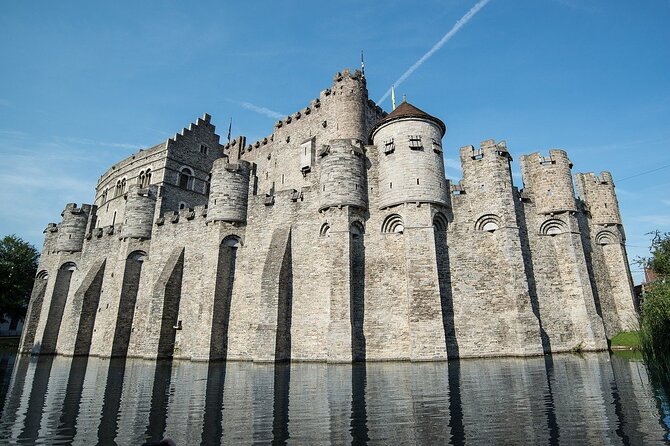
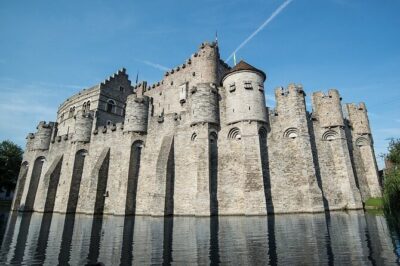
Gravensteen, the Castle of the Counts, is one of Ghent’s great surprises. Unlike many castles placed beyond the town, this medieval fortress sits directly in the center, surrounded by canals, shops, and city streets.
The castle is notably well preserved, and the guide explains its role and past from outside. You will hear about its imposing design and its place in Ghent’s political story, but this tour does not include admission or an interior visit.
That distinction matters when you compare the price with a small-group walk. If you want to climb the castle, inspect its rooms, or see its collection of weapons and defenses, you will need a separate ticket and more time. Still, the outside explanation gives you enough context to decide if going in is worth it for your schedule.
More history walks around Ghent:
- Ghent: 40-Minute Historical Boat Tour of City Center
★ 4.3 · 430 reviews - Bicycle tour in historic Ghent
★ 5.0 · 87 reviews - Chocolate history workshop Ghent
★ 5.0 · 34 reviews - Ghent: Private Tour in Historical Center
★ 4.9 · 22 reviews
St. Veerleplein, a square of life and death
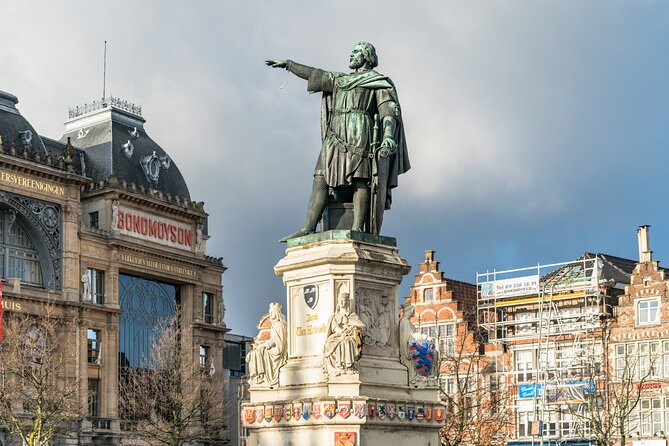
The square in front of Gravensteen is St. Veerleplein. Its two contrasting nicknames, the square of death and the square of life, provide one of the tour’s built-in storytelling moments.
Your guide explains the reason behind those names, linking the square to the punishments, ceremonies, and public activity that once took place here. It is a good example of how this tour uses a particular location to explain social history, rather than simply identifying the building in front of you.
The stop lasts about 10 minutes. Because the story depends on spoken explanation, this is one place where a lively guide can make a real difference.
Huis van Alijn and an old charitable institution
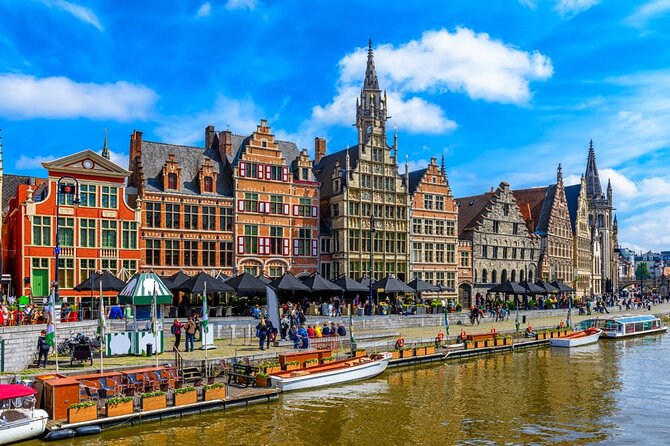
Next comes Huis van Alijn, the House of Alijn. It occupies the only remaining god house in Ghent, a charitable institution connected to care for the sick and poor.
The guide explains how the building became a hospital and tells the unfortunate story behind that change. This stop adds a more personal side to the city’s past. Castles and guild halls show power, while places like Huis van Alijn reveal how ordinary people faced illness, poverty, and limited medical care.
The building is now associated with a museum, but the tour’s included visit is an exterior explanation. If this subject catches your interest, you may want to return later for a longer look.
Vrijdagmarkt and the man in the middle
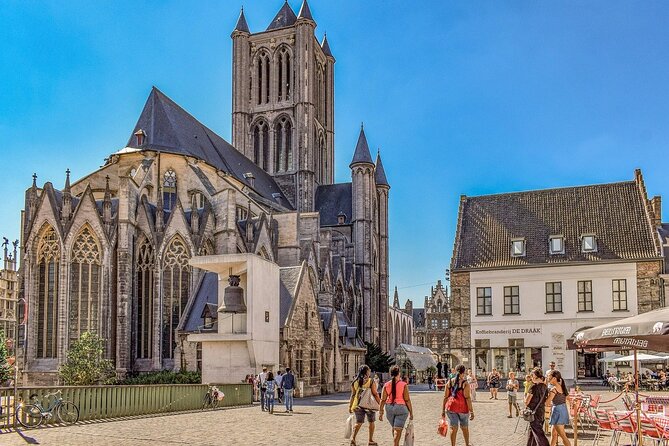
Vrijdagmarkt is one of Ghent’s major squares and has played a prominent role in the city’s political life. The statue in the center gives the guide a natural way to explain one important figure and the conflicts surrounding him.
This is where the city’s independence-minded character comes into sharper focus. Ghent has often pushed back against outside authority, and the square helps explain how public power, commerce, and civic pride worked together.
You spend roughly 10 minutes here. The square is also a useful place to pause and understand the city as a living center rather than a collection of preserved monuments.
Werregarenstraat, from graffiti problem to public outlet
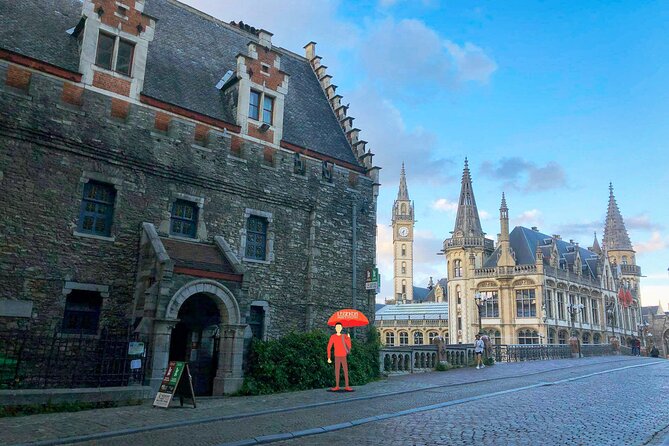
Werregarenstraat offers a sharp change of mood. Ghent designated this narrow passage for street artists so monumental buildings would be less likely to receive unwanted graffiti.
The result is informal, changing, and very different from the stone façades elsewhere on the route. The guide walks you through the alley and explains its purpose. It is a small but telling example of how Ghent manages the tension between old architecture and modern city life.
Do not expect a polished attraction. The appeal is the contrast. After medieval quays, churches, and civic buildings, this street shows a city making room for current forms of expression.
Ghent Town Hall and a divided-looking façade
At Ghent Town Hall, the guide explains why the building appears visually confused. Its different sections reflect a major conflict in the city’s past and the changing forces that shaped the town hall over time.
This is a short stop, about five minutes, but it makes an important point: architecture often records political disagreement. The façade is not merely an odd mixture of styles. It reflects competing periods and ideas about how Ghent should present its authority.
Because the stop is quick, listen for the basic story rather than expecting a full architectural study. The guide gives you a reason to look closely when you pass the building again.
St. Bavo’s Cathedral and the Ghent Altarpiece
St. Bavo’s Cathedral is the artistic high point of the walk. It has a long religious history and houses major works, most famously the Ghent Altarpiece by Hubert and Jan van Eyck.
The guide introduces the cathedral and explains the importance of the altarpiece. The tour does not include a dedicated interior visit or an entry ticket, so check the cathedral’s current arrangements if seeing the artwork is a priority.
This is an important planning point. The two-hour walk gives you the story and location, but you may need extra time and a separate admission purchase to see the art properly. If your schedule allows only one paid interior visit in Ghent, the cathedral and its altarpiece deserve serious consideration.
The Belfry, the people’s tower
The route ends at Het Belfort van Gent, the Belfry of Ghent, with the tour finishing in front of the tower on Sint-Baafsplein. The guide presents the Belfry as the people’s tower, a symbol of Ghent’s independence, strength, and stubborn civic spirit.
You also hear about its former use as a prison and a strange legend connected with the façade. That story gives the final stop a lighter note after the more serious material about war, punishment, trade, and religion.
The Belfry is not just a tower to photograph. It represents civic power, much as the cathedral represents religious power and Gravensteen represents aristocratic power. By ending here, the guide brings the city’s main forces together.
St. Nicholas’ Church and the final legend
The final stop is St. Nicholas’ Church, facing Korenmarkt. The church dates from the early 12th century and honors St. Nicholas, the patron saint of merchants and sailors.
Its location beside the old commercial center makes sense once you understand Ghent’s trading past. The guide also points out how the façade reflects a legend associated with St. Nicholas, giving the walk a story-driven ending.
The route description lists this as the last stop, while the meeting information says the tour ends at the Belfry. These sites are close together, so the difference is minor, but you should confirm the exact endpoint with your guide if you have a timed reservation afterward.
What two hours really gives you
This is a brisk introduction, not a leisurely museum day. The stops are short, often five or 10 minutes, and the route covers a lot of ground in a compact center.
That pace works well if Ghent is a day trip or if you have just arrived and want to get your bearings fast. You see the major landmarks, learn the main political and religious story, and receive a list of places worth returning to.
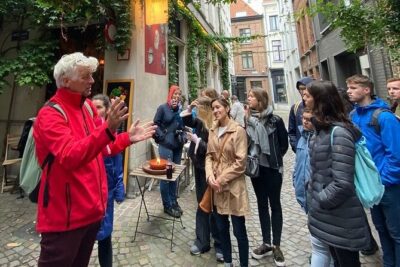
The private format helps because the guide can respond to your interests. Several guides named in the feedback, including Arn, Camila, Hans, Kenny, Sonia, Julian, and Onur, were praised for clear storytelling, humor, local pride, and useful food or shopping advice. One guide adjusted the pace for slower walkers, while another rearranged the ending around a lunch stop.
Guide quality can vary, as it does on any guided experience. Most comments describe warm, engaging, and well-prepared guides, but one account mentions a guide distracted by personal problems and phone use. Another reports a late change in the start time and a tour that ended early. Those are not reasons to reject the experience outright, but they are good reasons to confirm the meeting time and expected duration before setting other plans.
Is $105.82 per person a fair price?
At $105.82 per person, this is a premium walking tour. All fees and taxes, a professional local guide, a private group, and stated hotel pickup and drop-off are included. Food and drinks are not included, and the main sights are explained from outside rather than entered.
The price makes the most sense for a small group that values personal attention. If four people share the cost, the guide can tailor the route, answer questions freely, and adjust walking speed. That is useful for families, couples, or friends with limited time.
The calculation is less favorable for one or two people who do not need private service. A small-group walk may cover similar ground for less money, while the separate admissions could add another cost if you want to see the castle, belfry, or cathedral from inside.
I would book this for the guide relationship and efficient city orientation, not for included attractions. You are buying a private history lesson in the streets of Ghent.
Who will get the most from this walk?
You will likely enjoy this tour most if you:
- Have only a few hours in Ghent
- Prefer stories and context over silent sightseeing
- Want to ask questions without holding up a larger group
- Are interested in medieval trade, city politics, religion, and local legends
- Want a guide to suggest restaurants or plans for the rest of your stay
- Need a pace that can be adjusted for your group
It is less suitable if you want long interior visits, extensive museum time, or the lowest possible price. It is also not the best choice if you prefer to explore alone with an audio guide and set your own pace.
The walk is generally suitable for most participants, is near public transportation, and allows service animals. Wear comfortable shoes and prepare for outdoor sightseeing in changing weather. The route is central, but you are still walking between stops and standing while stories are told.
Should you book The Best of Ghent?
Book it if you want a private, story-led introduction that connects Ghent’s canals, churches, castle, civic buildings, and street art. It is especially useful on a first visit or a one-day stop, when you need the city’s main ideas without spending hours figuring out the route yourself.
Skip it if admission to the sights is essential or if $105.82 per person feels high for an outdoor walk. In that case, choose a less expensive group tour and put the savings toward Gravensteen, the Belfry, or St. Bavo’s Cathedral.
For most small groups with limited time, I see the appeal. The route is compact, the subject matter is varied, and a good local guide can turn Ghent from a pretty canal city into a place with political nerve, commercial muscle, and plenty of odd stories.
FAQ
How long does the private Ghent tour last?
The tour lasts approximately two hours.
Where does the tour begin?
It begins at Hostel Uppelink, Sint-Michielsplein 21, 9000 Ghent, Belgium.
Where does the tour end?
The stated endpoint is in front of the Belfry of Ghent on Sint-Baafsplein. The final route stop is St. Nicholas’ Church, which is nearby.
Is this a private tour?
Yes. Only your group participates in the activity.
What language is the tour offered in?
The tour is offered in English. The tour information also notes that the experience may be available in multiple languages, so confirm your preferred language when booking.
Are admission tickets included?
The tour includes all stated fees and taxes, but the listed stops are outdoor visits and no separate admission to the castle, cathedral, Belfry, or other attractions is included.
Is hotel pickup and drop-off included?
Hotel pickup and drop-off are listed among the inclusions. The formal meeting point is Hostel Uppelink, so confirm the pickup arrangement and location before the tour.
Can I cancel for a full refund?
Yes. You can cancel at least 24 hours before the local start time for a full refund. Cancellations or changes made less than 24 hours before the start are not accepted for a refund.
Just added around Ghent
- Historic Highlights, by a local guide★ 5.0 · 9 reviews
- Walking Food Tour in Ghent★ 5.0 · 13 reviews
- Discover Ghent while playing! Escape game – The Walter case★ 4.5 · 4 reviews
- Discover Ghent while playing! Escape game – The alchemist★ 4.0 · 4 reviews
- Discover Ghent with a self-guided Outside Escape city game tour!★ 4.0 · 10 reviews
- e-Scavenger hunt Kortrijk: Explore the city at your own pace★ 4.5 · 15 reviews
- Ghent Walking Tour with Audioguide on Your Smartphone★ 4.5 · 13 reviews
- Private Ghent Beer & Brewery Tour by a young local★ 5.0 · 12 reviews
Historical Tours, compared.



Historical Walking Tour with Chocolate & Waffle Tasting
Read our review →
THE Storytelling Tour of Bruges | First Day Must | History & Tips
Read our review →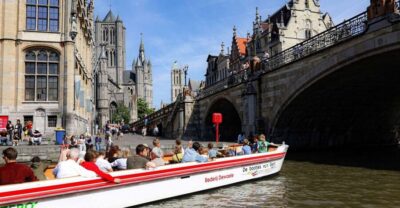
Tell Me About Brussels! | First Day Must-Do | Local Storytellers
Read our review →Browse the lists this tour appears in