
Reviewed · CHOCOLATE TOURS & WORKSHOPS
Discover authentic Ghent with historian & taste the best chocolate
Ghent reveals itself best through its odd details: a medieval meat hall, a castle built to intimidate townspeople, a controversial modern pavilion, and locals nicknamed noose bearers. Historian and teacher Wim connects these sights into one clear story, then adds a Belgian chocolate stop for a sweet change of pace.
I like the small group limit of 15, which should make it easier to hear and ask questions. I also like the route: it covers the major center sights without pretending that Ghent is just a pretty row of canals and old houses. The main drawback is that this is a history walk with some chocolate, not a two-hour chocolate tasting. A few people wanted more time with the chocolatier.
Key points at a glance
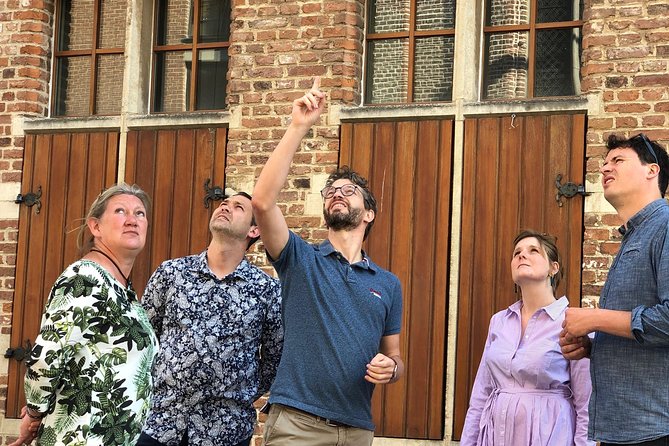
- Wim’s local perspective: He has lived in Ghent for many years and brings a historian’s eye to the city’s buildings and conflicts.
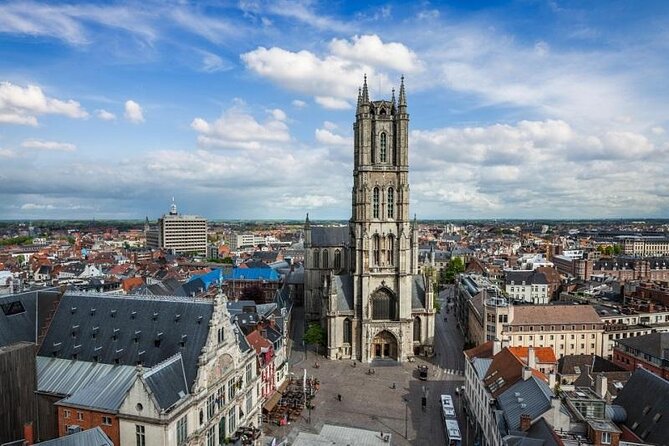
- A smart central route: The walk runs from Sint-Baafsplein to St. Michael’s Bridge, passing the cathedral, Town Hall, Korenmarkt, Gravensteen, and the medieval harbor.
- Chocolate is a short feature: You get a Belgian chocolate pause, but the main purpose is understanding Ghent.
- Four sides of the city: The opening talk covers economic, political, cultural, and religious life in one square.
- Good pace for first-time visitors: The tour lasts about two hours and keeps moving through the old center.
- Easy cancellation terms: You can cancel up to 24 hours before the start for a full refund.
Why this Ghent walk feels different
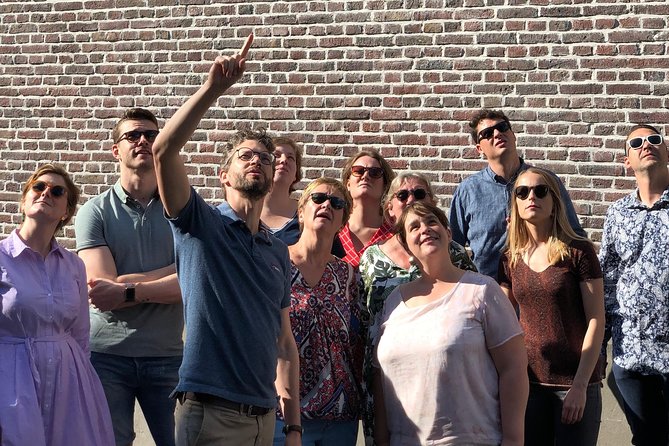
Many city walks point at a church, name a date, and move on. This one begins by asking you to read Ghent as a living record of power. At Sint-Baafsplein, Wim introduces the city through its economy, politics, culture, and religion, all visible around the square.
That opening matters. Ghent can feel like a jumble of handsome buildings at first. After this explanation, the cathedral, Town Hall, castle, and old harbor begin to fit together. You get a sense of why the city grew, who controlled it, and why its citizens were often willing to challenge authority.
Wim’s background is part of the appeal. He is described as a historian and teacher who has lived in Ghent for many years. The strongest praise focuses on his enthusiasm, clear explanations, and ability to tell stories about the city he calls home. His style seems suited to you if you prefer context and conversation over a memorized list of dates.
The tour is offered in English. It is also available in a group of no more than 15, a useful middle ground: more social than a private walk, but small enough for a guide to keep the group together.
More Chocolate Tours in Ghent
- Ghent: Belgian Chocolate Walking Tour with Tastings
★ 4.9 · 259 reviews - Ghent: Famous Belgian Chocolate Walking Tour with Tastings
★ 5.0 · 131 reviews - A Taste of Ghent: Beer & Chocolate with storytelling by a local
★ 5.0 · 77 reviews
Sint-Baafsplein and St. Bavo’s Cathedral
The first stop is Sint-Baafsplein, where you meet in front of the white statue in the middle of the square. Allow a little care here: the meeting point is specific, and the operator has stressed the importance of finding the guide at the statue.
The square gives Wim room to explain Ghent from several angles. The economic story is tied to the city’s trade and working life. The political story concerns the long push and pull between citizens and rulers. The religious and cultural sides appear in the cathedral and the public buildings around you.
From there, you walk around St. Bavo’s Cathedral. The visit focuses on the building’s development and its important art collection. The supplied details do not promise entry inside, so think of this as an exterior and historical introduction rather than a full cathedral visit.
That distinction is useful. If you want a long look at the cathedral’s interior and art, you may need separate time. If you want to understand why the building matters before exploring it on your own, this short stop does the job.
Van Eyck, villains, and a castle on the Scheldt
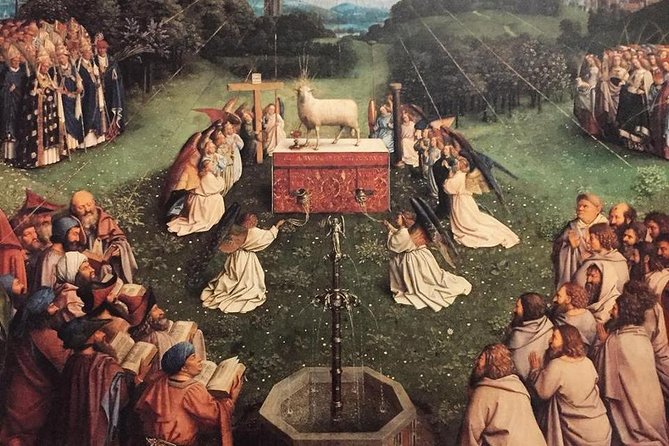
At Maaseikplein, the focus shifts to the Van Eyck brothers. The question about whether the image resembles them adds a small human touch to the walk. It is a quick stop, only about five minutes, but it breaks up the larger historical story with a look at how famous figures are represented in the city.
Next comes Geeraard de Duivelsteen, or the Castle of Gerald the Devil. Here, the route follows the Scheldt and brings in both the Vikings and Geeraard De Duivel. The title sounds like a children’s tale, but the point is more practical: Ghent’s waterfront has long carried stories of threat, defense, and power.
You will not spend long at either stop. That is both a strength and a limitation. The quick rhythm lets you cover a lot of central Ghent in two hours, but anyone who wants detailed architectural study may find the five-minute visits brief.
Medieval buildings at Hoogpoort and the Town Hall
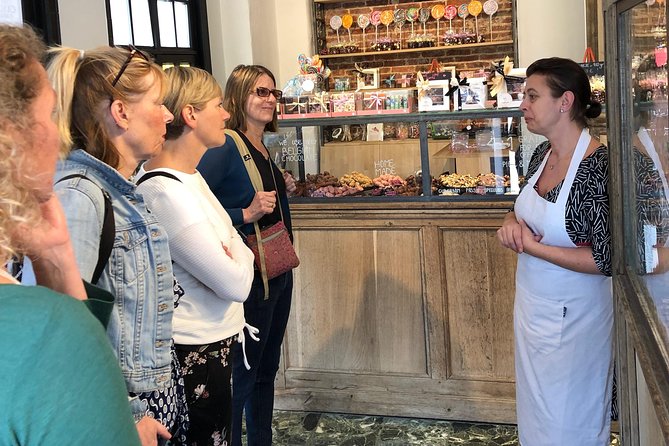
At Hoogpoort, Wim turns your attention to buildings dating from the 13th century. This is where a good guide earns the fee. Old facades can look decorative until someone explains what they reveal about the city’s growth and changing fortunes.
The Town Hall takes the story into a later period. Its construction stretched across centuries, and the explanation links that long building process to Emperor Charles V. Ghent’s revolt against him led to the local nickname noose bearers, a reference to the punishment imposed on the city’s citizens.
That is one of the tour’s most useful historical moments because it shows that Ghent was not always a quiet medieval postcard. Its citizens had political weight, pride, and a habit of resisting authority. The nickname gives the story a memorable hook without requiring you to remember a long chain of dates.
At Stadshal, you see what is described as Ghent’s most contested building. Its nickname is part of the guide’s explanation. This stop adds a modern argument to a walk otherwise filled with medieval and early modern structures, reminding you that Ghent still debates how new buildings should fit into its old center.
More chocolate tastings and workshops in Ghent:
- Ghent: Guided City Tour with Chocolate Tastings
★ 4.8 · 36 reviews - Chocolate history workshop Ghent
★ 5.0 · 34 reviews - Charlie’s Private Chocolate Tour (Ghent)
★ 5.0 · 34 reviews - Private Chocolate Experience in Ghent
★ 5.0 · 31 reviews
Korenmarkt and the old meat hall
Korenmarkt brings you back to the city’s commercial past. The houses here carry roughly 800 years of history, and some have mysterious inscriptions. Look up as you walk. This is the sort of detail you can easily miss when crossing the square on your way to the next sight.
The stop at Het Groot Vleeshuis explains an everyday problem from the time before refrigeration: how could people protect the quality of meat? The answer was to bring the butchers together in one building.
That practical detail makes the meat hall especially worthwhile. Instead of treating medieval life as a collection of grand churches and noble castles, the tour shows how the city managed food, trade, and public standards. You get a glimpse of ordinary work behind the grand facades.
The walk also avoids a common mistake in Ghent: treating every old building as equally important. Wim’s explanations help you notice which structures served public, religious, commercial, or defensive purposes.
Gravensteen and St. Veerleplein
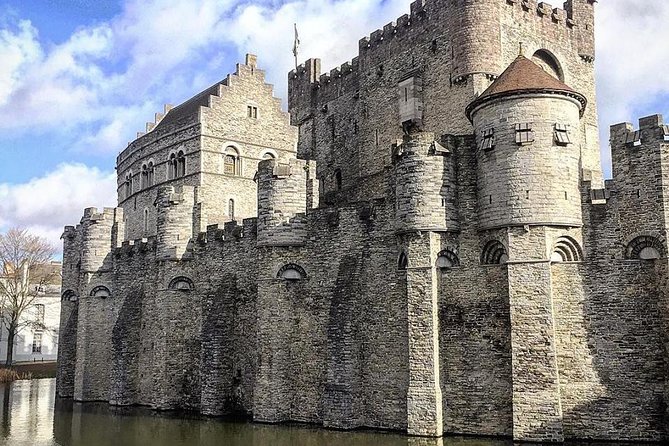
Gravensteen is one of Ghent’s most striking sights, and the story behind it is direct. The Count of Flanders wanted to show the city’s inhabitants who held power, so he built a castle. The fortress is not presented merely as a photogenic pile of stone. It becomes a statement aimed at the people living around it.
You should not expect a full castle tour during this walk. The route includes an explanation of the site, but the entire experience lasts about two hours and continues to the harbor. If you want to go inside Gravensteen, set aside separate time.
At St. Veerleplein, the group searches for Neptune, seahorses, and strange dolphins. This is a lighter stop after the castle’s political message. It gives you something specific to look for in the sculpture and architecture, which can make a public square more memorable than a simple photo stop.
The variety is one of the route’s best features. You move from rulers to merchants, from religious art to public sculpture, and from old political grudges to small visual puzzles.
Graslei and Korenlei, the walk’s grand finish
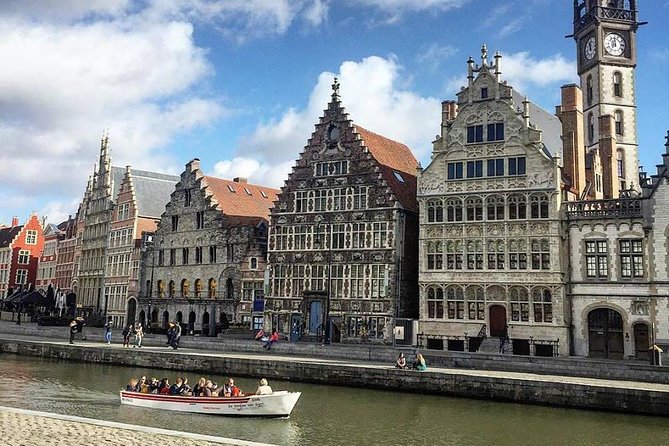
The tour ends at St. Michael’s Bridge, after passing along Graslei and Korenlei. For many people, this is the visual high point of central Ghent. The waterfront shows where skippers worked for centuries, traded goods, and looked for entertainment after work.
This is a good place to end because it brings together the city’s major themes. The harbor explains Ghent’s wealth. The historic facades show its long building tradition. The water explains why this location mattered in the first place.
You will want time for photographs here, but the listed stop itself is short. If the weather is pleasant, you may want to remain in the area after the tour rather than rush away. The end point at St. Michael’s Bridge also places you near one of the city’s most recognizable views.
How much chocolate do you actually get?
The chocolate tasting is best understood as a feature within a history walk. The experience promises a taste of Belgian chocolate, and the feedback describes the chocolates as excellent. At least two comments suggest the same practical point: the chocolate stop could be longer or include more chocolate.
That makes the tour a good match for you if chocolate is a bonus, not the main reason for booking. If you want a dedicated confectionery tour with extended tastings, this probably will not fill two hours. If you like having a small food break during a city walk, it adds welcome variety.
The tasting also fits the route’s wider theme. Ghent is not only about monuments. It is a place where food, trade, work, and local pride all connect. Still, keep your expectations measured: the history content takes up most of the time.
Price, pace, and practical value
At $42.05 per person, the experience is priced as a guided small-group city walk rather than a basic orientation stroll. I see the value in the guide’s local and historical focus, especially if you are new to Ghent and want the old center to make sense quickly.
You cover 12 named stops in about two hours. That means the pace is steady, with many stops lasting only five minutes. You will see a lot, but you will not receive a long interior visit at every landmark.
The route begins at Sint-Baafsplein and ends at St. Michael’s Bridge. Both locations are in central Ghent and near public transportation. Confirmation arrives when you book, and the tour accepts service animals. Most people can participate, although the supplied information does not provide detailed mobility guidance.
The tour is usually booked about 24 days ahead. That pattern suggests planning early if your Ghent dates are fixed, especially because the group is limited to 15. Free cancellation is available up to 24 hours before the start time. If the minimum number is not reached and the operator cancels, you are offered another date or experience, or a full refund.
Who should book this experience?
I would choose this walk if you want a strong first look at Ghent and enjoy a guide who explains causes, conflicts, and local stories. It suits solo visitors, couples, and families with older children who can manage a steady two-hour walk and enjoy listening.
It is also a good pick if you have only a short stay. The route covers the main old-center sights in one compact outing, then leaves you at St. Michael’s Bridge near Graslei and Korenlei. You can use that location to continue exploring on your own.
You may want something else if your priority is an extensive chocolate tasting, a slow photography walk, or full entry to every major building. The chocolate portion is limited, and the stops move quickly.
The score is 4.8 from 30 ratings, with 97 percent recommending the experience. The strongest praise centers on Wim’s enthusiasm, local experience, clear teaching, enjoyable pace, and the quality of the chocolate. One poor experience concerns a missed meeting connection, so take the start point seriously and wait at the white statue in Sint-Baafsplein.
Should you book the Ghent history and chocolate walk?
Book it if you want Ghent explained by someone who knows its streets and stories, with a little chocolate along the way. The best reason to go is not the number of stops. It is the way those stops connect public life, trade, religion, revolt, defense, and the harbor.
Do not book it expecting two hours of sweets. For that, choose a dedicated chocolate experience. For a lively introduction to Ghent with a historian, a compact route, and a small taste of Belgian chocolate, this is a sensible choice at $42.05.
FAQ
Where does the tour begin?
The tour begins at Sint-Baafsplein in Ghent, in front of the white statue in the middle of the square.
Where does the tour end?
The tour ends at St. Michael’s Bridge, on Sint-Michielshelling in Ghent.
How long does the experience last?
The walk lasts approximately two hours.
Is the tour offered in English?
Yes. The experience is offered in English.
How large is the group?
The maximum group size is 15 people.
Does the experience include chocolate?
Yes. The tour includes a Belgian chocolate tasting or chocolate stop, but the main focus is Ghent’s history and landmarks.
Can service animals join the tour?
Yes. Service animals are allowed.
Can I cancel for a full refund?
Yes. You can cancel at least 24 hours before the experience start time for a full refund. Cancellations or changes made less than 24 hours before the start are not accepted for a refund.
Just added around Ghent
- Historic Highlights, by a local guide★ 5.0 · 9 reviews
- Walking Food Tour in Ghent★ 5.0 · 13 reviews
- Discover Ghent while playing! Escape game – The Walter case★ 4.5 · 4 reviews
- Discover Ghent while playing! Escape game – The alchemist★ 4.0 · 4 reviews
- Discover Ghent with a self-guided Outside Escape city game tour!★ 4.0 · 10 reviews
- e-Scavenger hunt Kortrijk: Explore the city at your own pace★ 4.5 · 15 reviews
- Ghent Walking Tour with Audioguide on Your Smartphone★ 4.5 · 13 reviews
- Private Ghent Beer & Brewery Tour by a young local★ 5.0 · 12 reviews
Chocolate Tours & Workshops, compared.
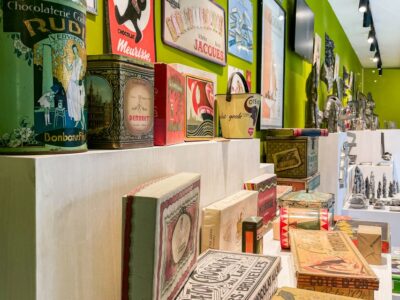
Choco-Story Brussels: Chocolate Museum Entrance with Tasting
Read our review →
Hungry Mary’s Famous Beer and Chocolate Tour in Brussels
Read our review →
Belgian Chocolate Making Workshop with Tastings
Read our review →
Choco-Story Chocolate Museum Guided Tour w/Tastings
Read our review →
2.5-Hour Chocolate Museum Visit with Workshop
Read our review →
Historical Walking Tour with Chocolate & Waffle Tasting
Read our review →
Brussels Walking and Tasting Tour (Beers,Chocolates&Fries/Waffle)
Read our review →Browse the lists this tour appears in