
Reviewed · WALKING TOURS
Ghent: Guided Walking Tour
Ghent’s medieval center packs an astonishing amount into a walkable area, and this tour gives you a useful first look at its churches, canals, guild houses, markets, and castle. I especially like the way it links grand sights such as Saint Bavo’s Cathedral and Gravensteen with smaller details, including the Masons’ Guild House and the old Butchers’ Hall. The explanation of Ghent’s noose-bearers nickname adds a memorable local twist.
I also like the practical advice built into the walk. Guides including Bruno, Mark, Pablo, and Lucas have helped visitors choose restaurants outside the busiest tourist streets and decide which museum or Belgian beer to try later. The main caution is timing: one tour began about 20 minutes late, and another finished after roughly an hour, so you should not plan a tightly timed museum visit immediately afterward.
Key points to know before booking
- Ghent’s best-known sights fit into a two-hour route: You see the Belfry, Saint Bavo’s Cathedral, Town Hall, Saint Nicholas’ Church, Graslei, the Old Fish Market, Patershol, and Gravensteen.
- The tour gives useful city orientation: It helps you decide what to revisit on your own, including the Mystic Lamb, museums, the castle, and a boat ride.
- English and Spanish tours are available: Guides such as Bruno, Mark, Pablo, and Lucas have led tours, though accents and speaking pace can affect how easily every detail is understood.
- Food and beer advice is part of the experience: You can ask about Flemish dishes, Belgian beer, and De Dulle Griet, the famous shoe pub associated with Kwak beer.
- Admission is not included: The walk focuses on the city and its monuments. Food, museums, and entrance fees are extra.
- Good shoes matter: This is a two-hour city walk, with no pets allowed.
Why Ghent makes a good walking tour city
Ghent rewards a slow look. Its center is compact enough to cover on foot, yet each turn brings a different period of the city’s past. One moment you are facing a Gothic church, then you are beside a canal lined with old trading houses, and soon after you are in a narrow medieval quarter.
A guided walk is useful here because Ghent’s buildings do not always explain themselves. The Belfry is more than a tall stone tower, and Saint Bavo’s Cathedral is more than an impressive facade. A guide can connect these places to the city’s trade, politics, art, and proud local identity.
At $17 per person, I see this as a low-cost orientation tour rather than a full sightseeing package. You are paying for two hours of explanation and local suggestions, not for museum admission or a long visit inside every monument. If you are making a day trip to Ghent, that distinction matters. The walk can help you spend the rest of your day wisely instead of circling the center without a plan.
More Walking Tours in Ghent
- Historical Walking Tour: Legends of Gent
★ 5.0 · 1,761 reviews - Ghent: Belgian Chocolate Walking Tour with Tastings
★ 4.9 · 259 reviews - Gastronomic Walking Tour of Gent – Tasters included
★ 5.0 · 199 reviews
Beginning at Sint-Baafsplein and the Ghent Belfry
The stated starting area is Sint-Baafsplein, with the exact meeting point depending on the option you book. This square puts you close to several major sights, so it is a sensible place to begin. Arrive ready to walk and check the meeting details carefully, since the start point may vary.
The Belfry of Ghent is usually the first major stop. You receive about 15 minutes of guided explanation here, enough to understand why the tower matters and how it fits into the city’s skyline. The Belfry is one of the clearest symbols of Ghent’s independence and civic power, and the guide can give you context before you decide if you want to pay for a separate visit inside.
Do not expect a long tower visit on this tour. Entrance to museums and paid attractions is not included, so the value here comes from seeing the monument in its urban setting and learning what to notice. I like this approach for a first visit because you can save your energy and money for the sights that interest you most.
Saint Bavo’s Cathedral and the Van Eyck brothers
Saint Bavo’s Cathedral receives another planned 15-minute stop. The Gothic facade sets the tone, but the main talking point is the Van Eyck brothers and their famous painting, The Adoration of the Mystic Lamb.
This is one of the most useful parts of the tour for art lovers. You get enough background to understand why the work is important, then you can decide if you want to arrange a closer look on your own. Since the tour does not include museum entrance, you should treat this as an introduction rather than the complete Mystic Lamb experience.
The cathedral also helps explain Ghent’s place in European art and religion. Listen for the guide’s recommendations about what to see later. A short orientation can prevent you from trying to fit every church and museum into one rushed afternoon.
Town Hall and Saint Nicholas’ Church
The Gothic and Renaissance Town Hall gives the walk a change of pace. Its different architectural sections reflect the fact that city buildings often grow over time rather than arrive as one neat design. A 15-minute stop lets your guide point out the contrast and explain how Ghent’s civic center developed.
Saint Nicholas’ Church follows, with another short guided visit. Its location near the old commercial center is important. Churches here were not isolated monuments. They were part of the working city, close to markets, guilds, merchants, and the streets where daily life unfolded.
Nearby, the Masons’ Guild House adds a smaller detail that many independent visitors could easily miss. I like these stops because they keep the tour from becoming a parade of only the biggest attractions. You get the headline buildings, but also the clues that reveal how the medieval city worked.
Same city, a completely different kind of day out:
- Ghent: 50-Minute Medieval Center Guided Boat Trip
★ 4.5 · 5,637 reviews - Ghent: 40 Minute Medieval Center Guided Boat Tour
★ 4.4 · 884 reviews - Evening Tour of the Dark Side of Gent
★ 5.0 · 646 reviews - Ghent Bike Tour Off-the-beaten-track
★ 5.0 · 505 reviews
Graslei, where Ghent’s trading past comes into view
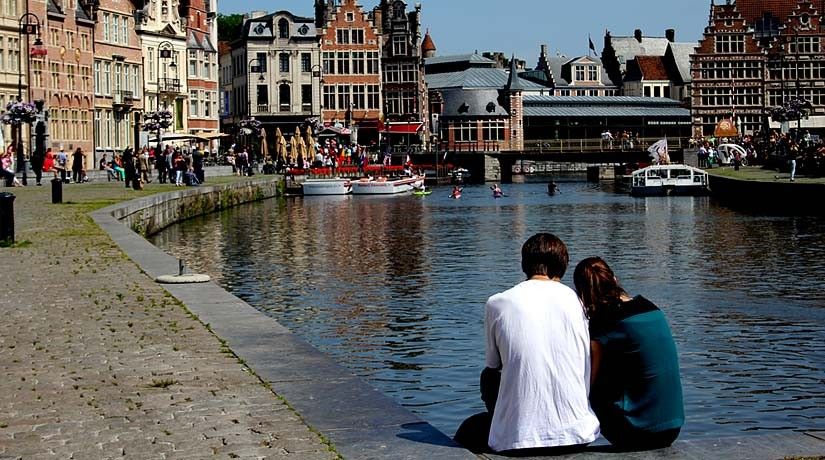
At Graslei, the route reaches one of Ghent’s most recognizable waterfront scenes. The embankment brings together water, historic facades, and the old commercial life of the city in one view.
This is a good place to pause and take photographs, but I would also listen closely to the explanation of the buildings. The waterfront is not just pretty scenery. It helps you picture Ghent as a trading city, where goods and people moved along the waterways.
A 15-minute stop is enough for orientation, though not enough for a relaxed canal-side visit. If you want to sit by the water, take a boat ride, or return at a quieter pace, mark Graslei for later. The walking tour shows you where to go; your own follow-up visit gives you time to linger.
The Old Fish Market and everyday Ghent
The Old Fish Market offers another change in mood. Instead of focusing only on royal or religious monuments, the tour takes you through a place tied to food and commerce.
This is where local eating advice can be especially useful. Food is not included, but you can ask your guide about typical Flemish dishes and places to eat beyond the most obvious tourist streets. That advice may be worth as much as another historical fact, especially if you have only one meal in Ghent.
The tour also points you toward Belgian beer. You can ask about styles and local customs, then decide where to sample one later. De Dulle Griet, often called the shoe pub, is mentioned as a place to try a Kwak beer. The drink itself is not included, so consider this a recommendation rather than a stop with a tasting.
Patershol and the Great Butchers’ Hall
Patershol brings you into one of Ghent’s older neighborhoods. Narrow streets and a different scale make it feel removed from the grand open squares, even though it is close to the main sights.
I find this kind of neighborhood useful on a first walk because it gives you a sense of Ghent beyond the postcard views. Your guide can help explain how this area fits into the city and point out places worth revisiting for food or atmosphere.
The route also shows the Great Butchers’ Hall, with its open wooden truss roof. This is a strong example of how practical buildings can be visually striking without being palaces or churches. The hall connects the tour’s architecture to ordinary trade and food production, which makes the city feel more human.
Gravensteen, the castle finish
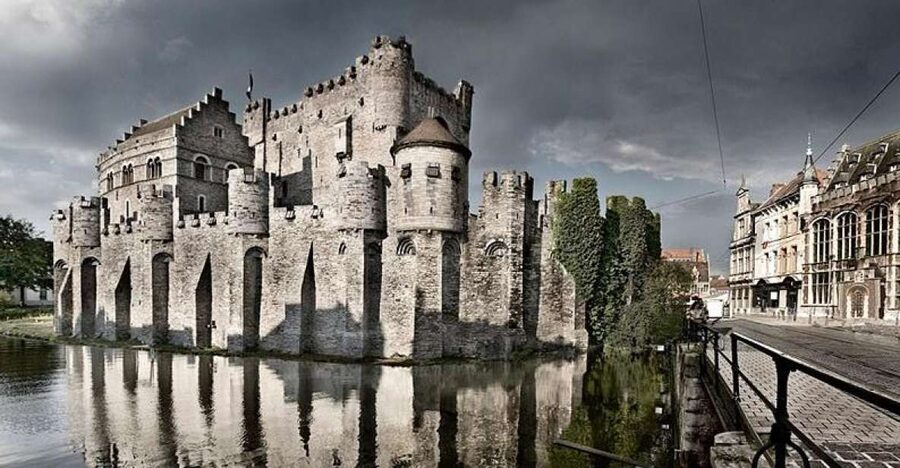
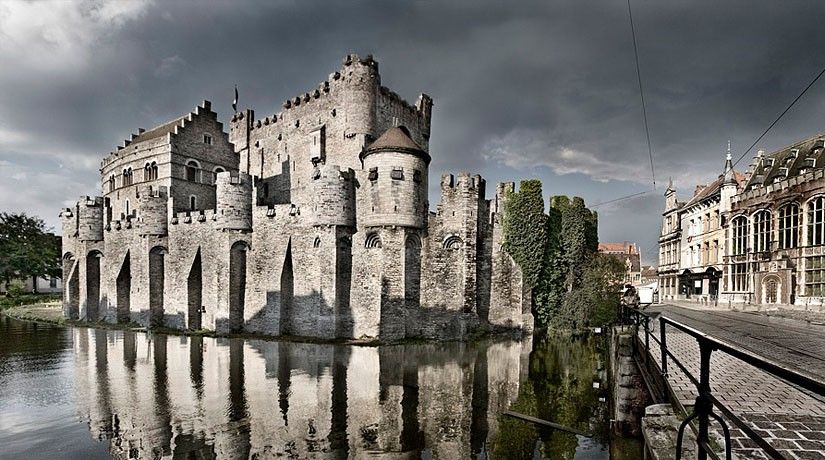
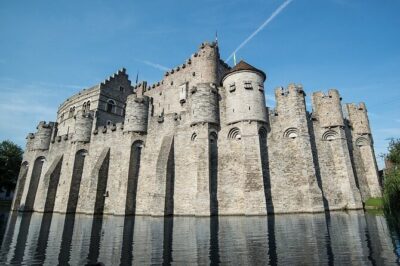
The walk ends at Gravensteen, also known as the Castle of the Counts. Its battlements and heavy medieval form provide a dramatic finish after the churches, squares, and waterfront.
The guide explains the castle from the outside, but entrance is not included. If medieval fortifications are high on your list, you may want to return and pay for admission separately. The walking tour helps you decide that before you spend part of your day inside.
The castle also gives the route a clear sense of progression. You begin among civic and religious monuments and finish with a powerful reminder of military authority. If you are using the tour to get your bearings, Gravensteen is a useful landmark from which to plan your next move.
The supplied meeting information says the meeting point may vary and also refers to the activity ending back at the meeting point, while the route details place the finish at Gravensteen. Confirm the exact end point when booking so you can plan transport or your next reservation correctly.
Charles V, the noose-bearers, and Ghent’s local character
One of the more unusual stories on the walk concerns Charles V. He was born in Ghent, later became Holy Roman Emperor and King of Spain, and is tied to the local nickname noose-bearers.
This is the sort of detail I want from a city tour. It is easy to remember, rooted in local pride and resentment, and more revealing than a string of dates. Ask your guide to explain the story fully, especially if the subject interests you.
The reference to Charles V also gives the monuments a larger setting. Ghent was not a quiet medieval village. It had power, wealth, political tension, and a strong sense of its own identity. A good guide can make those connections clear while keeping the walk moving.
What the guides add to the experience
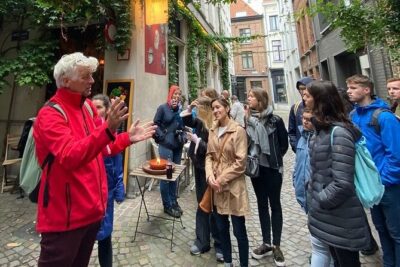
The tour is offered in English or Spanish. Guides named in the tour feedback include Bruno, Mark, Pablo, and Lucas. The strongest descriptions point to guides who were friendly, humorous, interactive, and able to make the history accessible.
Bruno is particularly associated with restaurant suggestions and an easy manner. Mark is described as making the walk fun and interactive. Pablo is praised for a lively presentation, while Lucas is noted for including children in the group.
Guide quality can vary from one departure to another, as it does with any walking tour. One guide had a thick accent that made some details harder for older members of the group to follow. If you are sensitive to accents or rely on very clear English, stand near the guide and ask for clarification when needed.
The route covers a lot in two hours, so the guide has to keep a steady pace. One positive detail is that the guide made sure the group stayed together. Still, comfortable shoes are essential, and you should not expect long interior visits at every sight.
Timing, value, and who should book
The advertised duration is two hours, with starting times shown during booking. A few timing issues are worth keeping in mind. One departure started about 20 minutes late while day-trippers from Brussels were given time to get coffee, and another ended after about an hour.
That does not make the tour poor value, but it does mean you should leave a buffer before a train, museum reservation, or meal booking. If you have a strict schedule, ask at the start how long the guide expects the route to take.
At $17, the tour is strongest for first-time visitors, day-trippers, and anyone who wants a quick map of Ghent’s historic center. It is also useful if you want recommendations rather than a full ticketed sightseeing package.
Families may appreciate the manageable route and the guide’s effort to include children. Art fans will value the introduction to the Mystic Lamb. Food-minded visitors can use the restaurant and beer advice to shape the rest of the day.
You may want something else if you prefer long visits inside churches and museums, a private guide, or a tour with guaranteed timing. Food, drinks, and admissions all cost extra, so budget accordingly.
Free cancellation is available up to 24 hours before the tour, and you can reserve now and pay later. Those terms make it easier to fit the walk into a changing Belgium itinerary.
Should you book this Ghent walking tour?
I would book it if you want a compact introduction to Ghent’s historic center for a modest price. The route covers the major landmarks, adds useful local stories, and gives you practical advice about food, beer, museums, and what to see next.
Go in with the right expectations. This is a guided orientation walk, not a series of full monument visits. Allow extra time in case the start runs late, confirm the meeting and finish points, and plan to pay separately for food and admissions.
If you have only a few hours in Ghent, the tour can help you get your bearings fast. If you have several days and prefer to explore independently, you may still find the local recommendations and Van Eyck background worth the two-hour investment.
FAQ
How long does the Ghent walking tour last?
The advertised duration is two hours. Starting times depend on availability, and the actual finish may vary, so allow some extra time if you have another reservation.
Which languages are available?
The tour is offered with a live English or Spanish-speaking guide.
What sights are included on the route?
The route includes the Belfry of Ghent, Saint Bavo’s Cathedral, Ghent Town Hall, Saint Nicholas’ Church, Graslei, the Old Fish Market, Patershol, and Gravensteen.
Is food included?
No. Food and drinks are not included, though you can ask the guide for advice about Flemish food, Belgian beer, restaurants, and De Dulle Griet.
Are museum and castle entrance fees included?
No. Entrance to museums and paid attractions is not included. The tour provides guided explanations and recommendations for places you may choose to visit separately.
Can I cancel the tour for a refund?
Yes. You can cancel up to 24 hours in advance for a full refund. You can also reserve now and pay later.
Just added around Ghent
- Historic Highlights, by a local guide★ 5.0 · 9 reviews
- Discover Ghent while playing! Escape game – The alchemist★ 4.0 · 4 reviews
- Walking Food Tour in Ghent★ 5.0 · 13 reviews
- Discover Ghent while playing! Escape game – The Walter case★ 4.5 · 4 reviews
- Discover Ghent with a self-guided Outside Escape city game tour!★ 4.0 · 10 reviews
- e-Scavenger hunt Kortrijk: Explore the city at your own pace★ 4.5 · 15 reviews
- Ghent Walking Tour with Audioguide on Your Smartphone★ 4.5 · 13 reviews
- Private Ghent Beer & Brewery Tour by a young local★ 5.0 · 12 reviews
Walking Tours, compared.

Small Group Boat Cruise and Guided Walking Tour
Read our review →
Walking Tour, Canal Boat Trip w/Beer Tasting Option
Read our review →

Historical Walking Tour with Chocolate & Waffle Tasting
Read our review →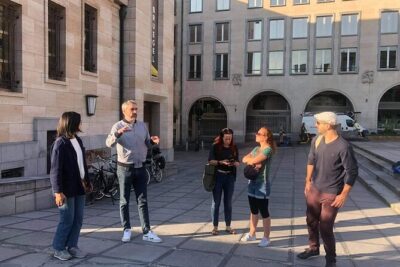
Brussels Walking and Tasting Tour (Beers,Chocolates&Fries/Waffle)
Read our review →
Browse the lists this tour appears in