
Reviewed · DARK SIDE & LEGENDS TOURS
Private Tour: The Dark Side of Gent
Ghent gets more interesting after sunset, when the stone lanes quiet down and its grim tales fit the setting. This private walk links medieval trade, religious conflict, executions, castles, and local legends without asking you to join a large group.
I like the private format, which lets you ask questions and set the pace, and I like the finish in Patershol, where you can carry on with dinner or a drink. The possible drawback is clear: the dark side sometimes means spooky stories and troubled history, but much of the walk is simply Ghent seen at night, not a full theatrical ghost tour.
Key points to know before booking
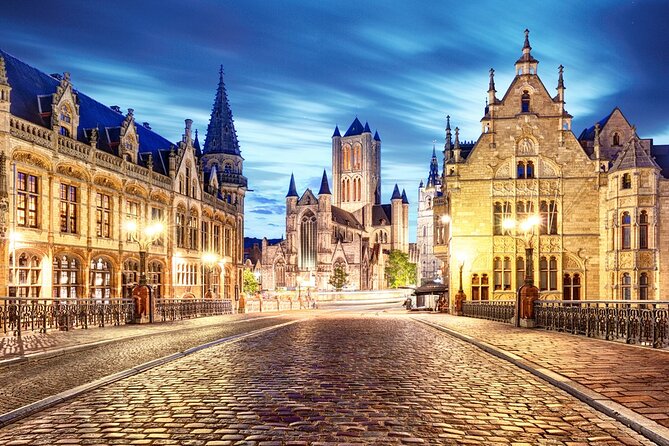
- The Three Towers open the tour: St Michael’s Bridge gives you one of Ghent’s best skyline views.
- The stories range beyond the macabre: You’ll hear about trade, Calvinist rule, royal power, defense walls, and industrial change.
- It is a true private tour: Only your own group takes part, with an English-speaking guide.
- The route covers ten stops: Most visits are outdoor story points, and no attraction admissions are included.
- Patershol is the final stop: You finish in a medieval quarter filled with places to eat and drink.
- The evening timing matters: Streets are less crowded, but details can be harder to see after dark.
What the Dark Side of Ghent tour is really about
This is best understood as a city walk with a macabre thread, not a haunted-house production. You move through central Ghent while your guide explains how power, religion, commerce, punishment, and war shaped the city.
That mix is the tour’s strength. Ghent’s darker stories make more sense when tied to real places. A tale of an execution gains weight beside the Butchers’ Hall. Religious conflict becomes easier to grasp when you are standing near an old monastery. The city’s medieval wealth is not just presented as a list of dates, but connected to its harbor, bridges, walls, and ruling families.
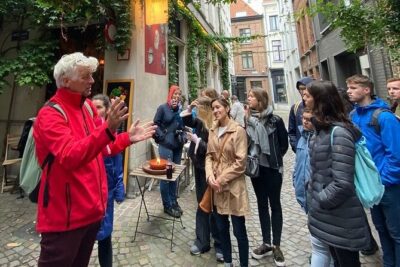
The private setup also changes the feel. You are not trying to hear a guide over a large crowd. You can stop to ask about architecture, Belgian customs, local food, or the next day’s sightseeing. Guides named in the feedback include Kenny, Debra, Sébastien, Isabelle, Jerke, Hamraz, and Deborah. The strongest pattern is that the guides bring energy and personal interest to the walk, with Kenny and Debra receiving especially warm praise for making the stories lively and easy to follow.
The tour runs about 1 hour 45 minutes. That is long enough to cover a lot of ground, but short enough to fit on your first evening in Ghent. I would schedule it early in your stay if possible. You get a useful orientation to the center, then finish in a quarter suited to an unhurried meal.
More dark side and legends walks in Ghent:
- Historical Walking Tour: Legends of Gent
★ 5.0 · 1,761 reviews - Evening Tour of the Dark Side of Gent
★ 5.0 · 646 reviews - Ghent: The Dark Side of Ghent Private Walking Tour
★ 4.9 · 19 reviews
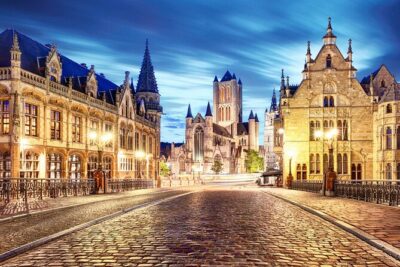
St Michael’s Bridge and the Three Towers
The walk begins at Hostel Uppelink on Sint-Michielsplein, beside St Michael’s Bridge. This is an excellent starting point because the bridge frames one of Ghent’s most famous views.
From here, your guide introduces Ghent as a medieval trading center and points out the city’s Three Towers. They form the skyline most closely associated with central Ghent, and the bridge gives you a clean view of them together.
The opening stop takes about 15 minutes. No ticket is needed. At night, lighting gives the stone buildings a different character, though you should expect the guide to focus more on the view and the story than on detailed architectural inspection.
This first stop also helps you get your bearings. Ghent’s center can feel like a web of canals, lanes, bridges, and squares. Starting with a recognizable skyline makes the rest of the walk easier to follow.
St Bavo’s Cathedral and the Devil’s Tower
The next stop is St Bavo’s Cathedral, where you hear the grim story behind its nickname, the Devil’s Tower. The visit lasts about 10 minutes, and entering the cathedral is not part of the tour.
That limitation matters. You are hearing the cathedral’s story from outside, not taking an architectural tour or seeing its interior. If you want to visit the cathedral on your own, plan a separate daytime stop.
Still, this is a good example of how the walk works. A familiar landmark becomes more memorable when linked to a disturbing local tale. Your guide also places the building within Ghent’s wider religious and political story, rather than treating it as an isolated monument.
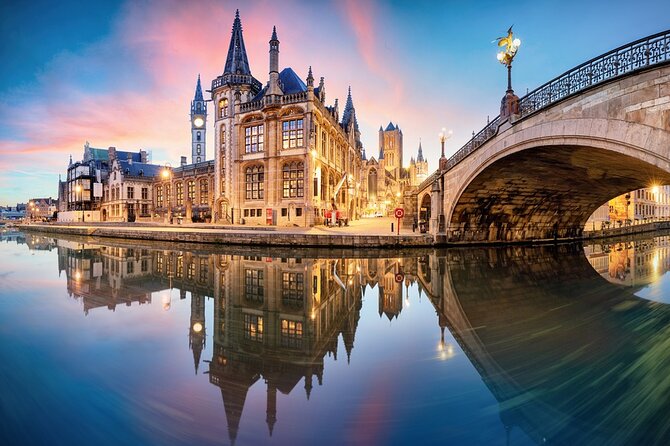
Graslei and Korenlei, where money moved through Ghent
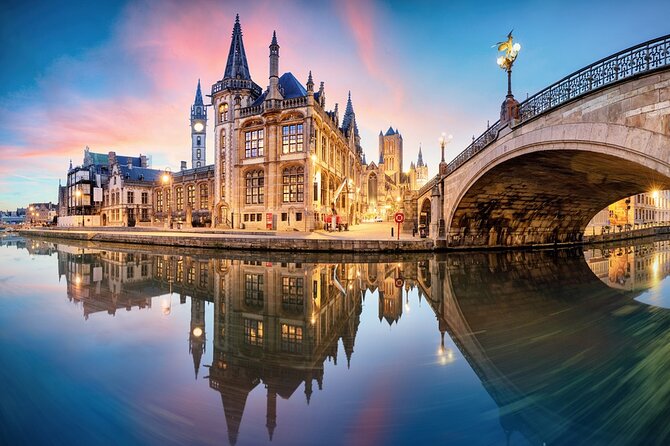
At Graslei and Korenlei, the focus shifts from punishment and legend to trade. These waterfront streets mark the medieval harbor, when Ghent was one of Europe’s major economic centers.
Your guide explains the goods and commercial activity that made the harbor profitable. The stop lasts about 10 minutes and is outdoors, with no admission charge.
This is one of the tour’s most useful history lessons because it explains why Ghent has such an impressive central core. Grand buildings did not appear by accident. They were supported by commerce, taxation, shipping, and the city’s role in regional trade.
The waterfront is also one of the prettiest parts of the walk. At night, reflections and illuminated facades create a memorable setting. If you want polished photos, come back during daylight. If you want atmosphere and fewer people around, the evening visit has the advantage.
A few more Ghent half days worth weighing up
- Ghent: 50-Minute Medieval Center Guided Boat Trip
★ 4.5 · 5,637 reviews - Ghent: 40 Minute Medieval Center Guided Boat Tour
★ 4.4 · 884 reviews - Ghent Bike Tour Off-the-beaten-track
★ 5.0 · 505 reviews - Ghent: 40-Minute Historical Boat Tour of City Center
★ 4.3 · 430 reviews
Appelbrugparkje and a grim rescue
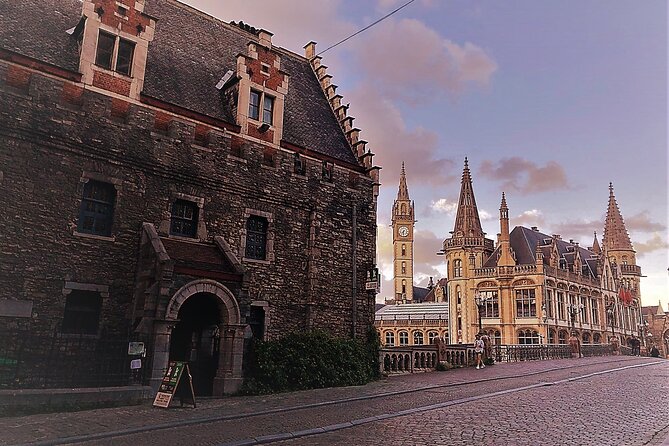
At Appelbrugparkje, the guide looks across toward the large Butchers’ Hall and tells the story of a father and son facing execution. The tale includes a miraculous event that saved them.
This is one of the stops most closely aligned with the tour’s dark title. It also shows why the private format helps. A story like this works best when you can ask whether it belongs to local folklore, civic memory, or documented history.
The stop takes roughly 10 minutes and costs nothing. You do not enter the Butchers’ Hall. Instead, the bridge provides the setting while your guide supplies the context.
If you want a nonstop sequence of shocking tales, this tour may feel restrained. It spends as much time explaining Ghent’s development as it does presenting grim material. For me, that balance makes the walk more useful, but it is worth knowing before you pay.
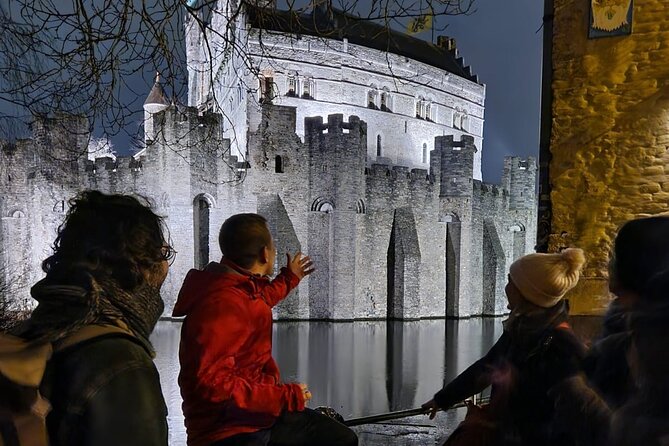
Gravensteen, Ghent’s medieval fortress
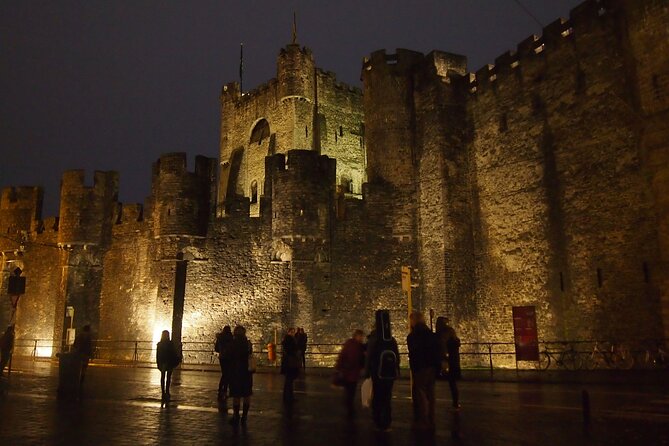
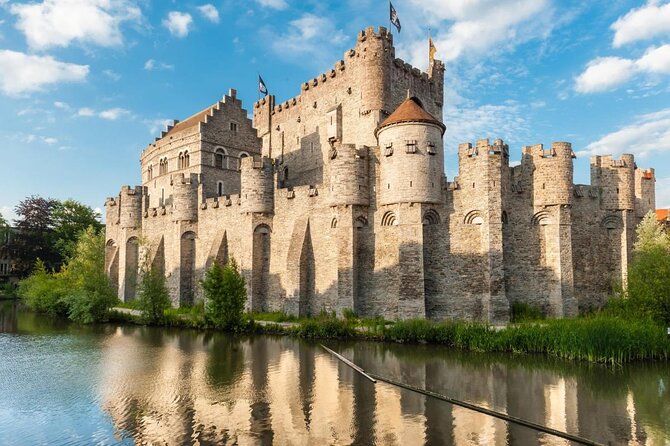
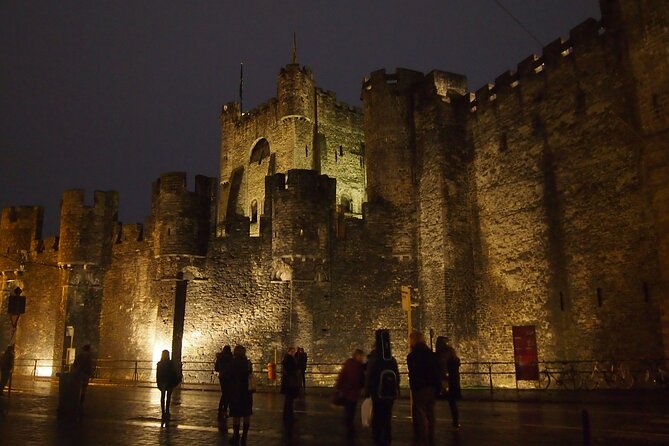
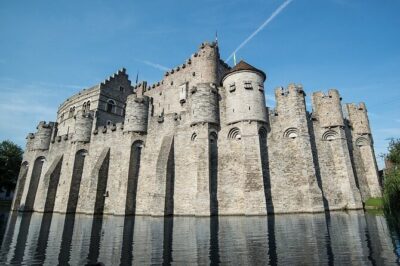
Gravensteen is the largest dramatic stop on the route. The fortress began as a defense site under Count Baldwin in the ninth century, built to protect the area from Viking raids. The city developed around this stronghold.
Your guide explains the castle’s role in Ghent’s early growth. The walk does not include entry, so you see the exterior and hear its story from outside.
Gravensteen is particularly effective at night. Its walls and towers have the right severity for a tour built around power and punishment. If you want to tour the fortress rooms, weapons, or exhibits, buy a separate admission and allow extra time outside this experience.
The outside stop lasts about 10 minutes. That is enough for an introduction, not a full castle visit. I would treat this portion as a preview that helps you decide if Gravensteen deserves a return visit in daylight.
Prinsenhof and the lost palace
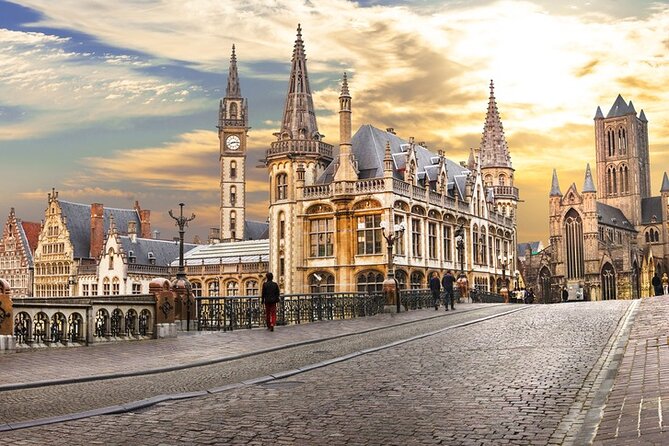
At Prinsenhof, the guide asks you to picture a palace that once covered a large area. Today, much of the original complex is gone, so imagination does part of the work.
The story is less about a single object you can inspect and more about vanished power. Ghent’s rulers once occupied a huge court, while the modern neighborhood gives only partial clues to its former scale.
Again, there is no interior visit. The stop takes about 10 minutes, and its value depends heavily on the guide’s storytelling. A lively guide can make absent walls and lost rooms feel understandable. A less prepared guide could make this section seem thin.
The private format gives you room to ask what remains, what disappeared, and how the palace fit into Ghent’s political life.
Rabot Sluice and the old defense wall
Rabot Sluice offers a clear link to Ghent’s medieval defenses. Your guide points out the only remaining tower from a defense wall that once stretched for 14 kilometers around the city.
This is a useful reminder that medieval Ghent was not just a trading center with handsome waterfront buildings. It was also a fortified place that needed to protect its people, goods, and ruling interests.
The stop lasts 10 minutes and is free to visit. You should not expect a long examination of the entire former wall. The point is to understand the scale of the defenses and see one surviving piece.
For visitors who like city planning and military history, this may be one of the more revealing stops. It shows how much of the old city has vanished, even when the modern streets look compact and intact.
Keizer Karel and the Bridge of Imperial Delights
At the bridge associated with Keizer Karel, four sculptures show legendary scenes from the life of Charles V. Your guide explains some of the scenes and their place in Ghent’s story.
This stop brings imperial politics into the walk. Charles V was closely tied to Ghent, and the sculptures give you a visual way to approach that complicated relationship.
The route does not ask you to memorize every detail. Instead, you get a short explanation of the figures and stories placed around the bridge. That works well during an evening walk, when a few strong points are easier to retain than a long lecture.
Allow about 10 minutes here. There is no admission fee, and the sculptures are viewed outdoors.
Augustijnenklooster and the Religious Wars
The Augustinian monastery stop covers the Religious Wars and the impact of Calvinist rule on Ghent. You do not enter the monastery, but the guide explains how religious conflict changed the city.
This section gives the tour more weight than a simple collection of ghost stories. Ghent’s troubled past was not only about individual punishments or legends. Religious authority, political control, and public unrest altered daily life and the appearance of the city.
The stop lasts about 10 minutes. It may be the most demanding part for listeners who prefer light sightseeing, since the subject involves conflict and competing beliefs. A good guide can keep it clear by connecting the political events to the places around you.
If you have already visited Ghent’s major churches, this background can help you see them in a new way. If you have not, it gives you a reason to return during the day.
Patershol and the industrial change that remade Ghent
The tour finishes in Patershol, a medieval quarter whose name means Monk’s Hole. This is a smart ending because it changes the mood from old punishment and conflict to the city’s later social and economic revival.
Your guide explains how the Industrial Revolution affected Ghent and helped revive its economy. The neighborhood itself provides a fitting setting: old lanes, compact buildings, and a sense of a district shaped by changing work and social life.
The final stop lasts about 10 minutes and is free. You finish near bars and restaurants, so you can continue the evening without crossing the city again.
I like this ending more than a return to the original meeting point. It leaves you in a useful part of town, and the guide may be able to offer food suggestions. One practical tip: do not schedule a tight dinner reservation immediately after the advertised finish. Walking time and questions can stretch the ending slightly.
Price, private value, and group size
The listed price is $105.59 per person, with group discounts available. That is a serious price for a 1 hour 45 minute walking tour, especially because attraction admissions are not included.
The value improves when you use the private format well. You are paying for your own guide, the chance to ask questions freely, and a route shaped around your group rather than a large public walk. For a couple, the total is about $211.18 before any discount. For a family or small group, the per-person cost may feel more reasonable if a discount applies.
I would not book this mainly for entry to monuments. There is no cathedral, castle, monastery, or palace admission included. Book it for the guide, the evening setting, and the way the stops connect into one story about Ghent.
The high overall rating, 4.9 from 73 ratings, and 99 percent recommendation figure suggest a strong record. Still, one detailed criticism calls the experience flat and overpriced, with the complaint that it was dark only because it took place at night. That is a fair warning. Your enjoyment depends on wanting history and legends delivered through conversation, not a staged fright show.
Who will enjoy this Ghent evening walk?
I would choose this tour for:
- First-time visitors who want a quick orientation to central Ghent
- Couples who enjoy legends, old buildings, and evening walks
- Families with older children who can handle stories about executions and religious conflict
- History fans who want more than standard monument descriptions
- Small groups who value a private guide and plenty of questions
- People arriving from Brussels who want a focused introduction to Ghent
I would hesitate if you want a pure ghost tour, interior visits, or a slow photography walk. The route covers ten stops in less than two hours, so expect regular movement and short explanations rather than long pauses.
The guides named in the feedback include Kenny, Debra, Deborah, Sébastien, Isabelle, Jerke, and Hamraz. The strongest qualities to look for are clear English, humor, patience, and a personal feel for the city. The experience is offered in English, and the guide’s style will shape the evening more than any single monument.
Practical details before you go
You meet at Hostel Uppelink, Sint-Michielsplein 21, 9000 Ghent. The walk ends in Patershol, in the city center, near bars and restaurants.
The tour is offered in English and uses a mobile ticket. Confirmation is sent at booking. It is near public transportation, service animals are allowed, and most people can take part.
Wear shoes suited to city walking. The route has ten stops and takes about 1 hour 45 minutes, with most of the experience outdoors. Evening light may make the city atmospheric, but it can also make small architectural details harder to see.
Free cancellation is available if you cancel at least 24 hours before the start time. Cancellations or changes made less than 24 hours ahead are not accepted for a refund.
Should you book The Dark Side of Gent?
Book it if you want Ghent’s famous sights tied to stories about trade, punishment, religion, defense, royal power, and industrial change. The private setup is especially useful for families and small groups, and the Patershol finish makes evening plans easy.
Skip it if you expect actors, elaborate scares, or admission to Gravensteen and St Bavo’s Cathedral. At $105.59 per person, you need to value the guide and the private conversation. For the right group, the walk offers a sharp introduction to Ghent after dark. For someone seeking a theatrical fright tour, it may feel too much like a history walk with a gloomy title.
FAQ
How long does The Dark Side of Gent tour last?
The tour lasts approximately 1 hour and 45 minutes.
Where does the tour start?
It starts at Hostel Uppelink, Sint-Michielsplein 21, 9000 Ghent, Belgium.
Where does the tour end?
The tour ends in Patershol, a central Ghent quarter with many bars and restaurants nearby.
Is the tour private?
Yes. Only your group participates in the activity.
What language is the tour offered in?
The tour is offered in English.
Are attraction admission fees included?
No. Entry to St Bavo’s Cathedral, Prinsenhof, and Augustijnenklooster is not part of the tour. The Gravensteen stop also takes place from outside, and no admission is included.
Is the tour suitable for most people?
Most people can participate. The experience is near public transportation, and service animals are allowed.
Can I cancel for a full refund?
Yes, if you cancel at least 24 hours before the experience start time. Cancellations or changes made less than 24 hours before the start time are not accepted for a refund.
Just added around Ghent
- Historic Highlights, by a local guide★ 5.0 · 9 reviews
- Discover Ghent while playing! Escape game – The alchemist★ 4.0 · 4 reviews
- Walking Food Tour in Ghent★ 5.0 · 13 reviews
- Discover Ghent while playing! Escape game – The Walter case★ 4.5 · 4 reviews
- Discover Ghent with a self-guided Outside Escape city game tour!★ 4.0 · 10 reviews
- e-Scavenger hunt Kortrijk: Explore the city at your own pace★ 4.5 · 15 reviews
- Ghent Walking Tour with Audioguide on Your Smartphone★ 4.5 · 13 reviews
- Private Ghent Beer & Brewery Tour by a young local★ 5.0 · 12 reviews
Dark Side & Legends Tours, compared.

Historical Walking Tour: The Story of Bruges – by Legends
Read our review →
Browse the lists this tour appears in