
Reviewed · HISTORICAL TOURS
Visite guidée : Bruxelles, 1000 Ans de Luttes
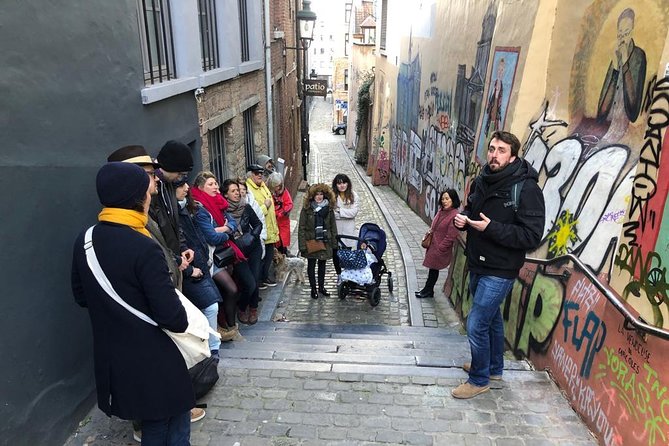
Brussels’ Marolles district tells the city’s story from the ground up, through working people, housing struggles, political decisions, and stubborn local pride. This tour moves beyond the Grand Place to places such as the 12th-century Notre-Dame de la Chapelle and the famously unfinished renovation of the Palace of Justice.
I like the way the walk links major sights to everyday life, rather than treating Brussels as a collection of grand façades. I also like the strong local viewpoint: guides including Thomas, Simon, and François have led sessions that mix history with personal stories and answer questions about the neighborhood.
The main consideration is that the advertised stops add up to roughly an hour, while the full experience lasts about two hours. The extra time is likely used for walking and discussion, but the pace and depth may depend on the guide and group. A €10 gratuity per person is also not included.
Key points to know before you book
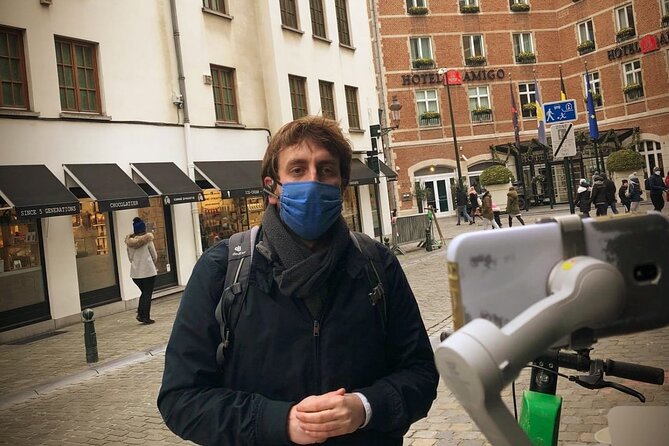
- The Marolles is the heart of the walk: You explore a central Brussels district shaped by poverty, independence, relocation threats, and community resistance.
- The Palace of Justice gets serious attention: The tour explains the decades-long renovation scandal and the public money tied up in it.
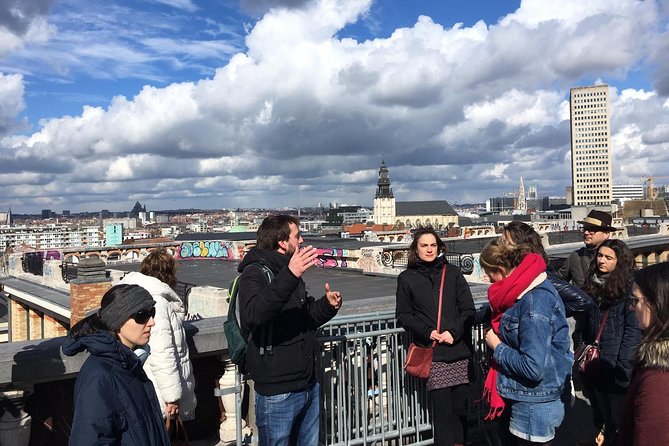
- You get a city view without an admission fee: The Marolles elevator offers a short but useful viewpoint over Brussels.
- The Place du Jeu de Balle is the finish line: You end beside the district’s daily flea market, with bars and restaurants around the square.
- The tone is social history, not monument collecting: Expect discussion of living conditions, invisible borders, local identity, and the people who shaped the area.
- It is a small-group walk: The maximum group size is 25, and the tour is offered in English.
Why the Marolles makes a better history lesson than another postcard stop
Many first visits to Brussels stay near the Grand Place, where ornate buildings do most of the talking. The Marolles offers a different kind of city lesson. Its streets are tied to people who lived with limited means, fought to protect their homes, and developed a strong identity within central Brussels.
The title, Brussels, 1000 Years of Struggles, points to the tour’s approach. This is not simply a timeline of rulers and buildings. You look at how ordinary people experienced the city, how the neighborhood changed, and how social divisions still shape Brussels.
I particularly like that the walk connects local events to the wider city. The Marolles is not presented as an isolated quarter. You learn how it fit outside the old walls, how its people related to other parts of Brussels, and how visible and less visible boundaries developed.
The subject matter also suits repeat visitors and people who live in Brussels. One local participant had spent five years in the city yet still learned a great deal about the Marolles. That is a useful clue: you do not need to be a first-time visitor to get value from this walk.
More Historical Tours in Brussels
- Brussels: Historical Walking Tour with Chocolate & Waffle Tasting
★ 5.0 · 1,165 reviews - Tell Me About Brussels! | First Day Must-Do | Local Storytellers
★ 5.0 · 649 reviews - Brussels: Historical Tour with Chocolate & Waffle Tasting
★ 4.8 · 642 reviews
Starting at Notre-Dame de la Chapelle
The meeting point is Rue de la Chapelle 21, at the Church of Our Lady of the Chapel. This is a practical starting place because the church gives the tour an immediate sense of age before the discussion moves toward modern civic problems.
The church dates from the 12th century and remains an active place of worship. The tour also points out its role as a venue for painting exhibitions and notes that Mass is offered in Polish every Sunday. Those details help show the building as part of living Brussels, not only as an old structure to photograph.
You spend about 10 minutes here, with admission listed as free. The guide focuses on the church’s secrets and its place in the neighborhood. Expect a short introduction rather than a full architectural lecture, since the walk has several subjects to cover.
This first stop also sets the tone. The tour combines cultural history, local religion, and present-day community life. If you prefer a tour that concentrates only on famous art and dates, this may feel less conventional. If you enjoy seeing how a building remains useful to different communities, it is a good opening.
The Palace of Justice and Brussels’ expensive unfinished story
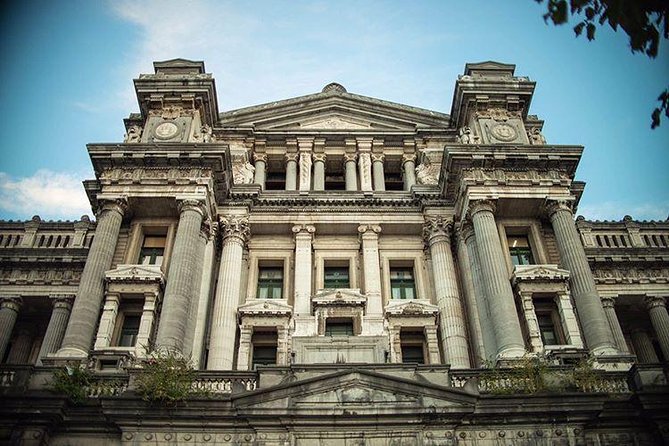
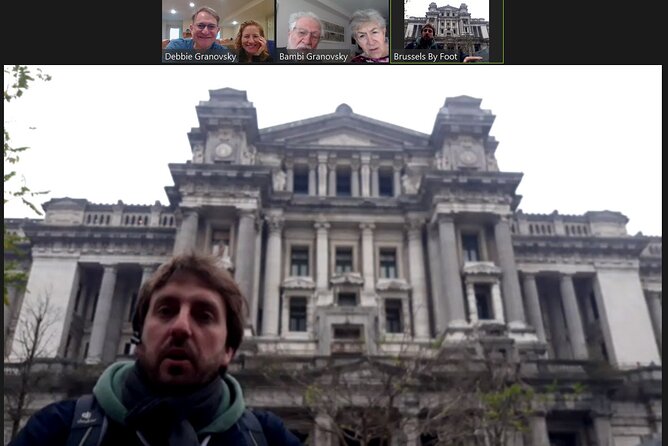
The next major stop is the Palace of Justice, where the guide turns from medieval Brussels to a very modern public controversy. Renovation work began about 40 years ago and still had not been completed when this tour information was published.
That long delay becomes a way to discuss Belgian politics, public spending, and frustration with large government projects. The subject is not treated as a dry construction update. It is framed as a distinctly Belgian scandal involving time, money, and a building that dominates the city.
You spend around 15 minutes here. The Palace of Justice is one of the tour’s strongest stops because it gives you a clear answer to a common Brussels question: why does this monumental building remain wrapped in such a troubled repair process?
The guide also uses the site to connect institutions with local life. The courthouse sits beside the Marolles, so its scale and history cannot be separated from the neighborhood below. You see how an official building can loom over a district physically and symbolically.
The drawback is that this is an exterior-focused stop based on the information provided. Do not book the walk expecting a guided visit inside the courthouse or a technical tour of the renovation. Its value is the story and the local perspective.
The Marolles elevator and one of Brussels’ best quick views
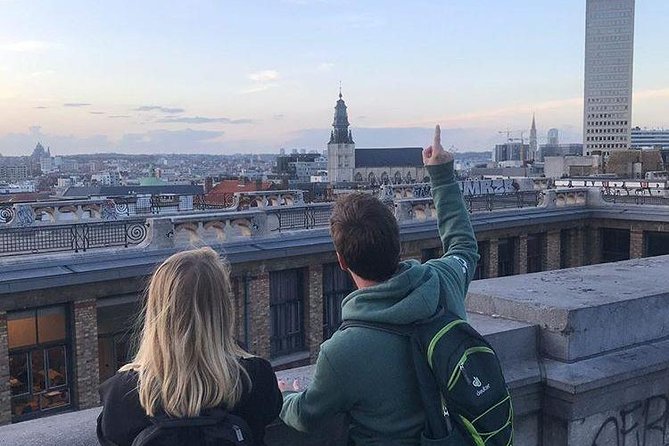
The Ascenseur des Marolles takes only about five minutes, but it provides a useful change of pace. You ride or reach the top of the elevator for a view over Brussels, with the guide pointing out the city from above.
The elevator is more than a viewpoint. It helps explain the physical relationship between the Marolles and the higher ground around the Palace of Justice. From street level, districts can feel separate. From above, you get a clearer sense of how close they are and how the city rises and falls.
Because the stop is short and admission is free, it adds value without turning the tour into a long sightseeing pause. Bring your camera, but listen closely to the guide’s explanation too. The view matters most when you understand what it says about the neighborhood’s position in Brussels.
The exact length of time at the elevator may feel brief if you enjoy panoramic stops. Still, the walk is built around stories, not prolonged observation. This is a quick visual aid in the middle of the route.
More history walks around Brussels:
- Historical Walking Tour: The Story of Brussels – by Legends
★ 5.0 · 164 reviews - Brussels: Museum Art & History Entry Ticket
★ 4.5 · 58 reviews - Historic Battle of the Bulge Sites Tour from Brussels
★ 5.0 · 31 reviews - Brussels: BELvue Belgium History Museum Entry Ticket
★ 4.6 · 27 reviews
Walking through the Marolles’ narrow streets and blind alleys
The central part of the tour spends about 20 minutes in the Marolles itself. This is where the title’s focus becomes clearest.
The district is described as a quiet, poor neighborhood in the middle of Brussels, filled with tiny streets and blind alleys. The contrast matters. You are not far from major institutions and tourist areas, yet the street pattern and local identity create a different feeling.
The guide explains the area’s unexpected history and the long effort of its residents to protect their home. You hear about living conditions, social progress, and the independent spirit of people who lived in a tight urban quarter outside the old Brussels walls.
This is also where the strongest social context appears. The discussion includes the visible and invisible borders within the district and the city. Those borders may involve class, reputation, housing, or access to power. The walk helps you understand why identifying with the Marolles can mean more than simply having an address there.
I like this part because it avoids presenting poverty as decoration. The neighborhood’s past is treated as a record of real hardship and organized resistance. At the same time, the guide does not reduce the Marolles to suffering. Local pride, humor, diversity, and independence are part of the story too.
You should expect some walking through compact streets and side passages. The supplied information does not specify the exact walking distance or whether every section is accessible to wheelchairs, so ask the provider if that matters for your visit. Service animals are allowed, and the tour is near public transportation.
Finishing at the Place du Jeu de Balle flea market
The route ends at Place du Jeu de Balle, with the meeting point listed in the middle of the square near number 64. The daily flea market gives the final stop a practical, open-air feel.
The guide explains how people have fought to preserve the market and its place in the Marolles. That detail fits the whole tour. The square is not only a shopping spot. It represents the neighborhood’s ability to hold on to its traditions while the central city changes around it.
You spend about 10 minutes here, although the tour finishes in an area where you can easily remain longer. Bars and restaurants surround the square, making it a sensible place to continue your afternoon.
The flea market is also a good ending because it brings the history back to daily life. After hearing about institutions, displacement, and neighborhood struggles, you arrive at a place still used by local people. The market keeps the tour from ending with a grand monument. Instead, it ends with commerce, conversation, and a public square.
If you want time to browse every stall, plan to stay after the official finish. The listed duration does not suggest that the guide will lead a full market-shopping session.
A guide-led walk with room for questions
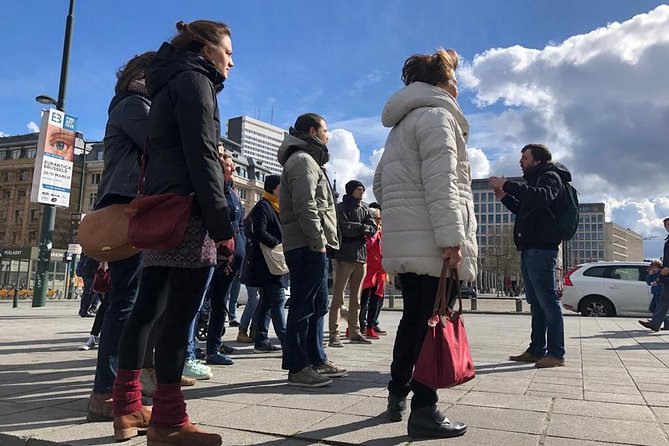
The English-language tour is offered by Brussels By Foot. Guides named in the available tour experiences include Thomas, Simon, and François, though your guide may vary depending on the date.
The strongest feature of the guiding style is the mix of history and anecdote. Thomas is described as passionate and especially good at answering questions about the Marolles. Simon’s tour focused on living conditions and social progress, while François led groups toward less familiar places in the Sablon and Marolles districts.
That range tells you what to expect. This is not a scripted march from one photo stop to the next. The guide’s personality matters, and discussion is part of the experience. Ask questions if you want more detail about local identity, the Palace of Justice, or the boundaries within Brussels.
The group limit is 25 people. That is not an intimate private walk, but it is small enough for a guide to manage questions more easily than on a large coach tour. A group of 12 friends previously took the walk together, so mixed groups and private social groups can fit the format.
The tour is recommended by all recorded participants and carries a 4.9 rating from 82 reviews. The most consistent praise centers on passionate guiding, clear storytelling, unusual locations, and the ability to make the Marolles meaningful even to people who already know Brussels.
Is the $3.62 price really good value?
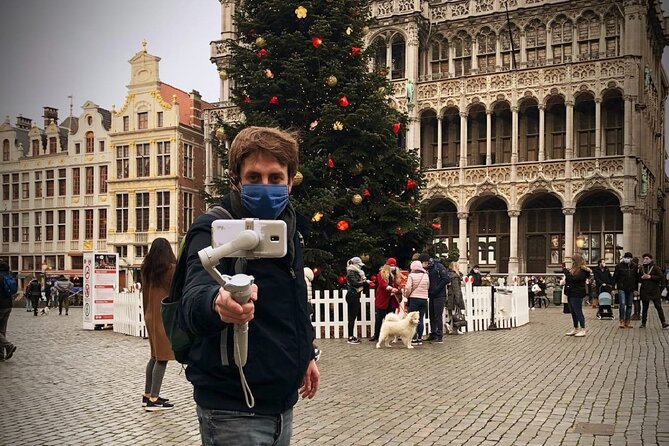
At $3.62 per person, the listed price is unusually low for an English-language guided walk lasting about two hours. Since the churches, Palace of Justice viewpoint, elevator, neighborhood, and market are all listed with free admission, most of what you are paying for is the guide’s time and interpretation.
That makes the tour a strong value if you want context rather than paid entry to an attraction. A standard sightseeing route may show you the Palace of Justice or the Marolles, but it may not explain why the renovation became a public scandal or how local residents fought to preserve their district.
The stated €10 gratuity per person is not included. You should factor that into the real cost. Even with the gratuity, the experience remains inexpensive compared with many guided city walks, provided you value the social history and local storytelling.
One point needs clarification before booking: the stop times listed total about 60 minutes, while the tour is advertised as approximately two hours. The difference may cover walking between sites, questions, and longer explanations. If you need a tightly timed schedule, confirm the expected finish time with Brussels By Foot.
Who will get the most from this Brussels walk?
I would choose this tour if you want:
- A view of Brussels beyond the Grand Place
- Social and urban history rather than a standard monument tour
- A closer look at the Marolles and its local identity
- An explanation of the Palace of Justice renovation problems
- A guide who welcomes questions and uses anecdotes
- A low-cost activity for your first day or a return visit
It also suits residents and repeat visitors. The material is specific enough to change how you see a district you may already pass through.
I would be more cautious if you want entry into major buildings, a long architecture lecture, or a tour focused on art collections. The route is outdoors and neighborhood-based, with only a short church visit or discussion at each stop. The experience depends heavily on the guide’s storytelling and the group’s interest in conversation.
Confirmation is sent at booking. The tour is near public transportation, service animals are allowed, and most people can participate. Free cancellation is available up to 24 hours before the start time. Changes or cancellations made less than 24 hours in advance are not refunded, and the tour requires a minimum number of participants.
Should you book Brussels, 1000 Years of Struggles?
Book it if you want to understand how Brussels works below the official surface. The best parts are the Marolles’ social history, the Palace of Justice scandal, the short city view, and the final walk into Place du Jeu de Balle.
The tour is especially worthwhile for curious repeat visitors, residents, and anyone who prefers local stories to a checklist of famous buildings. Keep your expectations realistic: this is a two-hour walking discussion, not a series of interior admissions.
At the low listed price, the value is excellent. Just remember the €10 gratuity, allow time for walking and questions, and confirm the duration if your day is tightly planned. For an English-language introduction to the Marolles, this is a smart and unusually grounded choice.
FAQ
How long does the tour last?
The experience lasts approximately two hours. The listed stop times add up to about one hour, with the remaining time likely used for walking and discussion.
Where does the tour begin?
It begins at Rue de la Chapelle 21, 1000 Bruxelles, Belgium, at the Church of Our Lady of the Chapel.
Where does the tour end?
It ends at Place du Jeu de Balle, 64, 1000 Bruxelles, Belgium, in the middle of the square.
What language is the tour offered in?
The tour is offered in English.
What places are visited?
The route includes Notre-Dame de la Chapelle, the Palace of Justice, the Ascenseur des Marolles, the Marolles district, and Place du Jeu de Balle.
Is admission included?
Entrance fees are included, and each listed stop has free admission. The information does not indicate a separate paid entrance during the walk.
How large can the group be?
The maximum group size is 25 people.
Is the tour near public transportation?
Yes. The experience is listed as being near public transportation.
Can I cancel for a full refund?
Yes, if you cancel at least 24 hours before the experience start time. Cancellations or changes made less than 24 hours before the start are not refunded, and the tour may be canceled if its minimum number of participants is not reached.
Just added around Brussels
- Standard vehicle from Brussels airport to city of Antwerp★ 5.0 · 4 reviews
- Transfer Brussels Airport (BRU) –> City Center 7 PAX (ONE WAY)★ 5.0 · 7 reviews
- Luxury vehicle from Brussels airport to the city of Brussels★ 4.0 · 5 reviews
- Luxury Minivan from Brussels airport to the city of Brussels★ 4.0 · 7 reviews
- Transfer Brussels Airport –> Brussels MB V Class 7 PAX (ONE WAY)★ 5.0 · 4 reviews
- Transfer Brussels Airport –> City MB E Class 1-3 PAX (ONE WAY)★ 5.0 · 6 reviews
- PRIVATE MPV TRANSFER FROM/TO BRUSSELS AIRPORT (Max 6 pax) ONE-WAY★ 5.0 · 4 reviews
- Waterloo Private Battlegrounds Tour with Lion Hill★ 4.5 · 9 reviews
Historical Tours, compared.


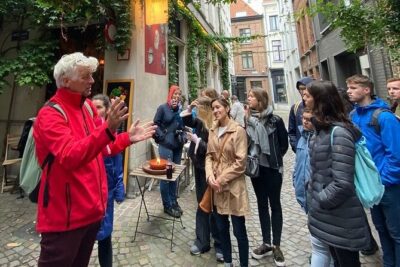

Historical Walking Tour with Chocolate & Waffle Tasting
Read our review →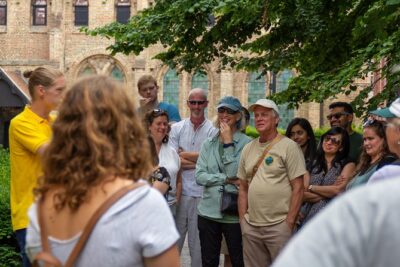
THE Storytelling Tour of Bruges | First Day Must | History & Tips
Read our review →
Tell Me About Brussels! | First Day Must-Do | Local Storytellers
Read our review →Browse the lists this tour appears in