
Reviewed · DARK SIDE & LEGENDS TOURS
Guided tour: Brussels Crime Scenes
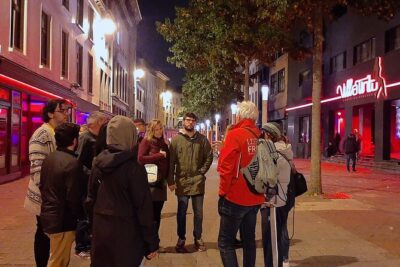
Brussels has a darker story than its chocolate shops and ornate squares suggest. This two-hour walk traces real crimes around the center, from a notorious crime of passion near Rue de l’Amigo to a brutal case that left three people dead at Place Saint-Géry. The aim is not cheap shock. It is to show how Brussels society changed through the 19th and 20th centuries, and how police, customs, and public morality shaped each case.
I like two things right away. First, the route uses ordinary streets and squares, so you see the city while hearing its less polished stories. Second, the guide adds historical context instead of simply reciting crimes. The main drawback is tone: the stories can be violent and disturbing, and anyone hoping for costumes, audience participation, or a theatrical performance may find the presentation fairly traditional.
Key points about Brussels Crime Scenes

- Real cases, not fictional ghost stories: The walk sticks to documented criminal events and treats the people involved with care.
- Five central Brussels stops: You visit Rue de l’Amigo, Le Coin du Diable, Place Saint-Géry, and Place du Jardin aux Fleurs, with a crossing of Grand Place.
- The social story matters: Crime is used to explain customs, policing, class, and public life in different eras.
- A compact two-hour route: The start is at Rue de l’Etuve 1, and the walk finishes at Place Saint-Géry.
- Small enough for questions: The maximum group size is 25, which should make it easier to hear the guide in city streets.
- Good booking flexibility: You can cancel for a full refund up to 24 hours before the start time.
Why Brussels’ criminal past makes a good walking tour
Many city crime walks rely on a spooky mood and a string of grisly details. This one takes a more useful route. The cases are windows into Brussels life, showing what people feared, how public authorities reacted, and how social customs differed from those of today.
That approach gives the walk more substance than a simple list of murders. A crime of passion, for example, tells you something about relationships, reputation, and the places where people met. A case involving unusual loot points toward ideas about property and value. A public crime that fascinated the city shows how news and rumor once moved through a close-knit capital.
I would choose this experience after a first look at Brussels, not as a replacement for the city’s classic sights. It begins close to Grand Place, so you can pair it with the central square, the nearby lanes, or a visit to Saint-Géry. The contrast works well. You see the polished center first, then hear how the same streets carried fear, scandal, and speculation in earlier times.
The tone is described as frightening and at times bloody, but respectful. That distinction matters. You should expect serious accounts of violent events rather than a playful haunted-house act. The guide’s job is to tell what happened and explain the era around it, not to make light of suffering.
More dark side and legends walks in Brussels:
- Evening Tour: The Dark Side of Brussels
★ 4.5 · 435 reviews - Historical Walking Tour: The Story of Brussels – by Legends
★ 5.0 · 164 reviews - Private Tour: The Dark Side of Brussels
★ 5.0 · 20 reviews
Starting at Rue de l’Etuve and crossing Grand Place
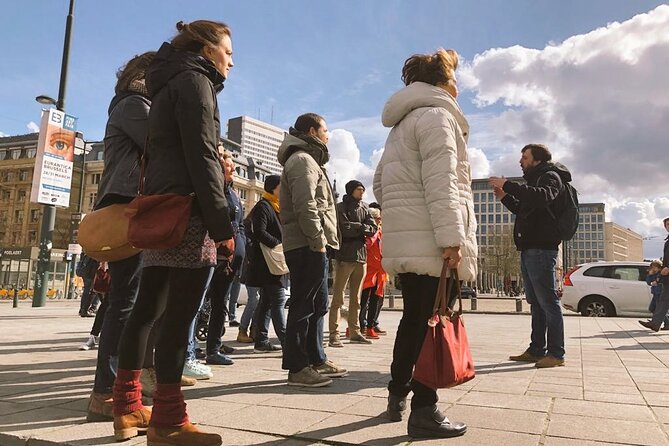
The meeting point is Rue de l’Etuve 1, 1000 Bruxelles, in the central Brussels area. From there, the route crosses Grand Place before turning toward its first crime scenes. The location is convenient if you are already exploring the historic center, and the walk does not begin at a distant transport stop.
Grand Place provides an effective opening setting. Its grand façades and public importance help frame the difference between Brussels as you see it now and Brussels as a working city in earlier centuries. The route then moves into nearby streets, where the stories feel more connected to particular buildings and corners.
You should wear comfortable shoes and be ready to walk for about two hours. The experience is outdoors and city-based, so the pace and comfort will depend partly on weather and street conditions. No museum admission is part of the tour, and the listed admission for the stops is free.
Rue de l’Amigo and the Hotel À la Ville de Courtrai
The first two stops are both around Rue de l’Amigo, but they offer different kinds of stories. The first concerns a hotel with a dreamlike past that did not always welcome prestigious visitors. The stop is planned for about 10 minutes.
That short pause sets the mood without using the whole walk on one location. The hotel setting also gives the guide a chance to explain how lodging houses worked as public spaces, where people from different backgrounds could cross paths. You are not only hearing about a building. You are considering who used it, what happened behind its doors, and how such places were viewed in their own time.
The second stop returns to Rue de l’Amigo and focuses on the Hotel À la Ville de Courtrai, at the corner of the street. A famous crime of passion took place there, and the guide gives it about 15 minutes.
This is likely one of the more personal cases on the route. The subject allows the guide to connect private relationships with public scandal. It also shows why hotels and busy central streets were useful settings for dramatic criminal stories: they brought together strangers, business, romance, secrecy, and gossip.
I appreciate the decision to give both stops their own space. The two locations are close, yet the subjects are not treated as one blur of crime. You get a sense of place first, then a separate case with its own circumstances. Still, the material may be uncomfortable if you prefer light sightseeing or family entertainment.
Le Coin du Diable and a legend from the 17th century
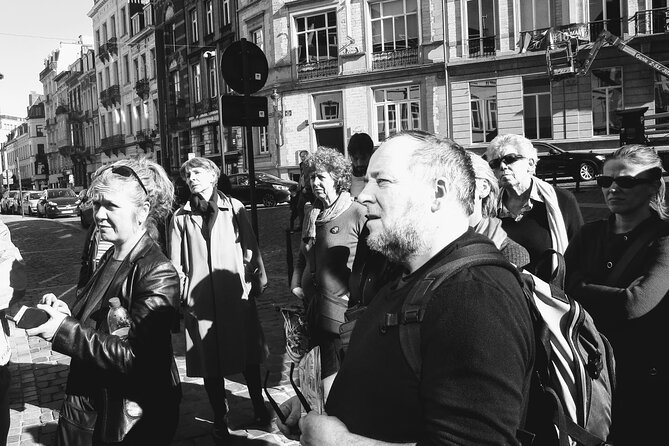
The route next reaches Le Coin du Diable, or the Devil’s Corner. This stop deals with a famous legend dating from the 17th century and lasts about 15 minutes.
The word legend is important here. Not every part of a crime-themed walk has the same status as a documented case, and this stop appears to belong to Brussels folklore rather than a modern police file. A good guide can use that difference to explain how stories change as they pass from one generation to the next.
I would listen for the boundary between established fact, local belief, and later retelling. That distinction helps you understand the city without treating every frightening tale as proven history. The stop also adds variety to the route. After the hotel cases, you get a story shaped by older beliefs and the atmosphere of a historic corner.
This is one place where the experience may appeal to people who enjoy legends, but it may disappoint anyone expecting only court records or strictly verified criminal investigations. The stated aim is to stay faithful to facts, yet a 17th-century legend naturally requires careful explanation.
A few more Brussels half days worth weighing up
- Brussels: Atomium Entry Ticket with Design Museum Ticket
★ 4.4 · 9,254 reviews - From Brussels: Guided Day Trip to Bruges and Ghent
★ 4.6 · 8,353 reviews - From Brussels: Bruges & Ghent Day Tour – 2 Fairytale Cities
★ 4.7 · 8,242 reviews - Choco-Story Brussels: Chocolate Museum Entrance with Tasting
★ 4.3 · 4,883 reviews
Place Saint-Géry and the three-death case
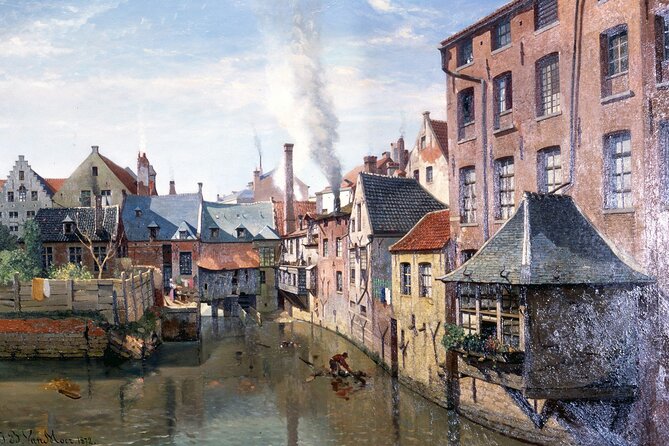
The most severe stop comes at Place Saint-Géry. A particularly atrocious crime there left three people dead and fascinated Brussels in the middle of the 19th century. The guide allows about 15 minutes for this case.
The setting matters. A public square makes the event feel less private than the hotel stories. You can consider how a crime became a citywide subject, how people gathered information before modern media, and why certain cases held public attention long after the immediate event.
The guide’s wider historical framing is especially useful here. A violent case can tell you about policing, public order, and the way a capital dealt with fear. It can also show how moral judgments were formed. You will hear about the crime, but the larger subject is the society that watched, discussed, and remembered it.
The tour ends in the center of Place Saint-Géry, at Pl. Saint-Géry 1. That makes the finish practical for continuing an evening in the area, though no onward activity is included. If the three-death case is likely to weigh heavily on you, remember that the walk does not soften its subject matter.
Place du Jardin aux Fleurs and the unusual loot
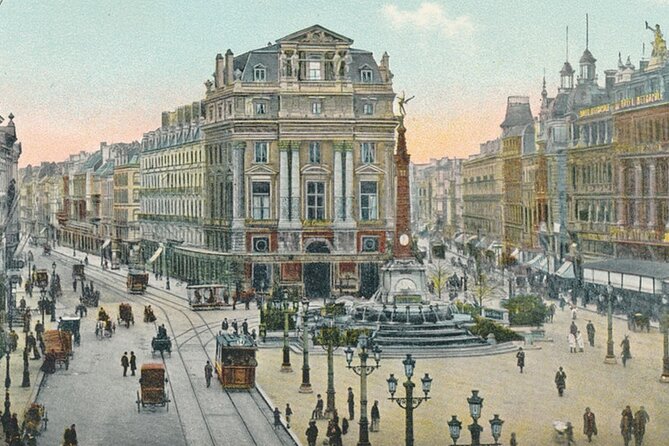
The final listed crime scene is Place du Jardin aux Fleurs. The case concerns a villainous crime committed for rather unusual loot, and it receives about 15 minutes.
This stop broadens the range of motives covered by the walk. Not every crime is presented as a tale of romance or personal revenge. A strange target or unusual object can reveal what people valued in a particular period, and what could motivate someone to take a serious risk.
I like this kind of ending because it gives the route a change of pace after the more violent Saint-Géry story. It also leaves you thinking about the odd details that make a historical case memorable. The description does not identify the loot, so you should not book this walk expecting a specific famous treasure hunt or a hands-on mystery game.
The listed route information places the finish at Place Saint-Géry, while Jardin aux Fleurs appears among the stops. Since the supplied details do not spell out the exact order between these locations, you should follow the guide’s route on the day rather than assume the final stop is the physical endpoint.
What the guide does well, and what could improve
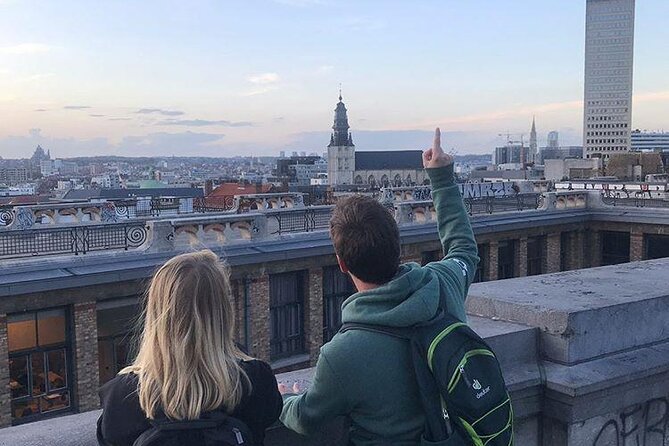
The guide is described as professional, sympathetic, and able to hold attention. More important, the presentation adds context around the crimes. That is the key quality I would look for here, since the cases could otherwise become a parade of grim facts.
The material is also handled with respect for the different people involved. That does not make it gentle, but it keeps the walk from treating real suffering as a joke. If you want a serious account of Brussels customs and public life, this is a strong part of the experience.
The main limitation is theatrical energy. The format does not promise costumes, role-play, or audience participation. Some people would enjoy a more playful style, with period clothing or small interactive moments, but this walk appears to rely on spoken storytelling and the streets themselves.
That is not necessarily a flaw. A restrained guide can make difficult subjects easier to take seriously. Still, if you want a dramatic performance with actors, this is probably not the right choice.
Price, group size, and practical value
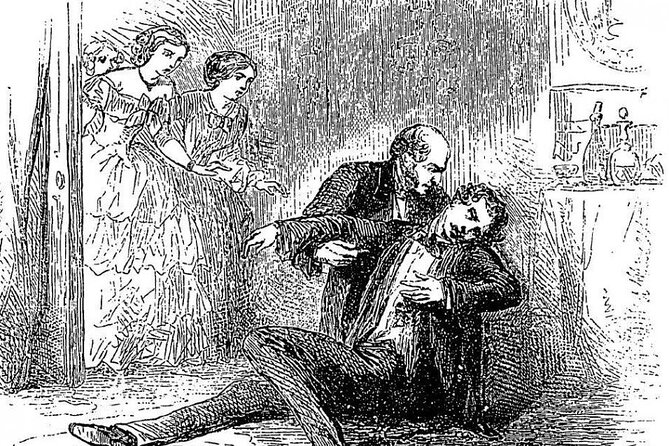
At $23.26 per person, the experience is reasonably priced for a two-hour guided walk in central Brussels. You are paying for the guide’s research and storytelling rather than admission to buildings, transport, food, or special effects. All fees and taxes are included, while coffee and tea are not.
The value depends on what you want from a city walk. If you are interested in social history, policing, local legends, and unusual stories tied to real streets, the price is fair. If you only want major monuments or interior access, the route may feel less useful because the stops are outdoor locations and no attraction admission is included.
The group limit is 25 people. That is not a private tour, but it is small enough to keep the group manageable in narrow central streets. You should still stay close to the guide and listen carefully when the city is noisy.
Confirmation is sent at booking. The activity is near public transportation, and service animals are allowed. Most people can take part, according to the supplied participation information. You can cancel up to 24 hours before the start for a full refund. Cancellations or changes made within 24 hours are not accepted for a refund.
The tour is booked, on average, 12 days ahead. That does not guarantee that every date fills, but it is a useful sign that you should reserve before your Brussels visit if your schedule is fixed.
Who should book this Brussels crime walk?
I would recommend it to adults and older teenagers who enjoy true crime, city history, local legends, and walks that reveal an unexpected side of a familiar place. It suits someone who has already seen Grand Place and wants to understand the streets around it in a different way.
It is also a good choice for people who prefer a guide’s explanation to reading plaques or following a self-guided route. The historical context gives the cases a wider meaning, especially around customs, police work, and public reaction.
I would be more cautious if you dislike graphic subjects or want a cheerful introduction to Brussels. The walk can be violent and frightening, and the central cases include a crime of passion and a three-death event. It is not a casual ghost tour designed only for laughs.
Final verdict on Brussels Crime Scenes
Book this tour if you want a serious, fact-based look at Brussels through its crimes, with a guide who explains the society around each case. The central route, modest price, free cancellation up to 24 hours ahead, and two-hour length make it easy to fit into a city break.
Skip it if you want costumes, interactive theater, food, or entry to historic buildings. For the right audience, though, this is an original way to see Grand Place, Rue de l’Amigo, Le Coin du Diable, Place Saint-Géry, and Jardin aux Fleurs while learning why these ordinary places carried such extraordinary stories.
FAQ
Where does Brussels Crime Scenes begin?
The tour begins at Rue de l’Etuve 1, 1000 Bruxelles, Belgium.
Where does the tour end?
The stated endpoint is Pl. Saint-Géry 1, 1000 Bruxelles, Belgium, in the center of Place Saint-Géry.
How long does the experience last?
The guided walk lasts approximately two hours.
How much does the tour cost?
The listed price is $23.26 per person.
What locations are visited?
The route crosses Grand Place and includes Rue de l’Amigo, Le Coin du Diable, Place Saint-Géry, and Place du Jardin aux Fleurs.
Is admission to the stops included?
All fees and taxes are included, and the stops have no separate admission charge. Coffee and tea are not included.
How many people can join the tour?
The maximum group size is 25 people.
Can I cancel for a refund?
Yes. You can cancel at least 24 hours before the local start time for a full refund. Cancellations or changes made less than 24 hours before the start are not accepted for a refund.
Just added around Brussels
- Standard vehicle from Brussels airport to city of Antwerp★ 5.0 · 4 reviews
- Luxury Minivan from Brussels airport to the city of Brussels★ 4.0 · 7 reviews
- Transfer Brussels Airport (BRU) –> City Center 7 PAX (ONE WAY)★ 5.0 · 7 reviews
- Luxury vehicle from Brussels airport to the city of Brussels★ 4.0 · 5 reviews
- PRIVATE MPV TRANSFER FROM/TO BRUSSELS AIRPORT (Max 6 pax) ONE-WAY★ 5.0 · 4 reviews
- Transfer Brussels Airport –> Brussels MB V Class 7 PAX (ONE WAY)★ 5.0 · 4 reviews
- Transfer Brussels Airport –> City MB E Class 1-3 PAX (ONE WAY)★ 5.0 · 6 reviews
- Waterloo Private Battlegrounds Tour with Lion Hill★ 4.5 · 9 reviews
Dark Side & Legends Tours, compared.

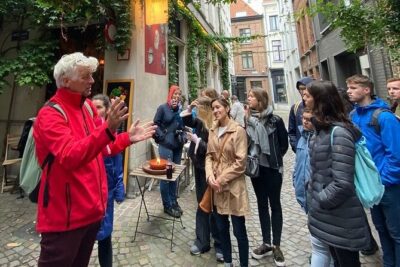

Historical Walking Tour: The Story of Bruges – by Legends
Read our review →
Browse the lists this tour appears in