

Reviewed · DARK SIDE & LEGENDS TOURS
Historical Walking Tour: Legends of Gent
Ghent’s best stories are told in the street, where a medieval castle sits beside a modern graffiti lane and a Gothic cathedral hides one of Europe’s great paintings. This two-hour walk moves through that striking mix, linking Ghent’s canals, towers, squares, and legends in a route that gives you a useful first look at the city. Tatiana, Kasia, Kenny, and Sophia are among the guides praised for clear, lively storytelling, though the guide depends on the departure.
I like the walk’s strong sense of place: you do not just look at Graslei, Gravensteen, or the Belfry, you hear why each mattered to Ghent’s merchants and citizens. I also like the practical finish, since guides share suggestions for food, beer, chocolate, and further exploring. The main consideration is the pay-what-you-want setup. The advertised price is only $3.62, so confirm how the payment and guide contribution work before you arrive, especially if booking through a third-party platform.
Key points at a glance
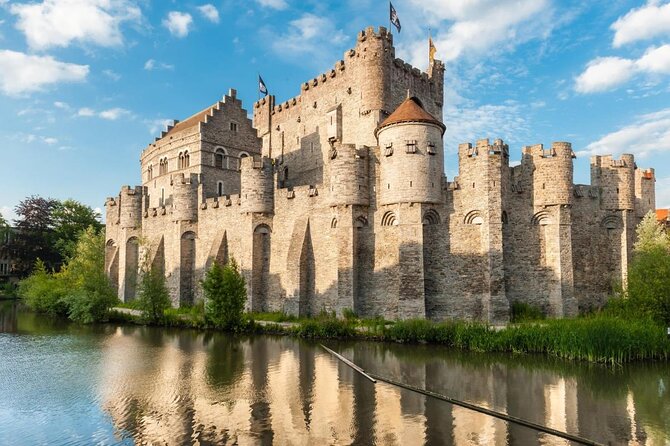
- Thirteen central stops: The route connects St Michael’s Bridge, the canals, Gravensteen, the cathedral, the Belfry, and St Nicholas’ Church.
- Stories rather than only dates: Expect legends, dark episodes, local pride, trade history, and explanations of Ghent’s rebellious character.
- A useful first orientation: The walk ends near the Belfry and covers the main historic core in about two hours.
- English-speaking guides with personality: Tatiana, Kasia, Kenny, Sophia, Robin, Liedewei, and others have been praised for humor, warmth, and strong storytelling.
- Large-group limit: The tour can include up to 35 people, so the experience may feel less personal at full capacity.
- Pay at the end: The low advertised price is appealing, but you should understand the payment arrangement and expected tip before setting off.
Why this walk is a smart first look at Ghent
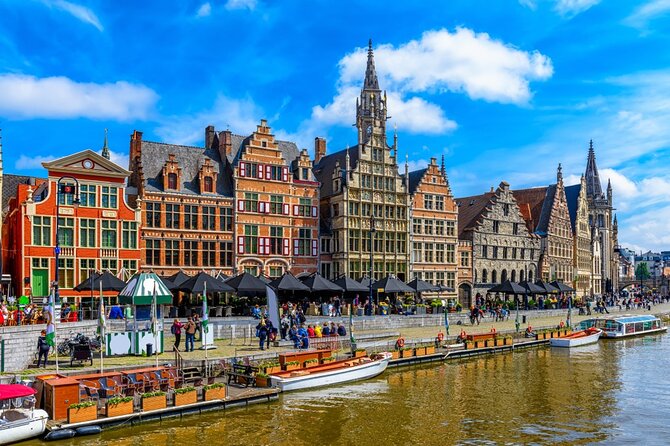
Ghent can feel confusing at first. Its canals split the old center into distinct pockets, while major monuments appear around corners with little warning. This route gives you a map in your head. You begin at St Michael’s Bridge, pass the old port and castle, cross several historic squares, and finish among the city’s best-known churches and towers.
The pace is steady rather than strenuous. Each stop lasts roughly 10 minutes, with a 15-minute opening at St Michael’s Bridge. You are on your feet for about two hours, and much of the center has cobblestones. That is manageable for most people, but supportive shoes will make the walk more pleasant.
I would take this tour early in a Ghent visit. It gives you enough context to decide which interiors deserve a later, slower visit. The guide’s restaurant and beer suggestions can also help you avoid wasting your first evening on an uninspired choice.
The group limit is 35 people. That is not an intimate private walk, and busy streets or a full group can make it harder to hear. Several guides have used microphones when needed, and strong guides such as Tatiana, Kenny, Kasia, and Robin have been praised for keeping people involved. Still, your experience depends partly on the day’s group size and the individual guide.
More Historical Tours in Ghent
- Ghent: 50-Minute Medieval Center Guided Boat Trip
★ 4.5 · 5,637 reviews - Ghent: 40 Minute Medieval Center Guided Boat Tour
★ 4.4 · 884 reviews - Ghent: 40-Minute Historical Boat Tour of City Center
★ 4.3 · 430 reviews
St Michael’s Bridge and the three towers
The tour starts outside Hostel Uppelink at St Michielsplein, beside St Michael’s Bridge. This is one of the best places to take in Ghent’s famous skyline. From here, you can see the three towers formed by St Nicholas’ Church, the Belfry, and St Bavo’s Cathedral.
The guide begins with Ghent’s role as a medieval trading center. That opening matters because it explains why the city grew so powerful and why its central buildings are so large. Ghent was not simply a pretty canal town. Its wealth came from commerce, and its citizens fought hard to protect their rights and influence.
St Michael’s Bridge also helps you understand the city’s layout before the walk gets busy. Look one way toward the towers and another toward the canals, then follow the route into the old port area. The stop is free, quick, and useful for photographs.
Graslei, Korenlei, and Ghent’s old port
At Graslei and Korenlei, the guide points out the buildings connected to trade when this stretch served as the city’s port. The canal frontage is one of Ghent’s most attractive scenes, but the explanation gives it more weight than a simple photo stop.
You will hear how the buildings functioned as part of a working commercial district. The paired quays also show how closely water, storage, transport, and civic power were tied together. I like this part because it turns attractive architecture into evidence of daily business.
It can be crowded here, especially around the quays. Listen closely, take your pictures between explanations, and do not expect a quiet pause. The point is not to enter every building. It is to understand the old port as the economic engine of the center.
Design Museum Gent and the local stubborn streak
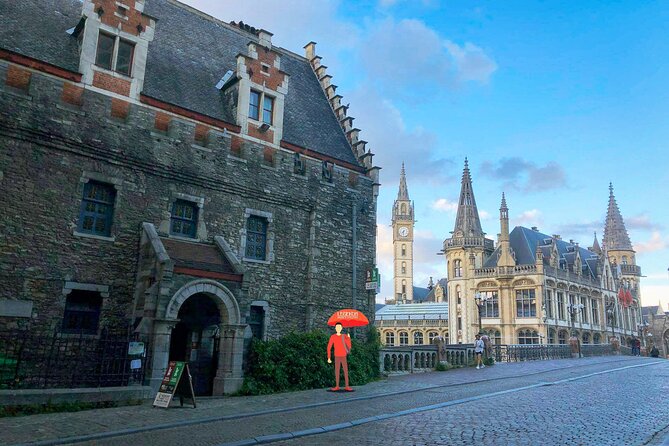
The stop outside Design Museum Gent shifts the subject from medieval trade to local character. The guide explains how a feature of the museum represents the stubborn, rebellious mindset associated with the people of Ghent.
That idea returns throughout the walk. Ghent’s identity is not presented as polite postcard charm alone. The city’s story includes civic resistance, political conflict, and a strong sense of independence. This stop helps connect modern design with older patterns of local behavior.
Admission to the museum is not included, and this tour does not appear to be a museum visit. Treat the stop as an exterior explanation and a piece of local context, not as a substitute for touring the collections.
More Walking Tours in Ghent
- Ghent: Belgian Chocolate Walking Tour with Tastings
★ 4.9 · 259 reviews - Gastronomic Walking Tour of Gent – Tasters included
★ 5.0 · 199 reviews - Ghent: Private 2-Hour Walking Tour
★ 4.7 · 134 reviews - Ghent: Famous Belgian Chocolate Walking Tour with Tastings
★ 5.0 · 131 reviews
The Great Butchers’ Hall and the darker side of grandeur
At Het Groot Vleeshuis, you look across the water toward the medieval covered Great Butchers’ Hall. Its grand appearance invites an easy architectural compliment, but the guide focuses on darker facts connected with the building.
That change in tone is part of the walk’s appeal. Ghent’s monuments are not treated as spotless symbols. They are places with practical uses, hard work, power struggles, and uncomfortable stories. The brief stop lets you see the building from outside while adding a more human edge to the architecture.
The admission is free at this stop. Keep your attention on the guide rather than expecting an extended visit inside.
Gravensteen, the Castle of the Counts
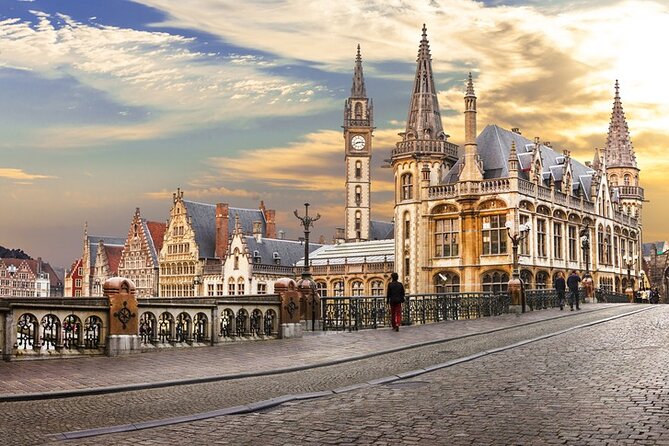
Gravensteen is the route’s most dramatic sight. Unlike many medieval castles that sit outside modern centers, Ghent’s Castle of the Counts occupies a place right in the middle of town. Its strong walls and preserved form make the contrast with surrounding streets especially striking.
The guide explains the castle’s past from outside. You will not receive a full interior visit through this walking tour, and admission is not included. If you have an interest in medieval defenses, rulers, or castle rooms, plan a separate visit when you have more time.
Even from the street, Gravensteen gives the tour a strong visual anchor. It is hard to miss, and its position helps explain how power once operated inside the city. The castle was not a distant monument. It was part of urban life, close to merchants, churches, markets, and public squares.
St Veerleplein, the square of death and life
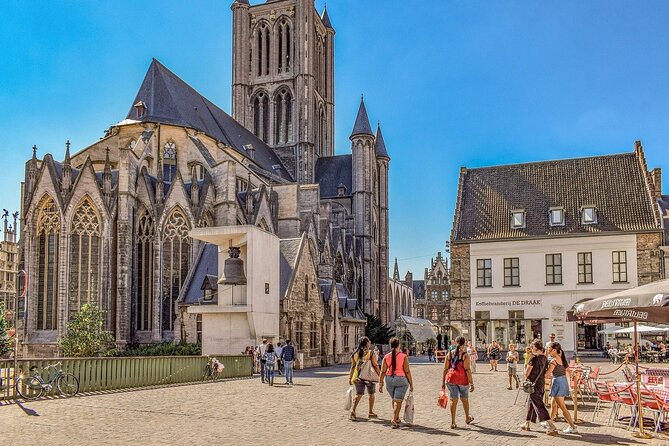
The square in front of Gravensteen is called both the square of death and the square of life. The guide explains the reason behind those opposing names, turning an open public space into one of the tour’s more memorable story stops.
This is the sort of detail a guide adds value to. A quick photograph would show you the castle and paving stones, but not the events and meanings attached to the square. The stop also gives you a moment to look back at Gravensteen from a different angle.
Admission is free, and the visit remains outdoors. It is a short pause, but the legend helps break up the architectural information with a sharper human story.
Huis van Alijn and the old god house
The House of Alijn is the only remaining god house in Ghent. The guide explains its earlier role as a hospital and the unfortunate story behind that change.
The name and function point to the city’s older charitable institutions, where care and religious duty were closely linked. You get a glimpse of how ordinary people were treated when illness, poverty, and family problems could quickly become public concerns.
This is another exterior-focused stop, so do not confuse the walking tour with entry to the museum. Still, it adds social history that can be missed when a visit focuses only on churches, castles, and impressive façades.
Vrijdagmarkt and the statue at its center
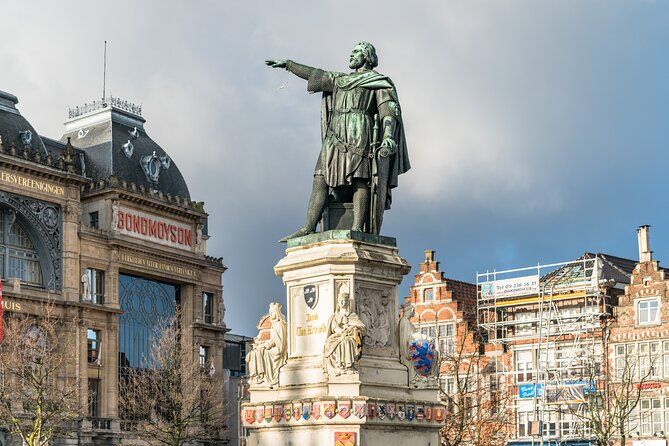
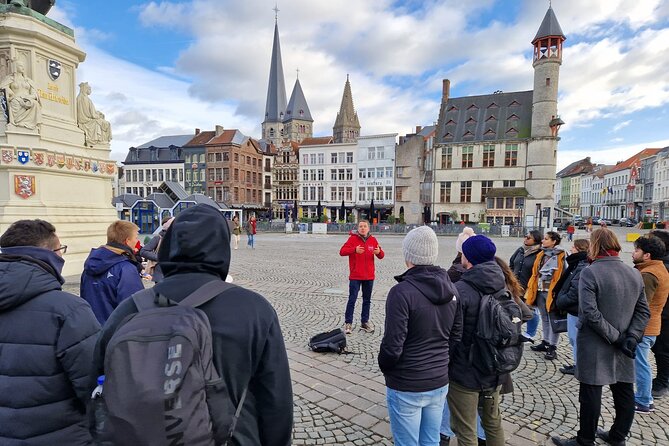
Vrijdagmarkt has played an important role in Ghent’s past, and the central statue gives the guide a clear starting point for telling that story. The square is broad and open, a useful contrast to the narrower canal streets earlier in the route.
The guide connects the square to the city’s political life and to the figure commemorated in the middle. This is where Ghent’s civic pride and independence come back into view. The city’s past was shaped not only by rulers but also by citizens who expected a say in how their town was run.
Take a moment to notice the scale of the square. It is easier here to imagine public gatherings and citywide events than in the tighter lanes near the canals.
Werregarenstraat, Ghent’s graffiti lane
Werregarenstraat provides one of the route’s most modern stops. Ghent designated this lane for street artists so monumental buildings would be less likely to receive unwanted graffiti. The result is a changing corridor of painted walls in the middle of the historic center.
I like the way this stop widens the tour’s idea of heritage. Ghent is not only preserving old stone. It is also making room for current artistic expression, even when that expression is rough, temporary, or hard to classify.
Do not expect a polished gallery. The lane is about layers, change, and the tension between public art and historic preservation. It is also a good place to take a short break from Gothic façades.
Ghent Town Hall and the city’s major conflict
At Ghent Town Hall, the guide explains why the building looks confused. Its different sections reflect a major conflict in Ghent’s history, giving the façade a visual record of competing periods and styles.
This is a useful stop for anyone who finds European architecture hard to read. Rather than simply labeling the building Gothic or Renaissance, the guide links its appearance to political change. The result is easier to remember because the architecture has a reason behind it.
Admission is not included. The tour focuses on the outside, and the explanation is the main value here. Look for the shifts in design while the guide describes the conflict that shaped them.
St Bavo’s Cathedral and the Ghent Altarpiece
St Bavo’s Cathedral brings art and religion into the final part of the route. The cathedral has a long history and contains major works, most famously the Ghent Altarpiece by the Van Eyck brothers.
The guide introduces the cathedral and explains why the altarpiece matters. This is a preview, not a detailed art lecture or a guaranteed extended viewing of every treasure. If the Van Eyck painting is a priority, set aside separate time to see it properly and check current visiting arrangements.
Even a short introduction helps. You will understand that the cathedral is more than a grand Gothic shell. It holds artwork that has shaped the reputation of Ghent far beyond Belgium.
The Belfry and St Nicholas’ Church
The tour ends near the Belfry of Ghent, the people’s tower. Its history reflects the city’s power, independence, and determination to manage its own affairs. The former prison façade also carries a bizarre legend, which gives the final stretch a lighter and stranger note.
The route then brings you to St Nicholas’ Church, an early 12th-century building overlooking Korenmarkt. Its patron saint, St Nicholas, protected merchants and sailors, so the church connects neatly with the trading history introduced at the start.
The façade itself illustrates the legend of its patron saint, making this a fitting final story. The end point is close to the Belfry at Sint-Baafsplein, so you can continue exploring from a central location. The Belfry admission is not included, but the exterior explanation gives you a good reason to return if you want to go inside.
The pay-what-you-want price and what it means
The listed price is $3.62 per person, with the balance of the guide’s compensation tied to what you choose to pay at the end. That can be excellent value for a two-hour orientation, especially when a strong guide adds local food and drink advice.
It also creates a practical wrinkle. A low booking price may not represent the total amount you are expected to contribute. Confirm the arrangement before the tour, and bring a clear idea of what you feel the walk was worth. One serious payment complaint involved a participant being asked to pay again after arrival, so keep your booking confirmation and receipt handy and make sure the payment platform and meeting instructions match.
The experience includes fees and taxes, but admissions to Design Museum Gent, Gravensteen, Ghent Town Hall, and the Belfry are not included. The route is designed to show you these places from outside, not cover a full day of entrance tickets.
Who should book this Ghent walking tour?
I would choose it for a first visit, a short stay, or a day trip when you want the city to make sense quickly. It suits people who prefer stories, architecture, and local context over a checklist of interior visits.
It is also a good match for solo visitors and couples who want restaurant, beer, chocolate, and activity suggestions from someone based in Ghent. Guides have been praised for humor, warmth, clear English, and the ability to keep a group interested for the full two hours.
You may want another option if you dislike group walks, have trouble with cobblestones, or want a specialized art or castle tour. A full group of 35 can feel distant, and most stops are brief. One guide also leaned too heavily on commercial recommendations, so the balance between history and shopping advice can vary.
Book at least a few days ahead if your schedule is fixed. The tour is often reserved about 16 days in advance, which suggests that popular departure times can fill. It requires good weather and a minimum number of participants. If poor weather or low enrollment cancels it, you are offered another date, another experience, or a full refund.
Should you book it?
Book this walk if you want a lively introduction to Ghent’s medieval center, with legends woven through the canals, churches, castle, squares, and towers. The route is broad, central, and well paced, and the best guides turn a long list of monuments into a connected story about trade, civic pride, religion, art, and rebellion.
I would especially recommend it at the start of your stay, then return to Gravensteen, St Bavo’s Cathedral, the Belfry, or the Design Museum with more time. Just confirm the pay-what-you-want arrangement before arrival and remember that the low listed fee is not the same as a private tour or a full set of admissions.
FAQ
How long does the Historical Walking Tour: Legends of Gent last?
The tour lasts approximately two hours.
Where does the tour begin?
It begins at Hostel Uppelink, Sint-Michielsplein 21, 9000 Gent, Belgium.
Where does the tour end?
It ends at the Belfry of Ghent on Sint-Baafsplein, 9000 Gent, Belgium.
What language is the tour offered in?
The tour is offered in English.
How many people can join the tour?
The maximum group size is 35 people.
Is the tour available with a mobile ticket?
Yes. A mobile ticket is available.
Are entrance tickets to the main monuments included?
No. Admission is not included for the Design Museum Gent, Gravensteen, Ghent Town Hall, or the Belfry. The tour includes all fees and taxes.
Can I cancel for a full refund?
Yes, if you cancel at least 24 hours before the experience start time. Cancellations or changes made within 24 hours are not refunded or accepted.
What happens if the tour is canceled?
If poor weather or the minimum number of participants causes cancellation, you are offered a different date or experience, or a full refund.
More Dark Side Tours in Ghent
- Evening Tour of the Dark Side of Gent
★ 5.0 · 646 reviews - Private Tour: The Dark Side of Gent
★ 5.0 · 73 reviews - Ghent: The Dark Side of Ghent Private Walking Tour
★ 4.9 · 19 reviews - Historical Walking Tour: Legends of Bruges
★ 5.0 · 2,541 reviews
Just added around Ghent
- Historic Highlights, by a local guide★ 5.0 · 9 reviews
- Walking Food Tour in Ghent★ 5.0 · 13 reviews
- Discover Ghent while playing! Escape game – The Walter case★ 4.5 · 4 reviews
- Discover Ghent while playing! Escape game – The alchemist★ 4.0 · 4 reviews
- Discover Ghent with a self-guided Outside Escape city game tour!★ 4.0 · 10 reviews
- e-Scavenger hunt Kortrijk: Explore the city at your own pace★ 4.5 · 15 reviews
- Ghent Walking Tour with Audioguide on Your Smartphone★ 4.5 · 13 reviews
- Private Ghent Beer & Brewery Tour by a young local★ 5.0 · 12 reviews
Dark Side & Legends Tours, compared.




Historical Walking Tour: The Story of Bruges – by Legends
Read our review →
Historical Walking Tour: The Story of Brussels – by Legends
Read our review →Browse the lists this tour appears in