

Reviewed · WWI BATTLEFIELD TOURS
From IEPER Private 4-hour Tour of the Ypres Battlefield
The most moving part of this Ypres tour is the way it connects broad military events with individual soldiers. At Hill 60, Tyne Cot, and Essex Farm, you are not simply looking at monuments. You are standing where men fought, died, were treated, and sometimes wrote the words that shaped how the war is remembered.
I like the private format, which lets Soren or Sabine adjust the route, pace, and explanations to your family, age group, walking ability, or national connection. I also like the use of maps, photographs, and family research, especially if you arrive with a soldier’s service record or name.
The main limitation is time. Four hours gives you a strong introduction, but Ypres and the surrounding battlefields cover a large area. You will see five important places, not every cemetery and battlefield site in Flanders.
Key points to know before booking
- Hill 60 puts mine warfare at the center of the story: Hear how huge mines were blown here on June 7, 1917.
- Sanctuary Wood offers original trenches: The museum is modest, but the preserved trench remains make the visit unusually direct.
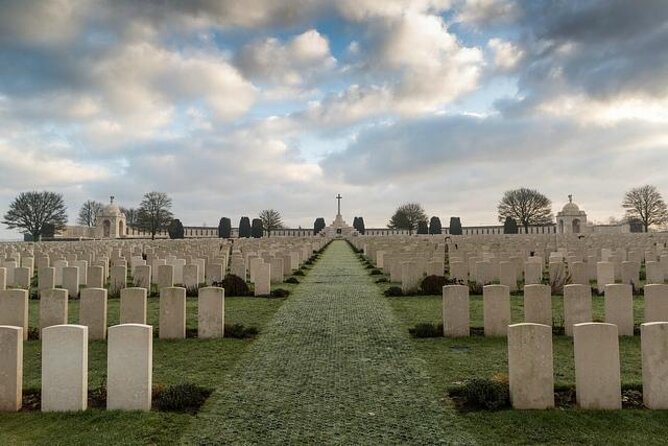
- Tyne Cot brings the scale of loss into focus: About 12,000 Commonwealth soldiers are buried here, with only around 3,000 identified by name.
- The tour can become personal: Send a relative’s service details before the visit and the guide may connect your family story to the battlefield.
- Pickup is simple: You can meet at Ypres train station or at a local hotel or bed-and-breakfast.
- A private vehicle keeps the pace comfortable: Your group of up to four travels together, with room to ask questions and pause when needed.
Why this four-hour tour works
Ypres, also called Ieper, is an excellent base for exploring the First World War in Belgium. The town was at the center of repeated battles, and the surrounding countryside contains trenches, cemeteries, memorials, and former medical sites.
This tour gives you a clear route through that story. It begins with underground warfare at Hill 60, moves to trenches and a small museum at Sanctuary Wood, then shifts to the vast memorial space at Tyne Cot. Saint Julien explains the first German gas attack, while Essex Farm links the war to the poem In Flanders Fields.
I find that sequence useful because it avoids treating the battlefield as one endless series of graves. You see different parts of the conflict: planning, attack, shelter, death, medical care, remembrance, and poetry.
The group limit is four people, and that matters. You can ask why a position was important, stop to discuss a family member, or request a little more time without waiting for a bus group. The guide can also use a more personal approach with children or provide a slower pace for someone with limited walking ability.
Soren is the guide most often named in the available information, while Sabine also leads tours. Both are described as local guides with strong command of the area and its wartime story. Sabine grew up in Ypres, and Soren is praised for combining clear explanations with a little humor when the subject becomes heavy.
More WWI Battlefield Tours in Ypres
- In Flanders Fields and Passchendaele Half Day Morning Tour
★ 5.0 · 117 reviews - Ypres: An exploration of the deadly salient battlefields
★ 5.0 · 76 reviews - From Brussels: Flanders Fields Remembrance Full-Day Trip
★ 4.4 · 65 reviews
Hill 60 and the mines of June 1917
Hill 60 is the first stop, with about 40 minutes set aside. The key story here is the huge underground mines detonated on June 7, 1917.
That date marks the opening of the Battle of Messines, a major British offensive south of Ypres. You will hear how the mines were prepared and why this ground mattered to both sides. The stop is particularly useful if you want to understand how the war was fought below the surface, not only across open fields.
Do not expect a polished museum experience here. The value comes from the location and the explanation. With maps and photographs, the guide can show how the position fitted into the wider front and how the attack changed the ground.
The 40-minute visit should be enough for a focused introduction, though anyone with a strong interest in military engineering may wish for a longer battlefield day. The tour’s private setup helps because you can ask questions instead of simply moving on with a large group.
Sanctuary Wood and the original trenches
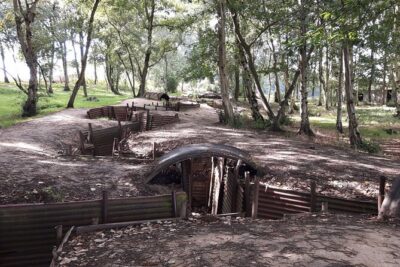
Sanctuary Wood Museum receives about 45 minutes and includes admission. This is one of the most tangible stops on the route because you can see original First World War trenches.
The museum itself is described as quaint rather than large or elaborate. That is worth knowing. You are not coming for a major national collection, but for the combination of a small museum and surviving trench lines. A tunnel through the trenches adds another physical sense of the cramped conditions soldiers faced.
I would give this stop special weight if you are new to battlefield travel. Written accounts and cemetery rows can feel distant. Standing beside old trench works makes the defensive system easier to picture, even when the remains are weathered and incomplete.
The guide’s maps and photographs are important here. They help show how trenches fitted into the wider network and how a site that now seems quiet once formed part of a dangerous front.
Families can also do well on this part of the tour. The guide has been described as patient with children from six to ten years old, using facts and a lighter touch without losing respect for the subject. Still, the war’s human cost is present throughout, so parents should prepare younger children for a serious visit.
Tyne Cot and the sheer scale of loss
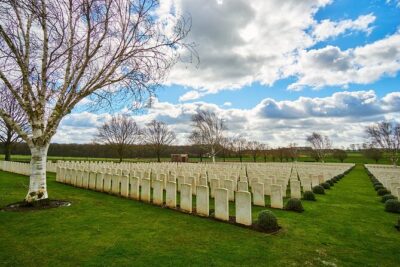
Tyne Cot Cemetery is given about 45 minutes, and this is likely to be the most visually imposing stop. It is the largest Commonwealth War Graves Commission cemetery in the world, with about 12,000 soldiers buried there. Only around 3,000 have names.
Those numbers are difficult to grasp until you are among the rows. The cemetery does not tell one single story. It asks you to think about the thousands of soldiers whose identities were lost, alongside the names that were preserved.
Two Australian and one Canadian Victoria Cross recipients are buried here. If you have a family connection to Australian, Canadian, or British forces, tell the guide in advance. The tour has been adapted for national connections before, including special attention to Canadian service and Australian sites.
Forty-five minutes is enough to walk through the cemetery and hear its main story, but it is not a long, private memorial visit. You may want to use the final minutes quietly rather than filling every moment with explanation. The guide can provide context, but you should also have space to take in the place for yourself.
This is one reason the private format earns its higher price. A fixed group schedule may hurry you through a cemetery. Here, the pace can respond to your family’s needs, although the overall four-hour limit still applies.
More Flanders Fields battlefield days from Ypres:
- Small Group Ypres Remembrance Day Filled With War History
★ 5.0 · 31 reviews - From Ypres, The Christmas Truce to Passchendaele Ypres Based WW1 private tour
★ 5.0 · 29 reviews - In Flanders Fields and Passchendaele Grand Tour
★ 5.0 · 25 reviews - From Ypres: WWI Battlefields Private Tour
★ 5.0 · 25 reviews
Saint Julien and the first gas attack
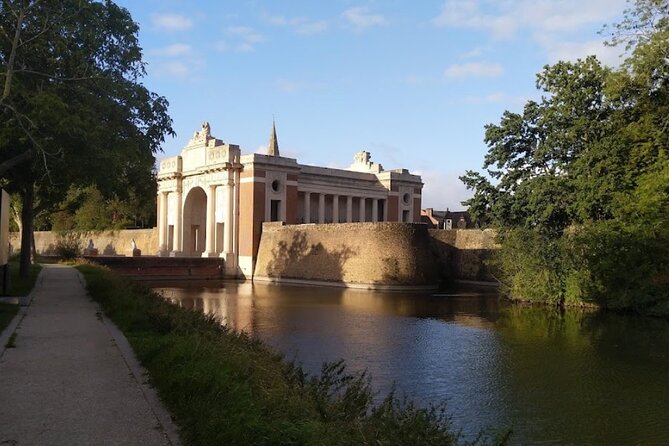
Saint Julien Memorial is a shorter stop, about 15 minutes. The subject is anything but minor: the first German chlorine gas attack of the First World War, launched on April 22, 1915, against French soldiers.
You will also hear how Canadian troops held the line as the gas cloud moved across the front. The memorial gives the guide a place to explain the shock of chemical warfare and the pressure placed on soldiers who had little warning and few defenses.
Because the stop is brief, expect a concentrated account rather than a long walk. It works as a bridge between the cemetery at Tyne Cot and the medical and literary story at Essex Farm.
This part of the tour is especially useful for Canadian visitors, but it also adds essential context for anyone trying to understand how the conflict changed during its early years. The guide can place the attack within the wider Ypres battles rather than presenting it as an isolated event.
Essex Farm and the poem behind the poppy
Essex Farm Cemetery is allotted about 30 minutes. The site served as a hospital station, and it is associated with Lieutenant Colonel John McCrae, who composed In Flanders Fields there.
That connection gives the stop a different tone. At Tyne Cot, the focus is the scale of death. At Essex Farm, the focus shifts to care, grief, writing, and remembrance. McCrae’s poem helped make the red poppy an enduring symbol of the First World War.
The site also helps you see that battlefield history is not limited to the front line. Medical posts, burial grounds, poems, and later memorial traditions all form part of the story.
Thirty minutes is a sensible amount of time for a final stop. By this point, you will have seen trenches, a major cemetery, and a memorial to gas warfare. Essex Farm leaves you with a cultural and personal link rather than another account of troop movement.
The guide’s use of family history
The strongest feature of this experience is the possibility of making the tour personal. If you have a grandfather, great-grandfather, uncle, or other relative who served in the area, send the guide the available details before the tour.
Several tours have included research into individual soldiers. That can mean identifying where a relative fought, connecting a regiment to particular battles, or showing how the person’s service fitted into the Ypres front. One family received information about a soldier’s second Military Medal, while another followed an ancestor through several battles.
You should bring whatever you have: a name, regiment, service number, dates, or service record. The more precise the information, the easier it is for the guide to explore a connection. Do not assume every family story can be confirmed in four hours, but the guide may be able to add useful direction and meaning.
This personal research is not a minor extra. It changes the tour from a general introduction into a family visit. It also explains why the private arrangement is more useful than a standard sightseeing circuit for people tracing military ancestors.
How the pacing and transport affect the day
The tour lasts about four hours and is offered in the morning or afternoon. Pickup is available at Ypres train station, or you can arrange collection at a local hotel or bed-and-breakfast. If your accommodation is not listed, you are asked to send its name.
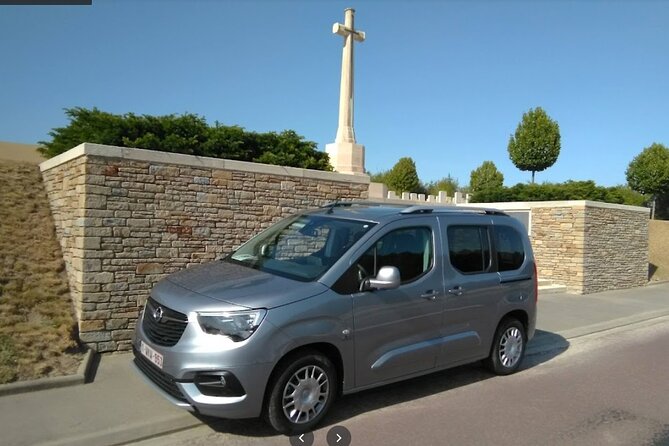
The vehicle is described in the tour information as a comfortable hybrid SUV. With up to four people, that makes the transfer between sites easier than arranging separate transport or trying to navigate the battlefields yourself.
The route includes five stops, with roughly 175 minutes assigned to visits before allowing for driving and transitions. That is a well-filled half day. You should expect a steady pace, but not a rushed race from one monument to the next.
The guide has also helped with altered pickup and drop-off points, luggage, lunch suggestions, and train connections. One practical tip is to ask about buying freshly made sandwiches for a train journey afterward. That sort of help is valuable if Ypres is part of a larger Belgium or France itinerary.
The tour is offered in English. Most people can participate, and service animals are allowed. No special level of fitness is stated, but walking at cemeteries and trench sites may not suit everyone equally. If you have a recent injury or walking restriction, tell the guide before the tour. The private format allows the pace and stops to be adjusted more easily.
Is the $399.25 group price good value?
The price is $399.25 per group of up to four people, not per person. For four people, that works out to roughly $100 per person. For two people, the individual cost is higher, but the private vehicle, pickup, guide, and four-hour service remain the same.
Admission is included at Sanctuary Wood Museum. The other listed stops have no admission charge. The real value is therefore not in bundled tickets. It is in transport, route planning, local interpretation, and the chance to shape the visit around your interests.
I think the cost makes the most sense for a family group, especially one with an ancestor connected to Ypres. It is also a sound choice if you are arriving by train and do not want to organize battlefield transport yourself.
A couple traveling together may need to compare the price with a larger shared excursion. The private setting is more expensive, but it buys time for questions and personal research. If you are mainly looking for a quick overview and do not care about the guide’s input, a private four-hour tour may be more than you need.
Who should book this Ypres battlefield tour?
I would recommend it most strongly to:
- Families tracing a First World War ancestor
- Visitors from Canada, Australia, Britain, or New Zealand seeking national connections
- First-time visitors who want the main Ypres sites explained in a clear order
- People arriving by train who need pickup and return assistance
- Families with children who benefit from a flexible pace
- Anyone who prefers private questions over a fixed group script
You should think twice if you want a full-day study of the Ypres front. Four hours cannot cover every cemetery, battlefield, museum, or memorial. It gives you a strong foundation, then leaves you to explore further if you have more time in Ieper.
My verdict on the private Ypres tour
I would book this tour if you want more than a list of military sites. Soren and Sabine bring local knowledge, maps, photographs, and a willingness to connect the battlefield to your own family story. The route covers five important places without pretending that four hours can explain everything.
The best reason to choose it is the combination of personal attention and historical context. The main caution is simply the limited duration. If you have only half a day in Ypres, this is a practical and thoughtful way to use it. If you have a full day or several days, treat this as your starting point and leave time for further visits.
FAQ
How long is the Ypres battlefield tour?
The tour lasts approximately four hours.
How much does the private tour cost?
The price is $399.25 per group of up to four people.
Where can pickup take place?
Pickup is available at Ypres train station or at hotels and bed-and-breakfasts in Ypres. If your accommodation is not listed, you can send its name to arrange pickup.
Is the tour offered in English?
Yes. The tour is offered in English.
Which sites are included?
The route includes Hill 60, Sanctuary Wood Museum, Tyne Cot Cemetery, Saint Julien Memorial, and Essex Farm Cemetery.
Is admission included?
Admission to Sanctuary Wood Museum is included. The listed admission for Hill 60, Tyne Cot Cemetery, Saint Julien Memorial, and Essex Farm Cemetery is free.
Can the tour focus on a family member who served in the war?
Yes. You can provide service details before the tour so the guide can research relevant battlefields and make the visit more personal.
Is this a private activity?
Yes. Only your group participates, with a maximum group size of four people.
Can I cancel the booking?
You can cancel for a full refund up to 24 hours before the experience start time. Cancellations or changes made less than 24 hours before the start time are not accepted for a refund.
Just added around Ypres
- Discover Tournai while playing! Escape game – The alchemist★ 4.0 · 3 reviews
- From LIlle or Bruges, Christmas Truce to Passchendaele Ypres 1 day WW1 private★ 5.0 · 5 reviews
- In Flanders Fields and Passchendaele Grand Tour★ 5.0 · 25 reviews
- PRIVATE Australian Western Front Battlefields 3-Day Tour Ypres to Amiens★ 5.0 · 3 reviews
- e-Scavenger hunt Ypres: Explore the city at your own pace★ 4.5 · 6 reviews
- From Ypres, The Christmas Truce to Passchendaele Ypres Based WW1 private tour★ 5.0 · 29 reviews
- Full Day Canadian WW1 Vimy and Somme Battlefield Tour from Ypres★ 5.0 · 6 reviews
- From Ypres 4hr Christmas Truce and Monster Mines of Messines PRIVATE Tour★ 5.0 · 5 reviews
WWI Battlefield Tours, compared.
Great War Flanders Fields Minibus Tour w/ Lunch
Read our review →
Flanders Fields Remembrance Tour from Brussels
Read our review →
In Flanders Fields and Passchendaele Half Day Morning Tour
Read our review →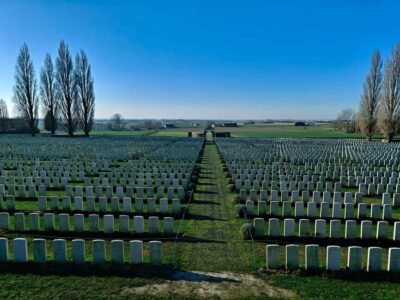
An exploration of the deadly salient battlefields
Read our review →
Small Group Ypres Remembrance Day Filled With War History
Read our review →Browse the lists this tour appears in