
Reviewed · WWI BATTLEFIELD TOURS
Flanders Fields Remembrance Tour from Brussels
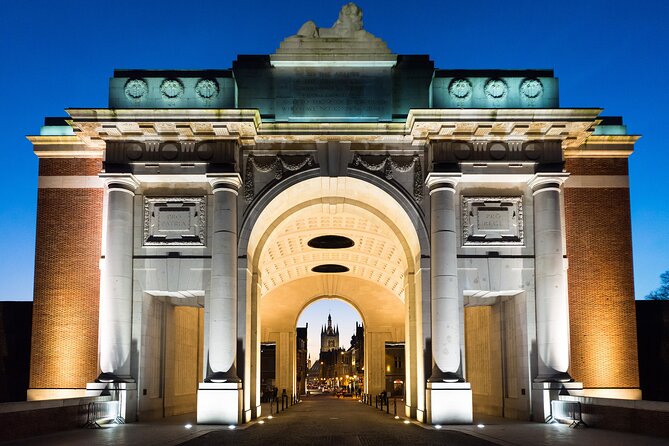
The most moving part of this full-day outing comes at the end, when you gather beneath Ypres’ Menin Gate for the Last Post Ceremony. After a day among cemeteries, bunkers, museums, and old battlefields, the short evening tribute gives the First World War a quiet human focus.
I like the way the tour links major sites instead of leaving you to piece them together by car or bus. I also like the guides, especially Diederik, Dietrich, and Stefan, whose clear storytelling helps explain why places such as Tyne Cot, Essex Farm, and Hill 60 matter. The main drawback is simple: this is a very long day, often lasting 12 to 13 hours, with plenty of time spent getting on and off the coach.
Key points to know before booking
- The day begins at 9:15 am in central Brussels and ends at Brussels Central after the evening ceremony.
- Vladslo’s Grieving Parents sculpture is one of the tour’s most powerful sights.
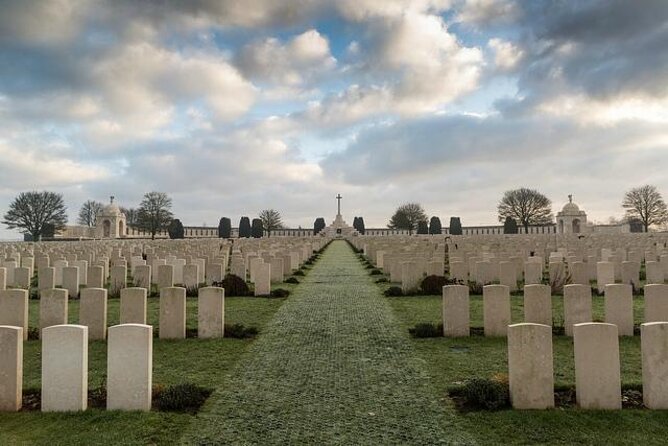
- Tyne Cot Cemetery brings the scale of the losses into sharp focus, with about 35,000 graves and names.
- The In Flanders Fields Museum adds useful context before you visit more battlefield sites.
- Ypres and the Menin Gate ceremony provide free time, dinner, and the emotional close of the day.
- Comfortable shoes, rain protection, and some cash are sensible choices.
Why this Brussels tour works for a Flanders Fields visit
Flanders Fields is spread across a wide area of western Belgium. You can visit some sites independently, but doing so takes planning, a car, and a firm grasp of the geography. This tour handles the driving and gives you a guide to connect the places into one story.
The route focuses on the Ypres Salient and nearby sites tied to German, Belgian, Canadian, British, Australian, and other Commonwealth forces. You will not see every First World War memorial in the region, but you will get a strong one-day introduction to the fighting, the cemeteries, and the way the war remains part of local life.
The $113.72 price is reasonable if you value the transport and guiding. Your day includes an air-conditioned coach and a professional multilingual guide, with no separate admission charge listed for the stops. You still need to pay for lunch and dinner, and the long hours mean the value depends heavily on your interest in military history.
The group can reach up to 100 people, so this is not a small, intimate battlefield walk. The upside is a large touring coach and a guide using a microphone or radios when needed. The tradeoff is that some stops may feel tightly timed, especially when the route includes many sites and a fixed evening ceremony.
More Flanders Fields battlefield days from Brussels:
- Private World War I Battlefield Tour from Brussels to Flanders
★ 5.0 · 8 reviews - Historic Ypres WWI Sites – Tour from Brussels
★ 5.0 · 6 reviews - Flanders World War I Battlefields Private Tour from Brussels
★ 4.5 · 4 reviews
Vladslo and the sorrow of Käthe Kollwitz
Your first stop is the German Military Cemetery at Vladslo. It is a quiet place, and the mood is set by Käthe Kollwitz’s sculpture Grieving Parents, created after the artist lost her son Peter in the war.
The figures do not glorify battle. They express private grief, which is why the work can feel more direct than a grand military monument. You have time to walk through the cemetery and take in the dark stone markers and subdued setting.
This stop is especially useful because the tour does not present the war only through an Allied lens. You begin at a German cemetery, then move through Belgian and Commonwealth sites. That wider view makes the day more thoughtful and less like a simple roll call of victories and defeats.
Keep your expectations practical. Vladslo is a reflective stop, not a place filled with displays or activities. You will get the most from it if you are willing to walk quietly and listen to the guide.
Diksmuide and the Brooding Soldier
The route continues to Diksmuide, where you see the monument of the Brooding Soldier. It honors the sacrifice of roughly 2,000 Canadian soldiers during the first German gas attack.
The monument helps explain how chemical warfare changed the nature of the fighting. It also brings Canada’s role into view, something that matters to visitors tracing a family connection or studying the Commonwealth armies.
The visit is brief and outdoors. You will want a coat or rain protection, since the weather can change quickly in this part of Belgium. The tour runs in wet conditions unless severe storms, flooding, or other extreme weather make travel unsafe.
The In Flanders Fields Museum puts names to events
After a short lunch break, you visit the In Flanders Fields Museum. This is one of the most useful parts of the day because it gives you the basic framework needed to understand the sites that follow.
The museum explains how the war developed, what the front was like, and how soldiers lived and fought in poor conditions. The exhibits help turn names such as Passchendaele, Ypres, and Hill 60 into specific places rather than isolated points on a map.
Your guide remains important here. Guides such as Diederik, Dietrich, and Stefan have been praised for making the military story easy to follow without losing sight of the people involved. Stefan, in particular, is described as setting clear expectations and explaining the material in a teacherly way.
Time can be the issue. With so many stops ahead and the evening ceremony fixed at 8 pm, you may not have as long in the museum as you would on a museum-only visit. If museum displays are your main interest, you might prefer a shorter tour centered on Ypres. If you want the museum as part of a wider day, the visit does its job well.
Lunch is not included in the tour price. Plan to buy food during the break, and carry a small amount of cash. One practical point is worth remembering: the schedule is full, so do not count on a long, leisurely restaurant meal.
A few more Brussels half days worth weighing up
- Brussels: Atomium Entry Ticket with Design Museum Ticket
★ 4.4 · 9,254 reviews - From Brussels: Guided Day Trip to Bruges and Ghent
★ 4.6 · 8,353 reviews - From Brussels: Bruges & Ghent Day Tour – 2 Fairytale Cities
★ 4.7 · 8,242 reviews - Choco-Story Brussels: Chocolate Museum Entrance with Tasting
★ 4.3 · 4,883 reviews
Passchendaele shows how battlefields become ordinary places
At Passchendaele, you see an area associated with one of the war’s most punishing campaigns. Today, the town is quiet and ordinary, which creates a sharp contrast with the mud, shellfire, and huge casualties connected with the name.
The stop lasts about 30 minutes. That is enough for an introduction and some explanation, but not enough for a long independent exploration. Your guide helps you picture how the front moved and why the ground mattered.
For many people, this is where the day’s central idea becomes clear: the battlefield is no longer visibly destroyed in the way you might expect. Roads, homes, and fields have returned to daily use. The absence of obvious ruins does not mean the past has disappeared.
Tyne Cot makes the numbers human
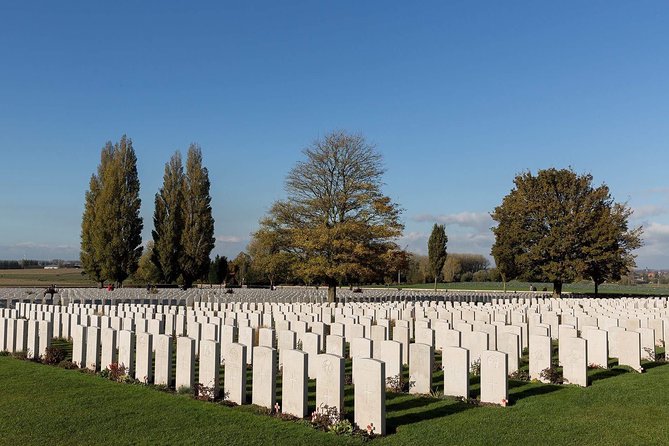
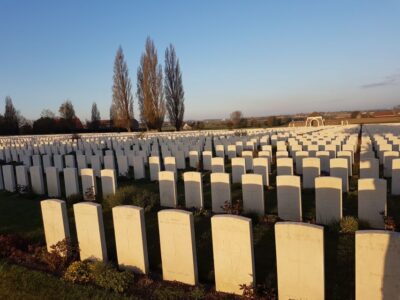
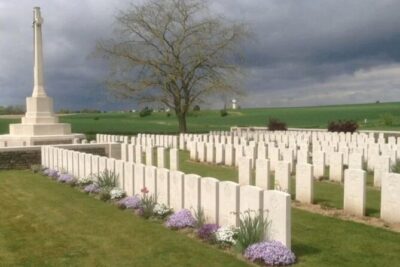
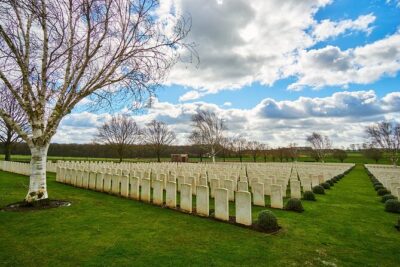
Tyne Cot Commonwealth War Graves Cemetery is one of the day’s essential stops. It is described as the largest Commonwealth cemetery in the world, and its scale is difficult to absorb at first. About 35,000 graves and names record soldiers who died in the fighting.
The cemetery is carefully kept, but the setting is not showy. The rows and memorial walls create a sense of order that contrasts with the chaos of the war. You can walk at your own pace for part of the visit, while the guide provides the historical setting.
This is one of the places where a family connection can make the day especially personal. You may not find a relative’s name, but the cemetery gives you a clear sense of the age and scale of the soldiers being remembered.
The stop also explains why a coach tour has value here. Tyne Cot is outside Ypres, and reaching it without a car requires more effort and careful connections. The tour gets you there efficiently, even if the time on site feels limited to visitors who want to study every inscription.
Essex Farm connects a field hospital with a famous poem
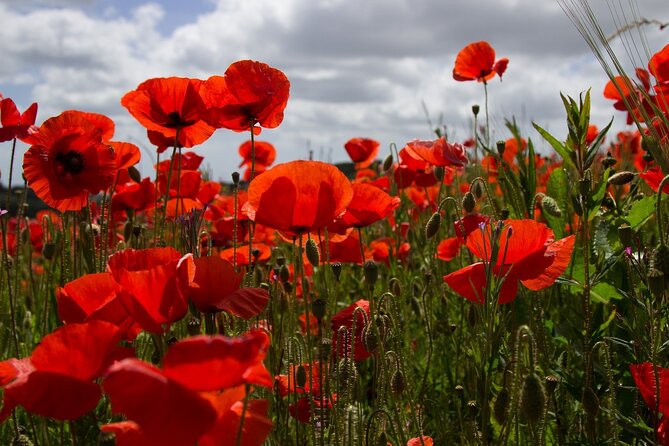
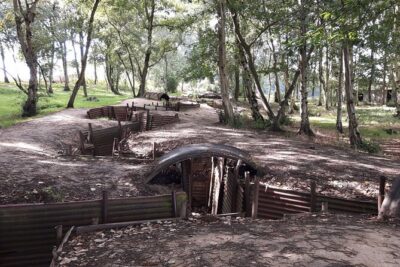
At Essex Farm Cemetery, you see the dressing station and bunkers associated with Dr. John McCrae, who wrote In Flanders Fields. The visit lasts about 15 minutes, so this is a compact stop rather than a long museum visit.
The place matters because it links battlefield medicine, personal loss, and one of the best-known remembrance poems of the war. The bunkers help you understand the rough conditions in which wounded men were treated.
You will want to listen closely here. The short stop can feel rushed if you want to read every marker, but the guide’s explanation gives the site its meaning. It is also a reminder that the war was not only fought in trenches. Medical stations, cemeteries, roads, and villages were all part of the front.
Hill 60 adds the underground story
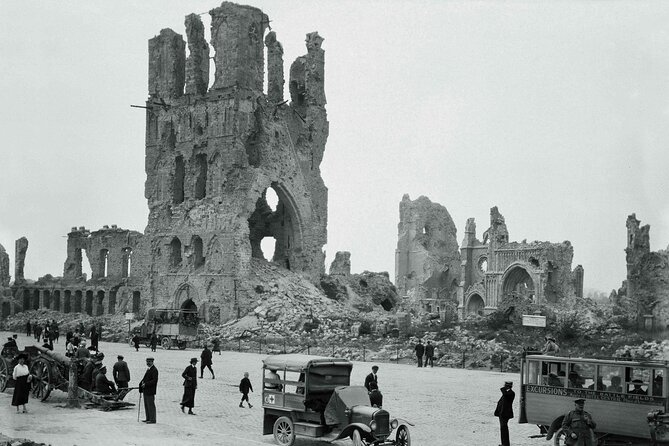
The route also includes Hill 60, a strategic position associated with tunnels and underground fighting. This stop brings a different type of warfare into the picture, since the battle was not limited to soldiers facing one another across open ground.
Hill 60 helps vary the day. After cemeteries and museum displays, the tunnels and strategic ground show how armies tried to gain even small advantages. Conditions could be wet, muddy, and dangerous, and the site gives the guide a chance to explain how the position fitted into the wider Ypres fighting.
The exact amount of time here can depend on the day’s traffic and schedule. The tour covers many locations, so you should expect an overview rather than a long archaeological visit.
Ypres gives you time to pause before the ceremony
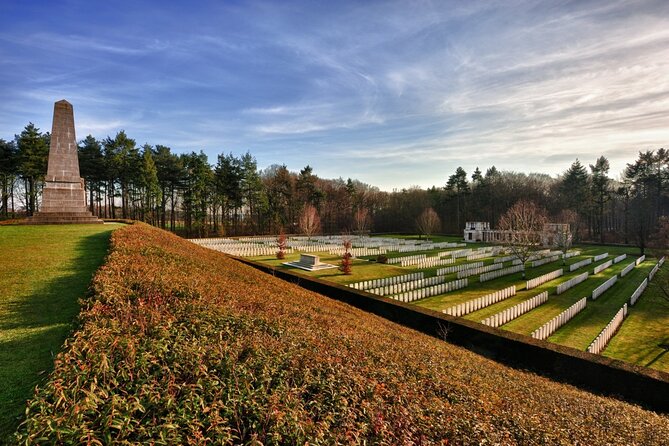
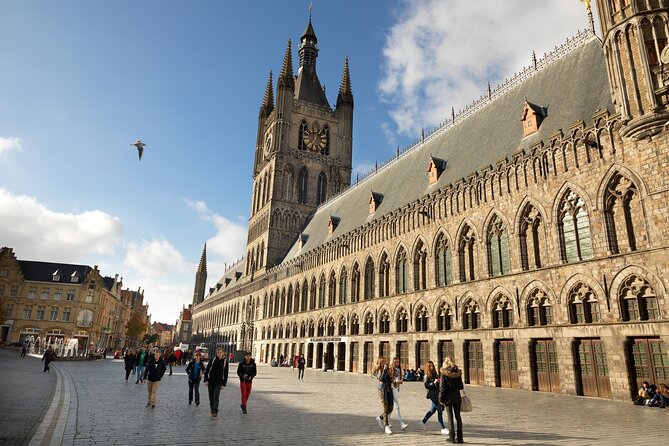
Late in the day, you reach Ypres. You have independent time to explore the town and arrange dinner before meeting the guide again at the agreed time.
This break is important. A 13-hour history tour can become tiring, and Ypres gives you a chance to sit down, eat, and absorb the day without a guide speaking. The town is also a pleasant contrast to the quiet cemeteries and battlefield stops.
Dinner is not included. Pay close attention to the meeting instructions, because the Last Post Ceremony takes place at a fixed time. If you wander too far or eat too slowly, you risk turning a relaxed break into a dash.
Some schedules may include extra driving to collect or drop off participants in Bruges. That can add a considerable amount of road time. The tour operator does not provide hotel pickup in Brussels, so you should arrive at the central meeting point at Bd de Berlaimont 18 by 9:15 am.
The Menin Gate Last Post Ceremony closes the day
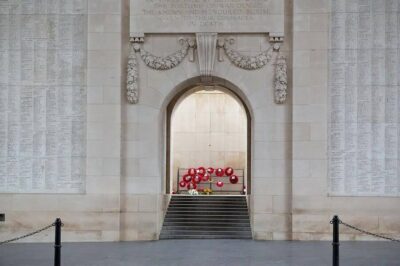
The Last Post Ceremony at Menin Gate is the emotional finish. It is held daily at 8 pm as a tribute to Commonwealth soldiers and officers who went missing after battle.
The ceremony itself is not long, but its setting matters. The gate carries the names of missing soldiers, and the simple service creates a quiet pause after the day’s movement. Some evenings may include musical performances, but that is not guaranteed.
You should not treat this as a theatrical finale. It is a solemn act of remembrance, and visitors are expected to behave respectfully. The ceremony may last about 30 minutes in the schedule, although the central Last Post portion itself can be much shorter.
Afterward, you return to the coach for the drive to Brussels. This is why the tour can run until late evening. You are not simply visiting Ypres during the day and heading back; you are staying for a ceremony that begins at 8 pm.
What to bring for a long day outdoors
You will spend time walking through cemeteries and outdoor sites, then return to the coach several times. Comfortable shoes are essential, and waterproof clothing is a smart choice even when the morning forecast looks fine.
Bring a raincoat, poncho, or umbrella. The tour runs in ordinary rain, and cancellations are reserved for extreme conditions such as heavy storms or flooding.
A small amount of cash is useful for food and other purchases. You can bring luggage on the large coach, and the vehicle is air-conditioned. Pets are not allowed onboard.
The tour is not recommended for anyone with a disability or difficulty walking. You need a moderate level of physical fitness, since the day involves repeated boarding, walking, and standing. It is not a strenuous hike, but it is tiring.
Free cancellation is available up to 24 hours before the start time for a full refund. Changes made within 24 hours are not accepted, and the minimum group requirement means the operator may offer another date or a full refund if the tour cannot run.
Who should book this Flanders Fields day trip?
I would choose this tour if I had limited time in Belgium and wanted a guided introduction to the Ypres Salient without renting a car. It suits history students, family researchers, Canadians and Commonwealth visitors, and anyone who wants the Menin Gate ceremony included in the same day.
It also works well if you prefer a guide to explain the sequence of battles and the role of each cemetery. Diederik, Dietrich, and Stefan are among the guides associated with especially strong explanations, though the guide assigned to your departure can vary.
I would think twice if you dislike long coach rides, fixed schedules, or frequent stops. Families with children can manage it, but the day may be demanding, particularly for younger children. One useful compromise is to treat the tour as a serious history day rather than a casual sightseeing trip.
Should you book it?
Book this tour if you want the widest useful sweep of Flanders Fields in one day, with transport from Brussels and the Last Post Ceremony built in. The combination of Vladslo, Tyne Cot, Essex Farm, Hill 60, Ypres, and the museum gives you far more context than a short cemetery visit.
Skip it if you want a relaxed day, a small private group, or long unhurried time at one site. The route is ambitious, and detours or traffic can stretch an already long schedule.
For the price, the strongest value is the guide’s interpretation and the difficult-to-reach sites. The day is tiring, but if you accept that tradeoff, it offers a respectful and well-connected way to remember the people who fought and died in Flanders.
FAQ
Where does the tour start?
The tour starts at Bd de Berlaimont 18, 1000 Bruxelles, Belgium. The scheduled departure time is 9:15 am.
Where does the tour finish?
The tour ends at Brussels Central, at Carr de l’Europe, 1000 Bruxelles, Belgium.
How long does the tour last?
The planned duration is about 13 hours. The late finish is due to attending the 8 pm Last Post Ceremony in Ypres.
Is lunch included?
No. Lunch is not included, and dinner in Ypres is also at your own expense.
What is included in the price?
The tour includes an air-conditioned vehicle and a professional multilingual guide. Radios and earphones are provided when necessary.
Is hotel pickup available?
No. You must travel to the stated central Brussels meeting point for departure.
Which languages are available?
Tours can be conducted in English, French, or Spanish. This experience is offered in English.
What should I bring?
Bring comfortable walking shoes, weather-appropriate clothing, rain protection, and some cash. The operator also advises carrying identification, although there are no border controls once you are within the Schengen Area.
Just added around Brussels
- Standard vehicle from Brussels airport to city of Antwerp★ 5.0 · 4 reviews
- Luxury Minivan from Brussels airport to the city of Brussels★ 4.0 · 7 reviews
- Transfer Brussels Airport (BRU) –> City Center 7 PAX (ONE WAY)★ 5.0 · 7 reviews
- Luxury vehicle from Brussels airport to the city of Brussels★ 4.0 · 5 reviews
- Transfer Brussels Airport –> Brussels MB V Class 7 PAX (ONE WAY)★ 5.0 · 4 reviews
- Transfer Brussels Airport –> City MB E Class 1-3 PAX (ONE WAY)★ 5.0 · 6 reviews
- PRIVATE MPV TRANSFER FROM/TO BRUSSELS AIRPORT (Max 6 pax) ONE-WAY★ 5.0 · 4 reviews
- Waterloo Private Battlegrounds Tour with Lion Hill★ 4.5 · 9 reviews
WWI Battlefield Tours, compared.
Great War Flanders Fields Minibus Tour w/ Lunch
Read our review →
In Flanders Fields and Passchendaele Half Day Morning Tour
Read our review →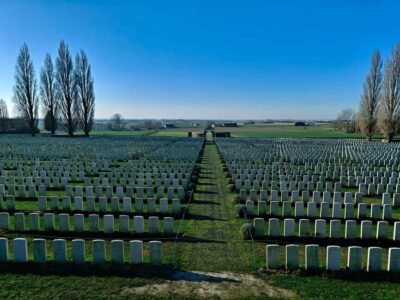
An exploration of the deadly salient battlefields
Read our review →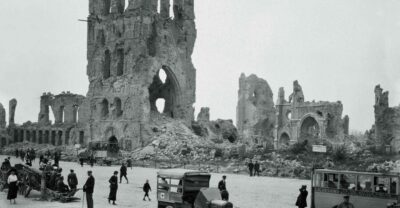
Small Group Ypres Remembrance Day Filled With War History
Read our review →Browse the lists this tour appears in