
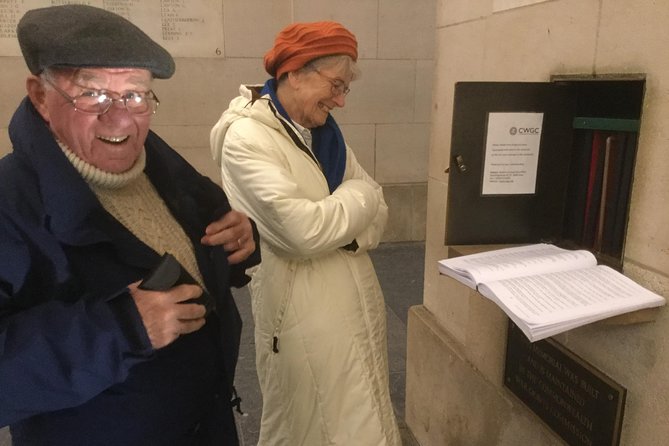
Reviewed · WWI BATTLEFIELD TOURS
From LIlle or Bruges, Christmas Truce to Passchendaele Ypres 1 day WW1 private
At Messines Ridge, the past feels unusually close. You can see mine craters, walk near the scene of the Christmas Truce, and hear how the ground later became part of the great Australian advance toward Passchendaele. This is not a quick photo stop. It is a full day of battle sites, cemeteries, memorials, and human stories.
I like the private format, which lets Søren adjust the day to your interests, including family links to the Ypres Salient. I also like the easy hotel pickup from Bruges, Lille, Ghent, and nearby towns. The main drawback is the price, $532.32 per person, and the fact that lunch is not included.
Key points to know before booking
- Messines Ridge links three powerful stories: the 1917 mine attack, the Christmas Truce, and the crypt where Adolf Hitler was treated for wounds.
- The Australian connection is strong: Polygon Wood, the Menin Road, Hill 60, and the route toward Passchendaele all feature prominently.
- Søren is the named guide: expect detailed explanations, thoughtful answers, and room to shape the day around your interests.
- Tyne Cot is the emotional center: about 12,000 Commonwealth soldiers are buried there, while thousands more names appear on the memorial to the missing.
- Sanctuary Wood offers original trenches: this is one of the most direct ways to see the physical conditions of the Western Front.
- The day runs about nine hours: pickup begins at 9:00 a.m., with bottled water included and lunch left to you.
A full day across the Ypres Salient
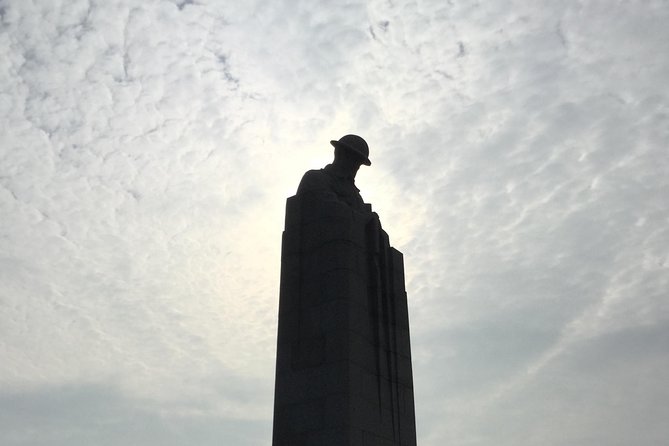
The Ypres area rewards a focused day. The old front line runs across fields, villages, woods, cemeteries, and roads that look calm now. Your guide connects those ordinary places to the battles fought there from 1914 to 1918.
This private tour covers a lot of ground, so the vehicle time matters. You are not spending the whole day walking between sites. Instead, you move through the region in the line of the Australian advance, stopping where the terrain and surviving remains help explain what happened.
I would allow the full nine hours rather than treating this as a short excursion from Bruges or Lille. There are several brief stops, but the day gains meaning from seeing how they fit together. You are not just collecting famous names. You are following a military story from Messines to Passchendaele, then returning to Ypres for remembrance.
Søren is the guide named for this experience. The strongest part of his role is the context he brings to each place. You can ask about battle tactics, Australian units, family connections, or the wider story of the First World War. If your interest centers on a particular soldier or regiment, tell him before or during the tour so the private format can work in your favor.
More WWI Battlefield Tours in Ypres
- From IEPER Private 4-hour Tour of the Ypres Battlefield
★ 5.0 · 154 reviews - In Flanders Fields and Passchendaele Half Day Morning Tour
★ 5.0 · 117 reviews - Ypres: An exploration of the deadly salient battlefields
★ 5.0 · 76 reviews
Messines Ridge and the Christmas Truce
The day begins at Messines Ridge, with about two hours here. This is one of the most rewarding stops because several different layers of the war meet in one area.
You hear the story of the Battle of Messines and see the mine craters left by the huge underground explosions. These craters give you a physical sense of the scale of the attack. They are not just markers on a map. They help explain how underground tunneling became part of the battle plan.
The stop also covers the Christmas Truce. This episode is often reduced to a sentimental tale, but the setting helps place it within the wider war. You are near the ground where opposing soldiers briefly set aside fighting during Christmas in 1914, before the conflict hardened into years of industrial warfare.
Another unusual detail here is the crypt where Adolf Hitler was treated for wounds. The site adds a later personal connection to a much earlier battle zone, though the main focus remains the First World War fighting around Messines.
Two hours is a useful amount of time, since there is enough here to examine the ground rather than rush through it. If you prefer quiet remembrance to a packed schedule, this may be one of the day’s best sections. The drawback is that the subject matter is broad, so you will want to ask questions if one part interests you more than the others.
Hooge Crater Cemetery and the Menin Road
Hooge Crater Cemetery is a short stop of about 15 minutes. You visit the grave of Pat Bugden VC, who was only 20 when he received the Victoria Cross, and hear about the action connected with his award.
You also stand on the Menin Road, beside the former Australian gun positions used during the assault on Passchendaele. That detail matters because it turns a famous battle name into a real position on the ground. The road was not simply a route on a map. It was part of the movement of troops, artillery, and supplies through a heavily fought area.
The short timing means this is more of a focused pause than a long cemetery visit. I would treat it as a chance to hear the key story, look carefully at the location, and save your longer reflective moments for Tyne Cot or Polygon Wood.
An Australian headquarters and the changing front line
The route includes a stop at the site of an Australian headquarters in September 1917. You also hear about earlier fighting on the same ground in November 1914.
This is a valuable reminder that the Western Front was not one single battle. The same patch of earth could matter at different points in the war, with different units and different objectives. I like this kind of stop because it moves the story beyond famous names and dates.
The exact visit time is not listed, so expect it to be handled as part of the driving route and battlefield explanation. That works well for a private tour, since you can ask Søren to spend more time here if your family history or military interest points in this direction.
More Flanders Fields battlefield days from Ypres:
- From Brussels: Flanders Fields Remembrance Full-Day Trip
★ 4.4 · 65 reviews - Small Group Ypres Remembrance Day Filled With War History
★ 5.0 · 31 reviews - From Ypres, The Christmas Truce to Passchendaele Ypres Based WW1 private tour
★ 5.0 · 29 reviews - In Flanders Fields and Passchendaele Grand Tour
★ 5.0 · 25 reviews
Polygon Wood, bunkers, and the 5th Division monument
At Polygon Wood, you walk through the woods and see concrete bunkers that remained from the fighting in which Australian soldiers captured the area. The tour also visits the cemetery and the Australian 5th Division monument.
This is one of the better stops for understanding how the battle zone looked and felt. Trees, bunkers, graves, and memorials occupy the same general area, allowing you to connect military movement with the cost of the fighting.
The visit lasts about 30 minutes. That is enough for a purposeful walk, though not a slow examination of every feature. Wear practical shoes and expect uneven ground. The information does not promise a long hike, but this is still a battlefield walk rather than a visit that stays entirely beside the vehicle.
For anyone with Australian family connections, Polygon Wood deserves special attention. The monument and the surrounding sites make the Australian role in the campaign more tangible than a general museum display can.
Hill 60 and the mine blown at 3:10 a.m.
Hill 60 brings the story underground. Here you hear about Captain Woodward and the 1st Australian Tunnelling Company, which placed a massive mine beneath the position. The mine was blown at 3:10 a.m. on June 7, 1917, and you see the crater created by the explosion.
The stop lasts about 45 minutes. That gives the story room to breathe, especially if you want to understand why tunneling mattered. The mine was not a minor engineering trick. It was part of a carefully planned attack designed to break a strongly held position.
I find this kind of site especially useful for readers who know the broad outline of the war but have not considered how much fighting took place below ground. Hill 60 adds another dimension to the usual trench story.
The crater is also one of the most memorable physical remains of the day. You can see how a single explosion changed the ground itself. The site may feel less polished than a formal memorial, which is part of its value. It gives you something concrete to look at while Søren explains the operation.
Following the Australian advance to Passchendaele
Between stops, the vehicle follows the line of the Australian advance. This travel time is part of the experience, not dead time. The route helps you see how the different sites relate to one another.
Passchendaele is often used as shorthand for mud, artillery, and enormous losses. A drive through the area lets you understand that the battle unfolded across a broad zone rather than at one isolated point. You see villages and roads that now appear ordinary, while the guide explains their role in the advance.
The private setting is useful here. On a large group outing, everyone may need to follow the same level of detail. With Søren, you can ask him to explain a particular unit, date, or family connection as you move from one place to the next.
Tyne Cot Cemetery and the missing
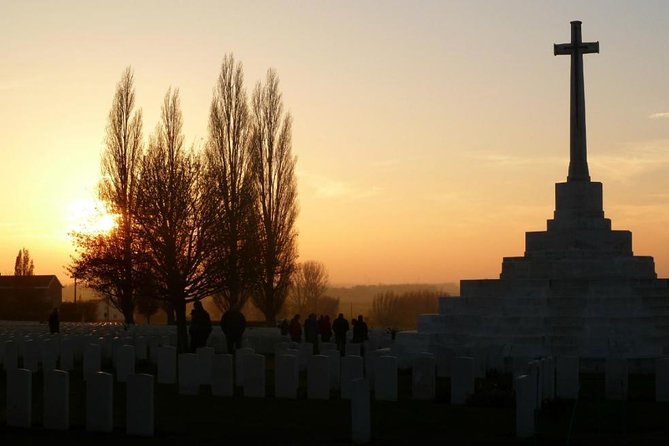
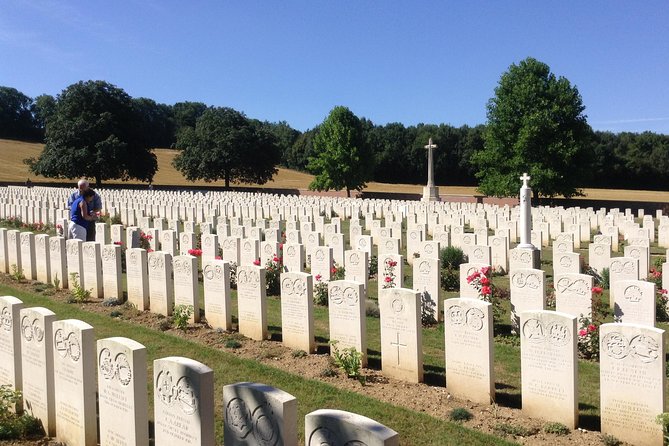
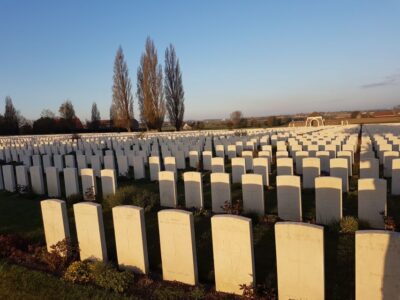
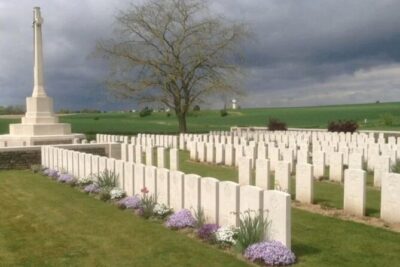
Tyne Cot Cemetery receives about 45 minutes, and it is likely to be one of the most solemn parts of the day. It is the largest Commonwealth War Graves Commission cemetery in the world, with about 12,000 soldiers buried there. Only around 3,000 of those graves have identified names, while the memorial records about 55,000 missing soldiers.
The scale is hard to take in quickly. I recommend resisting the urge to hurry through the rows. Give yourself time to read a few headstones and absorb the wider setting. The numbers matter, but individual names keep the visit personal.
Two Australian Victoria Cross recipients are buried at Tyne Cot, adding another direct link to the Australian story that runs through the day. Søren can explain the military context, but the cemetery also gives you space to pause without a constant stream of information.
Forty-five minutes is a sensible amount of time, though people who want a very quiet cemetery visit may wish for longer. Since this is a private tour, you can raise that preference with the guide.
John McCrae and In Flanders Fields
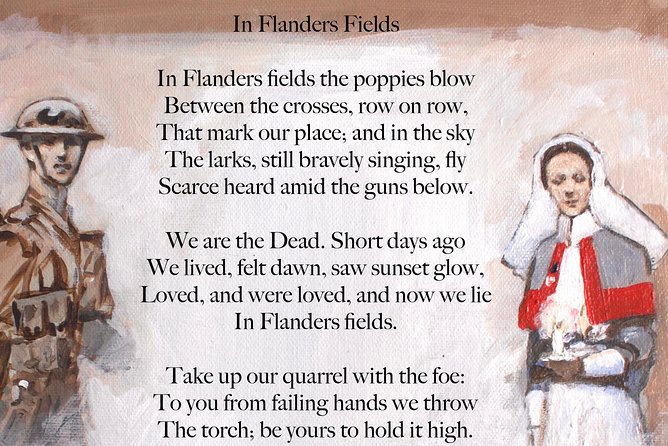
The John McCrae site brings the war into the realm of literature and remembrance. You visit the hospital site where Lieutenant Colonel John McCrae composed In Flanders Fields.
This stop lasts about 30 minutes. It helps explain why the poem became so closely linked with remembrance of the First World War. You are not simply hearing the poem recited in the abstract. You are seeing the place associated with its composition and the medical setting in which McCrae served.
The visit is a good change of pace after the battle sites and cemetery. It also suits readers who are interested in how poetry, memory, and commemoration developed during the war.
The Menin Gate and 55,000 names
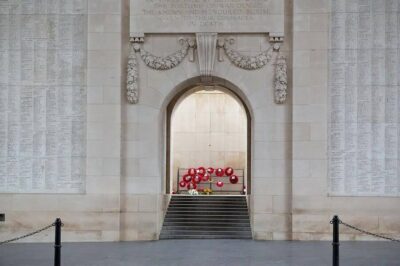
At the Menin Gate Memorial, you hear how the memorial came about and learn about the 55,000 names of missing soldiers listed there. The stop lasts about 20 minutes.
The Menin Gate is one of Ypres’s best-known remembrance sites, but a guide gives the structure more meaning than a quick photograph can. Søren explains why the memorial was built and how the names represent men who have no known grave.
The stop is short, so I would use it as an introduction rather than your only visit to the Menin Gate. One review specifically notes the possibility of staying for the Last Post if timing allows. The tour details do not promise that this will happen, so treat it as a possible bonus, not part of the guaranteed schedule.
The gate also brings you back into the city after a day spent across the surrounding battlefields. That change in setting makes the memorial feel tied to living Ypres rather than isolated from it.
Sanctuary Wood and original trenches
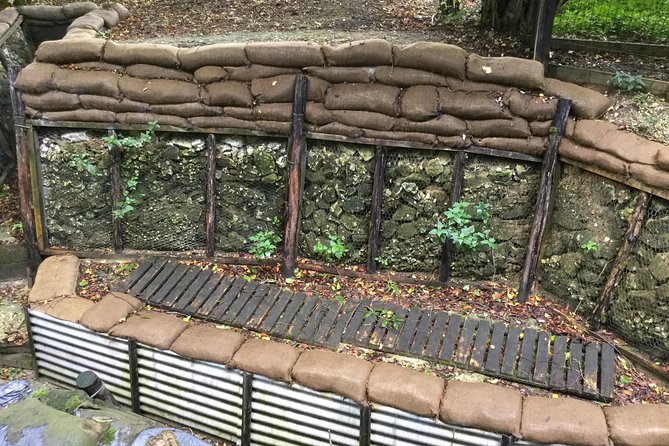
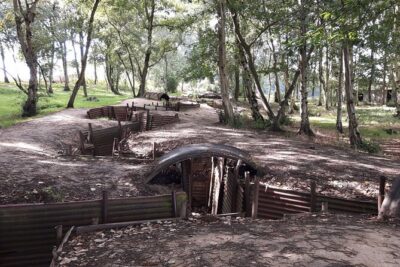
The final listed stop is Sanctuary Wood Museum, with about 40 minutes on site. Its main draw is a set of original First World War trenches.
After hearing about headquarters, artillery, mines, cemeteries, and advances, this is a direct look at the defensive ground where soldiers lived and fought. The original trenches make the physical hardship easier to picture than diagrams or photographs alone.
Admission to Sanctuary Wood is included, unlike the other listed stops, which have no separate admission charge. The museum is a strong finish because it leaves you with the basic structure of trench warfare after the day’s larger military story.
The stop may be less comfortable for anyone who prefers paved, formal sites. You should expect a place built around surviving wartime remains, not a polished indoor museum experience. That roughness is exactly what makes it useful.
Price, pickup, and the practical details
The cost is $532.32 per person. That is a serious price for a day trip, but the value depends on how much you want from the experience.
You are paying for a private day with a guide, not simply transport between memorials. Pickup and drop-off are offered from hotels and bed-and-breakfasts within a 66-kilometer radius of Ypres, with stated pickup options including Bruges, Lille, Ghent Dampoort Station, and Arras. That saves you the trouble of arranging separate transport to the battlefield area.
Bottled water is included. Lunch is not, so plan for that gap in a nine-hour day. The supplied details do not specify a restaurant stop or meal arrangement, so ask about lunch timing when you book.
The start time is 9:00 a.m. Confirmation is sent within 48 hours, subject to availability. The activity is private, meaning only your group participates. Service animals are allowed, and the tour is near public transportation, though the main convenience is the offered vehicle pickup.
Free cancellation is available if you cancel at least 24 hours before the start time. Changes or cancellations made inside that window are not accepted for a refund.
Who should book this Ypres battlefield tour?
I would recommend this tour to anyone who wants a serious introduction to the Ypres Salient without renting a car or piecing together the sites alone. It is particularly well suited to people with Australian military interests, family connections to the region, or a strong interest in the Western Front.
The day also works for a mixed group. One person can focus on the Christmas Truce, another on poetry and remembrance, and another on mines, bunkers, and battle movements. The private setting gives Søren room to answer those different questions.
I would think twice if you want a relaxed sightseeing day with long meals and plenty of free time. Nine hours is a lot, and the subject is emotionally heavy. The cost is also difficult to justify for a solo visitor on a tight budget, although it becomes easier to assess if you are sharing the private experience with family or friends.
Should you book it?
Book this experience if you want the Ypres battlefields explained as a connected story rather than a string of famous names. The combination of Messines Ridge, Hill 60, Polygon Wood, Tyne Cot, John McCrae’s site, the Menin Gate, and Sanctuary Wood gives you a strong sense of both combat and remembrance.
The best reasons to choose it are the private format, the broad Australian focus, the convenient pickup from Bruges or Lille, and Søren’s ability to answer detailed questions. The main cautions are the high per-person price, the long day, and the need to arrange your own lunch.
If you have a family name, regiment, or battlefield question, send that information ahead of time. That is where this tour has the most potential to become personal rather than simply informative.
FAQ
How long does the Ypres battlefield tour last?
The tour lasts approximately nine hours, with pickup starting at 9:00 a.m.
Where can pickup be arranged?
Pickup is offered from hotels or bed-and-breakfasts within a 66-kilometer radius of Ypres. Listed options include Bruges, Lille, Ghent Dampoort Station, and Arras.
Is this a private tour?
Yes. Only your group participates in the activity.
Is lunch included?
No. Lunch is not included in the tour price.
Is admission to the sites included?
The listed stops do not charge a separate admission fee, and admission to Sanctuary Wood Museum is included. Bottled water is also provided.
Can the tour be adapted for family history?
Yes. The tour can be tailored if you have family history connected to the Ypres region.
What is the cancellation policy?
You can cancel for a full refund up to 24 hours before the experience starts. Cancellations or changes made less than 24 hours before the start time are not refunded or accepted.
More 1-Day Tours in Ypres
- From Brussels: Guided Day Trip to Bruges and Ghent
★ 4.6 · 8,353 reviews - From Amsterdam: Bruges Day Trip in English with Boat Option
★ 4.4 · 1,989 reviews - From Amsterdam: Bruges Day Trip in Spanish with Boat Option
★ 4.6 · 1,866 reviews - Luxembourg and Dinant Day Trip from Brussels
★ 4.0 · 1,474 reviews
Just added around Ypres
- In Flanders Fields and Passchendaele Grand Tour★ 5.0 · 25 reviews
- Discover Tournai while playing! Escape game – The alchemist★ 4.0 · 3 reviews
- PRIVATE Australian Western Front Battlefields 3-Day Tour Ypres to Amiens★ 5.0 · 3 reviews
- e-Scavenger hunt Ypres: Explore the city at your own pace★ 4.5 · 6 reviews
- From Ypres, The Christmas Truce to Passchendaele Ypres Based WW1 private tour★ 5.0 · 29 reviews
- Full Day Canadian WW1 Vimy and Somme Battlefield Tour from Ypres★ 5.0 · 6 reviews
- From Ypres 4hr Christmas Truce and Monster Mines of Messines PRIVATE Tour★ 5.0 · 5 reviews
- From Ypres: WWI Battlefields Private Tour★ 5.0 · 25 reviews
WWI Battlefield Tours, compared.
Great War Flanders Fields Minibus Tour w/ Lunch
Read our review →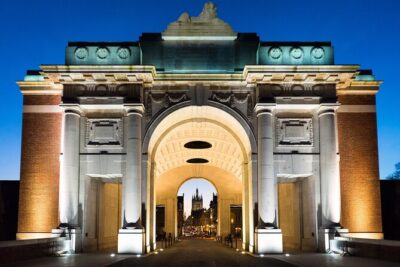
Flanders Fields Remembrance Tour from Brussels
Read our review →
In Flanders Fields and Passchendaele Half Day Morning Tour
Read our review →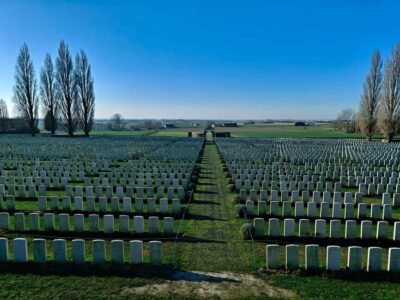
An exploration of the deadly salient battlefields
Read our review →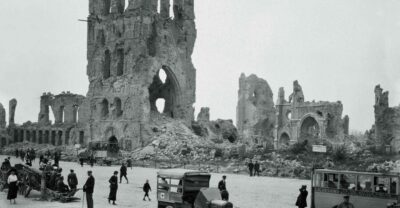
Browse the lists this tour appears in