
Reviewed · WWI BATTLEFIELD TOURS
Ypres: An exploration of the deadly salient battlefields
The most powerful part of this Ypres tour is the way it connects huge wartime events with individual lives. You move from Essex Farm, where the casualty system and John McCrae memorial bring the medical cost of war into focus, to trenches and cemeteries that make the scale of the fighting impossible to ignore. This is history told at ground level, not just from a seat in a museum.
I like the careful mix of sites: Yorkshire Trench shows the cramped reality of trench warfare, while Tyne Cot and Langemark explain how different nations remembered their dead. I also like the small van and seven-person limit, which gives you room to ask questions and, in some cases, adjust the route for family connections.
The main consideration is pace. Three and a half hours passes quickly across six major stops, and this is an emotionally serious outing rather than a casual drive through the Belgian countryside. Bring comfortable shoes, expect some walking, and tell the guide before departure if you have a particular relative or regiment you want to trace.
Key points to know before booking
- Six important battlefield sites in 210 minutes: Essex Farm, Yorkshire Trench, Langemark, the Brooding Soldier, Passchendaele, and Tyne Cot.
- Small groups make a difference: The dark blue Mercedes van carries no more than seven participants.
- Both sides of the conflict are represented: You visit Commonwealth cemeteries and the German cemetery at Langemark.
- Personal stories are part of the guiding: Kim has researched family connections and has made short detours to help people locate relatives.
- The tour explains more than battles: Expect discussion of the lead-up to the First World War, casualty recording, medical care, memorial design, and post-war remembrance.
- Good value at $88: Pickup, drop-off, transport, and an English-speaking guide are included.
Why this Ypres battlefield tour works
Ypres is surrounded by places where the First World War is not an abstract chapter in a textbook. Roads cross former front lines, farm fields cover old battle positions, and white cemetery markers appear in places that can look peaceful today. A good tour has to explain what happened without turning every stop into a list of dates. This one is built around that challenge.
Kimberley Wright leads many departures, while Lucas and Roger also guide some tours. The guiding style is consistently personal and clear: maps, wartime photographs, individual stories, and plain explanations help you understand how the fighting affected soldiers and Belgian civilians. Kim has also been praised for adjusting her explanations to the people in the van, including visitors from Australia, New Zealand, Spain, and the United States.
That matters because the subject can become confusing fast. The same area may be described by a modern town name, a wartime village name, a military operation, and a cemetery name. A guide who can connect those points saves you hours of reading and helps you see why each place matters.
The group limit of seven is another real advantage. You are not being moved through the sites in a large crowd. You can ask about a family name, pause at a grave, or request clarification without trying to catch a guide’s voice from the back of a coach.
More WWI Battlefield Tours in Ypres
- From IEPER Private 4-hour Tour of the Ypres Battlefield
★ 5.0 · 154 reviews - In Flanders Fields and Passchendaele Half Day Morning Tour
★ 5.0 · 117 reviews - From Brussels: Flanders Fields Remembrance Full-Day Trip
★ 4.4 · 65 reviews
Essex Farm and the human cost of the casualty system
The first major stop is Essex Farm Cemetery, where you spend about an hour. This is a useful opening because it places the human cost of the war before the larger military story takes over.
The tour explains the casualty system and the medical setting connected with the site. You also visit the John McCrae memorial, associated with the Canadian doctor and poet whose wartime experience inspired In Flanders Fields. The point is not simply to recall a famous poem. It is to understand the chain of care, recording, burial, and remembrance that followed a soldier’s death.
Give yourself time here. The cemetery is not just a backdrop for a quick photograph. The guide may use personal stories and photographs to show how people lived, served, suffered, and died in the Ypres area. You will also hear about the post-war years and the work required to identify and commemorate the dead.
This opening can feel heavy, but it gives the rest of the tour a clear purpose. When you later see rows of graves at Tyne Cot, you already understand something about the system behind them.
Yorkshire Trench and Dug-out, where the war moves underground
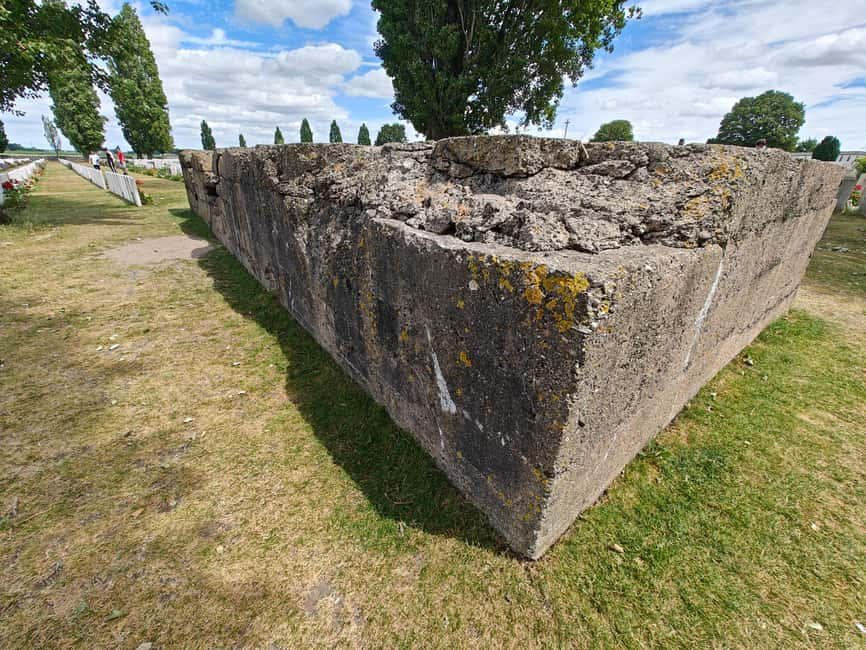
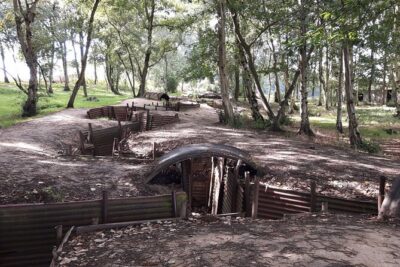
A short drive brings you to Yorkshire Trench and Dug-out for roughly 25 minutes. This is one of the tour’s most direct encounters with trench warfare.
The preserved trench and dug-out help you picture the confined conditions soldiers faced below ground. At other sites, it can be hard to grasp the difference between a field today and a front line in 1917. Here, the physical shape of the position does some of the teaching for you.
Do not expect a long walk or a full battlefield hike. The stop is brief, and the guide supplies the context. You will learn how trenches worked and why dug-outs mattered, while the surrounding terrain helps connect the surviving structure to the wider front.
Comfortable shoes are sensible. The tour is not described as strenuous, but cemetery paths and historic ground can be uneven. If you have limited mobility, ask about the current conditions before booking, since the available details do not promise step-free access at every stop.
Langemark German Cemetery and the other side of the war
Langemark German Military Cemetery gives the tour an important change of viewpoint. It is easy to visit Flanders only through Commonwealth remembrance. This stop reminds you that German soldiers also died in enormous numbers and that the war’s memory was shaped by national politics, grief, and changing ideas about commemoration.
The guided visit lasts about 45 minutes. You will learn about the cemetery itself, the German perspective, and the wider effect of the Great War. That balance is one of the strongest features of the route. It does not ask you to flatten the conflict into a simple story of heroes and villains.
The tone is respectful rather than theatrical. The cemetery also gives you a chance to compare memorial traditions. Commonwealth War Graves Commission cemeteries and German military cemeteries reflect different approaches to design, language, and national memory. Seeing both in the same morning adds meaning that you would miss by visiting only one side’s sites.
This is also a good point to ask questions. The guide can explain how the cemeteries came to look as they do and how the war continued to shape Belgium, Germany, Britain, Canada, Australia, and other countries long after the guns stopped.
More Flanders Fields battlefield days from Ypres:
- Small Group Ypres Remembrance Day Filled With War History
★ 5.0 · 31 reviews - From Ypres, The Christmas Truce to Passchendaele Ypres Based WW1 private tour
★ 5.0 · 29 reviews - In Flanders Fields and Passchendaele Grand Tour
★ 5.0 · 25 reviews - From Ypres: WWI Battlefields Private Tour
★ 5.0 · 25 reviews
The Brooding Soldier at Vancouver Corner
At the St Julien Canadian War Memorial, commonly known as the Brooding Soldier at Vancouver Corner, you spend around 25 minutes. The memorial commemorates Canadian soldiers involved in the Second Battle of Ypres, including the fighting associated with the first large-scale use of poison gas by German forces on the Western Front.
The statue is memorable because it does not show a triumphant charge. The soldier’s bowed head and reversed rifle create a mood of mourning. It is a quiet place, and the guide uses it to explain the Canadian role in the fighting and the human impact of new weapons.
This stop works especially well after Yorkshire Trench and Langemark. You have seen the physical remains of the front and considered the experience from the German side. Here, the memorial brings the focus back to a specific national force and a particular battle.
You will not spend a long time here, so listen closely during the explanation. The schedule allows enough time to take in the memorial, but not enough for an extended private visit.
Crossing the Passchendaele battlefields by van
The drive across the Passchendaele battlefields is one of the tour’s less formal but most useful sections. From the van, you see how modern roads, villages, farms, and open fields occupy ground that was once a battlefield.
The guide explains the fighting as you travel, using the terrain to show why the campaign became so difficult. This is where a private car or map can leave you with unanswered questions. You may know the name Passchendaele, but it is harder to understand the distances, routes, and positions without someone pointing out how the ground relates to the events.
The tour’s transport is a dark blue Mercedes van marked with the Kims Battlefield Tours logo. It is a practical choice for this route. You are driven from site to site rather than spending your short visit navigating unfamiliar roads, and the small vehicle makes it easier to hear the guide.
Some departures have included an extra stop or a short detour, such as a family cemetery or a local chocolatier in Passchendaele. Treat these as possible additions, not guaranteed parts of the schedule. If you have a personal connection to a soldier, share the details in advance. Kim has helped participants find graves and last-known locations, but short-notice requests may not be possible.
Tyne Cot Cemetery, the tour’s grandest and quietest stop
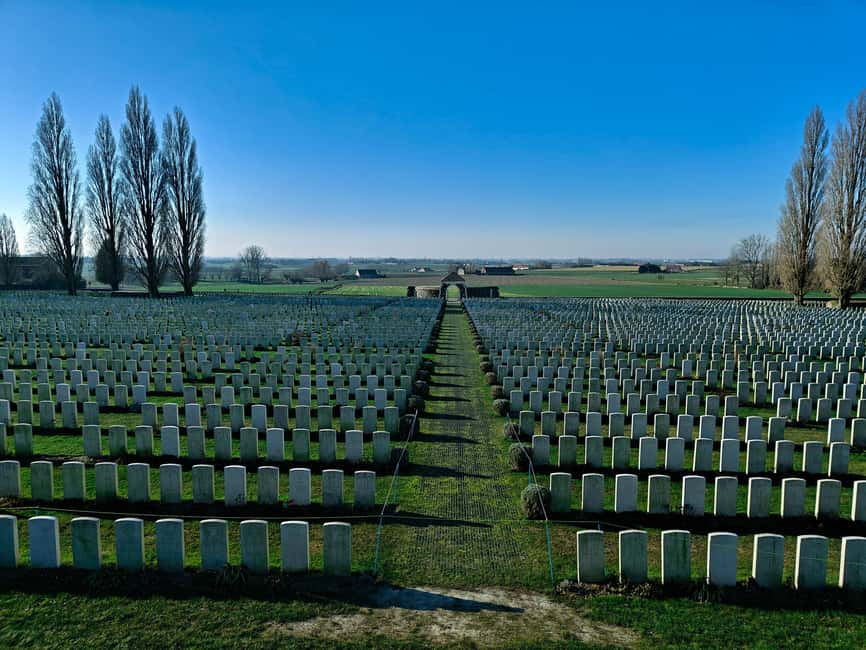
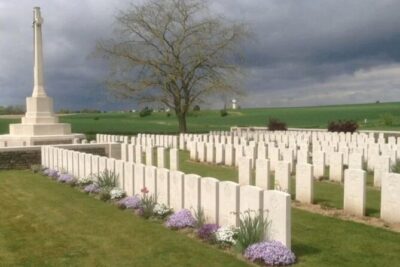
Tyne Cot Cemetery is the final main visit, with about 45 minutes on site. It is the largest Commonwealth War Graves Commission cemetery in the world, and its scale is difficult to absorb at first.
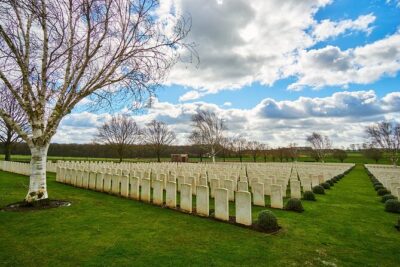
Rows of headstones spread across the grounds, while the surrounding memorials record names of men who have no known grave. The design is orderly and calm, a sharp contrast to the violence that created it. The guide explains the Commonwealth War Graves Commission, the post-war work of commemoration, and the meaning behind the cemetery’s layout.
This is the place where the earlier stops come together. Essex Farm introduced the casualty system. Yorkshire Trench showed the physical conditions. Langemark added the German perspective. The Passchendaele drive placed the battle in its actual setting. At Tyne Cot, those threads become a single, sobering picture.
Forty-five minutes is enough for a guided introduction and some quiet time, though you may wish the schedule allowed longer. If cemeteries affect you strongly, the final stop can feel intense. That is not a flaw, but it is worth knowing before you book. This is a serious historical visit, and the emotional weight builds steadily.
What the guide adds to the experience
The best feature here is the guiding. Kim’s approach combines detailed research with a warm, conversational manner. She has been described as clear in her explanations, easy to listen to, and willing to tailor the material to the people in the van. Lucas and Roger have also led departures with the same focus on explaining the sites rather than simply naming them.
Photographs are especially useful. A field can look ordinary until you see an image of the same place during the war. Maps help with distances and troop movements. Personal stories give the names and dates a human scale.
The guide may also help with family research. Several departures have included questions about great-grandparents, great-uncles, or other relatives. In one case, a short detour helped a participant locate a great-uncle’s grave. This kind of help depends on time, route, and advance information, so do not assume every request can be accommodated. Still, it is worth bringing names, service details, and cemetery information if you have them.
The tone is another strength. The tour is informative without treating the subject as entertainment. There is room for warmth and occasional humor, but the memorials are handled with care.
Price, timing, and comfort
At $88 per person, the tour offers solid value for a 210-minute experience. You are paying for a live English guide, transport between six major sites, pickup and drop-off at an agreed location, and a group limited to seven. Compared with arranging a car, researching the sites, and finding each location yourself, the price is reasonable.
The three-and-a-half-hour length suits visitors who want a strong introduction without giving up the whole day. It also works well if you are staying in Ypres for only a short time. The drawback is that the schedule is full. You will not have unlimited time at any one cemetery, and a serious family-history project may need a separate visit.
The van is reported to be clean, comfortable, and warm in colder weather. Pickup is included, and some participants have been collected from hotels or, when practical, a train station. Confirm your location when booking, especially if you are making a short-notice reservation.
Cancellation is free up to 24 hours before the tour, and you can reserve now and pay later. Short-notice bookings may not be possible, so contact the provider directly if your plans come together at the last minute.
Who should book this Ypres tour?
I would choose this tour if you want the main Ypres battlefields explained by a person rather than reduced to plaques and road signs. It suits first-time visitors, families researching relatives, history enthusiasts, and anyone who wants to understand how the war affected several nations.
It is also a good fit if you prefer a small group and a measured pace. The tour includes walking, but it is not a long battlefield trek. Most movement between sites is by van, with guided visits at each stop.
You may want a different format if you need extensive time for photography, detailed genealogical research, or silent visits at every cemetery. The schedule is carefully packed, and the guide has to keep the group moving.
Should you book it?
Book this Ypres battlefield tour if you want a thoughtful route that covers trenches, cemeteries, memorials, battlefield terrain, and both Commonwealth and German remembrance in one morning. The strongest reasons are the small group, the clear personal guiding, and the care taken with family connections.
I would especially recommend it for a first visit to Ypres. You will leave with a usable sense of where the fighting happened and why these places still matter. Just bring comfortable shoes, allow for an emotionally serious morning, and send any family-history details before you arrive.
FAQ
How long does the Ypres battlefield tour last?
The tour lasts 210 minutes, or three and a half hours.
What sites are included?
The route includes Essex Farm Cemetery, Yorkshire Trench and Dug-out, Langemark German Military Cemetery, the St Julien Canadian War Memorial known as the Brooding Soldier, the Passchendaele battlefields, and Tyne Cot Cemetery.
Is transportation included?
Yes. Pickup and drop-off at an agreed location are included, and you travel between sites in a dark blue Mercedes van with the Kims Battlefield Tours logo.
What language is the tour conducted in?
The tour is conducted in English with a live guide.
How many people are in the group?
The group is limited to seven participants.
What should I bring?
Bring comfortable shoes. The tour includes visits to cemeteries, memorials, and trench remains, with walking at several stops.
Just added around Ypres
- From LIlle or Bruges, Christmas Truce to Passchendaele Ypres 1 day WW1 private★ 5.0 · 5 reviews
- In Flanders Fields and Passchendaele Grand Tour★ 5.0 · 25 reviews
- Discover Tournai while playing! Escape game – The alchemist★ 4.0 · 3 reviews
- e-Scavenger hunt Ypres: Explore the city at your own pace★ 4.5 · 6 reviews
- From Ypres, The Christmas Truce to Passchendaele Ypres Based WW1 private tour★ 5.0 · 29 reviews
- PRIVATE Australian Western Front Battlefields 3-Day Tour Ypres to Amiens★ 5.0 · 3 reviews
- Full Day Canadian WW1 Vimy and Somme Battlefield Tour from Ypres★ 5.0 · 6 reviews
- From Ypres 4hr Christmas Truce and Monster Mines of Messines PRIVATE Tour★ 5.0 · 5 reviews
WWI Battlefield Tours, compared.
Great War Flanders Fields Minibus Tour w/ Lunch
Read our review →
Flanders Fields Remembrance Tour from Brussels
Read our review →
In Flanders Fields and Passchendaele Half Day Morning Tour
Read our review →
Small Group Ypres Remembrance Day Filled With War History
Read our review →Browse the lists this tour appears in