
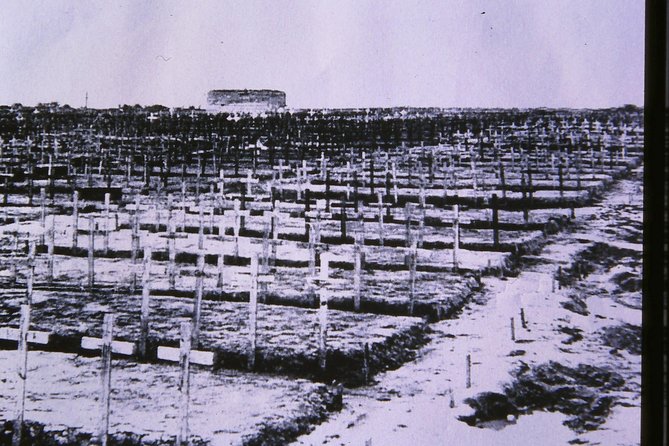
Reviewed · WWI BATTLEFIELD TOURS
Australian Battlefields Private Tour in Flanders from Bruges
The day follows the Australian story through some of the most affecting sites of the First World War. You will move from the recovered soldiers of Fromelles to the mine craters of Hill 60, then finish beneath Menin Gate in Ypres for the Last Post. The emotional arc is powerful, and the long drive between sites gives the battles a useful sense of place.
I like the private format and the freedom to shape the day around your interests. I also like that Claude Verhaeghe handles the driving and provides the historical background, leaving you free to focus on the cemeteries and museums. Lunch and entrance fees are included, which helps explain the price.
The drawback is simple: this is a very full day, about 12 hours, with many stops and a late finish after the ceremony. If you prefer a slower pace or have little interest in military history, the schedule may feel demanding.
Key points at a glance
- Fromelles gives the day its human focus: Learn how 250 Australian soldiers were recovered, identified, and reburied at Pheasant Wood.
- Hill 60 reveals the underground war: See the Caterpillar mine crater and the memorial to the 1st Australian Tunnelling Company.
- You visit major Australian sites in one day: Messines, Polygon Wood, Passchendaele, Tyne Cot, and several cemeteries are all included.
- The private minivan keeps the day personal: Your own group travels with Claude, with hotel pickup and drop-off from Bruges.
- Ypres provides a strong final chapter: You have free time near the Cloth Hall before attending the Last Post beneath Menin Gate.
- The schedule suits serious history fans: It is a long, information-filled day rather than a casual outing from Bruges.
From Bruges to the Australian front
This is not a quick stop at one memorial. It is a full circuit through the Flanders battlefields, with several sites in Belgium and a few in northern France. You leave Bruges at 9:00 a.m. in an air-conditioned minivan and return after the evening ceremony in Ypres.
The private setup matters here. The route covers a lot of ground, and you are not tied to the questions or interests of a large bus group. Claude Verhaeghe can explain the fighting, the geography, and the conditions faced by the soldiers, while you can ask for more or less detail as the day unfolds.
You will also pass through Armentières, linked with the song about Mademoiselle from Armentières, and near the Ploegsteert Memorial and Hill 63. These drive-by parts are brief, but they help connect the named battlefields into one continuous front rather than a series of isolated monuments.
The tour begins with a useful mix of museum interpretation, cemeteries, memorials, and open ground. That variety keeps the day from becoming a sequence of similar white headstones.
More Flanders Fields battlefield days from Bruges:
- From Bruges: Great War Flanders Fields Minibus Tour w/ Lunch
★ 4.9 · 1,257 reviews - Flanders Fields Remembrance Tour from Bruges
★ 4.5 · 207 reviews - From Bruges: Flanders Fields Remembrance Full-Day Trip
★ 4.8 · 65 reviews
Fromelles and the soldiers returned to the earth

The Museum of the Battle of Fromelles is the first major stop. Allow about 45 minutes here. Its key story is the recovery of 250 soldiers who had been buried in mass graves after the battle and were later exhumed and reburied with individual identities where possible.
This gives you a strong starting point because Fromelles is not treated only as a battlefield map. The museum helps explain what happened to the men after the fighting, and why modern archaeological and identification work mattered so much to their families and countries.
At Pheasant Wood Military Cemetery, you then stand among the graves of those soldiers. The visit lasts about 30 minutes and is free to enter. The move from museum displays to the cemetery is important: you first learn the story, then see the place where the men now rest.
The nearby Australian Memorial Park places you on the German lines, looking toward the ground across which Australian troops attacked on 19 July 1916. This is one of the day’s best moments for understanding distance and position. Maps can make an attack look tidy. Standing at the former German line gives the action a more physical scale.
Quiet cemeteries in northern France
The tour continues to VC Corner Australian Cemetery, described as the only cemetery in France devoted exclusively to Australians. It is a smaller, focused stop, with about 30 minutes to take in the site.
You also visit Rue Pettilon Military Cemetery, another resting place for Australian soldiers. These cemetery visits can feel repetitive if you are not interested in military memorials, but each one adds a different part of the story. The tour is strongest when Claude connects the names and units to the ground around them rather than treating each cemetery as a separate photo stop.
You should expect a reflective mood rather than a busy sightseeing rhythm. There are no grand attractions here in the usual tourist sense. The value comes from the chance to pause, read the inscriptions, and consider how many lives were lost in places that now look quiet.
Messines and the force beneath Hill 60
At Messines Ridge, you stand where Australian troops attacked in June 1917. The stop lasts about 30 minutes and is free. Claude’s explanation of the terrain is particularly useful here because the importance of the ridge is easier to grasp when you understand how elevation affected artillery and observation.
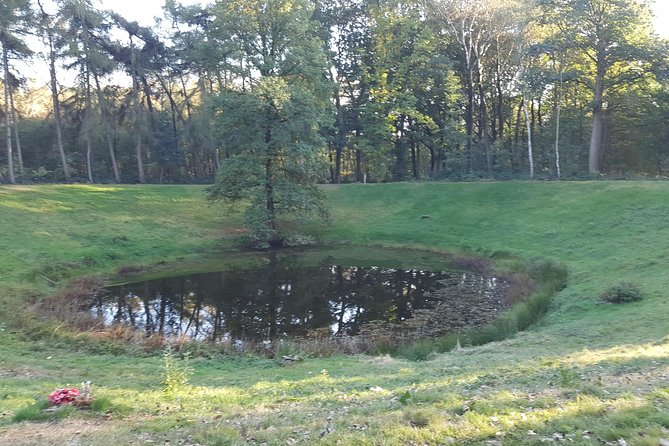
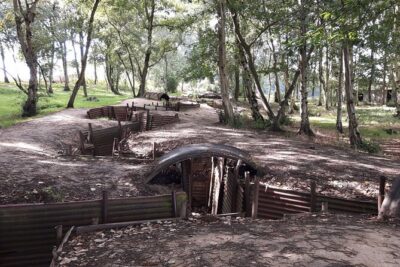
Hill 60 brings a different aspect of the war. You can see the Caterpillar mine crater and the memorial to the 1st Australian Tunnelling Company. The stop lasts about 45 minutes, giving you more time than at several of the cemeteries.
This is one of the most distinctive parts of the route. The mine crater is a visible reminder that the war was fought below ground as well as across open fields. The memorial also gives the Australian tunnellers a clear place in the wider story, rather than leaving the focus only on infantry attacks.
The ground around Hill 60 is meaningful, but the experience depends on explanation. Without context, a crater can look like an oddly shaped pond or hollow. With Claude’s account of the tunnelling work and the attack, it becomes evidence of a hidden battle that took months of planning.
A few more Bruges half days worth weighing up
- Bruges: Small Group Boat Cruise and Guided Walking Tour
★ 4.8 · 4,102 reviews - Bruges: Walking Tour, Canal Boat Trip w/Beer Tasting Option
★ 4.4 · 2,759 reviews - Historical Walking Tour: Legends of Bruges
★ 5.0 · 2,541 reviews - Bruges: Choco-Story Chocolate Museum Guided Tour w/Tastings
★ 4.2 · 1,379 reviews
Polygon Wood and the ANZAC connection
At Polygon Wood, you see the memorial to the 5th Australian Division and the New Zealand Memorial. The stop lasts around 30 minutes. This is also the place where the dawn service takes place on ANZAC Day, giving it a special connection for Australian and New Zealand visitors.
The memorials here make the Australian and New Zealand presence visible in the same setting. If you are visiting from Australia, this may be one of the most personally important stops on the route. If you are not, it still helps show how remembrance traditions continue to shape these sites.
The schedule remains brisk. You have enough time to understand the memorial and look around, but not enough for a long independent walk. That is a fair trade for covering so many important places in one day.
Passchendaele Museum and the scale of the fighting
The Passchendaele Museum is the longest museum visit, at about one hour. It is presented as one of the most interesting First World War museums in Belgium and adds indoor context after several outdoor sites.
That timing is welcome. By this point, you have seen cemeteries, memorials, a crater, and former front lines. The museum gives you a chance to bring those pieces together through exhibits about the fighting and the conditions faced by soldiers.
You should not expect the museum visit to feel like a separate half-day attraction. It is one part of a much larger route, and the hour passes within a packed schedule. Still, it adds needed variety and gives you shelter and a change of pace before the final stops.
Tyne Cot and the names without graves
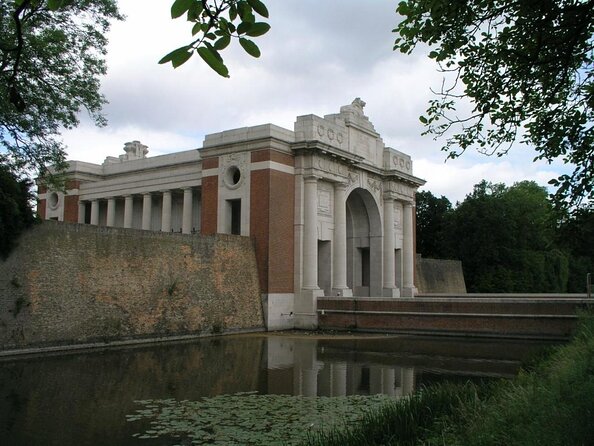
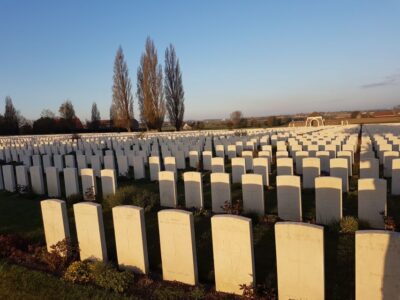
Tyne Cot Cemetery is the largest Commonwealth War Graves Commission cemetery. You have about 30 minutes there, with no separate entrance fee. The memorial bears the names of 35,000 soldiers who have no known grave.
The scale can be difficult to absorb quickly. I suggest using the time to focus first on the layout and the sheer number of names, then read a few individual inscriptions rather than trying to take in everything. The cemetery is not just another stop on a list. It shows the gap between the men who received marked graves and those whose remains were never found or identified.
After the smaller cemeteries earlier in the day, Tyne Cot changes the mood. Its size makes the losses feel vast. It is also a reminder that battlefield remembrance includes absence as much as burial.
Ypres, the Cloth Hall, and an hour to reset
The tour reaches Ypres for about an hour of free time around the main square. You can see the Cloth Hall, the cathedral, and other buildings before the Last Post ceremony.
This break is practical as well as pleasant. After a long day outdoors and in the minivan, you get time to walk without a guide speaking, look around the center, and prepare for the final ceremony. Lunch is included earlier in the day, and the meal is served at the Brothers in Arms restaurant according to the tour details and guest feedback. Alcoholic drinks are not included, though they can be purchased.
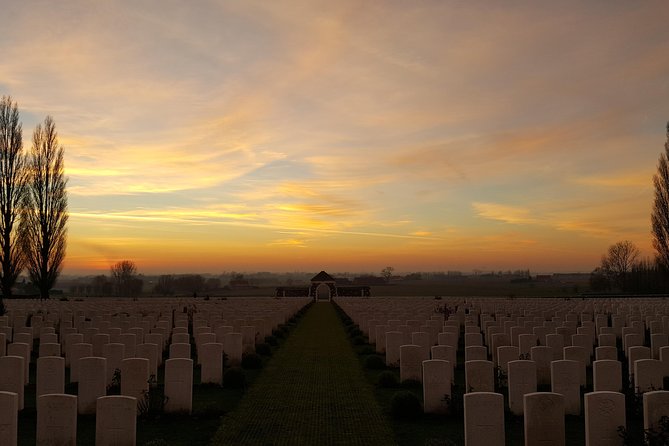
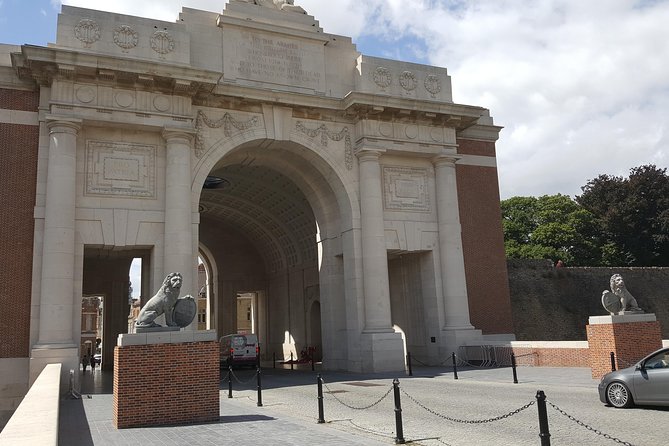
Ypres also gives you a reminder that the city is more than a battlefield memorial site. The Cloth Hall and cathedral anchor the town visually, while the Menin Gate connects everyday public space with wartime remembrance.
Menin Gate and the Last Post
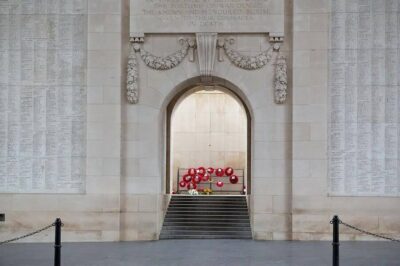
The day ends at Menin Gate for the Last Post ceremony. You spend about an hour at this final stop, then Claude drives you back to your hotel.
This is the moment that gives the tour its shape. After visiting the places where the battles took place, you end with a public act of remembrance in Ypres. The ceremony is short compared with the full day, but its setting beneath Menin Gate makes it feel weighty.
Plan to remain attentive and respectful. The experience is not a performance added for tourists. It is a formal memorial ceremony, and the atmosphere can be profoundly moving, especially after you have spent the day following Australian units and visiting their burial places.
The finish also explains why the tour cannot be treated as a simple morning outing. You are not merely passing through Ypres for photographs. You stay for the ceremony and then return to Bruges afterward.
What the $545.94 price covers
At $545.94 per person, this is an expensive day trip, but the price needs to be read in light of what is included. You receive a private tour, hotel pickup and drop-off, private transport in an air-conditioned minivan, a driver-guide, bottled water, lunch, local taxes, and entrance fees for the museums.
The private format is the main value. You are paying for a full day of driving across Belgium and northern France, not just admission to one museum. For a couple or small group with a serious interest in the Australian experience, the ability to ask questions and adjust the focus can make the cost reasonable.
Group discounts are offered, and at least two people are required per booking. The tour is booked well ahead on average, around 131 days in advance, so I would not leave it until the last moment if the Menin Gate ceremony is central to your plans.
The main question is not simply whether the price is high. It is whether you would otherwise be able to connect this many sites in a single day without hiring transport and arranging the route yourself. If you want a private, guided day from Bruges, the inclusions make the cost easier to justify.
Who should book this day
I would choose this tour if you have Australian family connections, a strong interest in the First World War, or limited time in Belgium but want more than Ypres alone. It also suits visitors who prefer a private guide to a large coach group.
The day is less suitable if you want an easy-paced outing, dislike cemeteries, or have young children who may struggle with 12 hours of driving and quiet memorial visits. The subject is serious, and the schedule is full.
Most people can take part, and service animals are allowed. Pickup and drop-off at your Bruges hotel remove much of the transport hassle. You should still expect a long day with outdoor stops, museum visits, and a late return.
Should you book the Australian Battlefields Private Tour?
Book it if your priority is depth, personal guiding, and a clear Australian thread through the Flanders battlefields. Claude Verhaeghe’s role as both driver and guide keeps the day efficient, while the route covers Fromelles, Messines, Hill 60, Polygon Wood, Passchendaele, Tyne Cot, Ypres, and the Last Post.
Skip it if you want a short excursion or a broad tour of Belgian sights. This experience gives nearly all its attention to war history and remembrance. For the right person, the combination of recovered graves, tunnelling sites, museums, and the Menin Gate ceremony makes it a memorable and carefully connected day.
FAQ
How long does the tour last?
The tour lasts approximately 12 hours, beginning at 9:00 a.m. and ending after the Last Post ceremony in Ypres, followed by transport back to your hotel.
Where does the tour start?
Hotel pickup is offered from Bruges. The stated start time is 9:00 a.m.
Is this a private tour?
Yes. Only your group participates, and transport is provided by private air-conditioned minivan.
How many people are required to book?
A minimum of two people per booking is required.
Is lunch included?
Yes. Lunch is included. Alcoholic drinks are not included, though they are available to purchase.
Are museum admission fees included?
Yes. Admission to the Museum of the Battle of Fromelles and the Passchendaele Museum is included. The listed cemetery, memorial, and outdoor battlefield stops do not have a separate admission charge.
Does the tour include the Last Post ceremony?
Yes. The tour visits Menin Gate in Ypres for the Last Post ceremony and then returns you to your hotel.
Can I cancel for a full refund?
You can cancel up to 24 hours before the experience start time for a full refund. Cancellations or changes made less than 24 hours before the start time are not accepted for a refund.
Just added around Bruges
- 2-Hour Private Walking Tour of Bruges★ 5.0 · 13 reviews
- The Waffles ‘n Coffee Breakfast in Bruges Centre★ 4.5 · 9 reviews
- Ticket Expo Body Worlds in Bruges, Belgium★ 4.5 · 11 reviews
- Discover the secrets of Bruges by playing!★ 4.5 · 7 reviews
- Explore the Instaworthy Spots of Bruges with a Local★ 5.0 · 3 reviews
- 6 Hour Bruges Shore Excursion from Zeebrugge Cruise Port★ 4.5 · 23 reviews
- Photo Tour “Jan van Eyck”★ 4.0 · 7 reviews
- Discover Bruges with a self-guided Outside Escape city game tour!★ 5.0 · 4 reviews
WWI Battlefield Tours, compared.
Great War Flanders Fields Minibus Tour w/ Lunch
Read our review →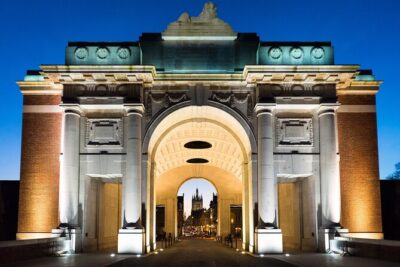
Flanders Fields Remembrance Tour from Brussels
Read our review →
In Flanders Fields and Passchendaele Half Day Morning Tour
Read our review →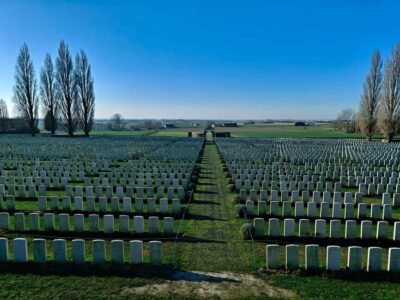
An exploration of the deadly salient battlefields
Read our review →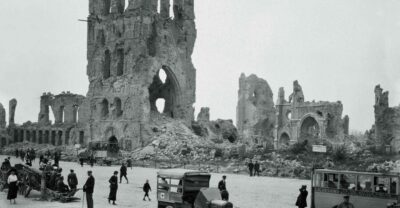
Browse the lists this tour appears in