
Reviewed · WWI BATTLEFIELD TOURS
Flanders Fields Remembrance Tour from Bruges
Flanders Fields is best understood on the ground, where a quiet Belgian field can suddenly reveal a trench, cemetery, bunker, or memorial to thousands of young men. This 10.5-hour tour from Bruges links the major sites with a guide who explains how the battles fit together.
I like the strong mix of preserved battlefield sites and personal memorials, from the Trench of Death to John McCrae’s dressing station at Essex Farm. I also like ending at the Last Post Ceremony beneath Ypres’ Menin Gate, a simple daily tribute that gives the long day a proper closing.
The main drawback is the pace. You cover a lot of ground in one day, and the group may be larger than expected. The description refers to a minivan, but some departures have used a large coach, so confirm the vehicle if that matters to you.
Key points to know before booking
- The Last Post Ceremony is the emotional high point: You finish at Ypres’ Menin Gate for the daily tribute to Commonwealth soldiers who never returned from battle.
- You visit more than one national memorial tradition: The route includes German, Commonwealth, Canadian, and French connections to the First World War.
- Diederiek Naeyaert is one guide you may encounter: His detailed commentary on the Ypres battles has been singled out repeatedly, though the guide can vary.
- This is a full battlefield circuit, not a short museum outing: Expect cemeteries, trenches, bunkers, a museum, memorials, and long periods on the road.
- The group size and vehicle can vary: The official information allows up to 200 people, while some departures have used groups of around 27 and a large coach.
- Lunch needs checking: A lunch stop is part of the day, but lunch is listed as not included, and details have varied by departure.
Why Flanders Fields makes a powerful day trip from Bruges
Bruges is famous for canals, medieval brickwork, and chocolate shops. Flanders Fields offers a very different side of Belgium. Within a couple of hours, you are among cemeteries, old trench lines, pillboxes, and towns rebuilt after some of the worst fighting of the First World War.
I like this tour because it gives you the setting as well as the dates and names. You do not simply look at a memorial in a city museum. You see how close the opposing positions could be, how the fields look today, and how carefully the dead are remembered.
The price is about $95.34 per person, which is fair for a full day of transport and guided visits. You are paying for the distance covered and for the guide’s explanation between stops, not just admission tickets. The tour includes an air-conditioned vehicle and a professional multilingual guide. Hotel pickup, hotel drop-off, and lunch are not listed as included.
The day begins at 11:00 a.m. from Bargeplein on Bargeweg, a central Bruges meeting point. You return there at the end. The tour is offered in English, and confirmation is supplied at booking.
More Flanders Fields battlefield days from Bruges:
- From Bruges: Great War Flanders Fields Minibus Tour w/ Lunch
★ 4.9 · 1,257 reviews - From Bruges: Flanders Fields Remembrance Full-Day Trip
★ 4.8 · 65 reviews - Australian Battlefields Private Tour in Flanders from Bruges
★ 5.0 · 15 reviews
Vladslo German Military Cemetery and the Grieving Parents
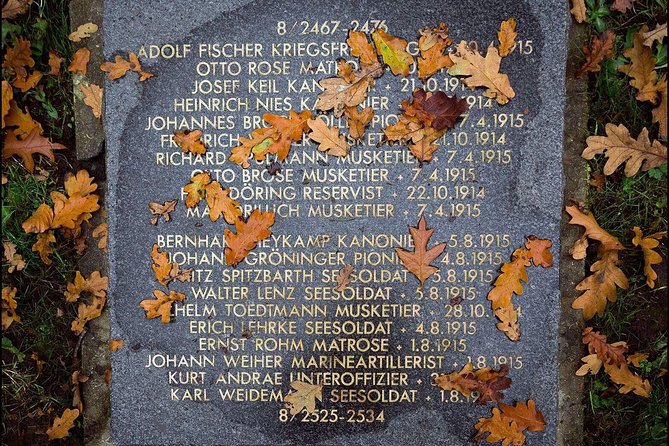
One of the first important stops is the German Military Cemetery at Vladslo. This is a quieter and more severe place than the larger Commonwealth cemeteries later in the day. Thousands of German soldiers are buried here, and the memorial atmosphere is restrained.
The central work is Käthe Kollwitz’s Grieving Parents, a pair of stone figures facing the graves. Kollwitz lost her own son in the war, and the sculpture gives the cemetery a deeply personal focus. You do not need a long lecture to understand its power. The figures make the cost of war feel painfully close to home.
This is a good early stop because it reminds you that Flanders Fields was not a story of one nation’s suffering. German, Canadian, British, Australian, French, and many other soldiers died in the same narrow region.
You should expect some walking on grass or uneven ground. Comfortable shoes are a practical choice, even though the tour is not described as strenuous. A moderate level of fitness is advised.
Diksmuide and the Trench of Death
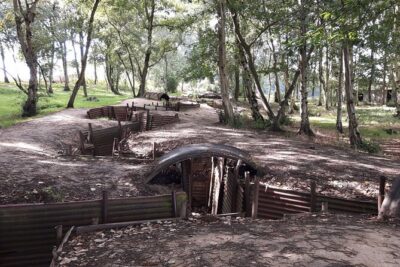
The route continues toward Diksmuide and the Trench of Death, one of the preserved stretches of the Western Front. The name is grim, but accurate. Trench warfare was not an abstract contest between armies. Soldiers lived and fought in cramped defensive lines, often only a short distance from the enemy.
The site helps you picture the physical conditions better than a photograph can. You see the narrow spaces, the defensive layout, and the exposed nature of the fighting. The calm countryside around it makes the contrast especially stark.
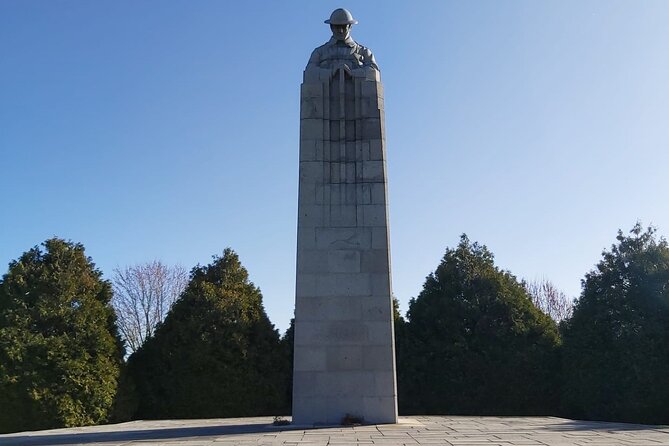
Nearby is the Brooding Soldier, a Canadian memorial marking the sacrifice of roughly 2,000 Canadian soldiers during the first German gas attack. The statue is also known as the Canadian Forces Memorial. This gives the stop a clear human focus, especially for visitors with Canadian family connections.
Your guide is important here. A battlefield can look ordinary without context. Guides such as Diederiek Naeyaert and Stephen have been praised for explaining the battles in a clear, serious way while still answering questions from the group.
Passchendaele and the cost of a name
After lunch, the tour turns toward Passchendaele, a name familiar to anyone who has studied the First World War. The battle became a byword for mud, artillery, exhaustion, and enormous loss of life.
Today, Passchendaele is a quiet traditional town. That peaceful setting can make the site harder to grasp. There are no ruined buildings or active front lines to show what happened. Instead, you rely on the guide, memorials, cemeteries, and your own imagination.
You may visit Passchendaele New British Cemetery and the area associated with the first gas attacks. The stop is brief, around 30 minutes according to the schedule. That is enough to look around and absorb the setting, but not enough for a long independent visit.
This is one of the tour’s strengths and weaknesses. You get a broad view of the region in one day, but you cannot give every cemetery and battlefield the time it deserves.
A few more Bruges half days worth weighing up
- Bruges: Small Group Boat Cruise and Guided Walking Tour
★ 4.8 · 4,102 reviews - Bruges: Walking Tour, Canal Boat Trip w/Beer Tasting Option
★ 4.4 · 2,759 reviews - Historical Walking Tour: Legends of Bruges
★ 5.0 · 2,541 reviews - Bruges: Choco-Story Chocolate Museum Guided Tour w/Tastings
★ 4.2 · 1,379 reviews
Tyne Cot Cemetery and thousands of names
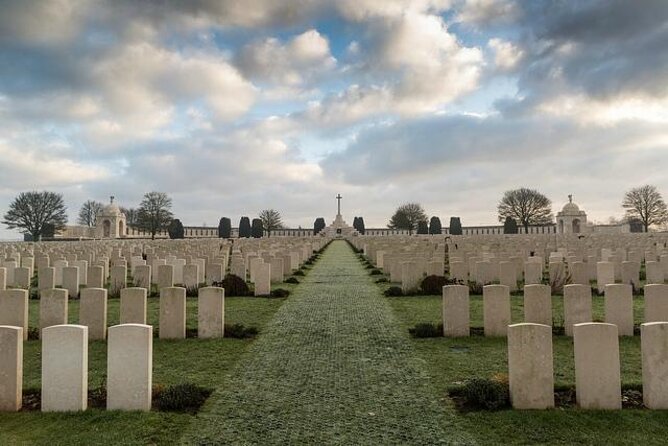
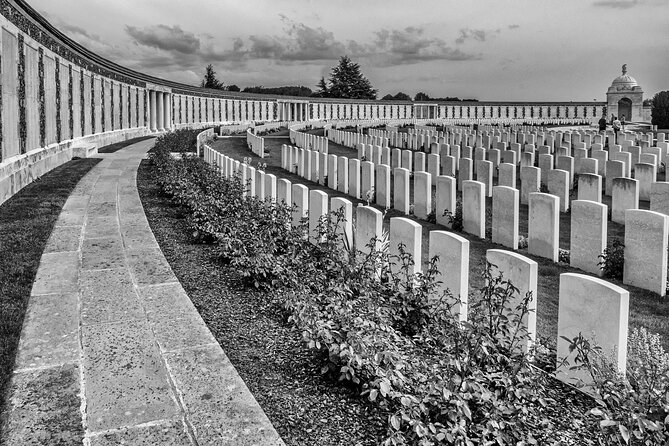
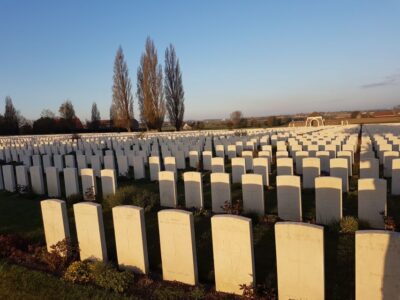
Tyne Cot is among the most significant stops. It is described as the world’s largest Commonwealth cemetery, with around 35,000 solemn headstones and memorial names. The scale is difficult to take in. A visit here changes the meaning of casualty figures. Instead of a number in a textbook, you see row after row of individual lives.
The cemetery is carefully maintained, with a formal design that does not hide the size of the loss. You may want to spend a quiet moment on your own, even if the guide has more to explain.
I would pay attention to the balance between guided commentary and private time. The guide’s background is valuable, but this is also a place where silence does part of the work.
Some visitors have felt the schedule did not allow enough time at Tyne Cot or at the Passchendaele museum. That is a fair concern. If Tyne Cot is your main reason for coming to Flanders Fields, a private visit or a dedicated battlefield tour may suit you better. If you want to understand several sites in one day, the short stop is a reasonable trade.
Hill 60 and the trenches near Zillebeke
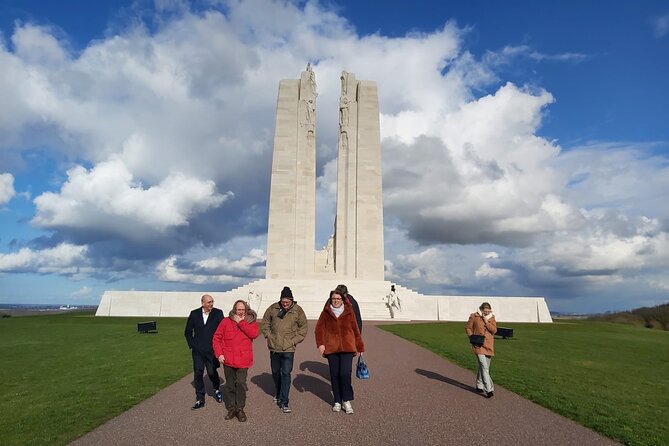
The tour passes Hill 60, a battlefield memorial site and park near Zillebeke. The hill mattered because even a small rise could offer a military advantage in the flat Flanders region.
The area includes tunnels and battlefield remains tied to the fighting. The tour information also refers to seeing trenches and bunkers at this point in the day. These physical traces are valuable because they show how soldiers used the ground, rather than presenting the war as a series of distant political events.
Hill 60 can be especially useful for first-time battlefield visitors. It helps connect the earlier discussion of trench lines, artillery, and no-man’s-land with an actual place you can walk through.
Again, wear shoes that can handle uneven surfaces. The tour is suitable for people with moderate fitness, but it is not a day spent entirely sitting in the coach.
Essex Farm and In Flanders Fields
At Essex Farm Cemetery, you visit the dressing station where Canadian doctor John McCrae wrote In Flanders Fields. The stop is short, about 15 minutes, but its importance is greater than its length suggests.
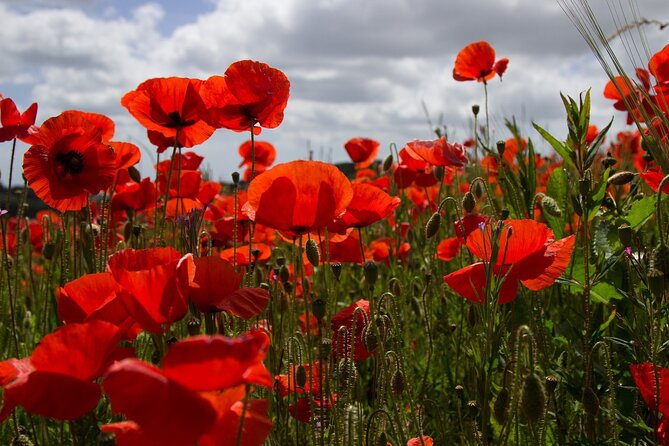
McCrae’s poem became one of the best-known works associated with the First World War. Seeing the place connected with its writing adds a physical setting to words many people first encountered at school or during a Remembrance ceremony.
The cemetery also brings the war back to individual people. You are not simply visiting the site of a battle. You are looking at the medical side of the conflict, where wounded men arrived after fighting and doctors worked under terrible conditions.
This is a place where I would not expect a long independent exploration. The value comes from the guide’s explanation and from understanding how Essex Farm fits into the larger route.
The Flanders Fields Museum and time in Ypres
The route includes the Flanders Fields Museum in Ypres, with exhibitions, battlefield objects, and an audio-guided presentation about the war. This is an important change of pace after several outdoor memorials.
The museum gives you evidence and detail that a cemetery cannot provide. Artifacts help explain daily military life, while the audio guide places the fighting in a wider story. If you have never studied the First World War closely, this part can help organize what you have seen during the day.
The schedule can be tight. One departure encountered a museum closure, and another had limited time at the museum and Tyne Cot. Opening hours and ceremony timing can shape the route, particularly in winter when daylight is shorter.
You may also have free time in Ypres for food or a short look around before the evening ceremony. The town was destroyed during the war and rebuilt afterward, with many buildings designed to look traditional. That rebuilt setting adds another layer to the day: you are looking at a place that is both old in appearance and modern in survival.
The Last Post at Menin Gate
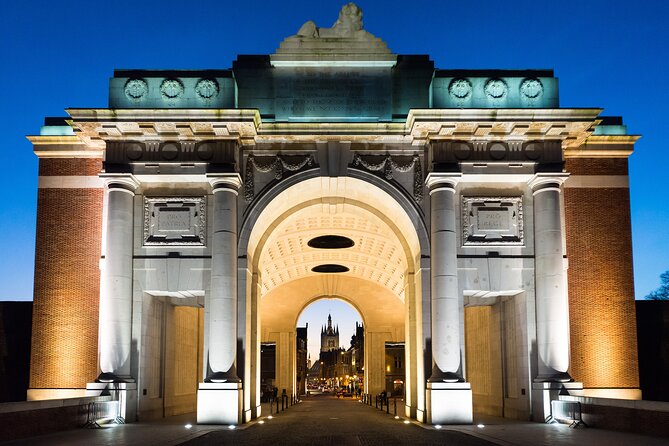
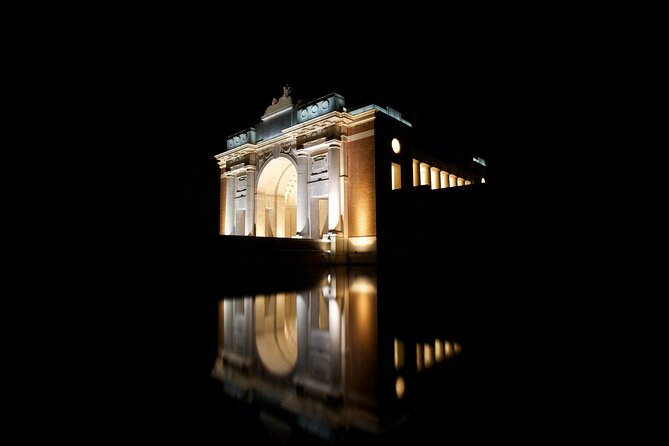
The final stop is the Last Post Ceremony at Menin Gate, held daily in Ypres. This is the moment many people remember most clearly.
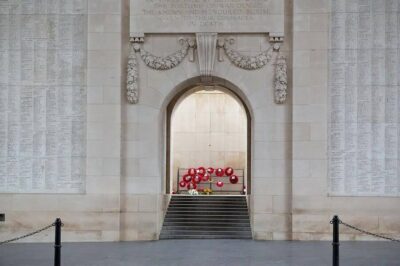
The ceremony honors Commonwealth soldiers and officers who went missing in battle. Buglers sound the Last Post beneath the great arch, and the tribute is deliberately simple. It does not need theatrical effects. After a day of graves, trenches, and battle sites, the quiet formality carries real weight.
Arrive ready for a crowd. The ceremony is free, but space and visibility can vary. The tour’s timing is built around attending it, which means the day may run late and the return to Bruges comes afterward.
Menin Gate has undergone refurbishment at times, and construction work can affect the setting. If that matters to you, check the current condition before booking. Even with scaffolding or changes around the monument, the ceremony itself remains the reason this tour finishes in Ypres rather than returning earlier.
Transport, group size, and the long day
The description refers to a comfortable, air-conditioned minivan, but the vehicle is not guaranteed to be small. Some departures have used a large tour bus. One account also described a group of 27 despite an expectation of a smaller group.
That difference matters. A large coach is comfortable for the long drive, but it can be harder to hear commentary when everyone gathers at a stop. If you have motion sickness, or if a small vehicle is important to you, ask the operator about the expected vehicle before you pay.
The official maximum is up to 200 people, though that is a broad operating limit rather than a promise that every departure will reach it. Group size can affect how quickly people move between the coach and a cemetery, and how easily you can ask questions.
The full day lasts approximately 10 hours and 30 minutes. That includes substantial road time, outdoor stops, museum time, lunch, and the evening ceremony. I would not pair it with another major attraction the same day.
Lunch and what you should plan for
A lunch stop at a local restaurant is part of the route, and some departures have included a simple meal and a drink. However, lunch is listed as not included in the stated price, so you should confirm the current arrangement before leaving Bruges.
The stop is useful even beyond the food. It gives you a chance to sit down, warm up or cool off, and talk with people who are also trying to process a serious day. Still, do not assume the meal will match your dietary needs unless the operator confirms it.
Bring water and a small snack in case the timing does not suit you. The day has many stops, but the schedule is organized around the battlefield route and the Last Post Ceremony rather than around long restaurant breaks.
Who should book this Flanders Fields tour?
I would choose this tour if you have one day in Bruges and want a broad introduction to the Ypres Salient, Passchendaele, cemeteries, trenches, and memorials. It is especially useful if you want a guide to explain the military history as you travel between places.
It also suits people with family connections to Commonwealth forces, Canadian history, or the First World War. The national cemeteries and the Last Post make the day meaningful even if you are not a military history specialist.
You may want a different option if you prefer slow visits, long time at each cemetery, or a small private group. The schedule is packed, and the guide’s commentary may be harder to hear when the group is large.
The tour is offered in English, with a professional multilingual guide. Guides can vary, but Diederiek Naeyaert, Stephen, and Stefan are among the names associated with highly praised departures. Their ability to explain the battles is one of the main reasons to take a guided trip rather than attempt the route alone.
Should you book it?
Book this tour if you want to see a wide range of Flanders Fields sites in one day and you value a strong guide more than a leisurely pace. The combination of the Trench of Death, Tyne Cot, Essex Farm, Hill 60, the museum, and the Last Post Ceremony gives you a serious and well-rounded introduction.
Think twice if you need a guaranteed minivan, a very small group, or extended time at every stop. Ask about the vehicle, group size, museum access, and lunch before booking.
For about $95.34, the tour offers good value if you would otherwise struggle to reach these scattered sites. The Last Post Ceremony alone is not the whole reason to go. The real value comes from seeing how all the places connect, then ending the day beneath Menin Gate in quiet remembrance.
FAQ
Where does the Flanders Fields tour depart from?
The tour starts at Bargeplein, Bargeweg, 8000 Brugge, Belgium. The start time is 11:00 a.m.
Where does the tour end?
The activity ends back at the meeting point in Bruges.
Is lunch included in the tour price?
Lunch is listed as not included. The itinerary includes a lunch stop, and details may vary by departure, so confirm the current arrangement before booking.
Is hotel pickup and drop-off included?
No. Hotel pickup and drop-off are not included. You must reach the central Bruges meeting point yourself.
Is the Last Post Ceremony included?
Yes. The tour finishes with the daily Last Post Ceremony at Menin Gate in Ypres. The ceremony is a tribute to Commonwealth soldiers and officers missing after battle.
Can I cancel for a full refund?
Yes, if you cancel at least 24 hours before the local start time. Cancellations or changes made less than 24 hours before the start are not refunded, and the tour requires a minimum number of participants to operate.
Just added around Bruges
- 2-Hour Private Walking Tour of Bruges★ 5.0 · 13 reviews
- Ticket Expo Body Worlds in Bruges, Belgium★ 4.5 · 11 reviews
- The Waffles ‘n Coffee Breakfast in Bruges Centre★ 4.5 · 9 reviews
- Discover the secrets of Bruges by playing!★ 4.5 · 7 reviews
- Explore the Instaworthy Spots of Bruges with a Local★ 5.0 · 3 reviews
- Australian Battlefields Private Tour in Flanders from Bruges★ 5.0 · 15 reviews
- 6 Hour Bruges Shore Excursion from Zeebrugge Cruise Port★ 4.5 · 23 reviews
- Photo Tour “Jan van Eyck”★ 4.0 · 7 reviews
WWI Battlefield Tours, compared.
Great War Flanders Fields Minibus Tour w/ Lunch
Read our review →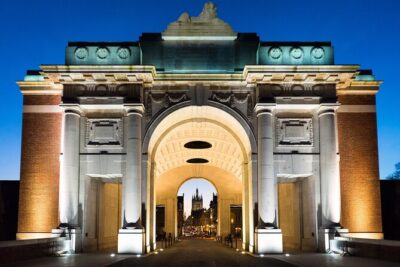
Flanders Fields Remembrance Tour from Brussels
Read our review →
In Flanders Fields and Passchendaele Half Day Morning Tour
Read our review →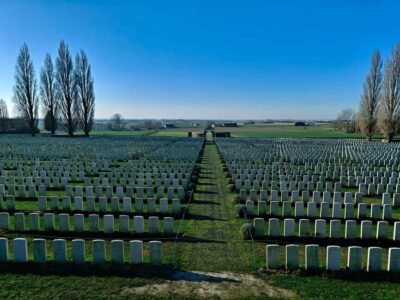
An exploration of the deadly salient battlefields
Read our review →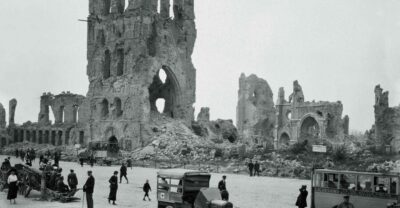
Small Group Ypres Remembrance Day Filled With War History
Read our review →Browse the lists this tour appears in